

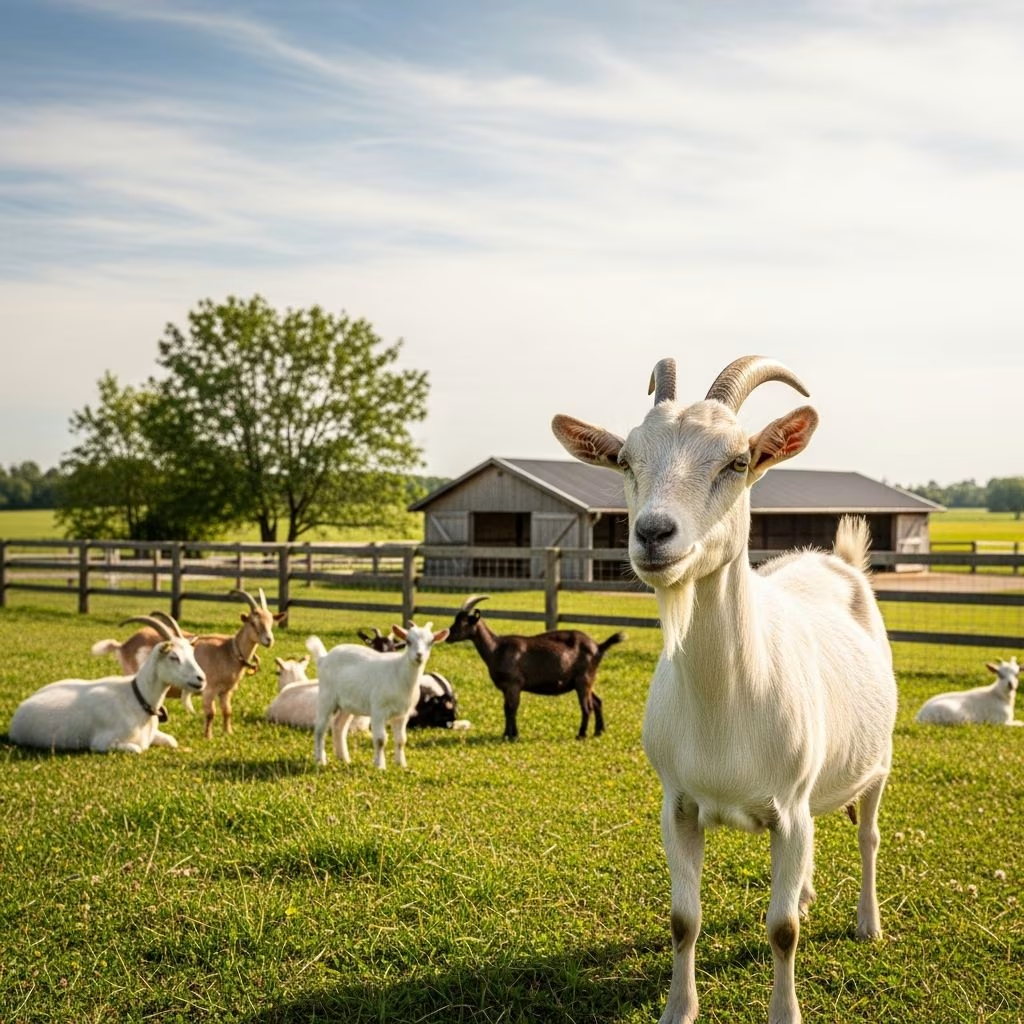
Successful goat breeding forms the foundation of a thriving herd, enabling farmers to enhance genetics, increase productivity, and achieve consistent kidding cycles. By integrating proper timing, nutrition, health protocols, and reproductive technologies, producers can optimize fertility rates and produce vigorous offspring.
Understanding Goat Reproductive Physiology
Goats exhibit a distinct reproductive cycle influenced by seasonality, with most breeds displaying short-day breeding patterns where fertility peaks during fall months. Does typically reaches puberty between 4-12 months, depending on breed and nutrition, while bucks mature slightly earlier. Estrus lasts 24-48 hours, occurring every 18-21 days during the breeding season, marked by behaviors like tail wagging, vocalization, and clear vaginal discharge.
Gestation averages 145-155 days, with dairy breeds often on the shorter end and meat breeds slightly longer. Multiple births are common, averaging 1.5-2 kids per doe, which underscores the importance of doe condition to support twins or triplets.
Selecting Breeding Stock for Superior Genetics
Choosing the right bucks and does is critical for herd improvement. Prioritize animals with strong conformation, including sound feet, legs, and udders, alongside traits like rapid growth and high milk yield for dairy operations. Body condition scoring (BCS) on a 1-5 scale should target 3.0-3.5 at breeding for does to ensure adequate fat reserves without obesity.
For bucks, evaluate libido, scrotal circumference (minimum 25 cm at maturity for optimal sperm production), and semen quality via regular veterinary exams. Avoid inbreeding by rotating sires and tracking pedigrees; community breeding programs can introduce diverse genetics while preventing close relatives from mating.
- Buck Selection Criteria: Age 1-5 years, no lameness, uniform testicle size, high serving capacity (up to 40 does per season).
- Doe Selection Criteria: History of easy kidding, strong maternal instincts, fertility over two seasons.
Breeding Systems: Natural vs. Advanced Methods
Goat producers employ various systems tailored to herd size, goals, and resources. Natural service remains dominant for its simplicity, but technologies like AI and embryo transfer offer genetic precision.
| Method | Pros | Cons | Best For |
|---|---|---|---|
| Natural Service | Low cost, minimal equipment, high conception (80-90%) | Risk of injury, disease spread, less genetic control | Small herds, beginners |
| Artificial Insemination (AI) | Superior genetics, disease control, semen storage | Requires skill, estrus detection, equipment costs | Genetic improvement programs |
| Embryo Transfer (ET) | Multiplies elite genetics rapidly | High expense, veterinary expertise needed | Commercial elite breeders |
Natural Breeding Techniques
In pen breeding, introduce one buck per 20-30 does in a controlled pasture, allowing natural heat detection. Hand mating provides precise records: isolate a doe in estrus, present the selected buck for 1-2 days, and monitor for acceptance. Overnight privacy often boosts success, as bucks perform better without observers.
Maintain buck:doe ratios at 1:15-25 to prevent exhaustion; rotate bucks to sustain fertility. For out-of-season breeding, manipulate photoperiod with 16-20 hours of indoor lighting for 60 days pre-breeding, transitioning to short days for synchronized estrus.
Artificial Insemination Protocols
AI expands access to top genetics using fresh or frozen semen. Transcervical insemination with fresh semen (300 million motile sperm) yields 50-70% conception; frozen requires laparoscopic methods (20 million sperm minimum).
Estrus synchronization via prostaglandins or sponges (e.g., 12-day CIDR insertion followed by PGF2α) aligns breeding for efficiency. Collect semen via electroejaculation or artificial vagina, storing at 5°C for up to 24 hours or freezing in 0.25 mL straws.
Nutrition Strategies for Peak Fertility
Nutrition drives reproductive success. Flush does with 0.5-1 lb extra grain daily 4-6 weeks pre-breeding to elevate BCS and ovulation rates. Bucks benefit from high-energy diets boosting testosterone and sperm motility.
Key nutrients include:
- Energy: 2.5-3 Mcal DE/day for does; supports follicular development.
- Protein: 14-16% crude protein; enhances embryo implantation.
- Minerals: Selenium (0.3 ppm), Vitamin E (100 IU/day), Copper (10 ppm) via bolus or injection to prevent white muscle disease.
Post-breeding, maintain balanced forage (60-70% roughage) to sustain pregnancy without excess weight gain.
Health and Biosecurity in Breeding
Pre-breeding exams screen for Brucellosis, CAE, Johne’s, and foot rot. Vaccinate against clostridial diseases and deworm strategically using FAMACHA scoring. Hoof trimming reduces lameness, preserving buck mobility and sperm quality.
Quarantine new animals 30 days; separate bucks year-round to control parasite loads. Heat stress mitigation via shade and fans maintains fertility during summer.
Gestation and Kidding Preparation
Monitor pregnancy via ultrasound at day 30-45 (90% accuracy). Provide creep feed from day 1 for kids, introducing hay and grain to build rumen function. Wean at 6-8 weeks when on solid feed.
Kidding pens should be clean, spacious (6×8 ft/doe), bedded deeply. Signs include udder engorgement 24-48 hours prior; assist if no progress in 30 minutes for first kid. Ensure colostrum intake within 1 hour postpartum (20-25% body weight).
FAQs
What is the ideal breeding age for goats?
Does breed first at 8-12 months (60-70 lbs); bucks at 6-8 months. Delay heavy breeds to 18 months for skeletal maturity.
How can I synchronize estrus in goats?
Use CIDR sponges for 12 days plus PGF2α injection; expect 80% synchronization.
What causes low conception rates?
Poor nutrition, heat stress, undetected disease, or improper timing. Aim for 70-85% via BCS monitoring and health checks.
Is out-of-season breeding viable?
Yes, with lighting protocols yielding 60%+ success; ideal for continuous milk production.
How do I improve buck fertility?
Regular hoof care, scrotal measurements, and shade to avoid heat; test semen annually.
Advanced Genetic Improvement
Embrace performance recording for traits like kidding rate (target 200%), weaning weight, and parasite resistance. Crossbreeding local adapted does with exotic sires (stop at F2-F3) balances hardiness and productivity.
Embryo transfer multiplies elite does: superovulate donors, flush embryos day 7 post-AI, transfer to recipients for 300% offspring increase per season.
In summary, integrate these practices for a robust breeding program yielding healthy kids and profitable herds. Adapt to your operation’s scale and consult vets for tailored advice.
References
- Reproductive Management – Dairy Goats and Sheep — Alabama Cooperative Extension System (ACES). 2023. https://www.aces.edu/blog/topics/sheep-goats/reproductive-management-dairy-goats-and-sheep/
- GOATS: BREEDING, KIDDING, MILKING, HEALTH — Infonet Biovision. 2010-05-15. https://infonet-biovision.org/sites/default/files/4197.14_goats_breeding_kidding_milking_health_15.5.2010.pdf
- Reproductive Options Exist for Breeding Goats — DuraFerm. 2024-11. https://duraferm.com/2024/11/breeding-goats/
- Reproduction and Genetics – Goats — Penn State Extension. Accessed 2026. https://extension.psu.edu/animals-and-livestock/goats/reproduction-and-genetics/
- Goat Breeding 101: Beginners Guide — GoatFarmers.com. Accessed 2026. https://www.goatfarmers.com/blog/goat-breeding/
- Breeding and Parturition of Goats — Merck Veterinary Manual. Accessed 2026. https://www.merckvetmanual.com/management-and-nutrition/preventative-health-care-and-husbandry-of-goats/breeding-and-parturition-of-goats
- Five Ways To Improve Sheep and Goat Breeding — Zinpro. Accessed 2026. https://www.zinpro.com/resource-center/blog/five-ways-to-improve-sheep-and-goat-breeding/



