

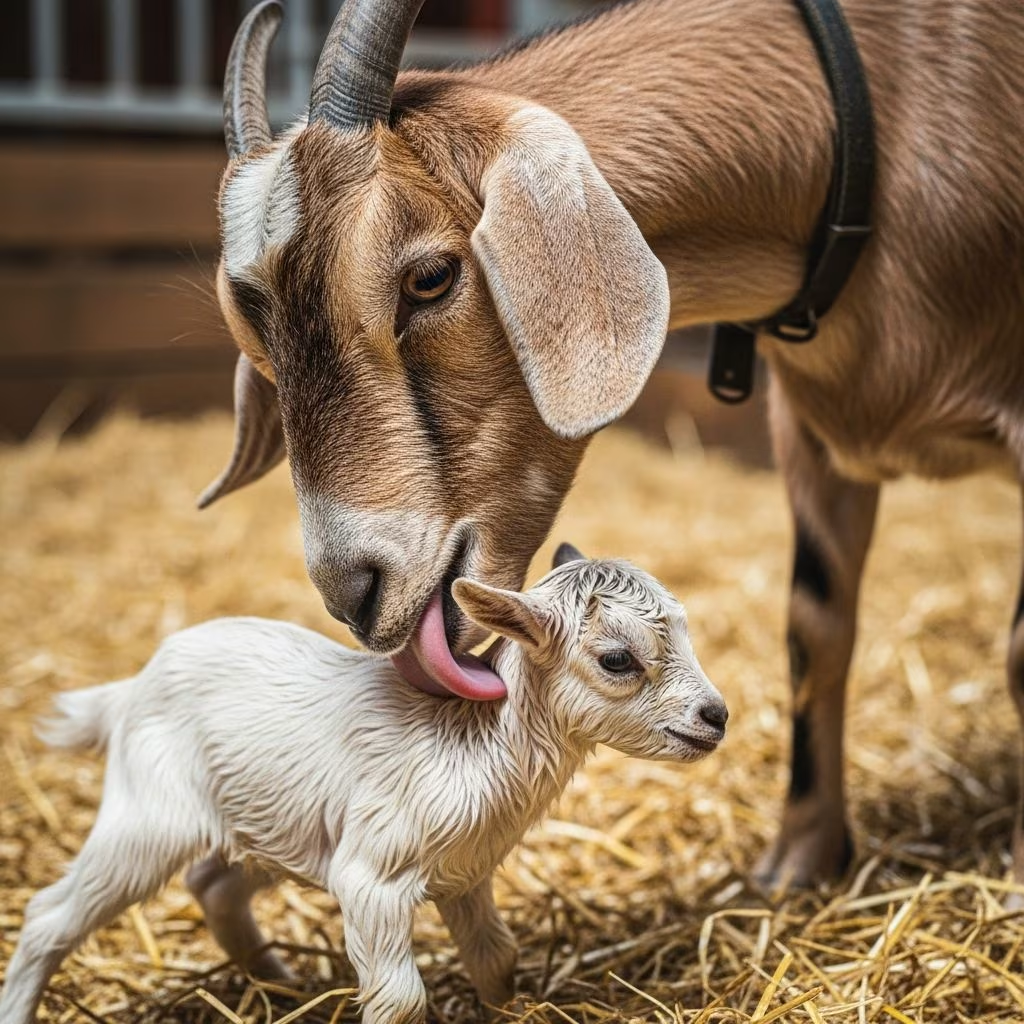
Successfully managing the birthing process in goats, known as kidding, is crucial for herd health and productivity. This guide details the physiological changes, behavioral indicators, and practical steps for overseeing parturition, drawing from established veterinary practices to help producers achieve optimal outcomes.
Understanding the Gestation Timeline
Goat pregnancies typically last 145 to 150 days, though variations occur by breed and individual factors. Dairy breeds may gestate slightly shorter periods, around 140-145 days, while meat breeds often extend to 150 days or more.
Owners should track breeding dates meticulously to anticipate kidding. Tools like gestation calculators aid in pinpointing due dates, allowing preparation of clean, spacious kidding areas with ample bedding such as straw or shavings to minimize infection risks.
Pre-Labor Physical and Behavioral Changes
As kidding approaches, does exhibit distinct signs signaling the onset of labor within 24-48 hours. The udder undergoes rapid development, often described as “bagging up” or “popping,” where it fills noticeably overnight, with teats appearing taut and glossy.
Concurrently, the vulva swells and elongates, becoming soft and puffy. Ligaments around the tailhead soften dramatically, transforming from firm bands to squishy tissue, effectively vanishing as the pelvis prepares for passage.
- Udder filling: Sudden expansion indicates colostrum production.
- Vulva swelling: Pink, moist appearance signals hormonal shifts.
- Tail ligament relaxation: Easy finger insertion between tail and pins confirms readiness.
- Behavioral shifts: Isolation from herd, nesting, pawing ground.
Clear or mucous discharge from the vulva is common, representing cervical plug expulsion. These cues warrant close monitoring without unnecessary disturbance, as stress can prolong labor.
The Three Distinct Phases of Kidding
Goat parturition divides into three phases: preparation, expulsion, and placental passage. Recognizing each ensures timely intervention if deviations arise.
Phase 1: Preparation and Cervical Dilation
This initial phase lasts 4-12 hours, longer in first-time mothers (doe kids) at 6-12 hours versus 4-8 hours for mature does.
Uterine contractions reposition fetuses, primarily anterior presentation with front legs extended and nose down. The doe appears restless: pacing, vocalizing softly, lying down frequently, or staring blankly. Mild straining may occur, but visible progress is absent.
Interference is rarely needed here; isolation in a quiet pen promotes relaxation. Duration exceeding 12 hours, especially with distress, signals potential dystocia requiring veterinary assessment.
Phase 2: Active Delivery of Kids
Marked by the amniotic sac’s emergence—a shiny, fluid-filled bubble—this phase demands vigilance. Sac rupture follows, releasing fluids, then the kid’s front hooves and muzzle should present in the “diving” position: hooves soles down, nose atop legs.
| Normal Presentation | Timeline | Observations |
|---|---|---|
| Two front feet, nose forward | <1 hour (mature); <4 hours (first-timers) | Smooth progression, doe pushes rhythmically |
| Single kid or multiples | 20-45 min between kids | Rest periods of 10-30 min normal |
Delivery completes when the kid fully exits, often with a gush of fluid. The doe instinctively cleans and stimulates breathing by licking. Multiple births are common; intervals under 30-45 minutes prevent fatigue.
Absence of progress 30 minutes post-sac rupture necessitates examination for malposition, such as backward presentation or leg folds, common intervention points.
Phase 3: Placental Expulsion and Cleanup
Post-delivery, uterine contractions detach the placenta, expelled 1-8 hours later, typically 1-3 hours after the last kid.
One placenta serves all kids from a horn. Does may consume it for nutrients and hygiene, though removal prevents ingestion hazards if refused.
Straining diminishes; monitor for complete expulsion to avoid retained placenta, defined post-12 hours, risking infection.
When and How to Provide Assistance
Most kiddings proceed unassisted, but 10-20% require aid. Key red flags include:
- No kid 1 hour after sac appears.
- Prolonged >30 min pushing without progress.
- Abnormal presentations (e.g., tail, hind legs first).
- Weak doe or kid distress (gasping, blue tongue).
Assistance protocol: Use lubricant, clean hands/arms, gently reposition kid to normal posture. Pull during contractions with steady, downward-then-backward traction matching kid size. Never force; summon vet for complex cases.
Immediate Postpartum Management
Post-kidding, dip kid navels in 7% iodine for infection prevention. Ensure kids nurse within 1-2 hours for colostrum, vital for immunity. Does require clean water, high-energy feed, and observation for hemorrhage or fever.
Weigh kids to track growth; average birth weights: 2-4 kg for dairy, 3-5 kg meat breeds.
Common Complications and Prevention
Dystocia
Oversized kids from overfeeding late gestation or sire mismatch cause most cases. Prevention: Balanced nutrition, diverse genetics.
Retained Placenta
Beyond 12-18 hours, administer oxytocin per vet; antibiotics guard against metritis.
Metritis and Mastitis
Clean environments and monitoring minimize uterine/vulvar infections and udder inflammation.
Breeds and Multiple Births Considerations
Nubians, Boers favor twins/triplets; litter size influences labor vigor. Prepare for 2-4 kids, with supplemental milk if doe overwhelmed.
FAQs
How long is goat labor?
Total 12-24 hours; stage 2 <1 hour ideally.
What if no progress after water breaks?
Check presentation after 30 min; assist if needed.
Should I pull the placenta?
Wait 3-6 hours; remove if retained, vet consult.
Can does kid alone?
Yes, but monitor closely, especially primiparas.
What are ideal kidding conditions?
Warm (above 50°F), dry, quiet pens with bedding.
Long-Term Doe Recovery and Kid Care
Does rebound in 1-2 weeks with proper nutrition: alfalfa, grains for lactation. Kids thrive on milk, weaned at 8-12 weeks. Vaccinate, deworm per schedule for herd vitality.
This holistic approach to kidding fosters sustainable goat farming, maximizing survival rates above 95% with proactive management.
References
- Kidding In Goats — Sierra Animal Hospital. Accessed 2026. https://www.sierraanimal.com/kidding-goats
- Signs and Stages of Goat Labor — Nest in the West. 2025-05. https://thenestinthewest.com/2025/05/signs-and-stages-of-goat-labor/
- Gestation Period of a Goat: Birthing Kids Labor Timeline — Manna Pro. Accessed 2026. https://mannapro.com/blogs/news/birthing-goat-kids-labor-timeline
- Step-by-Step Goat Birth: From Labor to Newborn Kids — YouTube. Accessed 2026. https://www.youtube.com/watch?v=WgW-YmxEAI8
- Goat Labor and Birth — Dummies.com. Accessed 2026. https://www.dummies.com/article/home-auto-hobbies/hobby-farming/goats/goat-labor-and-birth-189314/
- Caring For Pregnant And Lactating Sheep And Goats Part Two — Open Sanctuary. Accessed 2026. https://opensanctuary.org/caring-for-pregnant-and-lactating-sheep-and-goats-part-two-labor-and-delivery/
- Chapter 8 Kidding — Oklahoma State University Extension. Accessed 2026. https://extension.okstate.edu/programs/meat-goat-production/site-files/docs/chapter-8-kidding.pdf



