

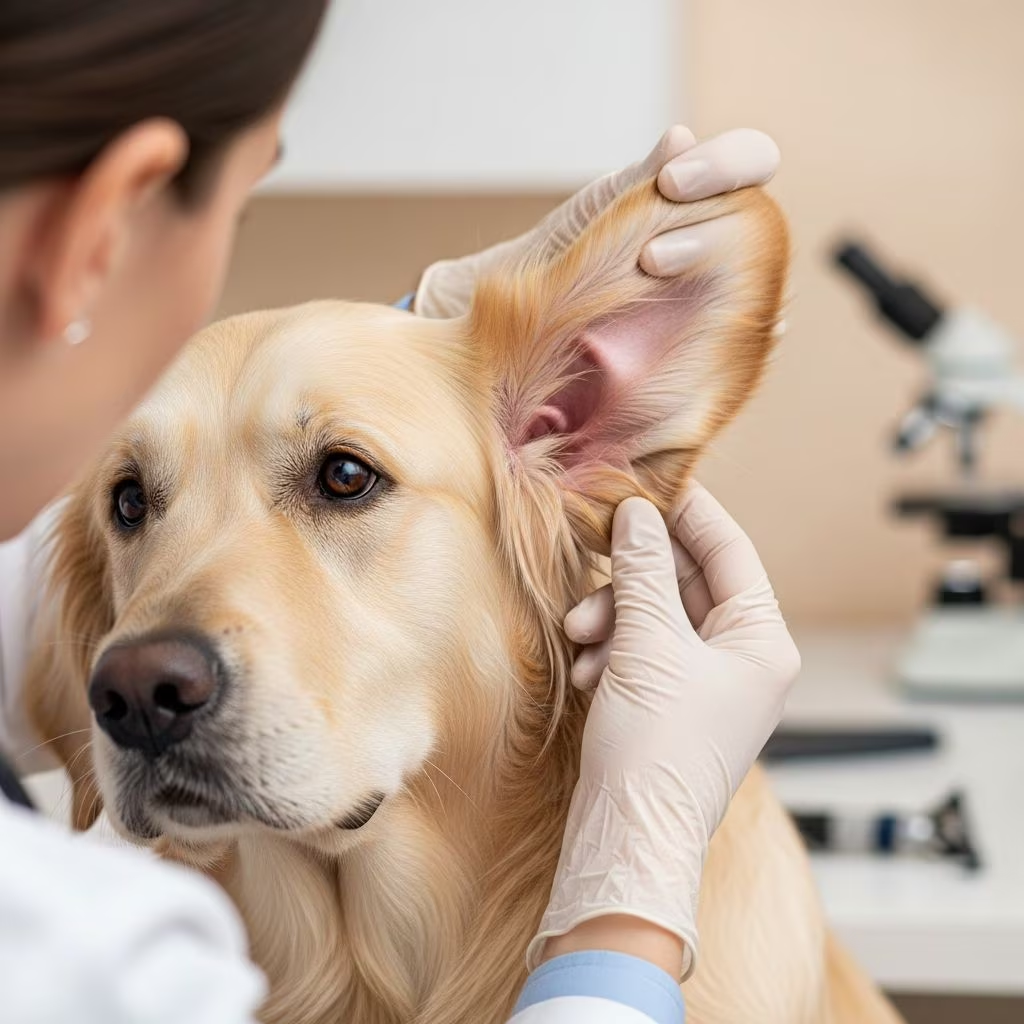
Glue ear, clinically termed primary secretory otitis media (PSOM), is a condition where thick, viscous mucus accumulates in a dog’s middle ear, potentially leading to discomfort, hearing impairment, and balance disturbances. This non-infectious disorder primarily affects certain breeds and requires prompt veterinary attention to prevent complications.
Understanding the Anatomy of a Dog’s Ear
A dog’s ear consists of three parts: the outer ear (pinna and canal), the middle ear (containing the eardrum and small bones), and the inner ear (responsible for balance and hearing). The Eustachian tube connects the middle ear to the throat, aiding in pressure equalization and drainage. In glue ear, dysfunction here allows mucus to thicken into a plug, blocking normal function.
This buildup occurs behind the eardrum, distinguishing it from outer ear infections like otitis externa. Unlike bacterial otitis media, PSOM stems from overproduction or poor drainage of sterile mucus, making it unique in canine ear pathology.
Common Symptoms to Watch For
Dogs with glue ear often exhibit subtle signs that worsen over time. Early detection hinges on recognizing changes in behavior and physical cues.
- Head shaking or tilting: Persistent tilting toward the affected side indicates pressure or fluid imbalance.
- Hearing loss: Gradual deafness, noticeable when the dog ignores commands or startles easily.
- Balance issues: Ataxia, circling, or reluctance to move due to vestibular disruption.
- Ear discharge or odor: Though less common in pure PSOM, secondary infections may cause yellow-brown exudate and foul smells.
- Pawing or rubbing: Discomfort prompts self-trauma, leading to redness or scabs.
In advanced cases, symptoms mimic neurological conditions like syringomyelia, emphasizing the need for professional evaluation.
Breeds at Higher Risk
Certain breeds, particularly those with short skulls (brachycephalic), face elevated risks due to Eustachian tube anatomy. Cavaliers, for instance, show high prevalence, with studies noting plugs in both ears frequently.
| Breed | Risk Factors | Prevalence Notes |
|---|---|---|
| Cavalier King Charles Spaniel | Short muzzle, Eustachian tube flaws | Common; often bilateral |
| Bulldog | Brachycephalic structure | Increased mucus production |
| Pug | Narrow ear canals | Drainage impairment |
| Other small breeds | Genetic predisposition | Variable; monitor closely |
Age plays a role too, with middle-aged dogs more commonly affected, though any age can develop it.
Root Causes and Predisposing Factors
The exact etiology remains unclear, but experts point to Eustachian tube malfunction. This tube may fail to drain mucus adequately or produce excess secretions, forming the signature plug.
- Anatomical issues: Narrow or dysfunctional tubes in predisposed breeds.
- Secondary to outer infections: Chronic otitis externa can progress to middle ear involvement.
- Allergies or inflammation: May trigger mucus hypersecretion without bacteria.
Unlike infectious otitis media, PSOM lacks pathogens, confirmed via cytology. Environmental factors like poor air quality or diet rarely contribute directly.
How Veterinarians Diagnose Glue Ear
Diagnosis starts with a thorough history and otoscopic exam. Video otoscopy reveals a bulging, opaque eardrum indicative of fluid.
- Physical exam: Check for head tilt, discharge, and pain response.
- Otoscopy: Visualize middle ear fluid; may require sedation for deep views.
- Imaging: CT or radiographs confirm bulla effusion and rule out tumors.
- Myringotomy: Diagnostic and therapeutic; samples test for infection.
Distinguishing PSOM from otitis media with effusion or neoplasia is crucial for tailored care.
Treatment Options: From Medical to Surgical
Treatment escalates based on severity. Mild cases may respond to conservative measures, while stubborn plugs demand intervention.
Medical Management
Initial therapy includes mucolytics to thin secretions and corticosteroids to reduce inflammation. Antibiotics address secondary bacteria.
- Topical otic solutions with steroids (e.g., mometasone) and antibiotics (e.g., enrofloxacin).
- Oral meds like prednisone for swelling.
- Ear cleaning to remove debris, avoiding irritants like vinegar.
Minimally Invasive Procedures
Myringotomy involves puncturing the eardrum under anesthesia to aspirate the plug and flush the bulla. This restores drainage effectively.
Ventral bulla osteotomy accesses the middle ear via the neck, ideal for recurrent cases, minimizing ear trauma.
Surgical Interventions for Chronic Cases
Total ear canal ablation (TECA) or bulla osteotomy suits end-stage disease with bone involvement.
Post-procedure care includes e-collars to prevent self-trauma and follow-up otoscopy.
Potential Complications if Untreated
Neglect risks permanent hearing loss, facial nerve paralysis, or Horner’s syndrome (drooping eyelid, miosis).
- Neurological deficits: Nystagmus, ataxia from inner ear spread.
- Eye issues: Neurogenic dry eye (KCS) from nerve irritation.
- Chronic pain: Osteomyelitis or cholesteatoma formation.
Early intervention yields excellent prognosis, with many dogs regaining full function.
Preventive Strategies for Ear Health
While genetics limit prevention, proactive steps reduce risks.
- Dry ears after swimming or baths to prevent moisture buildup.
- Regular vet check-ups for at-risk breeds.
- Manage allergies with hypoallergenic diets.
- Avoid plucking ear hair or using powders, which irritate canals.
Monitor for subtle signs like reduced response to sounds, ensuring timely care.
Home Care and Monitoring After Treatment
Post-treatment, administer meds as prescribed, typically 4-8 weeks for resolution.
- Clean ears gently with vet-approved solutions.
- Watch for recurrence: head shaking or tilt signals repeat myringotomy need.
- Track hearing via play response or clap tests.
Recurrence is common but manageable with vigilant follow-up.
Frequently Asked Questions (FAQs)
What is glue ear in dogs?
It’s PSOM, a sterile mucus plug in the middle ear causing pressure and hearing issues.
Can glue ear resolve without treatment?
Rarely; medications may thin mucus in mild cases, but most need procedures.
Is glue ear painful for dogs?
Yes, it causes discomfort, head pressure, and potential balance upset.
How much does myringotomy cost?
Varies by clinic; expect $500-$2000 including anesthesia and meds (consult your vet).
Can all dogs get glue ear?
Primarily predisposed breeds like Cavaliers, but any dog can develop it.
Long-Term Outlook and Prognosis
With appropriate care, most dogs experience significant improvement. Hearing may partially recover, and balance stabilizes post-drainage. Annual ear exams prevent relapses in high-risk pets.
References
- Otitis Media in Dogs (Middle Ear Infection) – Symptoms & Treatment — Animal Eye Guys. 2024-06-30. https://www.animaleyeguys.com/site/blog/2024/06/30/otitis-media-dogs
- Canine Ear Disorders — ACKCS Charitable Trust. N/A. https://ackcscharitabletrust.org/canine-ear-disorders/
- Dog Ear Discharge: Causes and Treatments — WebMD. N/A. https://www.webmd.com/pets/dogs/dog-discharge-ear
- 8 Signs of Ear Infections in Dogs: What To Look For — PetMD. N/A. https://www.petmd.com/dog/general-health/signs-of-dog-ear-infection
- Ear Infections and Otitis Externa in Dogs — Merck Veterinary Manual. N/A. https://www.merckvetmanual.com/dog-owners/ear-disorders-of-dogs/ear-infections-and-otitis-externa-in-dogs
- Inner Ear Infection (Otitis Interna) in Dogs — VCA Animal Hospitals. N/A. https://vcahospitals.com/know-your-pet/inner-ear-infection-otitis-interna-in-dogs
- Dog Ear Infections — American Kennel Club. N/A. https://www.akc.org/expert-advice/health/dog-ear-infections/
- Primary Secretory Otitis Media (PSOM) — MSPCA-Angell. N/A. https://www.mspca.org/angell_services/primary-secretory-otitis-media-psom/



