

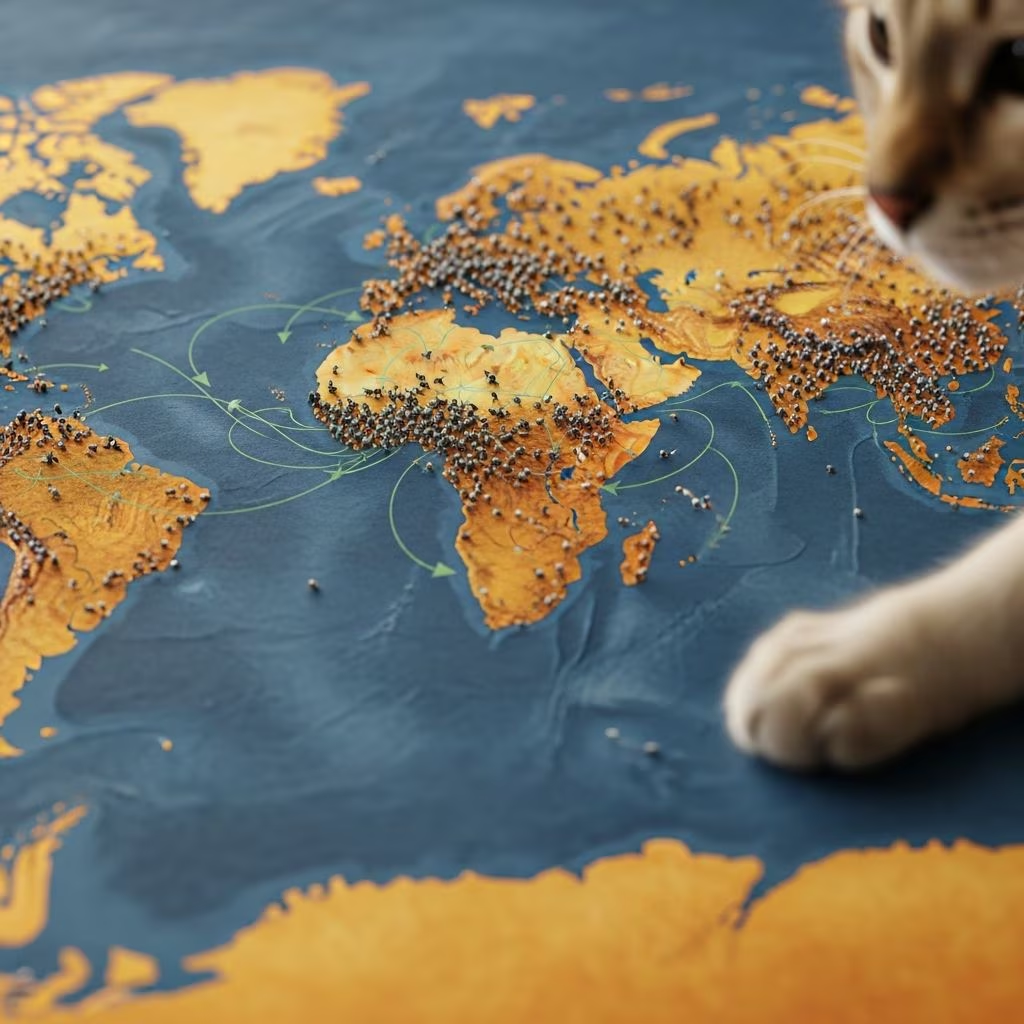
The world’s feline population represents a fascinating demographic that spans continents, habitats, and living situations. From beloved household companions to free-roaming strays navigating urban landscapes, cats have established themselves as one of the most widespread carnivorous mammals on the planet. Understanding the scope of this global population requires examining both the scale of feline numbers and the diverse circumstances in which these animals live.
The Total Count: How Many Cats Exist Globally?
Current estimates suggest that approximately 600 million cats inhabit Earth today. This staggering figure encompasses all categories of felines—from pampered indoor pets enjoying comfortable homes to street cats navigating urban environments and feral colonies thriving in remote areas. The sheer magnitude of this population underscores the significant role cats play in ecosystems worldwide and their importance to human societies.
Breaking down this global total reveals a striking disparity in living conditions. Of the 600 million cats worldwide, approximately 220 million are domestic house cats living with human guardians. This means that roughly 37% of the global feline population enjoys formal ownership and regular human care. The remaining 380 million cats exist as strays or feral animals, highlighting a substantial proportion of the world’s cats living without permanent homes or human support.
Continental Breakdown: Where Cats Call Home
The distribution of cats across the globe is far from uniform, with certain regions hosting significantly larger populations than others. Asia dominates the global cat population landscape by a considerable margin.
Asia’s Dominance in Feline Population
Asia is home to approximately 400 million of the world’s 600 million cats, representing roughly two-thirds of the global feline population. This concentration reflects both the continent’s enormous human population and widespread cat adoption across Asian societies.
Within Asia, China stands out as a particular hub for cat populations. The country hosts approximately 58 million house cats, making it one of the world’s leading nations in terms of pet cat ownership. This figure represents a significant shift in Chinese culture, where cat ownership has grown substantially in recent decades as urban development and increasing disposable income have made pet keeping more accessible to middle-class families.
North American Cat Distribution
The United States, despite having a much smaller human population than China, rivals that nation in terms of house cat ownership. America is home to approximately 74-75 million pet cats, making it one of the world’s leading nations in feline companionship. This high rate of cat ownership reflects cultural attitudes toward pets in American society, where cats have become integral family members for millions of households.
Interestingly, American cat ownership patterns differ notably from other developed nations. The United States tops the global charts for cat ownership per capita, despite China hosting more total house cats. This distinction illustrates how cultural preferences, economic prosperity, and housing patterns influence pet adoption rates differently across societies.
Other Notable Regions
The United Kingdom maintains a substantial house cat population of approximately 10.9 million cats, reflecting strong pet ownership traditions throughout the British Isles. Japan, another developed nation with significant cat enthusiasm, is home to approximately 7.25 million cats, including the famous feline populations on cat-themed islands that have become tourist attractions.
Russia contributes approximately 17.8 million cats to the global population, while also hosting over 12.5 million dogs. These Eastern European figures demonstrate the widespread adoption of pet cats across diverse geographic and cultural contexts.
The Pet Versus Stray Dynamic
Understanding the global cat population requires distinguishing between different living situations and ownership statuses. This categorization reveals important truths about feline welfare and societal approaches to animal care.
| Cat Category | Estimated Population | Percentage of Total | Primary Characteristics |
|---|---|---|---|
| Owned House Cats | 220 million | 37% | Live with human guardians, receive regular care and veterinary attention |
| Stray and Feral Cats | 380 million | 63% | Live without permanent human guardianship, often struggle for survival |
Challenges in the United States Context
The United States presents a particularly instructive case study of feline population dynamics in a developed nation. While America boasts 74-75 million pet cats enjoying comfortable home environments, the nation simultaneously faces a significant homeless cat crisis.
Estimates suggest that between 30 and 40 million cats live without permanent homes in the United States. This figure—nearly equivalent to the number of pet cats—illustrates the scale of cat overpopulation in American society. Notably, only 10% of the homeless animal population enters shelters or rescue organizations, meaning the vast majority of stray and feral cats remain invisible to formal animal welfare systems.
The breeding capacity of unspayed females contributes significantly to this problem. A single unspayed female cat and her offspring can theoretically produce more than 350,000 kittens within just seven years. While 80-90% of owned pet cats in the United States are spayed or neutered, this comprehensive approach to population management does not extend to stray and feral populations, where the majority of cats remain unaltered.
Shelter Systems and Adoption Realities
The relationship between cat populations and shelter systems reveals critical challenges in animal welfare infrastructure.
Shelter Intake and Capacity
Approximately 6.5 million cats and dogs combined enter American animal shelters annually, with cats representing a slightly larger portion at 3.3 million animals. This consistent influx of animals overwhelms many facilities, creating difficult situations regarding resource allocation and animal outcomes.
The numbers have grown substantially in recent years. Nearly one million more pets occupy shelters and rescues compared to 2021, indicating an accelerating crisis in animal homelessness. This trend suggests that current adoption rates and spay-neuter programs are insufficient to manage feline population growth.
Adoption Success and Limitations
Despite widespread adoption efforts, shelter outcomes remain challenging. Approximately 2.6 million cats are adopted from American shelters annually, representing a positive outcome for a significant portion of shelter animals. However, this adoption rate cannot keep pace with intake numbers, creating an ongoing deficit.
Additionally, approximately 40% of pet cats in America are adopted from shelters, though this percentage has fluctuated over time. In 2018, only 31% of cats adopted came from shelters, suggesting variability in adoption source preferences among cat owners.
Euthanasia and Its Consequences
The mismatch between shelter intake and adoption capacity creates tragic outcomes. In 2023, approximately 330,000 cats were euthanized in American shelters due to lack of space and resources. Alarmingly, approximately 80% of animals euthanized in shelters were otherwise healthy, indicating that death resulted from capacity constraints rather than medical necessity.
This situation represents a moral and practical challenge for animal welfare organizations. No-kill shelters and private rescue organizations have increased in recent years, providing alternatives to euthanasia. However, the scale of the problem far exceeds current alternative capacity.
Environmental and Ecological Implications
The global cat population’s ecological impact extends far beyond simple population statistics. Cats significantly influence wildlife populations and ecosystem dynamics worldwide.
Research indicates that free-roaming domestic cats kill between 1.3 and 4 billion birds annually in the United States alone, accounting for both feral cats and pet cats allowed outdoor access. Globally, estimates suggest cats kill 20.7 billion small animals and up to 3.7 billion birds per year. These figures place cats among the most significant threats to wildlife populations in many regions.
Beyond direct predation, domestic cats have contributed to at least 63 vertebrate extinctions and pose major hazards to threatened species worldwide. The ecological consequences of maintaining such vast cat populations without proper management represent one of modern conservation’s underappreciated challenges.
Regional Variations in Cat Ownership Culture
Cultural attitudes toward cats vary significantly across regions, influencing both pet ownership rates and approaches to stray populations.
Japan’s Cat Enthusiasm
Japan represents a fascinating case of extreme cat cultural prominence. The nation has become famous for cat-themed attractions, including islands where feline populations vastly outnumber human residents. The Japanese island of Aoshima, for example, hosts fewer than two dozen people alongside more than 120 cats, earning it the nickname “Cat Island”. This phenomenon reflects Japan’s deep cultural affection for cats, expressed through literature, art, and tourism.
Western Pet Ownership Patterns
In Western developed nations, cats rank as the second most popular pet species after dogs. The United States and United Kingdom maintain particularly high rates of cat ownership relative to their human populations. This Western preference for cats reflects factors including apartment living compatibility, lower space requirements compared to dogs, and shifting cultural attitudes toward independent pet companions.
Frequently Asked Questions About Global Cat Populations
What percentage of the world’s cats are owned pets?
Approximately 37% of the world’s 600 million cats are owned house cats living with human guardians, while 63% exist as stray or feral animals without permanent homes.
Which country has the most pet cats?
China hosts the largest absolute number of pet cats at approximately 58 million, though the United States has higher per-capita cat ownership at 74-75 million cats in a much smaller human population.
How do stray cat populations affect urban ecosystems?
Stray and feral cats significantly impact urban wildlife through predation, disease transmission, and territorial behavior, affecting bird populations, small mammals, and reptiles.
What solutions address cat overpopulation?
Spay-neuter programs, adoption rate increases, trap-neuter-return initiatives, and improved shelter capacity all contribute to managing cat overpopulation challenges.
Looking Forward: Managing Global Feline Populations
The global cat population of 600 million represents both a remarkable human-animal relationship and a significant management challenge. Addressing the needs of owned cats while simultaneously managing stray and feral populations requires coordinated efforts across multiple sectors including animal welfare, urban planning, conservation, and public health.
Future solutions must balance animal welfare considerations with ecological concerns, recognizing that unmanaged cat populations pose genuine threats to wildlife while owned cats provide valuable companionship to hundreds of millions of people. Understanding current population distributions, regional variations, and underlying causes of overpopulation represents the necessary first step toward sustainable approaches to global feline population management.
References
- Facts You Need to Know About Domestic Cats — International Fund for Animal Welfare (IFAW). 2024. https://www.ifaw.org/animals/cats
- 14 Cat Overpopulation Statistics (2026 Update) — Catster. 2026. https://www.catster.com/statistics/cat-overpopulation-statistics/
- Cat Population Management — International Cat Care. 2024. https://icatcare.org/cat-friendly-solutions-for-unowned-cats/cat-population-management
- Cat Statistics 2026 Newest Available Data + Infographic — Cats.com. 2026. https://cats.com/cat-statistics
- Cats Are Fueling a Global Eco-Crisis, Pushing Birds and Other Species to Extinction — Nation of Change. 2025-04-08. https://www.nationofchange.org/2025/04/08/cats-are-fueling-a-global-eco-crisis-pushing-birds-and-other-species-to-extinction/
- Smithsonian Conservation Biology Institute and U.S. Fish and Wildlife Service Study on Cat Predation — Loss, S. et al. 2013. https://www.nature.com/articles/ncomms2380



