

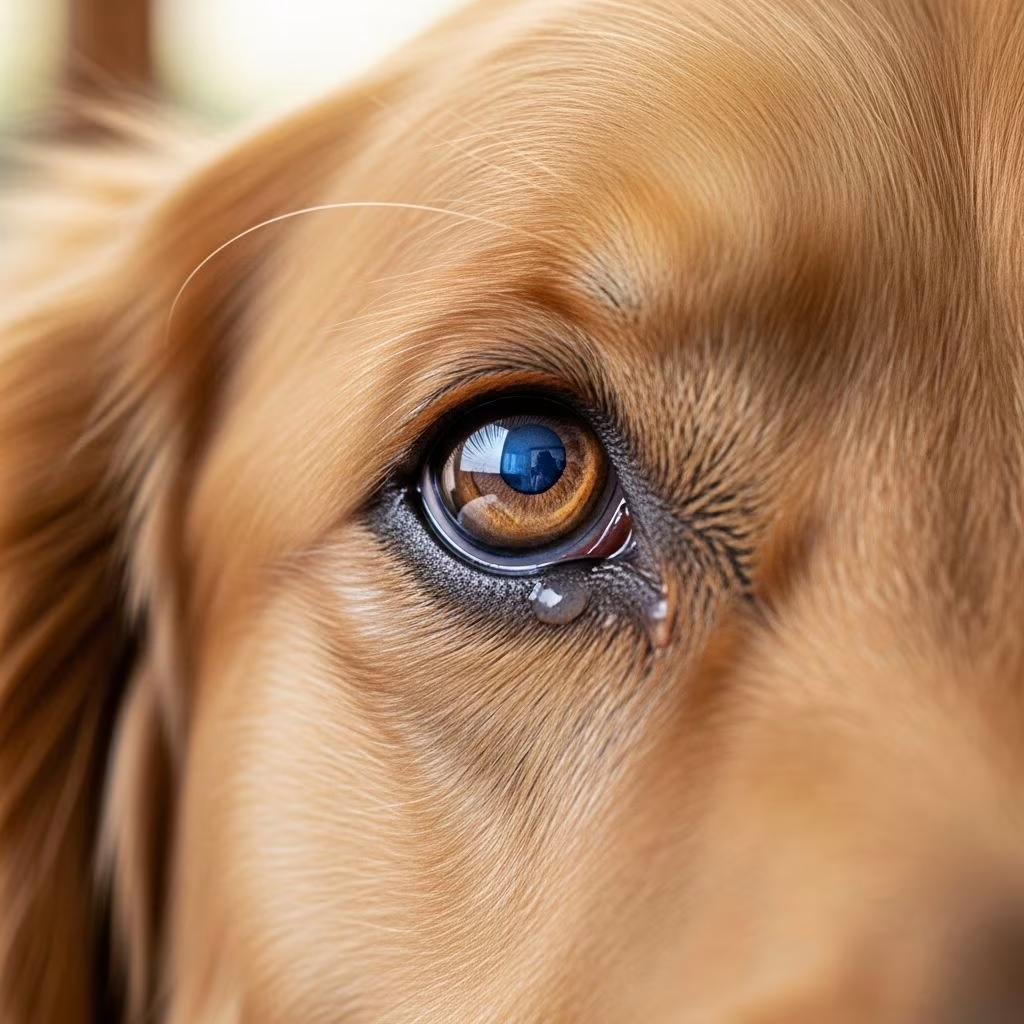
Glaucoma represents a serious ocular emergency in dogs, characterized by elevated pressure within the eye that can rapidly lead to irreversible vision loss and significant discomfort. This condition arises from impaired drainage of aqueous humor, the fluid nourishing the eye, resulting in damage to the retina and optic nerve. Prompt recognition and intervention are essential to mitigate pain and potentially salvage sight.
The Fundamentals of Canine Glaucoma
The eye maintains internal pressure through a delicate balance of fluid production and outflow. In glaucoma, this equilibrium disrupts, causing intraocular pressure (IOP) to rise dangerously, often exceeding 40-50 mmHg, necessitating immediate care. Dogs experience this as acute or chronic, with acute forms presenting sudden, severe symptoms and chronic ones developing insidiously.
Primary vs. Secondary Glaucoma: Key Distinctions
Understanding the type of glaucoma is crucial for tailored management. Primary glaucoma stems from genetic anomalies, particularly goniodysgenesis, where drainage angles are malformed from birth. Certain breeds like Cocker Spaniels, Basset Hounds, and Beagles face heightened risks due to inherited narrow ducts.
Secondary glaucoma, conversely, emerges from underlying issues obstructing drainage. Common triggers include:
- Cataracts: Leaking lens proteins incite inflammation, blocking outflow paths.
- Trauma: Injuries provoke swelling or hemorrhage, disrupting fluid dynamics.
- Tumors: Intraocular masses impede circulation.
- Lens Luxation: Displaced lenses physically hinder drainage.
- Uveitis: Inflammatory responses scar drainage tissues.
- Other factors: Infections, hyphema (blood in the eye), or post-surgical complications.
While primary affects predisposed breeds bilaterally over time, secondary can strike any dog unilaterally or bilaterally depending on the inciting condition.
Recognizing the Warning Signs
Glaucoma symptoms vary by acuity but share hallmarks of distress and ocular change. Owners often overlook subtle early cues, mistaking them for minor irritations until vision falters.
| Symptom | Description | Acute vs. Chronic Indicator |
|---|---|---|
| Eye Redness | Ciliary flush or episcleral injection from vascular congestion | Both, prominent in acute |
| Corneal Cloudiness | Edema causes hazy, bluish tint | Both |
| Bulging Globe | Scleral show as eye protrudes | Acute |
| Dilated Pupil | Non-responsive to light due to nerve damage | Both |
| Pain Behaviors | Pawing, squinting, rubbing, lethargy, appetite loss | Both, dogs mask chronic pain |
| Vision Impairment | Bumping objects, hesitation in low light | Progressive |
These signs demand urgent veterinary evaluation, as pressures above normal (10-25 mmHg) can destroy vision within hours.
Diagnostic Approaches for Accurate Assessment
Veterinarians employ tonometry as the cornerstone, using tools like TonoVet to measure IOP precisely. Normal readings fall between 10-25 mmHg; elevations signal glaucoma. Gonioscopy evaluates drainage angles, vital for primary cases, while ophthalmoscopy inspects the optic nerve for cupping indicative of chronic pressure.
Additional diagnostics include:
- Schirmer Tear Test: Checks tear production to rule out dry eye contributions.
- Fluorescein Staining: Detects ulcers from rubbing.
- Ultrasound: Visualizes posterior structures if cornea opacity hinders exams, identifying tumors or detachments.
- Fungal Cultures: Essential in endemic regions for systemic infections like blastomycosis.
Referral to a veterinary ophthalmologist is standard for comprehensive imaging and specialized tests.
Emergency and Initial Treatment Strategies
Acute glaucoma constitutes a veterinary crisis; hospitalization facilitates rapid IOP reduction. Prostaglandin analogs like latanoprost swiftly enhance outflow, often normalizing pressure within hours. Adjuncts include carbonic anhydrase inhibitors (dorzolamide), beta-blockers (timolol), and osmotic agents like mannitol intravenously for refractory cases.
Pain control is paramount, employing analgesics to alleviate suffering. For secondary glaucoma, addressing the root cause—such as cataract surgery or anti-inflammatories for uveitis—is integral.
Long-Term Medical Management
Stabilization transitions to outpatient regimens, typically multiple daily eye drops combining pressure-lowering and anti-inflammatory agents. Compliance challenges owners, as regimens may involve 3-4 applications per day. Frequent rechecks monitor efficacy, adjusting protocols as resistance develops—a common progression.
Prophylaxis for the fellow eye in primary cases involves prophylactic drops to delay onset, though not preventive.
Surgical Interventions for Advanced Cases
When medications falter, surgery offers alternatives categorized by vision status. Vision-preserving options include:
- Laser Cyclophotocoagulation: Targets ciliary body to curb fluid production.
- Anterior Shunts: Implant devices to facilitate drainage.
For blind, painful eyes, enucleation (eye removal) or intrascleral prosthesis implantation ensures comfort with high success rates. Cyclocryotherapy ablates fluid producers chemically. Outcomes vary; vision salvage succeeds in under 30% long-term, prioritizing comfort.
High-Risk Breeds and Genetic Considerations
Breeds with shallow anterior chambers predispose to primary glaucoma: American Cocker Spaniels, English Cocker Spaniels, Basset Hounds, Chow Chows, and Siberian Huskies top lists. Gonioscopy screening in at-risk lineages aids breeding decisions, though no universal protocols exist.
FAQs on Canine Glaucoma
Can my dog live a normal life with glaucoma?
Yes, many adapt remarkably post-vision loss, relying on other senses. Pain-free management sustains quality of life.
How quickly does glaucoma progress in dogs?
Acute forms blind within 24-48 hours untreated; chronic advances over months.
Is glaucoma preventable?
Not fully, but early screening in predisposed breeds and trauma avoidance help.
What is the cost of glaucoma treatment?
Initial emergencies range $500-2000; surgeries $2000-5000; lifelong meds add ongoing expense.
Does secondary glaucoma resolve if the cause is treated?
Often yes, if addressed promptly, unlike primary’s progressive nature.
Prognosis and Supportive Care
Prognosis hinges on early intervention: acute cases caught pre-blindness retain vision longer. Most eventually lose sight, but 90% achieve comfort with intervention. Support involves environmental adaptations—clear paths, scent cues—and monitoring the contralateral eye biannually.
Holistic care encompasses nutrition for ocular health, omega-3 supplements potentially aiding inflammation, though evidence is anecdotal. Regular wellness exams catch precursors early.
References
- Glaucoma in Dogs: Causes, Symptoms and Treatment Options — CareCredit. 2023. https://www.carecredit.com/well-u/pet-care/dog-glaucoma/
- Glaucoma in Dogs: Symptoms, Causes, and Treatments — American Kennel Club. 2023-10-12. https://www.akc.org/expert-advice/health/dog-glaucoma/
- Glaucoma | Cornell University College of Veterinary Medicine — Cornell University. 2024. https://www.vet.cornell.edu/departments-centers-and-institutes/riney-canine-health-center/canine-health-topics/glaucoma
- Glaucoma in dogs — PDSA. 2024. https://www.pdsa.org.uk/pet-help-and-advice/pet-health-hub/conditions/glaucoma-in-dogs
- Glaucoma in Dogs — Small Door Veterinary. 2024. https://www.smalldoorvet.com/learning-center/medical/glaucoma-in-dogs
- Glaucoma in dogs: Symptoms, causes, treatment and costs — All About Vision. 2023. https://www.allaboutvision.com/eye-care/pets-animals/glaucoma-in-dogs/
- Glaucoma in Dogs — VCA Animal Hospitals. 2024. https://vcahospitals.com/know-your-pet/glaucoma-in-dogs



