

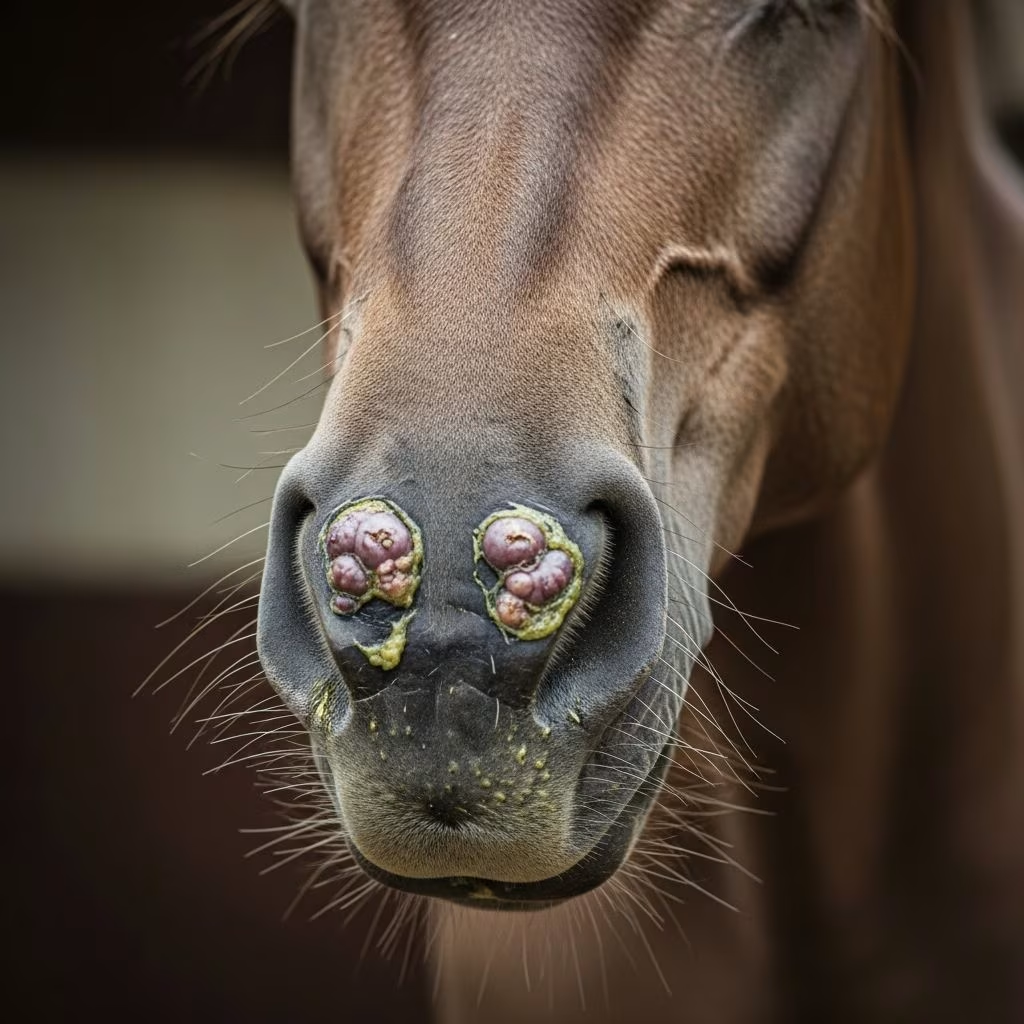
Glanders, caused by the bacterium Burkholderia mallei, represents one of the most severe infectious diseases impacting horses, donkeys, and mules. This highly contagious condition manifests in acute or chronic forms, leading to devastating respiratory, skin, and systemic effects. Horses often endure prolonged suffering in chronic cases, while acute infections can kill rapidly. Global eradication efforts have succeeded in regions like North America, but risks persist through trade and travel.
The Pathogen Behind Glanders
Burkholderia mallei is a gram-negative, non-motile bacterium that thrives as an obligate parasite in equids. Unlike related species, it cannot survive long outside a host, relying on direct contact for transmission. Its resilience to environmental stresses and antibiotics complicates control. The bacterium invades mucous membranes, lymphatics, and lungs, forming abscesses and ulcers.
Historically, glanders plagued armies and trade routes, earning it a reputation as a biological weapon candidate due to its zoonotic potential. Today, it endangers equine populations in Asia, Africa, and the Middle East, where surveillance lags.
Routes of Transmission and Risk Factors
Infection spreads primarily through direct contact with infected discharges from nasal cavities, skin ulcers, or pus from lymph nodes. Contaminated feed, water, tack, and stables facilitate indirect spread. Aerosol transmission occurs in close quarters, while venereal routes affect breeding stock.
Horses incubate the bacteria for 2-21 days, sometimes longer in chronic carriers. Asymptomatic shedders pose hidden dangers, disseminating B. mallei unknowingly. Mules and donkeys suffer acute forms more often, while horses favor chronic progression.
- Direct contact: Nosing infected animals or shared equipment.
- Indirect contact: Fomites like buckets or brushes harboring bacteria.
- Ingestion or inhalation: Contaminated hay or respiratory droplets.
Overcrowded stables, poor hygiene, and international imports heighten risks. Zoonotic transmission to humans via cuts or inhalation underscores biosecurity needs.
Recognizing Clinical Manifestations
Glanders presents in three overlapping forms: nasal, pulmonary, and cutaneous (farcy). Systemic signs like fever up to 106°F (41°C), lethargy, and anorexia accompany all types. Chronic cases involve weight loss, intermittent fevers, and nasal bleeding.
Nasal Involvement
The nasal form targets the respiratory mucosa, forming star-shaped ulcers on the septum and turbinates. Horses discharge thick, yellow-green pus, often blood-tinged, leading to dyspnea and cough. Acute episodes progress swiftly to sepsis.
Pulmonary Complications
Lung nodules evolve into abscesses, causing bronchopneumonia. Affected equids gasp, cough persistently, and show exercise intolerance. Radiographs reveal consolidation and miliary patterns.
Skin Lesions: Farcy Explained
Farcy features firm nodules along lymphatics, especially hind limbs, thighs, and flanks. These rupture into crater-like ulcers oozing sticky pus, with slow-healing tracts. Limb edema and lameness follow joint invasion.
| Form | Key Signs | Progression |
|---|---|---|
| Nasal | Ulcers, purulent discharge, breathing difficulty | Acute, rapid death |
| Pulmonary | Cough, nodules, pneumonia | Acute to subacute |
| Farcy (Cutaneous) | Lymphatic nodules, ulcers, edema | Chronic, years-long |
Diagnostic Approaches
Suspicion arises from clinical signs and history. Confirmation demands lab tests due to mimics like strangles or melioidosis. The mallein test injects allergen intradermally, eliciting swelling in sensitized horses within 24-48 hours.
Culture from swabs grows B. mallei on selective media. Serology detects antibodies via complement fixation or ELISA. PCR offers rapid molecular identification. Necropsy reveals characteristic abscesses.
- Mallein test: Hypersensitivity reaction at injection site.
- Bacterial culture: Gold standard, requires biosafety level 3 labs.
- Serology/PCR: Supports field diagnosis.
Report suspicions to authorities immediately; false negatives occur in early infection.
Treatment Challenges and Outcomes
No reliable cure exists for equines. Antibiotics like sulfadiazine show limited human efficacy but fail in horses due to intracellular persistence and resistance. Prolonged therapy risks carriers.
Euthanasia is mandated in non-endemic areas to halt spread. Acute cases kill in days; chronic ones debilitate over years before fatality. Recovered horses lack immunity and may relapse.
Prevention and Control Strategies
Eradication hinges on test-and-slaughter, quarantine, and disinfection. No vaccine is available commercially. Import testing and movement controls protect clean zones.
Biosecurity includes isolating newcomers, disinfecting with bleach or phenols, and rodent control. Traceability via microchips aids outbreaks.
- Screen imports with mallein/serology.
- Maintain hygiene in barns and arenas.
- Educate on zoonotic risks—wear PPE near suspects.
Zoonotic Dimensions and Public Health
B. mallei infects humans via inhalation, cuts, or ingestion, causing glandular fever, pneumonia, or sepsis. Lab workers and veterinarians face highest risks. Human treatment succeeds with sulfonamides and trimethoprim.
WHO classifies glanders as a potential bioterror agent, prompting vigilant surveillance.
Global Status and Economic Impact
Eradicated from the US since 1945, Europe, and Australia, glanders persists in Brazil, India, and Pakistan. Outbreaks disrupt trade, costing millions in quarantines and culls.
WOAH mandates reporting, enforcing international standards.
Frequently Asked Questions
What causes glanders in horses?
The bacterium Burkholderia mallei causes this disease, spreading via infected secretions.
Is glanders treatable in equines?
No effective treatment exists; euthanasia prevents spread.
How do you test for glanders?
Mallein skin test, culture, and PCR confirm infection.
Can humans catch glanders from horses?
Yes, it’s zoonotic, especially through direct contact.
Is there a vaccine for glanders?
No approved vaccine; prevention relies on hygiene and testing.
Key Takeaways for Horse Owners
Vigilance saves herds. Monitor for fever, discharges, and nodules. Prompt reporting averts disasters. In free zones, robust protocols sustain health.
References
- Glanders | School of Veterinary Medicine — University of California, Davis. 2023. https://ceh.vetmed.ucdavis.edu/health-topics/glanders
- Glanders (Farcy) in Horses: Transmission, Symptoms, & Prevention — Mad Barn. 2024. https://madbarn.com/glanders-in-horses/
- Glanders – WOAH — World Organisation for Animal Health. 2024-02-01. https://www.woah.org/en/disease/glanders/
- Glanders (Farcy) in Horses – MSD Veterinary Manual — MSD Veterinary Manual. 2025. https://www.msdvetmanual.com/horse-owners/infectious-diseases-of-horses/glanders-farcy-in-horses
- Glanders: An ancient and emergent disease with no vaccine — PMC (NCBI). 2024. https://pmc.ncbi.nlm.nih.gov/articles/PMC12157308/
- Disease Factsheet Glanders — Equine Disease Communication Center. 2023. https://www.equinediseasecc.org/Content/ContentDocs/DiseaseFactsheet_Glanders_Final.pdf



