

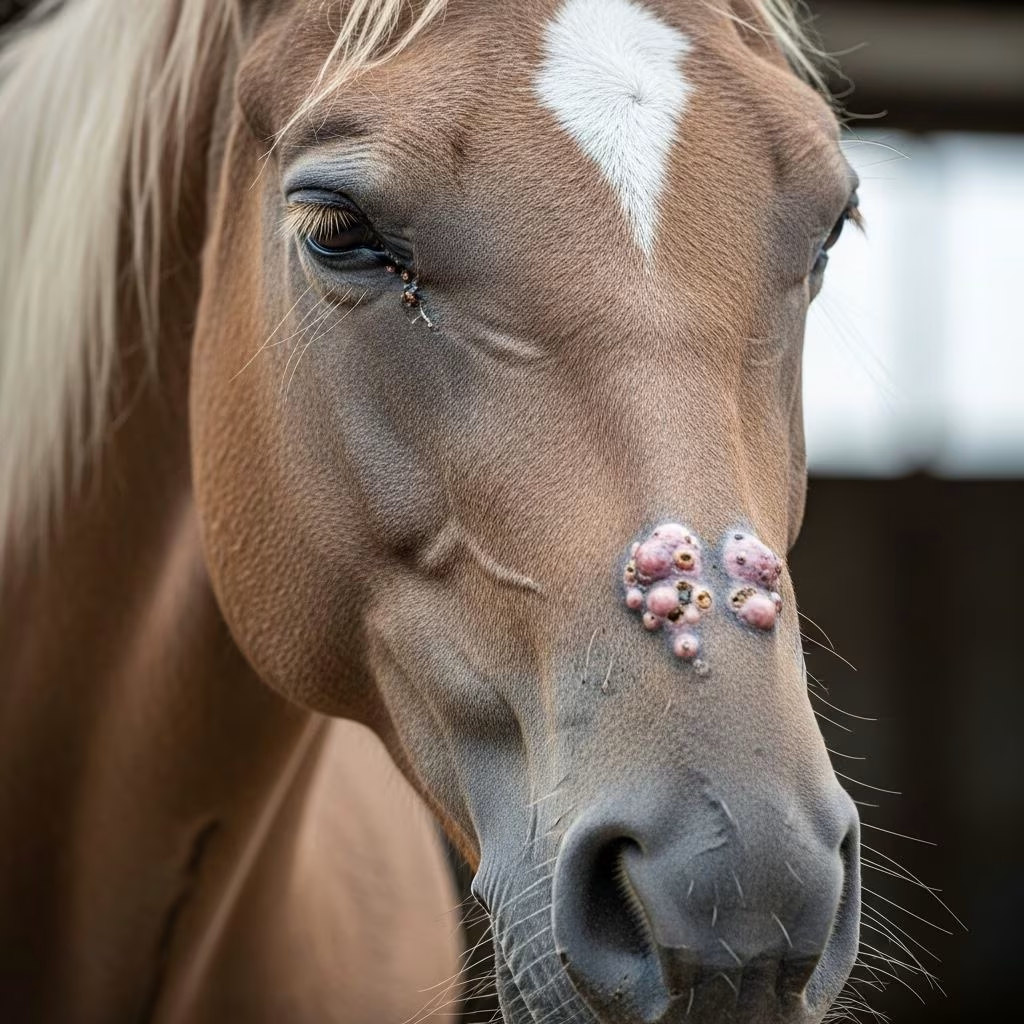
Glanders represents one of the most severe infectious diseases impacting horses, mules, donkeys, and other equids. Caused by the bacterium Burkholderia mallei, this zoonotic pathogen leads to acute, chronic, or latent infections that are nearly always fatal without intervention. Once widespread globally, glanders has been eradicated in many regions, including the United States, but persists in parts of Asia, Africa, and South America, posing risks to animal and human health alike.
The Pathogen Behind the Disease
Burkholderia mallei is a non-motile, aerobic gram-negative bacterium closely related to Burkholderia pseudomallei, the agent of melioidosis. Unlike its relative, B. mallei does not survive long in the environment outside a host, relying heavily on direct transmission between animals or to humans. This host-adapted pathogen thrives in the respiratory tract, skin, and lymphatic systems of equids, forming abscesses and ulcers that spread the infection via pus-laden discharges.
The bacterium’s resilience to antibiotics complicates management. While some strains respond to prolonged courses of drugs like doxycycline or trimethoprim-sulfadiazine, treatment failures are common, and therapy is generally discouraged to prevent chronic carriers that perpetuate outbreaks. Horses, as primary reservoirs, can harbor the bacteria latently for years, shedding sporadically and evading detection.
Clinical Manifestations Across Equid Species
Glanders presents in multiple forms—nasal, pulmonary, cutaneous (farcy), and generalized—often overlapping in affected animals. The disease’s progression varies by species, with donkeys and mules prone to rapid acute cases, while horses typically endure chronic debilitation.
Acute Glanders: Rapid Onset and High Mortality
In its acute phase, glanders strikes swiftly after a 1-2 week incubation period. Infected equids develop septicemia, spiking fevers up to 106°F (41°C), severe depression, and rapid weight loss. Respiratory distress dominates, with thick, yellowish nasal discharge, coughing, and labored breathing signaling pulmonary involvement. Donkeys and mules succumb within days to blood poisoning or pneumonia, rarely surviving beyond weeks.
Chronic Glanders: A Lingering Debilitation
Horses more commonly experience the chronic form, characterized by intermittent fevers, persistent cough, progressive emaciation, and mucopurulent nasal discharge that may turn bloody. Joint effusions cause lameness, particularly in hind limbs, while episodic ulcerations in the nasal mucosa lead to foul-smelling exudate. Animals may rally temporarily but relapse, surviving months to years before succumbing.
Pulmonary and Nasal Forms
The pulmonary variant features lung nodules, abscesses, and bronchopneumonia, manifesting as chronic cough and dyspnea. Nasal glanders involves ulcerative nodules in the nostrils and septum, with star-shaped ulcers draining infectious pus. These sites serve as primary transmission points.
Cutaneous Glanders or Farcy
Farcy targets the skin and lymphatics, producing firm nodules along vessels, especially on legs, flanks, and abdomen. These evolve into crateriform ulcers exuding sticky, yellow pus highly contagious via fomites or direct contact. Limb edema, scrotal swelling in stallions, and lymph node enlargement compound lameness and debilitation.
In latent infections, equids appear healthy but harbor bacteria in lungs or lymph nodes, posing silent epidemic risks.
Transmission Routes and Risk Factors
Direct contact with infected discharges drives glanders spread—nasal pus, farcy ulcers, or sputum contaminate feed, water, stables, and grooming tools. Respiratory aerosols facilitate close-quarters transmission in herds. Humans contract it via inhalation, skin abrasions, or lab exposures, with veterinarians and handlers at highest risk.
Outbreaks cluster in endemic zones like the Middle East, India, and Brazil, often linked to unregulated trade. Imported equids from affected areas trigger incursions in free countries, necessitating stringent quarantines. Species susceptibility ranks horses highest, followed by mules; donkeys suffer acutely but less frequently chronically.
Diagnostic Approaches for Confirmation
Suspicion arises from classic signs, but definitive diagnosis demands lab confirmation due to overlapping symptoms with strangles or melanoma. Key methods include:
- Mallein Test: Intradermal injection of mallein (purified B. mallei protein) elicits hypersensitivity swelling, heat, and discharge within 24-48 hours at neck or eyelid sites.
- Bacterial Culture: Pus or biopsies yield B. mallei on selective media, confirmed via PCR or biochemical tests.
- Serology: Complement fixation or ELISA detects antibodies, though false negatives occur in early or latent cases.
- Molecular Tests: PCR targets unique genes for rapid, sensitive detection.
Table 1 below compares diagnostic tools:
| Method | Sensitivity | Specificity | Time to Result |
|---|---|---|---|
| Mallein Test | High in symptomatic | High | 24-48 hours |
| Culture | Moderate | Very High | Days |
| PCR | Very High | Very High | Hours |
| Serology | Variable | Moderate | Days |
Combined approaches ensure accuracy, especially in chronic carriers.
Treatment Challenges and Prognosis
No reliable cure exists; antibiotics like sulfadiazine-trimethoprim offer limited success in early stages but foster resistant carriers. Prolonged doxycycline regimens may suppress but rarely eradicate infection. Prognosis is dire: acute cases kill 95-100%, chronic ones progress fatally over time. In glanders-free nations, positives face euthanasia or export bans.
Prevention and Control Strategies
Eradication hinges on surveillance, testing, and culling. WOAH mandates 6-month quarantines for imports from endemic areas, with mallein or serologic certification. Stables require disinfection with bleach or phenols; fomites like harnesses must be destroyed.
- Regular screening in endemic regions.
- Quarantine new arrivals.
- Report suspicions to authorities immediately.
No vaccine is commercially available, though research explores subunit candidates. Biosecurity—separate housing, hygiene—curbs spread.
Global Distribution and Historical Context
Eradicated from North America (last US case 1946), Europe, and Australia via test-and-slaughter, glanders lingers in Iraq, Pakistan, UAE, Brazil, and Mongolia. Zoonotic cases underscore human risks, with recent lab-acquired infections. Climate and trade exacerbate persistence in developing regions.
Frequently Asked Questions (FAQs)
What are the first signs of glanders in horses?
Initial symptoms include fever, nasal discharge, cough, and lethargy, progressing to ulcers and lameness.
Can glanders be treated with antibiotics?
Attempts often fail due to resistance; euthanasia is standard in free countries.
Is glanders transmissible to humans?
Yes, via contact with pus or aerosols; fatal without prompt antibiotics.
How is glanders prevented on farms?
Through testing, quarantine, disinfection, and avoiding imports from endemic areas.
What is farcy in glanders?
The skin-lymphatic form with nodules and ulcers along vessels.
Key Takeaways for Equine Owners
Vigilance saves herds: monitor for unexplained fevers, discharges, or nodules. Prompt veterinary reporting prevents outbreaks. In free zones, compliance with import rules protects national status.
References
- Glanders | School of Veterinary Medicine — University of California Davis. Accessed 2026. https://ceh.vetmed.ucdavis.edu/health-topics/glanders
- Glanders – WOAH — World Organisation for Animal Health. Accessed 2026. https://www.woah.org/en/disease/glanders/
- Glanders (Farcy) in Horses – Horse Owners — Merck Veterinary Manual. Accessed 2026. https://www.merckvetmanual.com/horse-owners/infectious-diseases-of-horses/glanders-farcy-in-horses
- Glanders: An ancient and emergent disease with no … — PMC (PubMed Central). 2024. https://pmc.ncbi.nlm.nih.gov/articles/PMC12157308/
- DiseaseFactsheet_Glanders_Final.pdf — Equine Disease Communication Center. Accessed 2026. https://www.equinediseasecc.org/Content/ContentDocs/DiseaseFactsheet_Glanders_Final.pdf
- Glanders Factsheet — Center for Food Security and Public Health, Iowa State University. Accessed 2026. https://www.cfsph.iastate.edu/Factsheets/pdfs/glanders.pdf
- Glanders in Horses and Other Equids — MSD Veterinary Manual. Accessed 2026. https://www.msdvetmanual.com/generalized-conditions/glanders/glanders-in-horses-and-other-equids



