

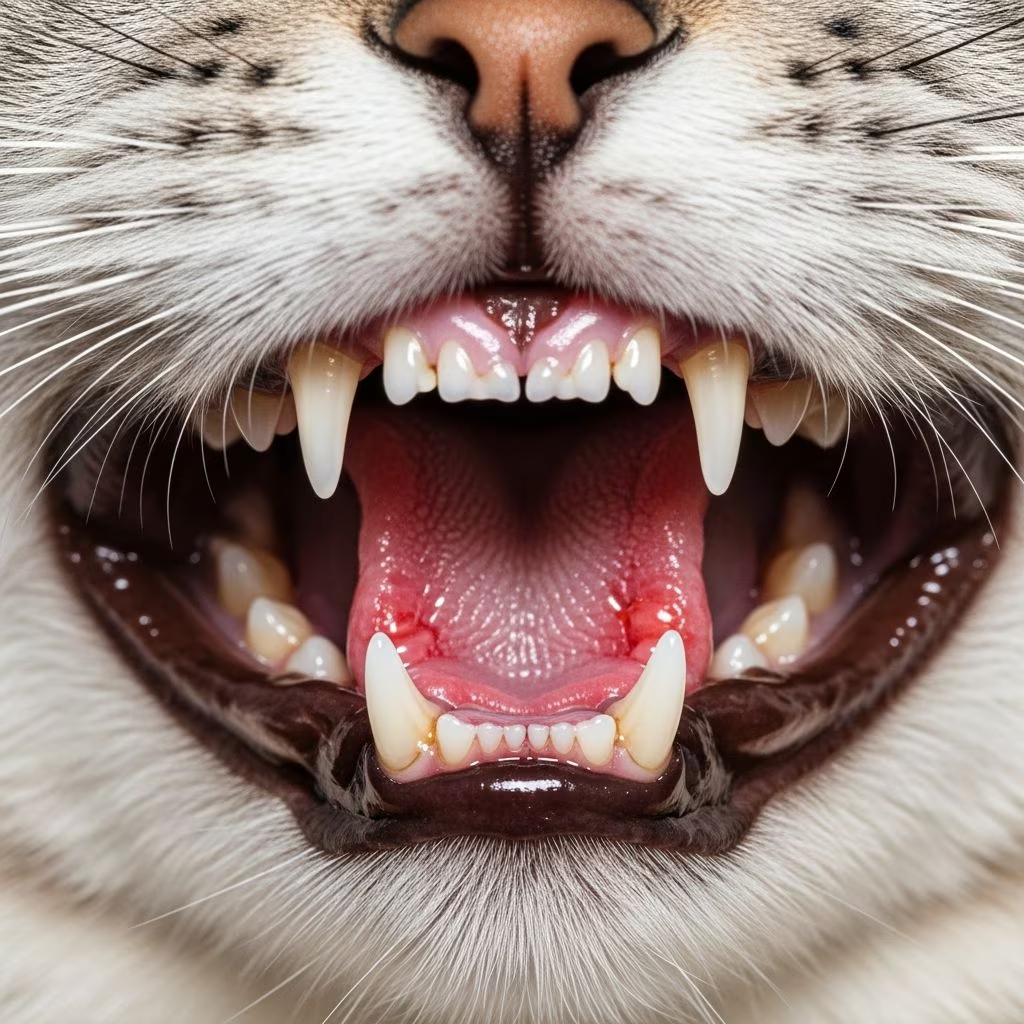
Understanding Gingivitis and Stomatitis in Cats
Gingivitis and stomatitis are common oral conditions affecting cats of various ages and breeds. While these conditions can be uncomfortable and painful, understanding their causes, recognizing early symptoms, and pursuing appropriate treatment can significantly improve your cat’s quality of life. This comprehensive guide provides pet owners with essential information about these dental diseases.
What Is Feline Gingivitis?
Gingivitis is the inflammation of the gingiva, commonly known as the gums. In cats, gingivitis represents the earliest stage of periodontal disease and involves swelling and redness of the gum tissue surrounding the teeth. This condition occurs when plaque and tartar accumulate on the tooth surface, triggering an inflammatory response in the gum tissue. Unlike advanced periodontal disease, gingivitis is typically reversible if caught early and managed appropriately with professional dental care.
The condition develops gradually as bacteria colonize the tooth surface and form biofilm. When left untreated, gingivitis can progress to more severe periodontal disease involving bone loss and tooth mobility.
What Is Feline Stomatitis?
Stomatitis is a more severe inflammatory condition that extends beyond the gums to involve the entire oral cavity, including the mucous membranes of the mouth, cheeks, and throat. Also known as feline chronic gingivostomatitis (FCGS), this condition represents a dysregulated immune response to oral bacteria rather than a simple bacterial infection. Approximately 10 percent of cats develop this painful condition at some point in their lives.
In stomatitis, the cat’s immune system overreacts to the bacteria naturally present in the oral cavity, causing severe inflammation that can make eating and swallowing extremely painful. This autoimmune component distinguishes stomatitis from common gingivitis and makes it more challenging to treat.
Symptoms and Warning Signs
Recognizing the symptoms of gingivitis and stomatitis is crucial for early intervention. Pet owners should watch for the following signs:
Common Symptoms of Gingivitis
– Red or inflamed gum tissue along the gum line- Bleeding gums, especially during eating or tooth brushing- Bad breath or halitosis- Mild discomfort during eating- Tartar buildup on teeth (yellowish or brownish deposits)- Swollen or tender gums
Symptoms of Stomatitis
Stomatitis presents with more severe and extensive symptoms than gingivitis:
– Severe pain and inflammation throughout the oral cavity- Bright red, inflamed gums and oral mucosa extending throughout the inner lining of the mouth and cheeks- Excessive drooling, sometimes tinged with blood- Severe bad breath or halitosis- Difficulty eating or complete loss of appetite- Crying out or running away suddenly when yawning or eating- Weight loss due to decreased food intake- Behavioral changes including withdrawal or aggression- Difficulty swallowing- Pawing at the mouth
Causes of Gingivitis and Stomatitis
Contributing Factors to Gingivitis
Several factors contribute to the development of gingivitis in cats:
– Poor oral hygiene and inadequate plaque removal- Diet high in soft foods that don’t provide natural cleaning action- Genetic predisposition to periodontal disease- Age-related changes in oral tissues- Underlying systemic diseases such as diabetes or kidney disease- Viral infections including feline calicivirus and feline leukemia virus- Compromised immune system
Causes of Stomatitis
Stomatitis typically develops due to an abnormal immune response rather than simple bacterial infection: The condition involves a dysregulated reaction to oral bacteria, where the cat’s immune system attacks not only the bacteria but also the surrounding oral tissues. Contributing factors include:
– Chronic viral infections (feline calicivirus, feline leukemia virus)- Genetic predisposition to autoimmune conditions- Severe plaque and tartar accumulation- Underlying periodontal disease- Immunosuppressive conditions- Severe bacterial plaque burden
Diagnosis and Examination
Your veterinarian will perform a thorough oral examination to diagnose gingivitis and stomatitis. The examination typically includes:
– Visual inspection of the gums and oral mucosa- Assessment of tooth mobility and stability- Evaluation of bleeding and inflammation severity- Probing to measure pocket depth around teeth- Assessment for tooth resorption lesions- Evaluation of overall oral health- Dental radiographs to assess bone loss and tooth root condition
In some cases, additional diagnostic testing may be recommended, including blood work to identify underlying systemic conditions or viral infections that might be contributing to the oral disease.
Treatment Options for Gingivitis
Professional Dental Cleaning
The primary treatment for gingivitis involves professional veterinary dental cleaning performed under general anesthesia. This procedure includes scaling (removal of plaque and tartar), polishing, and probing to assess the extent of periodontal disease. Professional cleaning removes the bacterial biofilm responsible for inflammation and allows for early intervention before more severe damage occurs.
Home Care and Prevention
– Daily tooth brushing with veterinary-approved toothpaste- Dental diets formulated to reduce plaque accumulation- Water additives designed to reduce bacterial growth- Regular veterinary check-ups- Avoiding soft foods that promote plaque buildup
Follow-up Treatment
After professional cleaning, regular follow-up examinations every 6-12 months help monitor for disease recurrence and allow for early intervention if needed.
Treatment Options for Stomatitis
Surgical Extraction Therapy
Surgical tooth extraction remains the most effective and widely recommended treatment for feline stomatitis. The approach recognizes that stomatitis is primarily an inappropriate immune response to oral bacteria, and removing the structures where bacteria attach—the teeth—represents the most direct intervention.
Partial Mouth Extraction: This approach involves removing all premolar and molar teeth while preserving the canine and incisor teeth. Studies indicate that partial mouth extraction provides substantial improvement or complete resolution of stomatitis in more than two-thirds of affected cats.
Full Mouth Extraction: Complete extraction of all teeth offers the most aggressive approach and provides clinical cure in approximately 55% of cats, with 35% showing marked improvement. Research suggests that full mouth extractions do not provide additional benefits over partial extraction in most cases. According to clinical data, 90% of cats undergoing partial or full-mouth tooth extractions show complete resolution of stomatitis symptoms.
Surgical Considerations: Alveoplasty (smoothing of bone and removal of ridges and spicules) should be performed in conjunction with extractions. Only American Veterinary Dental College specialists or veterinarians with extensive experience in feline extraction should perform these procedures.
Medical Management
For cats that do not respond adequately to surgical management, medical treatment options include:
Immunosuppressive and Immunomodulatory Therapy
– Cyclosporine: A potent immunosuppressive agent labeled for once-daily oral dosing in cats. Recent studies demonstrated significant clinical improvement, with 69% success in cats without previous corticosteroid exposure compared to 45% in those with prior steroid use. Whole blood cyclosporine levels should be monitored monthly, with a goal of >300 ng/mL. Transient vomiting and diarrhea are common side effects.- Corticosteroids: Prednisone can be administered orally or as long-acting injections, with many veterinarians experiencing greater success with injectable formulations.- NSAIDs and Adjunct Therapy: A combination of bovine lactoferrin oral spray and piroxicam resulted in significant clinical improvement in 77% of cats in randomized controlled trials.
Mesenchymal Stromal Cell Therapy
Autologous adipose-derived stromal cell (ASC) therapy represents an innovative treatment for refractory stomatitis cases. This regenerative medicine approach involves harvesting the patient’s own fat-derived stem cells and administering them intravenously to modulate the immune response and reduce inflammation. Studies have confirmed clinical improvement, complete cure, or substantial lesion reduction through clinical, histopathologic, and immunologic testing.
Pain Management
Pain management is fundamental to treating stomatitis and should include:
– Pre-, intra-, and postoperative analgesia with opioids such as buprenorphine- Compounded gabapentin for severely painful patients- Regional nerve blocks providing 6-8 hours of analgesia- Ketamine loading doses or constant rate infusions- Long-term pain management as needed
Preparation and Recovery
Preoperative Preparation
Cats that consume hard kibble should transition to canned food prior to surgery to facilitate easier eating during the healing period. An appetite stimulant such as mirtazapine (3.75 mg per cat every 72 hours) may help cats adjust to the new texture and can continue through the posttreatment phase.
Postoperative Care
Following extraction therapy, appropriate management is critical:
– Continued canned diet for at least 2-3 weeks postoperatively- Regular pain management medications as prescribed- Antibiotics if recommended by your veterinarian- Appetite stimulants if needed during initial recovery- Soft tissue protection while healing- Many cats transition back to eating kibble once gum tissue heals completely
Pet owners often notice rapid improvement in their cat’s attitude, appetite, and overall quality of life once the mouth is free from pain and inflammation.
Long-Term Prognosis
The prognosis for stomatitis involves ongoing management rather than a permanent cure. With full mouth extractions, approximately two-thirds of cats experience clinical cure, meaning no additional care beyond routine dental maintenance is necessary. The remaining one-third may require additional supportive measures including oral gels, further extractions, or immunosuppressive and antibiotic therapy.
Most cats adapt well to life without teeth and can consume both soft and hard foods once fully healed. The elimination of chronic oral pain often results in significant quality of life improvements including increased appetite, better grooming behavior, and increased playfulness.
Frequently Asked Questions
Q: Can gingivitis be reversed?
A: Yes, early-stage gingivitis can be reversed with professional dental cleaning and appropriate home care including daily tooth brushing. However, once gingivitis progresses to periodontitis with bone loss, the damage cannot be fully reversed, though further progression can be slowed with treatment.
Q: Why is tooth extraction necessary for stomatitis?
A: Feline stomatitis results from an inappropriate immune response to bacteria on the teeth. Since removing the bacterial attachment surfaces—the teeth—addresses the root cause, extraction represents the most effective treatment approach.
Q: Can cats eat without teeth?
A: Yes, cats can eat normally without teeth. Most cats adapt quickly and can consume both soft and hard foods after complete healing, as cats do not chew food the same way humans do.
Q: What is the success rate of tooth extraction for stomatitis?
A: Approximately 90% of cats show complete resolution of stomatitis symptoms following partial or full-mouth extraction surgery, with 55% achieving complete clinical cure and 35% showing marked improvement.
Q: Is stomatitis painful?
A: Yes, stomatitis is extremely painful, often so severe that affected cats lose interest in eating. Appropriate pain management both before and after treatment is essential for patient comfort and recovery.
Q: Can medical management alone cure stomatitis?
A: Medical treatment alone is considered unrewarding and typically produces only temporary improvement. However, combined with or following surgical extraction, medical therapies can help manage cases that don’t achieve complete cure with extraction alone.
Conclusion
Gingivitis and stomatitis represent significant oral health challenges for cats, but modern veterinary medicine offers effective treatment approaches. While gingivitis may be managed with professional cleaning and home care, stomatitis typically requires more aggressive intervention through partial or full-mouth tooth extraction combined with appropriate pain management and, in some cases, immunosuppressive therapy. Pet owners should consult with their veterinarian at the first signs of oral disease to prevent progression and ensure their cats receive optimal care. With proper treatment, most cats experience dramatic improvements in quality of life, returning to normal eating habits and comfortable, pain-free existence.
References
- Feline Stomatitis – Dental Disease in Cats — Orovet Dental Specialists. 2024. https://orvetdentalspecialists.com/feline-stomatitis/
- Feline chronic gingivostomatitis current concepts in clinical management — PMC/NIH. 2024. https://pmc.ncbi.nlm.nih.gov/articles/PMC10811996/
- Chronic Feline Gingivostomatitis: Proven Therapeutic Approaches and New Treatment Options — Today’s Veterinary Practice. 2024. https://todaysveterinarypractice.com/dentistry/chronic-feline-gingivostamatitis-proven-therapeutic-approaches-new-treatment-optionsce-article/
- Stomatitis in Cats: Signs and Treatment of Feline Dental Disease — Best Friends Animal Society. 2024. https://bestfriends.org/pet-care-resources/stomatitis-cats-signs-and-treatment-feline-dental-disease
- Feline Stomatitis – Treatment and Management — Michigan Animal Dental Specialists PC. 2024. https://www.mianimaldental.com/feline-stomatitis
- Feline Stomatitis Signs & Treatment — BluePearl Pet Hospital. 2024. https://bluepearlvet.com/medical-articles-for-pet-owners/stomatitis-in-cats/
- Stomatitis in Cats: Symptoms, Causes and Treatment — PetMD. 2024. https://www.petmd.com/cat/conditions/mouth/stomatitis-in-cats



