

Gingival Hyperplasia in Dogs: A Comprehensive Guide
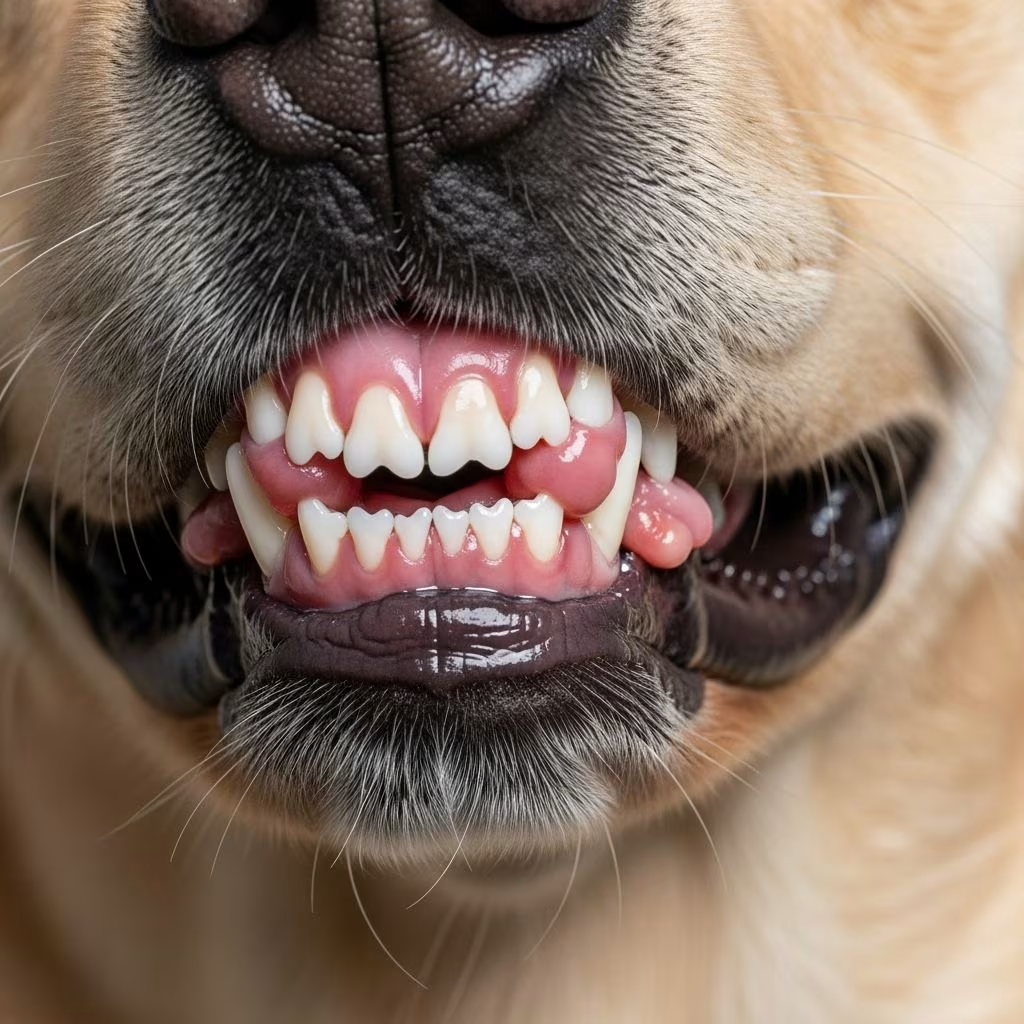
Gingival hyperplasia is a common condition affecting dogs where the gingival tissue (gums) grows abnormally and can eventually cover the crowns of the teeth. This benign condition, while not immediately life-threatening, requires prompt veterinary attention to prevent serious complications affecting your pet’s oral health and overall well-being. Understanding the causes, symptoms, and available treatment options is essential for dog owners concerned about their pet’s dental health.
Understanding Gingival Hyperplasia
Gingival hyperplasia refers specifically to the growth of excess or redundant gingival tissue resulting from an increase in the number of cells. This is distinct from gingival overgrowth, which involves an excessive accumulation of extracellular matrix proteins that increase gingival volume. While the tissue in gingival hyperplasia is histologically normal aside from inflammation, the condition creates significant functional problems for affected dogs.
The normal gingival anatomy includes three important zones: the sulcus (the space between the gum and tooth), the junctional epithelium, and the connective tissue attachment to the cementum and alveolar bone. These zones must maintain a specific relationship called biologic width. When hyperplasia develops, this critical relationship becomes compromised, leading to potential periodontal complications.
Causes and Risk Factors
Several factors can contribute to the development of gingival hyperplasia in dogs. Understanding these causes is crucial for prevention and management.
Medication-Induced Hyperplasia
Certain medications are known to trigger gingival hyperplasia as a side effect. The most commonly implicated drugs include calcium channel blockers, particularly amlodipine and nifedipine, which are frequently prescribed for managing heart conditions in older dogs. Other medications associated with gingival enlargement include cyclosporine, often used for immune-related conditions. The mechanism involves increased accumulation of extracellular matrix proteins in the gingival tissue. Notably, when the offending medication is discontinued, the gingival overgrowth typically begins to regress, with complete resolution often occurring within weeks to months.
Idiopathic Gingival Hyperplasia
When generalized gingival hyperplasia occurs without an identifiable medication cause and affects multiple teeth in a fairly symmetrical pattern, it is classified as idiopathic gingival hyperplasia. This form appears to have a genetic or constitutional predisposition, with certain dog breeds, particularly boxers, showing higher susceptibility. In these cases, surgical intervention becomes necessary since the condition will not resolve without active treatment.
Inflammatory Factors
Chronic inflammation from dental plaque accumulation on the tooth crowns triggers edema in the free gingiva and initiates collagenase activity that breaks down the structural collagen fibers. This inflammatory response can perpetuate and exacerbate hyperplastic changes, making plaque control an important management strategy.
Clinical Presentation and Symptoms
Dogs with gingival hyperplasia present with characteristic clinical signs that warrant veterinary evaluation:
- Excessive tissue growth that may partially or completely cover the tooth crowns
- Formation of false pockets (pseudopockets) that trap food debris and bacteria
- Oral masses or nodular tissue enlargement
- Difficulty closing the mouth or eating, in severe cases
- Visible bleeding or inflammation of gingival tissue
- Halitosis (bad breath) resulting from bacterial accumulation
- Tissue trauma from the dog chewing on redundant gingiva
In advanced cases, the gingival enlargement becomes so extreme that dogs cannot close their mouths without contacting the hyperplastic tissue, causing discomfort and functional impairment. This represents a clinical emergency requiring prompt surgical intervention.
Diagnostic Procedures
Proper diagnosis of gingival hyperplasia involves a systematic veterinary approach combining clinical examination, imaging, and laboratory confirmation.
Clinical Examination
A thorough oral examination under general anesthesia allows the veterinarian to assess the extent of gingival enlargement, measure oral masses, evaluate tooth condition, and identify areas of periodontal pocketing. Intraoral radiographs are essential to evaluate the teeth, jawbones, and determine the presence of true periodontal pockets versus false pockets created by tissue proliferation.
Preoperative Laboratory Testing
Before surgical intervention, veterinarians typically perform complete blood count and serum chemistry profiles to ensure the patient is a suitable surgical candidate. Preoperative chest radiographs may also be recommended, particularly for older dogs or those with underlying cardiac conditions.
Biopsy and Histopathologic Diagnosis
Biopsy samples of oral masses should be obtained and sent for histopathologic examination to confirm the diagnosis and rule out other conditions such as fibromas or malignant tumors that may mimic gingival hyperplasia. Samples should ideally be evaluated by an oral pathologist for the most accurate and definitive diagnosis.
Complications of Untreated Hyperplasia
Leaving gingival hyperplasia untreated leads to progressively serious complications affecting periodontal health and tooth retention.
Pseudopocket Formation
As the free gingiva becomes inflamed and edematous, it grows both upward along the tooth crown (coronally) and increases in thickness. This creates deep pseudopockets that trap food, hair, and bacteria, creating an ideal environment for periodontal infection.
Periodontal Disease Progression
If gingival hyperplasia extends beyond the cemento-enamel junction, true periodontal pockets form involving destruction of the periodontal ligament and alveolar bone. This irreversible tissue loss significantly increases the risk of tooth mobility, infection, and eventual tooth loss. The excess tissue traps food and hair between the tissue and teeth, accelerating the destruction of supporting structures.
Functional Impairment
Extreme gingival enlargement interferes with normal mouth closure and eating, affecting the dog’s ability to consume food comfortably and maintain proper nutrition.
Treatment Options
Treatment approaches vary depending on whether the hyperplasia is medication-induced or idiopathic.
Medication Discontinuation
The first diagnostic step is determining whether the patient is receiving any medications known to cause gingival enlargement. If medication-induced hyperplasia is confirmed, discontinuing the offending drug is the initial treatment. Gingival overgrowth typically begins regressing within two weeks and may completely resolve within six months. However, reinstitution of the medication may cause recurrence of the condition within months.
Surgical Gingivoplasty
For idiopathic gingival hyperplasia or cases where medication cannot be discontinued, surgical gingivoplasty is necessary to restore normal gingival architecture. This procedure involves:
- Whole-mouth intraoral dental scaling to remove plaque and tartar
- Surgical removal of excessive gingival tissue using a scalpel blade or surgical instruments
- Contouring of gingiva using high-speed handpieces with fluted burs to achieve normal height and thickness
- Extraction of severely diseased teeth
- Treatment of periodontal pockets with gingival curettage and locally applied antimicrobial agents
Surgical Goals and Technique
The surgical objective is recontouring the gingiva to normal height and contour, re-establishing healthy gingival architecture. The new free-gingival margin after healing should be positioned 1-3 millimeters coronal to the cemento-enamel junction. For true periodontal pockets that extend beyond the cemento-enamel junction, specialized periodontal surgery aimed at preserving and regenerating periodontal tissues is required, rather than simple gingival removal.
Post-Operative Care and Recovery
Proper post-operative management is critical for optimal healing and long-term success.
Immediate Post-Operative Period
Following surgical treatment, dogs should receive antibiotics and analgesics to prevent infection and manage pain. Soft food feeding is recommended for approximately two weeks to minimize trauma to the healing gingival tissues. Owners should suspend routine home care, including tooth brushing, during the initial healing phase.
Healing Timeline
The gingival tissue typically re-epithelializes within 7 to 10 days following surgery. At this point, owners should return to or begin implementing a daily plaque-control program to prevent recurrence. At two-week recheck appointments, veterinarians assess healing progress and ensure the patient is comfortable.
Long-Term Management
In patients predisposed to generalized gingival hyperplasia, maintaining meticulous plaque control through daily tooth brushing and professional dental cleanings is essential for minimizing regrowth. While mild regrowth may occur requiring retreatment, proper home care significantly extends the interval between surgical procedures.
Prognosis and Recurrence
The prognosis for gingival hyperplasia depends on the underlying cause and commitment to post-operative care.
For medication-induced hyperplasia, discontinuing the drug offers the best prognosis, with complete resolution possible in many cases. Some mild enlargement may persist and require surgical gingivoplasty, but the condition typically does not recur if the medication is not reintroduced.
For idiopathic hyperplasia, surgical treatment is effective in restoring normal gingival anatomy. However, recurrence is common in predisposed individuals, requiring periodic retreatment. Regular professional dental care and diligent home plaque control can minimize the severity and frequency of recurrence.
Frequently Asked Questions
Q: Is gingival hyperplasia painful for dogs?
A: While gingival hyperplasia itself may not initially cause pain, the associated inflammation, pseudopocket formation, and bacterial infection can cause discomfort. In advanced cases where dogs cannot close their mouths properly, significant pain and functional impairment occur.
Q: Can gingival hyperplasia be prevented?
A: While idiopathic forms cannot be prevented, medication-induced hyperplasia can be prevented by using alternative medications when possible. Maintaining excellent oral hygiene through daily tooth brushing reduces the severity of inflammatory-related gingival changes.
Q: What is the difference between gingival hyperplasia and gingival hypertrophy?
A: Gingival hyperplasia involves an increase in the number of cells, while gingival hypertrophy involves thickening of existing tissue. Regardless of the specific classification, both conditions present similarly and require similar treatment approaches focused on restoring normal gingival anatomy.
Q: Will my dog’s gingival hyperplasia return after surgery?
A: For medication-induced hyperplasia, recurrence is unlikely if the medication is discontinued. For idiopathic hyperplasia, mild regrowth may occur over time, but rigorous plaque control and professional cleanings can extend the time between surgical procedures significantly.
Q: How long does recovery take after gingival surgery?
A: Initial healing typically occurs within 7-10 days, when the tissue re-epithelializes. However, complete remodeling and final healing may take several weeks. Most dogs return to normal eating and activity levels within 2-3 weeks with appropriate post-operative care.
References
- Focus On: Gingival Hyperplasia — Hale Veterinary Clinic. 2024. https://www.haleveterinaryclinic.ca/files/education_handouts/gingivalhyperplasia.pdf
- Dental Corner: A Boxer with Gingival Hyperplasia — DVM360. 2024. https://www.dvm360.com/view/dental-corner-boxer-with-gingival-hyperplasia
- Ginigival Hyperplasia — Family Pet Veterinary Center. 2024. https://www.fampetvet.com/services/other/blog/ginigival-hyperplasia
- Gingival Hyperplasia Associated with the Administration of Amlodipine in Dogs — Journal of Veterinary Internal Medicine, 2009. https://onlinelibrary.wiley.com/doi/full/10.1111/j.1939-1676.2008.0212.x



