

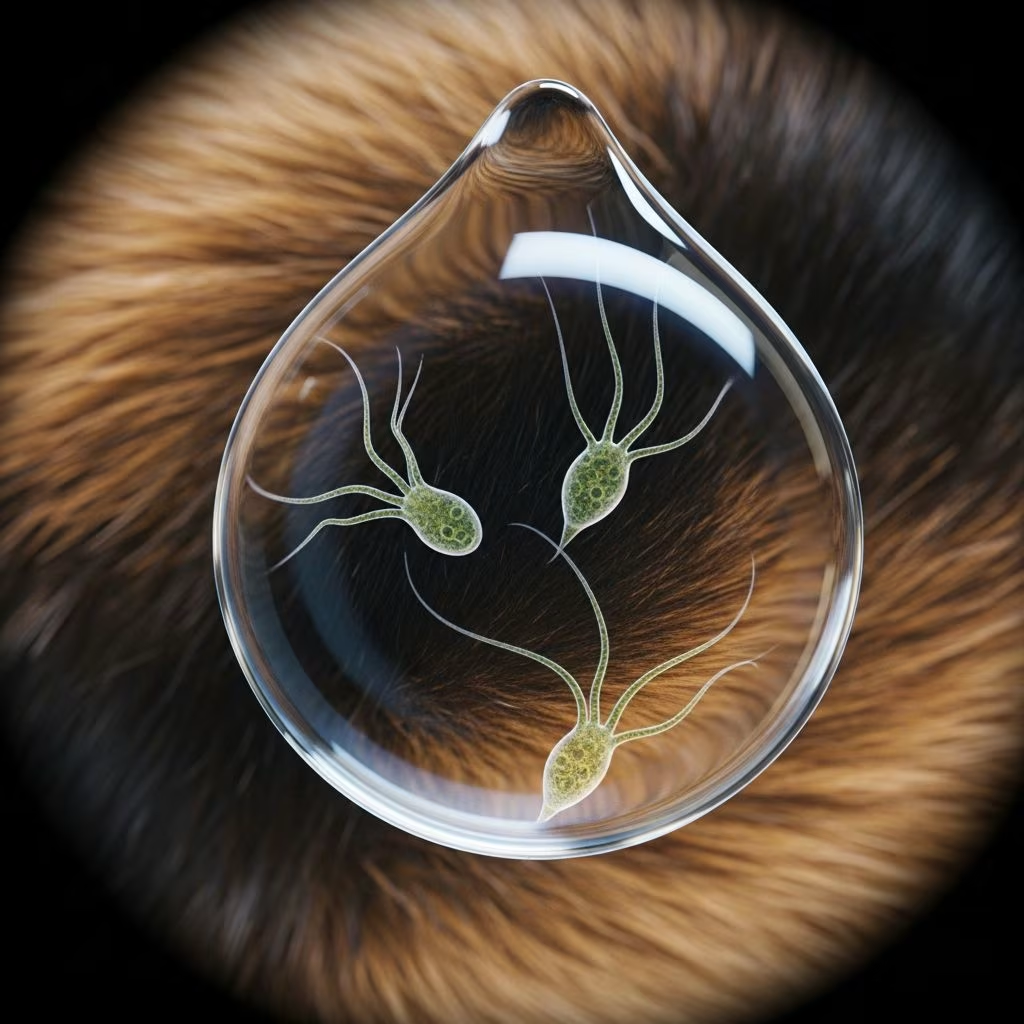
Giardia represents one of the most prevalent intestinal protozoan infections affecting dogs worldwide, capable of triggering significant gastrointestinal disturbances that compromise a pet’s well-being. This microscopic parasite thrives in contaminated environments, making awareness crucial for proactive pet guardianship. Dog owners must recognize its subtle yet persistent nature to intervene effectively and avert prolonged health challenges.
Unraveling the Giardia Parasite: What Every Dog Owner Needs to Know
The Giardia organism exists as a single-celled protozoan that colonizes the small intestine, existing in two primary forms: the active trophozoite stage, which adheres to intestinal walls and multiplies rapidly, and the resilient cyst stage, which is shed in feces and survives outside the host for weeks in cool, moist conditions. These cysts prove extraordinarily hardy, resisting standard cleaning agents and persisting in soil, water sources, and shared spaces.
Transmission occurs primarily through the fecal-oral route, where dogs ingest cysts via contaminated water, food, or direct contact with infected feces from other animals—including wildlife like raccoons or beavers—or fellow canines in communal settings. Puppies and immunocompromised adults face heightened vulnerability due to immature or weakened defenses, though many carriers remain asymptomatic, unknowingly perpetuating the cycle.
| Giardia Life Stages | Characteristics | Survival Duration |
|---|---|---|
| Trophozoites | Active, pear-shaped, flagellated form in intestines | Hours outside host |
| Cysts | Infectious, thick-walled form in feces | Weeks in moist environments |
Spotting the Signs: Key Symptoms of Giardia Infection
Clinical manifestations vary widely, with some dogs exhibiting no overt issues while others endure acute discomfort. The hallmark indicator remains diarrhea, often pale, greasy, and malodorous, occasionally laced with mucus or blood in severe instances. Stools may alternate between loose and firmer consistencies, a pattern termed ‘cow pie’ appearance due to segmental expulsion.
- Diarrhea: Watery or soft, foul-smelling, intermittent
- Weight loss: Despite normal appetite, from nutrient malabsorption
- Lethargy: Reduced energy, especially in prolonged cases
- Abdominal pain: Indicated by hunching, whining, or reluctance to eat
- Vomiting: Less common but possible in heavy infestations
Young puppies often suffer dehydration quickest, displaying sunken eyes, dry gums, and skin tenting. Without prompt attention, chronic infection impairs growth and vitality, underscoring the imperative for vigilant monitoring during high-risk periods like boarding or park visits.
How Vets Diagnose Giardia: Tests and Processes
Veterinary confirmation hinges on fecal analysis, as clinical signs alone cannot distinguish Giardia from bacterial enteritis or viral gastroenteritis. Standard fecal flotation concentrates cysts via centrifugation and sugar solutions, though sensitivity hovers around 70-80% due to intermittent shedding; thus, vets recommend three consecutive samples.
Advanced diagnostics include ELISA antigen tests detecting Giardia proteins with over 90% accuracy, PCR assays amplifying parasite DNA for definitive identification, and microscopic examination revealing characteristic pear-shaped trophozoites or oval cysts measuring 8-12 microns. In multi-pet households, testing all animals prevents silent spread.
Effective Treatment Strategies for Giardia in Dogs
Therapeutic protocols target parasite elimination alongside symptom relief and reinfection blockade. Veterinarians tailor regimens based on severity, with hydration as the cornerstone for dehydrated patients via subcutaneous or intravenous fluids restoring electrolyte equilibrium.
Primary pharmacologics encompass antiprotozoals like fenbendazole (50 mg/kg daily for 3-5 days), proven highly effective against cysts and trophozoites, and metronidazole (10-25 mg/kg twice daily for 5-8 days), FDA-approved for canine use despite potential neurotoxicity at high doses. Combination therapy enhances clearance rates, particularly in refractory cases.
| Medication | Dosage | Duration | Notes |
|---|---|---|---|
| Fenbendazole | 50 mg/kg SID | 3-5 days | Broad-spectrum dewormer |
| Metronidazole | 10-25 mg/kg BID | 5-8 days | Monitor for side effects |
Supportive measures feature bland diets rich in probiotics to rebuild gut flora, alongside rigorous hygiene. Bathing removes lingering cysts from fur, while steam cleaning or 1:32 bleach dilution (contact time 10 minutes) eradicates environmental reservoirs. Treatment success demands 2-4 weeks of follow-up testing.
Environmental Control: Breaking the Reinfection Cycle
Giardia’s environmental tenacity demands meticulous decontamination. Cysts withstand ammonia-based cleaners but succumb to quaternary ammonium compounds, hydrogen peroxide (1:10 dilution), or bleach solutions post-rinse. Vacuum carpets daily, launder fabrics in hot water, and isolate infected pets during therapy.
- Daily feces removal from yards using pooper scoopers
- Disinfect food/water bowls with boiling water or dishwasher cycles
- Wipe paws post-elimination to curtail household tracking
- Restrict access to shared green spaces until clearance confirmed
Household-wide treatment averts ping-pong infections, as even subclinical pets shed cysts profusely.
Prevention Blueprint: Safeguarding Your Dog Long-Term
Proactive defense integrates behavioral curbs, habitat management, and routine health surveillance. Prioritize filtered or bottled water on outings, leashing during hikes to avert puddle slurping, and prompt waste disposal. Year-round broad-spectrum preventives bolster immunity against co-infections exacerbating Giardia susceptibility.
Annual fecal exams during wellness visits facilitate early interception, while the Giardia vaccine—though not universally endorsed—merits discussion for high-exposure dogs like those in shelters or agility circuits. Discourage coprophagia through training and deterrents.
Special Considerations for Puppies, Seniors, and Multi-Dog Homes
Puppies under six months confront elevated risks from developing immunity and exploratory behaviors, necessitating monthly fecal checks. Geriatric dogs or those with comorbidities like diabetes endure protracted recoveries, often requiring dietetic interventions with highly digestible fibers.
In multi-pet scenarios, quarantine positives, designate separate elimination zones, and treat en masse post-confirmation. Human handlers must prioritize handwashing, as certain assemblages pose zoonotic threats, though dog strains infrequently transmit.
FAQs: Common Questions About Giardia in Dogs
Can humans catch giardia from dogs? Rarely; most canine strains differ from human-pathogenic ones, but hygiene prevents crossover.
How long does giardia last in dogs without treatment? Months or indefinitely in asymptomatics; symptoms may wax and wane.
Is natural treatment effective for giardia? Limited evidence; probiotics aid recovery but don’t eradicate alone—vet meds essential.
Will my dog get giardia from the dog park? Possible if feces-contaminated; supervise closely and clean paws after.
Recheck needed after giardia treatment? Yes, repeat fecal tests 2-4 weeks post-therapy confirm clearance.
Monitoring Recovery: What to Watch Post-Treatment
Post-therapeutic vigilance tracks stool normalization within 5-7 days, appetite resurgence, and vitality rebound. Persistent symptoms warrant retesting for metronidazole-resistant strains or co-pathogens. Maintain hygiene protocols 4 weeks to forestall resurgence, logging stool photos aids vet consultations.
References
- Giardia in Dogs – PetMD — PetMD. 2023. https://www.petmd.com/dog/conditions/infectious-parasitic/giardia-dogs
- Giardia in Dogs: Symptoms, Causes, and Treatment — Countryside Veterinary Hospital. 2024. https://countrysidevets.com/blog/giardia-in-dogs/
- Treatment and Prevention of Giardia in Dogs — Chimacum Valley Veterinary Hospital. 2023. https://chimacumvet.com/blog/treatment-and-prevention-of-giardia-in-dogs/
- Giardia: Infection, treatment and prevention — Cornell University College of Veterinary Medicine. 2024. https://www.vet.cornell.edu/departments-centers-and-institutes/riney-canine-health-center/canine-health-topics/giardia-infection-treatment-and-prevention
- Giardia – Companion Animal Parasite Council — CAPC. 2025-02-06. https://capcvet.org/guidelines/giardia/
- Grappling With Giardia: Tips For Avoiding Infection — Texas A&M University Veterinary Medicine. 2023. https://vetmed.tamu.edu/news/pet-talk/giardia/
- Giardia in Dogs: Signs, Causes, Treatment and Prevention — CareCredit. 2024. https://www.carecredit.com/well-u/pet-care/giardia-dogs-signs/



