

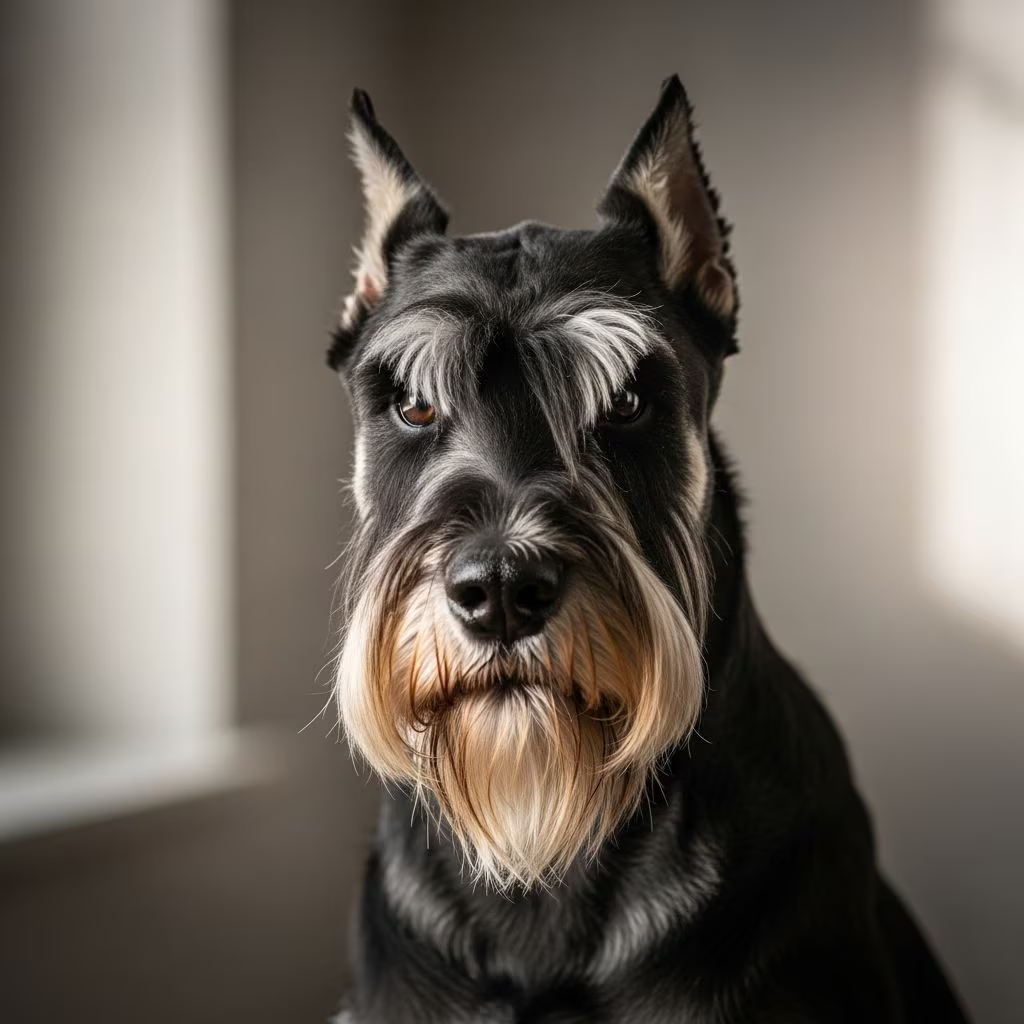
The Giant Schnauzer stands out as a formidable and intelligent breed, originally crafted for demanding farm tasks in Germany’s rugged landscapes. This large, robust dog combines strength, loyalty, and sharp instincts, making it an exceptional choice for experienced owners seeking a versatile partner in protection, sports, and family life.
Origins and Evolution of the Breed
Emerging from the Bavarian Alps and surrounding regions like Württemberg in the mid-1800s, the Giant Schnauzer was selectively bred from the smaller Standard Schnauzer to handle heavier duties such as herding cattle over long distances to markets. Farmers valued these dogs not just for driving livestock but also for safeguarding properties against intruders and predators, leveraging their coarse, protective coats suited to harsh winters.
Historical records trace the breed’s development to crosses involving rough-coated herding dogs, possibly including black Great Danes, Bouvier des Flandres, and other sturdy types like Rottweilers or German Shepherds, though early breeders kept precise formulas secret. By the early 1900s, known as Munich or Riesenschnauzer, they guarded breweries, stockyards, and butcheries in Bavaria. World Wars I and II propelled them into military and police roles, showcasing their tracking, obedience, and protection skills.
In the United States, the first imports arrived in the 1930s, but popularity surged in the 1960s with the founding of the Giant Schnauzer Club of America in 1962. Show successes, like Ch. Terry V Krayenrain’s Best in Show wins and Monty’s 2024 AKC National Championship triumph, cemented their status.
Physical Characteristics and Standards
Giant Schnauzers are imposing, with males typically measuring 25.5 to 27.5 inches at the shoulder and weighing 60 to 85 pounds, while females are slightly smaller at 23.5 to 25.5 inches and 55 to 75 pounds. Their rectangular, compact build exudes power without bulkiness, featuring a deep chest, straight back, and well-arched tail often docked.
The hallmark wiry double coat, harsh to the touch, comes in solid black or pepper-and-salt (banded hairs creating a grayish tone with dark mask). This weather-resistant fur requires regular hand-stripping or clipping to maintain its distinctive bearded muzzle and bushy eyebrows.
| Trait | Male | Female |
|---|---|---|
| Height | 25.5-27.5 inches | 23.5-25.5 inches |
| Weight | 60-85 lbs | 55-75 lbs |
| Coat Colors | Black, Pepper & Salt | Black, Pepper & Salt |
| Life Expectancy | 12-15 years | 12-15 years |
This table summarizes AKC breed standards, highlighting the Giant Schnauzer’s balanced proportions ideal for agility and endurance.
Temperament and Personality Traits
Bred for protection, Giant Schnauzers exhibit bold confidence, loyalty, and wariness toward strangers, making them natural guardians. They form deep bonds with family, often selecting one primary person, but thrive with consistent leadership from all household members.
- Intelligent and Trainable: Quick learners excelling in obedience, Schutzhund (now IGP), agility, and tracking.
- Energetic: Requires 1-2 hours of vigorous daily exercise to prevent boredom-induced mischief.
- Protective yet Discriminating: Alerts to threats without undue aggression when properly socialized.
- Affectionate with Family: Playful with children if raised together, but supervision advised due to size.
Without structure, their high energy and strong will can lead to dominance issues, underscoring the need for experienced handlers.
Training and Socialization Essentials
Start training early with positive reinforcement methods, as Giants respond best to firm, fair leadership rather than harsh corrections. Puppy classes build foundational obedience, while advanced work in protection sports channels their instincts productively.
Socialization from 8-16 weeks is crucial: expose them to diverse people, dogs, sounds, and environments to temper their natural reserve. Leash manners, recall, and impulse control prevent pulling or overprotectiveness on walks.
- Enroll in obedience classes by 12 weeks.
- Practice daily mental stimulation like puzzle toys or scent work.
- Use crate training for housebreaking and security.
- Maintain lifelong training to reinforce pack hierarchy.
Grooming and Maintenance Routine
The non-shedding coat demands professional grooming every 6-8 weeks: hand-stripping preserves texture, while clipping suits pets. Daily brushing prevents mats, especially around furnishings, and weekly baths keep them clean without stripping oils.
Check ears weekly for infections, trim nails monthly, and brush teeth 2-3 times weekly. Their beard requires regular cleaning post-meals to avoid odors.
Health Considerations and Wellness Tips
Giant Schnauzers enjoy 12-15 years with proper care, but screen for breed predispositions:
- Hip and Elbow Dysplasia: Affects mobility; choose OFA-certified parents.
- Pancreatitis: Manage with low-fat diets.
- Bloat (Gastric Dilatation-Volvulus): Feed smaller meals; avoid exercise post-eating.
- Eye Issues: Progressive Retinal Atrophy; annual vet exams.
- Autoimmune Thyroiditis: Monitor bloodwork after age 3.
Annual vet checkups, balanced nutrition (high-protein for actives), and weight control mitigate risks. Hip scoring from official registries ensures breeding stock quality.
Ideal Living Environments and Lifestyle Fit
Best suited to active households with space: suburban homes with yards suit better than apartments, though adaptable with ample exercise. They excel with runners, hikers, or competitors in dog sports but falter in sedentary settings.
Not ideal for novice owners or young unsupervised kids due to size and strength. Pairs well with older children, cats (if raised together), and confident dogs.
Nutrition and Daily Care Guidelines
Feed 3-5 cups of high-quality kibble daily, split into 2-3 meals, adjusted for age, activity, and weight. Puppies need frequent feeding for growth; seniors benefit from joint supplements.
- Fresh water always available.
- Avoid table scraps to prevent obesity and pancreatitis.
- Monitor for allergies; grain-free options if needed.
Pros and Cons of Ownership
| Pros | Cons |
|---|---|
| Exceptional guard dog | Requires extensive exercise |
| Highly trainable | Heavy shedding of dead hair despite non-shed coat |
| Loyal family protector | Professional grooming costs |
| Versatile in sports | Not for beginners |
Frequently Asked Questions (FAQs)
Are Giant Schnauzers good with children?
Yes, when socialized early and supervised; their size warrants caution around toddlers.
How much exercise do they need?
At least 60-120 minutes daily of walks, runs, or play to satisfy their working drive.
Do they shed a lot?
Minimal shedding due to wiry coat, but regular grooming removes loose hair.
What’s the cost of owning one?
Initial purchase $1,000-$3,000; annual costs $1,500+ for food, grooming, vet care.
Can they live in hot climates?
Prefer cooler weather; provide shade, water, and avoid midday heat.
Choosing Your Giant Schnauzer
Select from reputable breeders emphasizing health testing (OFA hips/elbows, CERF eyes, thyroid panels). Rescues offer adult Giants needing homes. Prepare for commitment: their intelligence demands engagement, rewarding owners with unwavering devotion.
References
- History Of The Giant Schnauzer — Royal Giants. Accessed 2026. https://royalgiantschnauzers.com/history-of-the-giant-schnauzer/
- Giant Schnauzer History — American Kennel Club. 2024. https://www.akc.org/expert-advice/dog-breeds/giant-schnauzer-history/
- Breed History — Giant Schnauzer Club. Accessed 2026. https://www.giantschnauzerclub.co.uk/breed-info/breed-history/
- Giant Schnauzer — Wikipedia (informed by primary sources). Accessed 2026. https://en.wikipedia.org/wiki/Giant_Schnauzer
- History of the Giant Schnauzer — Schnauzer Turkiye. Accessed 2026. https://www.schnauzerturkiye.com/en/kopyas%C4%B1-history-of-the-standart-schn



