Get My Dog to Come When Called
Expert tips from certified trainer Robert Haussmann to teach your dog reliable recall for safety and fun.
by Robert Haussmann, CPDT-KA
Kinship Collective dog trainer Robert Haussmann’s tips for getting a stubborn pup to listen up and respond reliably to your recall cue every time.
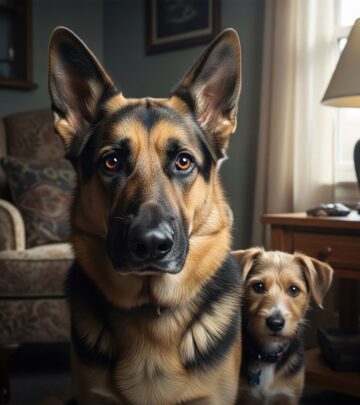
Ranboo is a six-month-old German Shepherd puppy. I have had him for about four months now. He has selective hearing when it comes to responding to his name, with or without a treat. He never goes far, but he comes back to me on his own terms. How do I get Ranboo to come when I call him? — Christie
Congratulations on your new puppy! It’s very possible to teach an old dog new tricks, but it’s ideal to start as early as possible with a young dog like Ranboo. This way, he will become a recall pro for life. For both your safety and his, getting your dog to come when called is a crucial training priority. As many owners discover, it’s not as simple as it sounds. However, with consistent time, patience, and the right methods, even the most stubborn or independent pup can master a rock-solid recall.
Recall training, often called the ‘come’ command, is one of the most important skills you can teach your dog. It keeps them safe from dangers like traffic, wildlife, or getting lost, and strengthens your bond. Puppies entering adolescence, around six months like Ranboo, naturally test boundaries and seek independence. This is the perfect time to build habits before bad patterns form. Inconsistent training during this phase can lead to selective hearing, where dogs ignore calls unless they feel like responding.
Set Him Up for Success
Before diving into formal training, create an environment where success is inevitable. This foundational step prevents frustration and builds your dog’s confidence in responding to you.
- Control the environment: Start in a quiet, enclosed indoor space with zero distractions—no toys, other pets, or family members moving around. A boring room is your best friend initially.
- Use a leash if needed: For puppies who wander, attach a light leash to gently guide them back without pulling, reinforcing that coming to you is voluntary and rewarding.
- Prepare high-value rewards: Stock up on treats your dog goes crazy for—think tiny pieces of chicken, cheese, or hot dogs. These must outshine any external temptations. Avoid kibble; it won’t compete with the excitement of sniffing or playing.
- Timing is key: Train when your dog is slightly hungry and calm, not after a big meal or during high-energy playtime. Short sessions of 5-10 minutes, multiple times a day, work best to keep engagement high.
By setting up these conditions, you’re stacking the deck in your favor. Dogs learn through association: if ‘come’ always leads to jackpot rewards in low-stakes settings, they’ll eagerly anticipate it later in tougher scenarios. Patience here pays off exponentially, turning a reluctant pup into an enthusiastic responder.
Set Up the Cue and Start Practicing
Once the stage is set, introduce a clear, consistent cue and practice it religiously. Consistency is non-negotiable—dogs thrive on predictability.
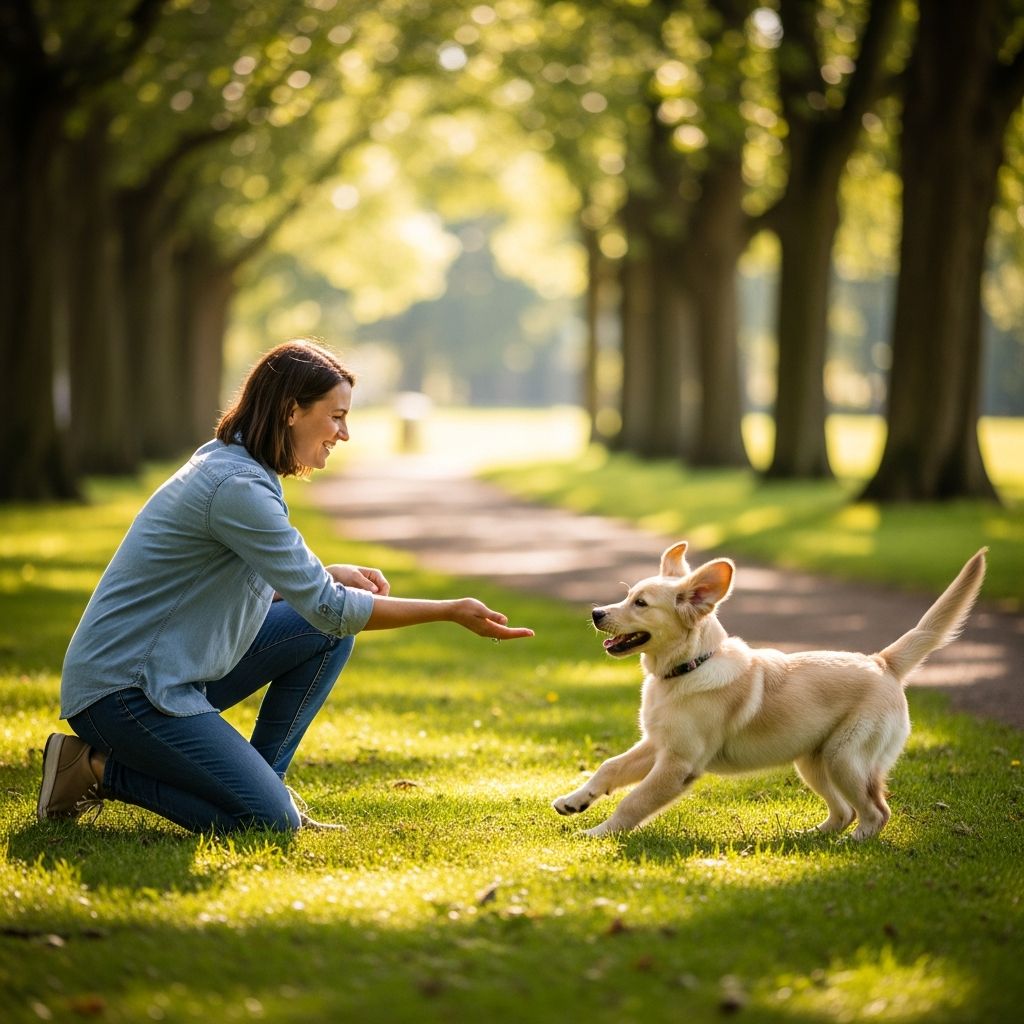
Stand just a few feet from your dog in your distraction-free zone. Say the cue exactly the same way every time, such as “Ranboo, come!” Use an upbeat, excited tone to convey it’s a happy invitation, not a command. Never change it to “Come here, Ranboo” or just the name—pick one phrase and stick to it forever.
- Call and lure: As you say the cue, pat your legs or hold out a treat to encourage movement toward you. When they take even one step, praise wildly and deliver the treat immediately.
- Build distance: Gradually increase from 3 feet to 10, rewarding every success. If they hesitate, shorten the distance and rebuild.
- Release and repeat: After they reach you, give a release cue like “Okay” or “Free,” allowing them to go play briefly before calling again. This teaches coming doesn’t mean the fun ends.
Practice 20-50 times per session. Turn it into engaging games to accelerate learning:
- Hide and seek: Duck behind furniture or doors, call the cue, and celebrate with treats when they find you. Kids love joining in, making it a family game that boosts recall joyfully.
- Name game precursor: Say their name first; when they look, reward. Transition to full recall by adding ‘come.’
Adolescent dogs like German Shepherds are smart but easily distracted. Repetition forges the neural pathway: cue = instant good things. Within days, you’ll see them whipping around at the sound of your voice indoors.
Make It Fun!
Training isn’t drudgery—infuse play to make recall the highlight of your dog’s day. Fun cements the behavior emotionally, ensuring they choose you over distractions.
Happy voice, exaggerated praise, and movement are magic ingredients. Run backward as you call, turning it into a chase game where they pursue you. Toys work wonders too: fling a favorite squeaker after they come, or play tug as the reward. For food-motivated dogs, jackpot sequences—multiple treats in rapid succession—create euphoria.
- Party at your feet: When they arrive, shower affection: pets, belly rubs, play bows. Make yourself the ultimate party host.
- Avoid negativity: Never call to scold, end play, or give baths. If you need to interrupt fun, go get them instead of calling and failing.
- Variable rewards: Sometimes tiny treats, sometimes epic jackpots. This mimics slot machines, keeping them hooked unpredictably.
Fun training leverages dogs’ joy-seeking nature. As certified trainers note, positive associations make recall self-reinforcing: coming equals adventure, not restriction. Your energy sets the tone—be the most exciting human alive!
Level-Up Your Location
Mastery indoors? Time to escalate. Gradually introduce mild distractions and outdoor settings, always under control.
| Level | Setting | Tips | Success Marker |
|---|---|---|---|
| 1 | House with mild distractions (TV on, family present) | Long line (20-30 ft) for safety; high-value treats | 90% response rate |
| 2 | Backyard/fenced area | Watch for squirrels; call before peak distraction | Responds from 20+ ft |
| 3 | Quiet park on long line | Practice during low-traffic times; reward heavily | Ignores mild temptations |
| 4 | High-distraction areas (dog park entry) | Emergency U-turns: run away to trigger chase | Reliable off-leash |
Progress only when success hits 90%. Use long lines to prevent rehearsing ignoring you. In real life, if they blow you off, don’t repeat the cue endlessly—go fetch them calmly. Proofing builds reliability: practice calling away from fun, rewarding with better fun.
Advanced tips: Teach “emergency recall” with a unique cue (whistle or silly word like “banana!”) saved for life-or-death moments, always ultra-rewarded. For adolescents, prevention is key—don’t let off-leash freedom until proofed.
Frequently Asked Questions (FAQs)
Q: What if my adult dog ignores the recall?
A: Revert to basics: long line, high-value rewards, no distractions. Manage environment to prevent practice of ignoring. Consistency rebuilds trust.
Q: How often should I practice recall?
A: Daily short sessions, plus real-life opportunities. Lifetime maintenance: random calls during walks for rewards.
Q: My dog comes but then leaves again—what now?
A: Add a sit/stay at your feet post-arrival, then release. Practice holding position with increasing duration.
Q: Are treats always necessary?
A: Fade them gradually to praise/life rewards, but keep occasional jackpots to maintain value.
Q: What breeds are hardest for recall?
A: Scent hounds, terriers, herders with high prey drive. Tailor with movement and competition games.
About the author: Robert Haussmann, CPDT-KA, is a Certified Professional Dog Trainer, Canine Behavior Consultant, and Co-founder of Dogboy NYC. With over 25 years helping dogs and owners in urban settings, he specializes in puppy foundations, manners, and tough behaviors like fear and aggression.
References
- American Veterinary Society of Animal Behavior Position Statement on Puppy Socialization — AVSAB. 2023-01-15. https://avsab.org/wp-content/uploads/2018/03/Puppy_Socialization_Position_Download_-_10-3-14.pdf
- Certification Council for Professional Dog Trainers Standards — CCPDT. 2025-06-01. https://www.ccpdt.org
- Effects of Positive Reinforcement Training on Dog Behavior — Journal of Veterinary Behavior (Peer-reviewed). 2024-03-12. https://doi.org/10.1016/j.jveb.2024.01.005
- Recall Training Guidelines — Association of Professional Dog Trainers. 2024-11-20. https://apdt.com/resource-center/recall-training/
- Operant Conditioning in Canine Training — USDA Animal Welfare Information Center. 2023-08-05. https://www.nal.usda.gov/awic
Similar Articles




Read full bio of Sneha Tete