

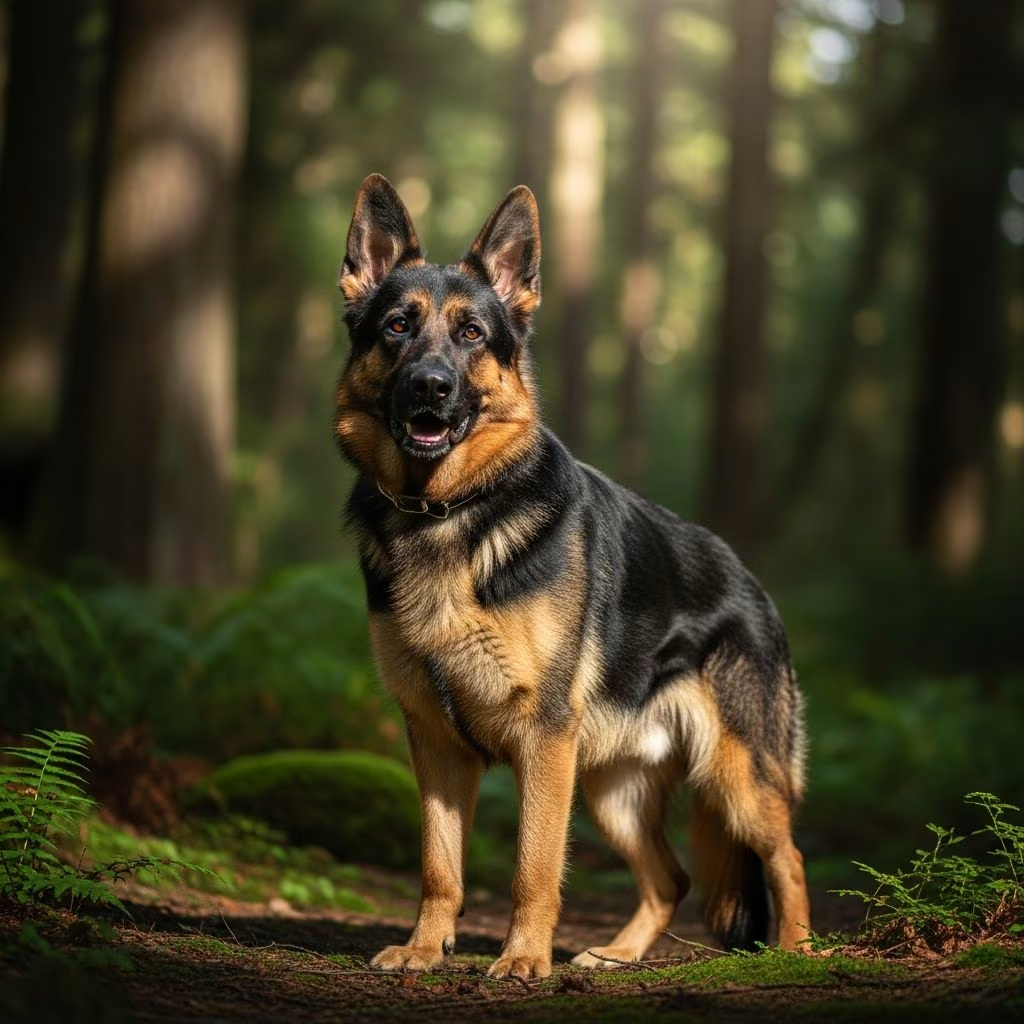
The German Shepherd Dog stands as one of the most recognizable and versatile canine breeds in the world. With roots firmly planted in 19th-century Germany, this breed has evolved from humble herding origins to become an indispensable working dog across numerous professions. Understanding the breed’s history, temperament, and care requirements is essential for anyone considering bringing one into their home.
The Foundation of a Revolutionary Breed
The German Shepherd Dog’s creation represents a pivotal moment in canine history, driven by the vision of one man’s dedication to selective breeding. Captain Max von Stephanitz, a German cavalry officer and veterinary student, recognized the potential for establishing a standardized working dog that could serve multiple purposes throughout Germany. Rather than accepting the fragmented regional variations of herding dogs that existed across the countryside, von Stephanitz embarked on a mission to unify these diverse animals into a single, coherent breed.
Before the breed’s official recognition, German herding dogs were scattered across the nation’s rural communities. The dogs from different regions possessed distinct characteristics—Thuringian herding dogs tended to be smaller and more compact with curled tails, while those from Württemberg in southern Germany were generally larger and heavier-boned. Von Stephanitz envisioned a dog that would combine the best attributes of these regional variations, creating a balanced working animal suited to the demands of modern Germany.
The Chance Encounter That Changed Everything
In 1899, von Stephanitz’s vision crystallized into reality when he encountered a yellow-and-gray herding dog at a dog show in Karlsruhe, a city in western Germany. The dog, originally named Hektor Linksrhein, immediately captured von Stephanitz’s attention. This medium-sized animal possessed the exact qualities he had been seeking: a balanced structure, supple yet powerful frame, keen intelligence, and remarkable working ability. The dog required minimal formal training beyond basic direction to excel at herding tasks—evidence of his natural aptitude and exceptional mental stability.
Von Stephanitz purchased this dog and renamed him Horand von Grafrath, officially registering him as the first German Shepherd Dog in 1899. Horand’s significance extended far beyond his individual merits; he became the foundation upon which the entire modern breed would be built. His descendants would carry forward his exceptional temperament, working ability, and physical conformation, making him the most influential ancestor in German Shepherd lineage.
Establishing Standards and Founding the Breed Club
Recognizing that creating a breed required more than one exceptional dog, von Stephanitz took decisive action. That same year, he founded the Verein für Deutsche Schäferhunde (SV), the official German Shepherd Dog club that would govern the breed’s development and maintain strict breeding standards. This organization became instrumental in preventing the uncontrolled breeding practices that could have diluted the breed’s characteristics.
Von Stephanitz’s breeding philosophy centered on a revolutionary principle: utility and intelligence superseded aesthetic appeal. His famous motto, “Utility is the true criterion of beauty,” reflected his belief that a dog’s value lay in its capacity to work and serve alongside humans, not merely in its appearance. The breed standard he developed emphasized mental stability, working ability, trainability, and sound temperament as the primary breeding objectives.
Early Breeding Strategy and Development
To consolidate the breed’s characteristics, von Stephanitz employed strategic inbreeding on Horand and his brother Luchs, producing offspring such as Hektor von Schwaben, Beowulf, and Pilot III. This concentrated approach successfully established the breed type relatively quickly. However, recognizing the risks of excessive inbreeding, von Stephanitz demonstrated foresight by introducing unrelated herding bloodlines when undesirable traits emerged, such as through the dogs Audifax von Grafrath and Adalo von Grafrath. This balance between controlled breeding and genetic diversity helped maintain the breed’s vigor and health.
Adapting to Changing Times: From Herding to Military Service
The German Shepherd Dog’s early purpose was clearly defined: herding sheep across German countryside. However, von Stephanitz recognized that industrial advancement posed a threat to traditional herding work. As railroads expanded across Europe and the sheep industry declined, the demand for herding dogs diminished dramatically. Rather than accepting this decline, von Stephanitz pivoted strategically, promoting the breed’s versatility for emerging roles in law enforcement and military service.
Von Stephanitz collaborated closely with police and military authorities to demonstrate the German Shepherd’s suitability for protection, tracking, and service work. His promotional efforts proved remarkably successful, convincing government officials to adopt German Shepherds for Red Cross work, messenger service, supply carrying, sentry duty, and search and rescue operations. This transition from agricultural worker to valued service dog transformed the breed’s future and ensured its continued relevance in modern society.
The Schutzhund Testing System
Recognizing that military and police organizations required objective methods to evaluate working dogs, von Stephanitz developed rigorous testing protocols. These trials, which became known as Schutzhund (“protection dog”), assessed tracking ability, obedience, and protection work. This system established a standard by which working dogs could be evaluated fairly and comprehensively, separating dogs with genuine working ability from those with superficial appeal.
The Körung system, introduced by von Stephanitz to combat irresponsible breeding practices in foreign markets, further protected the breed’s integrity. This detailed breed survey rigorously evaluated dogs’ temperament, structure, and working ability before approving them for breeding. Such quality control measures prevented mass production for profit and ensured that only dogs meeting strict standards contributed to future generations.
Physical Characteristics and Appearance
German Shepherd Dogs are large-sized dogs with a distinctive wolf-like appearance that reflects their herding heritage. The breed typically stands between 22 to 26 inches at the shoulder, with males being larger than females. Their bodies are well-muscled and slightly longer than they are tall, creating a profile that suggests power combined with agility.
Coat and Color Variations
The German Shepherd’s double coat serves protective purposes, consisting of a dense undercoat beneath a longer, coarser outer layer. Common color variations include:
- Tan and black
- Red and black
- Sable (dark coloring with lighter tips)
- Solid colors such as black or gray
The breed’s coat requires regular grooming to manage shedding, which occurs year-round with seasonal intensification.
Temperament and Behavioral Traits
The German Shepherd Dog’s temperament has been deliberately shaped through generations of selective breeding. These dogs are highly intelligent and responsive animals that thrive when provided with purposeful work or training. Their eagerness to learn and willingness to engage in structured activities makes them exceptional candidates for various roles ranging from family companions to service dogs.
Key Personality Characteristics
German Shepherds are characterized by several defining behavioral traits:
- Self-assured confidence: These dogs naturally possess confidence without aggression, displaying calm assurance in familiar environments
- Loyalty and devotion: The breed demonstrates exceptional loyalty to their families, forming deep bonds with their owners
- High energy levels: German Shepherds are never idle, maintaining constant activity and alertness
- Protective instincts: They naturally exhibit protective behaviors toward their families and territory, though proper socialization prevents excessive protectiveness
- Curiosity and intelligence: Their natural curiosity makes them excellent guard dogs and suitable for search and investigation missions
Von Stephanitz’s own observations of Horand captured the essence of the breed’s temperament: though untrained in puppyhood, Horand demonstrated obedience to the slightest command when with his master. The breed is described as well-disposed to harmless people, enjoying children and displaying genuine affection within their social circle.
Health Considerations and Medical Care
German Shepherd Dogs, like all purebred dogs, are susceptible to certain genetic health conditions that prospective owners should understand. Responsible breeding practices, consistent health screening, and regular veterinary care can help minimize these risks.
Common Health Conditions
Hip and elbow dysplasia represent the most prevalent health concerns in the breed, affecting the joint structures and potentially causing pain or mobility issues. Additionally, German Shepherds can experience:
- Exocrine pancreatic insufficiency
- Degenerative myelopathy
- Bloat (gastric dilatation-volvulus)
- Perianal fistulas
Regular health screenings through organizations such as the Orthopedic Foundation for Animals (OFA) can identify genetic predispositions early, allowing owners to implement preventive measures.
Training and Mental Stimulation
The German Shepherd Dog’s exceptional intelligence and trainability make the breed responsive to structured training programs. These dogs possess a natural desire to work and learn, traits that were deliberately selected for throughout their breeding history. Proper training should begin early in puppyhood and continue throughout the dog’s life.
Training Approach and Methods
Effective training for German Shepherds incorporates:
- Positive reinforcement techniques that reward desired behaviors
- Consistent commands and clear boundaries
- Regular practice sessions with gradually increasing complexity
- Exposure to diverse environments and socialization
- Advanced training for specific roles such as service or protection work
The breed’s high energy levels require substantial physical exercise combined with mental stimulation. Without adequate outlets for their working drive, German Shepherds may develop destructive behaviors or anxiety.
Grooming and Coat Maintenance
German Shepherds require regular grooming to maintain their coat health and manage shedding. The breed sheds year-round, with increased shedding during seasonal transitions. Establishing a consistent grooming routine helps maintain coat quality while reducing household dog hair.
Grooming Schedule Recommendations
| Grooming Task | Frequency | Purpose |
|---|---|---|
| Brushing | 2-3 times weekly | Remove loose hair and prevent matting |
| Bathing | Every 4-6 weeks | Maintain skin and coat health |
| Nail trimming | Every 3-4 weeks | Prevent overgrowth and joint stress |
| Ear cleaning | Weekly | Prevent infections |
| Dental care | Daily or several times weekly | Maintain oral hygiene |
Nutrition and Dietary Requirements
German Shepherds require high-quality, nutrient-dense dog food that supports their large frame and active lifestyle. The breed’s size and energy levels necessitate adequate protein and fat content to maintain muscle mass and sustained energy. Feeding guidelines should account for age, activity level, and individual metabolic factors.
Proper nutrition should be established in puppyhood to support healthy growth and development. Large-breed growth formulas help prevent bone and joint problems that can result from too-rapid growth. Adult dogs typically thrive on two meals daily, while senior dogs may benefit from adjusted portions and specialized formulations.
Socialization and Family Integration
Early socialization significantly influences a German Shepherd’s ability to interact appropriately with different people, animals, and environments. While the breed naturally exhibits protective behaviors, proper socialization helps them distinguish between normal social interactions and genuine threats.
German Shepherds can integrate successfully into family environments, demonstrating particular affection for children when raised alongside them. However, their size and exuberance require supervision with very young children, and training should establish appropriate interaction protocols.
Frequently Asked Questions
Are German Shepherds good family pets?
German Shepherds can make excellent family companions when properly trained, socialized, and provided with adequate exercise. Their loyalty and protective nature create strong bonds with family members, though they require commitment to training and mental stimulation.
How much exercise do German Shepherds need?
German Shepherds require at least 90 minutes of daily physical exercise combined with mental stimulation. Their high energy levels and working drive necessitate activities such as running, training, or sports engagement to prevent behavioral problems.
What is the typical lifespan of a German Shepherd?
German Shepherds typically live 9 to 13 years, with lifespan varying based on genetic factors, health care quality, and lifestyle. Maintaining healthy weight, providing regular veterinary care, and ensuring adequate exercise can contribute to longevity.
Do German Shepherds get along with other dogs?
German Shepherds can coexist peacefully with other dogs when properly socialized from puppyhood. Early exposure to diverse dogs and ongoing social management help establish positive relationships, though individual temperament varies among dogs.
What makes German Shepherds suitable for service work?
The breed’s intelligence, trainability, loyalty, and protective instincts make them ideally suited for police, military, search and rescue, and assistance dog roles. Their working drive and responsiveness to training enable them to perform complex tasks reliably.
The Enduring Legacy of German Shepherd Dogs
From their origins as regional herding dogs to their current status as globally recognized working animals, German Shepherds represent a remarkable achievement in selective breeding and canine development. Von Stephanitz’s vision of a dog unified by working ability, intelligence, and stable temperament continues to define the breed more than a century later. These dogs serve alongside law enforcement agencies, military organizations, and as loyal family companions, embodying the qualities their founder so carefully cultivated. For potential owners, understanding the breed’s heritage and requirements ensures they can provide the appropriate environment for these exceptional dogs to thrive.
References
- History of the Breed — Vom Geliebten Haus. Accessed January 2026. https://www.vomgeliebtenhaus.com/history-of-the-breed
- German Shepherd Breed Info — Bil-Jac. Accessed January 2026. https://www.bil-jac.com/breed-library/german-shepherd/
- German Shepherd Dog History: Where the Breed Originated — American Kennel Club. Accessed January 2026. https://www.akc.org/expert-advice/dog-breeds/german-shepherd-dog-history/
- A Very Brief History of the German Shepherd Dog — Dog Trainer College. Accessed January 2026. https://www.dogtrainercollege.us/a-very-brief-history-of-the-german-shepherd-dog/
- Breed History — The German Shepherd Dog Club of America. Accessed January 2026. https://www.gsdca.org/breed-history/
- The History and Origin of the German Shepherd Dog — GSD Elite. Accessed January 2026. http://gsrelite.co.uk/the-history-origin-of-the-german-shepherd-dog/



