

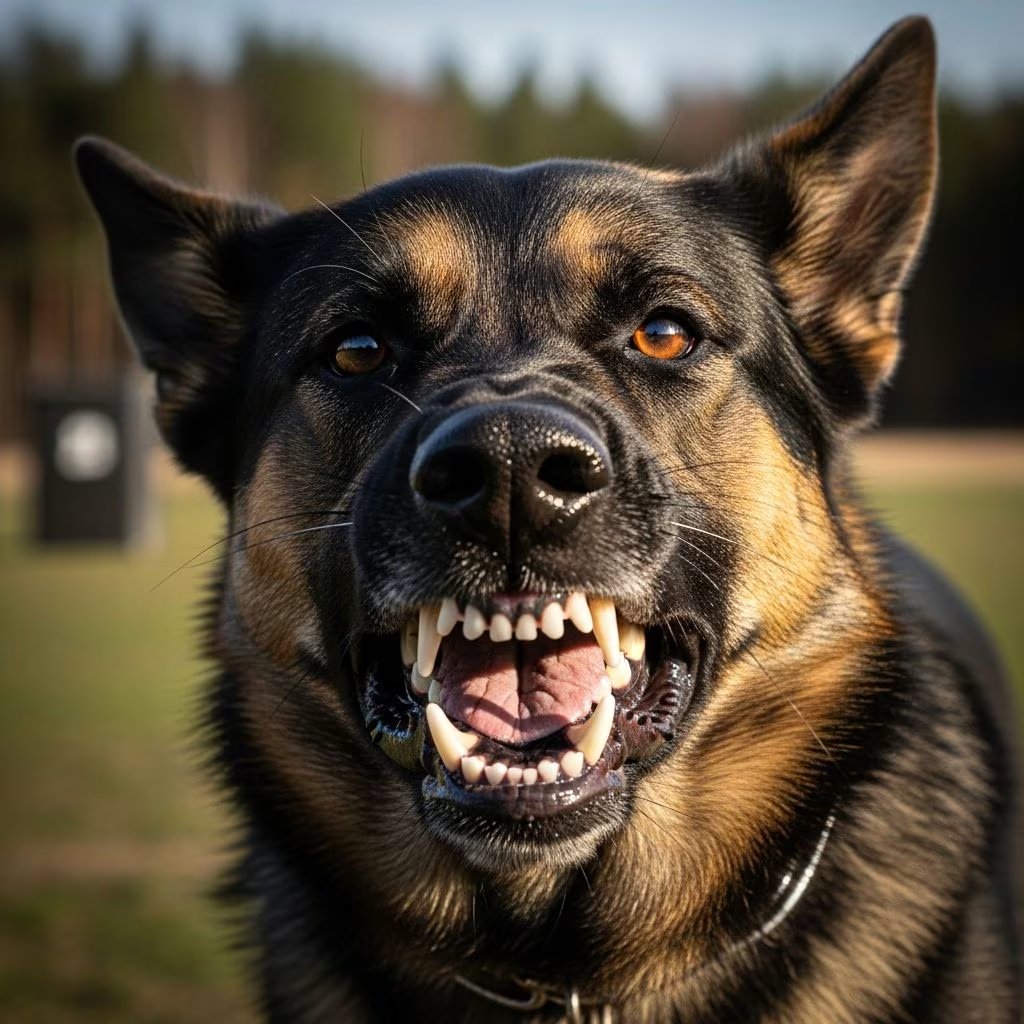
German Shepherds possess a bite force ranging from 238 to 300 PSI, making them among the strongest in domestic dogs and ideal for protection roles.
The Science Behind Canine Jaw Power
Bite force, measured in pounds per square inch (PSI), quantifies the pressure a dog’s jaws exert during a bite. This metric stems from biomechanical studies assessing jaw muscle mass, skull structure, and temporomandibular joint leverage. For German Shepherds, their elongated muzzles and robust masseter muscles contribute to efficient force generation.
Research on working dogs, including German Shepherds and Belgian Malinois, recorded mean bite forces around 256 Newtons (approximately 57 pounds), with variations up to 1394 N in extreme cases. These values convert to roughly 200-300 PSI depending on measurement methods, highlighting how context like bite location alters readings.
Jaw mechanics involve front canines for piercing and molars for crushing. Breeds like German Shepherds balance speed and power, enabling deep punctures with tearing effects.
Factors Shaping German Shepherd Bite Force
Several elements influence bite intensity in German Shepherds:
- Genetics and Breeding: Originating from herding lines with wolf ancestry, selective breeding enhanced jaw strength for gripping livestock.
- Age and Size: Adults, especially males over 65 pounds, generate higher PSI than puppies or females.
- Training Level: Police-trained Shepherds learn controlled bites, reducing unintended force during apprehension.
- Emotional State: Fear-driven defensive bites exceed warning snaps, with PSI spiking under stress.
- Health Conditions: Dental issues or jaw injuries can diminish force, aiding veterinary diagnostics.
A peer-reviewed study on police dogs found Belgian Shepherd Malinois averaging 246.8 N medially, comparable to German Shepherds at 256 N overall, underscoring breed similarities in functional biting.
Comparing German Shepherds to Other Breeds
German Shepherds rank highly but not atop canine bite forces. Here’s a comparison table based on documented PSI values:
| Breed | Bite Force (PSI) | Notes |
|---|---|---|
| German Shepherd | 238-300 | Versatile for police work; deep punctures. |
| Doberman Pinscher | 245 | Guard breed; muscular jaws. |
| Rottweiler | 328 | Stronger crush; protection focus. |
| Siberian Husky | 320 | Endurance-built; surprising power. |
| English Mastiff | 550-650 | Massive skull; bone-crushing. |
| Kangal | 743 | Top dog; livestock guardian. |
While Nile crocodiles reach 5,000 PSI, German Shepherds excel among dogs for controlled application in working scenarios.
Applications in Protection and Police Work
German Shepherds’ bite strength, combined with intelligence, makes them premier choices for law enforcement. Their jaws can break human bones (fracture threshold ~25 PSI) with peaks up to 600 PSI in untrained scenarios, though measured averages are lower.
In bite sleeve tests, these dogs achieve accelerations up to 9.2 g and decelerations to 13.1 g, demonstrating kinetic prowess for suspect control without lethal intent.
Military and K9 units value this trait, as Shepherds grip and hold with precision, minimizing excessive damage.
Health Implications of Powerful Jaws
Strong bites aid diagnosis of oral pathologies. Reduced force may signal temporomandibular disorders or muscle atrophy. Studies equate Shepherd bite strength to elderly human grip (70-80+ years), revealing structural limits.
Owners should monitor for signs like reluctance to chew hard toys, prompting dental exams.
Safe Training and Socialization Strategies
To harness bite force responsibly:
- Enroll in obedience classes from puppyhood for impulse control.
- Use positive reinforcement to teach ‘bite inhibition’—softening play bites.
- Socialize widely to curb defensive aggression.
- Employ professionals for protection training, ensuring controlled responses.
- Supervise interactions with children and strangers.
Poor training amplifies risks; well-handled Shepherds rarely misuse strength.
Legal and Safety Considerations for Owners
Dog bite laws vary, but breeds like German Shepherds face scrutiny due to incident involvement. Owners bear liability for attacks, emphasizing insurance and leashing.
Statistics link higher PSI breeds to severe wounds, underscoring prevention.
FAQs
Can a German Shepherd bite break bones?
Yes, with potential up to 600 PSI versus human bone’s 25 PSI threshold, though controlled bites in trained dogs minimize this.
How does German Shepherd bite force compare to a wolf?
Similar to wolves (~400 PSI), but Shepherds are bred for control over raw power.
Is bite force the same in all German Shepherds?
No; it varies by individual, size, training, and context, from 200-600 PSI.
Are female German Shepherds weaker biters?
Females average slightly lower PSI due to size, but differences are minimal.
Can training reduce bite force?
Training teaches inhibition, not reducing max force, but controlling application.
This comprehensive look reveals German Shepherds’ impressive yet manageable bite capabilities, rewarding diligent owners with loyal companions.
References
- How Hard Does A German Shepherd Bite? (Bonus – YouTube — Anything German Shepherd. 2023. https://www.youtube.com/watch?v=_d4aSojsQaw
- What Dog Breed Has the Strongest Bite — Bam Injury Law. 2024-01-15. https://baminjurylaw.com/blog/what-dog-breed-has-the-strongest-bite/
- Dog Bite Injury Statistics: Facts, Risks, and Trends — MJB Law Chicago. 2023-05-20. https://www.mjblawchicago.com/dog-bite-injury-statistics/
- Reliability of a New Bite Force Measure and Biomechanics of … – NIH — PMC/NCBI (Peer-reviewed). 2021-03-22. https://pmc.ncbi.nlm.nih.gov/articles/PMC8003291/
- These Dog Breeds Have a Stronger Bite Force Than Wolves — A-Z Animals. 2024. https://a-z-animals.com/slideshows/these-dog-breeds-have-a-stronger-bite-force-than-wolves/



