

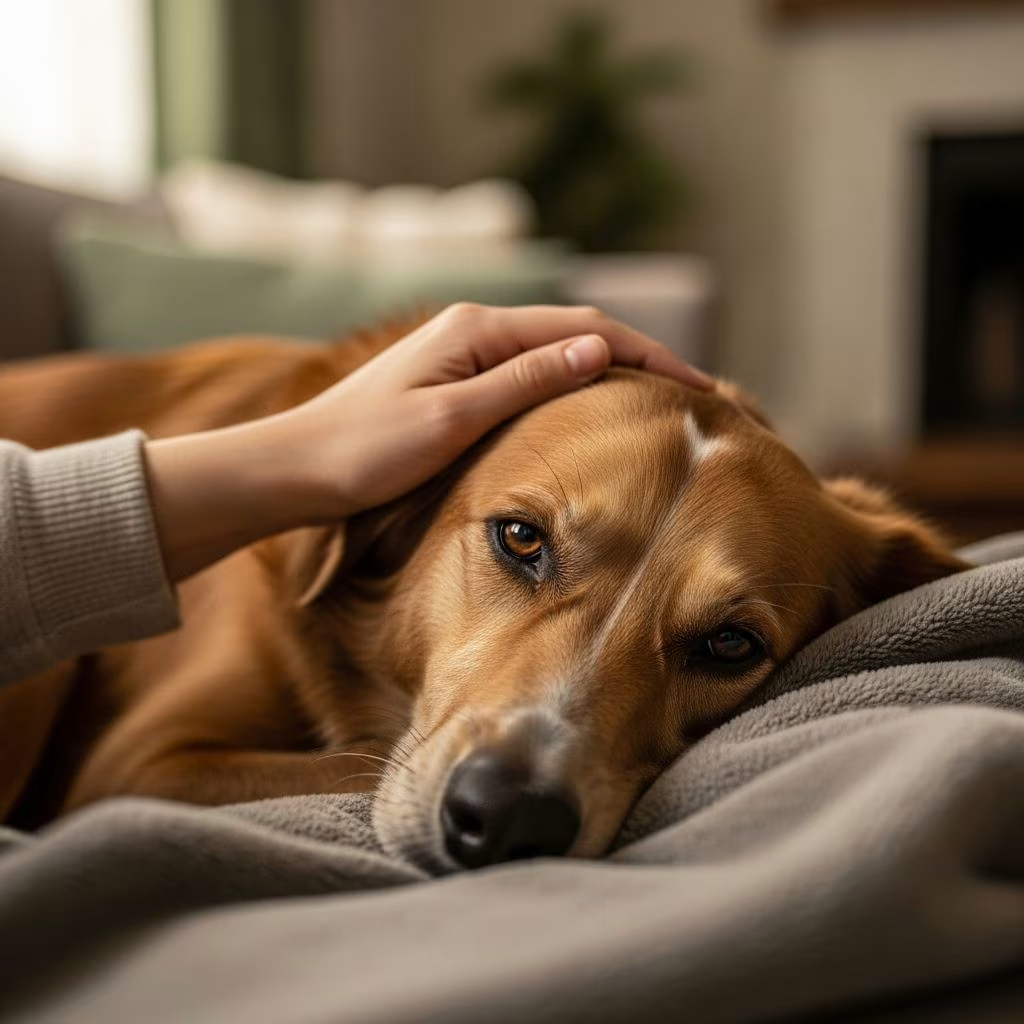
Understanding Touch Sensitivity in Canines
Touch sensitivity in dogs represents a legitimate behavioral challenge that affects many pet owners. When a dog exhibits reluctance or anxiety around physical contact, it often stems from past experiences, lack of early socialization, or inherent temperament traits. Dogs with touch aversion may display signs including backing away, trembling, lip licking, yawning, or attempting to escape when touched. These responses indicate genuine discomfort rather than willful disobedience.
The foundation of any successful touch conditioning program rests on understanding that desensitization requires time, consistency, and a reward-based framework. Unlike traditional force-based approaches, modern behavioral science emphasizes creating positive associations with human contact, allowing the dog to move at their own pace while building confidence incrementally.
Establishing the Baseline: Proximity Training First
Before initiating direct physical contact, establishing comfort with your presence forms the critical first step. This preliminary phase removes pressure and allows your dog to form associations between your proximity and positive outcomes. Begin by sitting near your dog in a relaxed posture without attempting any physical contact. Your body language should remain calm and non-threatening, with your posture open and shoulders relaxed.
During these proximity sessions, reward your dog for calm behavior by tossing treats from a distance. This approach allows your dog to eat the treat without feeling trapped or pressured by your physical presence. Repeat this process 10-15 times per session, maintaining sessions of approximately 2-3 minutes to prevent overwhelming your dog. The goal involves establishing that your proximity consistently predicts positive outcomes.
Progressive expansion of proximity forms the next component. Over successive sessions, gradually move closer to your dog while continuing to reward calm behavior. Watch for signs of acceptance including relaxed body posture, normal breathing patterns, and genuine interest in treats. If your dog shows discomfort by backing away or displaying tension, maintain the previous distance until confidence builds.
Introducing Contact: The Shoulder Approach
Once your dog demonstrates comfort with proximity, initiating actual contact requires selecting low-stress body regions. The shoulder and chest areas typically present the least threat to most dogs, making them ideal starting points for touch conditioning. These zones allow you to establish foundational comfort before progressing to more sensitive regions.
The mechanics of initial contact remain straightforward yet require precision. Place your hand gently on your dog’s shoulder while simultaneously offering a high-value treat with your other hand. The duration of this first contact should be minimal—just one to two seconds. Immediately remove your hand and allow your dog to consume the treat. This rapid sequence prevents your dog from becoming anxious during the touch itself.
Repetition within individual sessions proves essential for building familiarity. Perform 10-15 repetitions of this shoulder-touch-and-treat sequence before concluding the session. Your dog should begin displaying anticipation, moving toward your hand or displaying positive body language when you initiate the touch. Once your dog consistently accepts this basic protocol with visible comfort, you’ve established the foundation for progressive advancement.
Building Duration: Extending Touch Tolerance
After establishing basic comfort with brief touches, gradually increasing contact duration becomes the next progression milestone. This expansion must occur so gradually that your dog barely registers the change, preventing anxiety spikes that could reverse progress.
Follow this structured progression schedule:
- Week 1-2: Maintain 1-2 second touches paired with immediate treats
- Week 3-4: Extend touches to 3-5 seconds while continuing treat rewards
- Week 5-6: Gradually progress to 5-10 second touches
- Week 7+: Continue extending duration based on your dog’s demonstrated comfort level
Throughout this progression, monitor your dog’s responses carefully. Signs of acceptable progress include relaxed facial expressions, steady breathing, and genuine interest in receiving treats. Warning indicators that suggest moving too quickly include tension in the shoulders, rapid breathing, or attempts to move away. If you observe these signs, return to the previous duration level and maintain more sessions at that interval before attempting further progression.
Varying Touch Pressure and Technique
Touch quality encompasses more than duration alone. The pressure applied during contact significantly influences your dog’s comfort level. Begin with extraordinarily light touches using only fingertip contact, essentially creating a barely perceptible sensation. This minimal-pressure approach allows dogs to acclimate to contact sensation without feeling confined or controlled.
Progress through this pressure sequence:
- Gentle fingertip touches across the shoulder
- Full palm contact with very light pressure
- Gradual increase in palm pressure while maintaining your dog’s comfort
- Gentle cradling and support movements
- Introduction of light restraint-style handling
Varying the sequence and pattern of your touches prevents your dog from anticipating a rigid routine. Dogs with anxiety benefit from unpredictability in training contexts, as it helps them understand that varied handling situations remain safe and rewarding. Occasionally touch the shoulder, then alternate with chest touches, followed by neck area contact. This variation prepares your dog for real-world scenarios involving veterinary exams and grooming procedures.
Systematic Progression to Sensitive Areas
Once your dog demonstrates solid confidence with shoulder handling, expanding to additional body regions proceeds systematically from less sensitive to more sensitive locations. Most dogs find the following progression manageable: chest to back, back to sides, sides to hind legs, and finally to more sensitive areas including paws, ears, and head.
The critical principle governing this expansion involves never forcing progression. If your dog shows hesitation about a particular body area, remain at previous comfort zones longer. Forcing premature advancement to anxiety-inducing areas risks creating negative associations that can severely setback your training timeline.
For extremely sensitive areas like paws or ears, consider employing intermediate tools. A long-handled wooden spoon with soft fabric wrapped around the end provides distance while introducing tactile sensation, making the experience less threatening for dogs with severe touch aversion. Gradually transition from tool-assisted contact to direct hand contact as your dog’s confidence builds.
Special Consideration: Collar and Restraint Conditioning
Collar handling and gentle restraint represent critical skills for veterinary care and emergency situations. Begin this specialized training by reaching toward the collar area without touching it, stopping at a comfortable distance where your dog remains relaxed. Offer a treat with your other hand, then remove both hands while your dog eats.
Gradually progress this protocol across multiple sessions:
- Move reaches progressively closer to the collar without touching
- Progress to light collar touching
- Grasp the collar gently and release immediately
- Hold the collar gently while your dog consumes treats
- Gradually add slight pressure while maintaining rewards
- Repeat the entire sequence on both sides of the neck
This bilateral approach ensures your dog accepts handling from either side, crucial for real-world veterinary and grooming situations. Maintain 10-15 repetitions per session and take breaks between training blocks to prevent fatigue.
Recognizing Stress Signals and Managing Setbacks
Successful touch conditioning requires keen observation of your dog’s emotional state. Common stress indicators include yawning, lip licking, rapid breathing, body trembling, pinned-back ears, and attempts to increase distance from you. When these signals appear, immediately cease the current activity and return to a previous comfort level.
Setbacks occur in most training programs and do not indicate failure. Progress frequently follows a non-linear pattern with periods of advancement interspersed with plateaus or temporary regressions. Patience and consistency prove more valuable than rapid advancement. Some dogs require weeks or months to achieve comfort with handling that other dogs master in days.
Integration Into Daily Routines
Sustainable progress emerges when touch conditioning integrates into your daily interactions rather than remaining isolated training sessions. Incorporate gentle touching and handling into playtime, grooming, and quiet moments throughout your day. This integration helps your dog understand that human contact represents a normal, expected, and rewarding aspect of their life.
Consistency across household members proves equally important. All family members should employ identical techniques, maintaining the same reward-based approach and respecting the same comfort boundaries. Inconsistent handling from different people can confuse your dog and undermine training progress.
Advanced Applications: Preparation for Medical Care
Touch desensitization creates foundation skills that directly benefit real-world situations including veterinary examinations, grooming procedures, and nail trimming. Dogs conditioned to accept gentle handling experience substantially less stress during these necessary procedures.
Once your dog demonstrates reliable comfort with general body handling, you can introduce specific medical-related touches. Gently examine ears, look inside the mouth briefly, and simulate nail trimming pressure without actually trimming. These practice scenarios familiarize your dog with procedures they will experience during professional care.
Troubleshooting Common Challenges
Some dogs display extreme touch aversion that requires modified approaches. For formerly abused or severely traumatized dogs, progress may extend over many months. In these cases, consider working with a certified professional dog trainer or veterinary behaviorist who can develop individualized protocols.
Dogs displaying aggressive responses to touch require specialized handling beyond basic desensitization. Growling, snapping, or attempting to bite during touch conditioning indicates the need for professional intervention to ensure safety for your dog and household members.
Measuring Progress and Celebrating Milestones
Document your dog’s progression by noting specific milestones achieved. Initial comfort with proximity, first successful shoulder touch, extended duration tolerance, and expansion to new body areas all represent legitimate achievements worthy of recognition. Maintaining simple progress notes helps you identify patterns and celebrate advancement that might otherwise go unnoticed.
Remember that the ultimate goal extends beyond mere physical tolerance to genuine acceptance and comfort with human contact. A dog who eagerly seeks out your touch and demonstrates relaxation during handling has achieved the true success of this conditioning work.
References
- Positive Reinforcement Training Methods for Dogs — American Kennel Club (AKC). Accessed March 2026. https://www.akc.org/expert-advice/training/
- Clinical Skills: Lifting and Restraining a Dog — University of Bristol, Faculty of Veterinary Science. https://www.bristol.ac.uk/vetscience/
- Body Handling Sensitivity in Service Dogs — Dog Partners. https://www.dogpartners.ca/
- Canine Behavior: Touch Sensitivity and Desensitization Protocols — International Association of Canine Professionals. https://www.iacp.net/
- Gentle Handling and Training for Touch-Sensitive Dogs — Good Dog Santa Cruz, Professional Training Methods. https://www.gooddogsantacruz.com/
- Progressive Desensitization in Canine Behavior Modification — Association of Professional Dog Trainers. https://www.apdt.com/



