

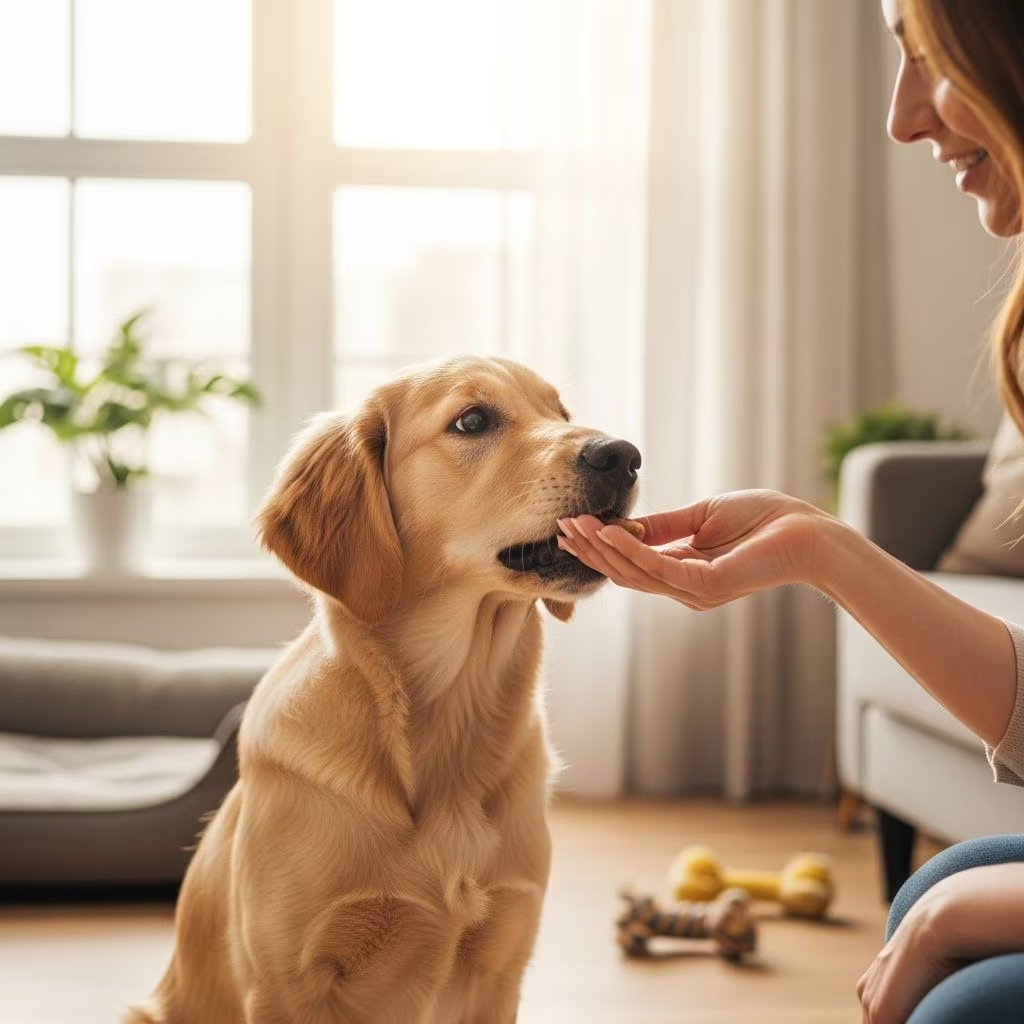
Positive reinforcement stands as the cornerstone of modern dog training, focusing on encouraging good behaviors through rewards rather than suppressing bad ones with punishment. This approach not only yields reliable results but also strengthens the human-canine bond by associating training with joy and success.
Why Choose Reward-Based Training?
Reward-based methods leverage operant conditioning, where desired actions are reinforced by adding something pleasurable, like treats or praise, immediately after the behavior occurs. This ‘positive’ addition increases the likelihood of repetition, creating confident, eager learners. Unlike dominance or force techniques, which can instill fear and erode trust, positive methods promote mental stimulation and voluntary participation.
Studies and expert consensus highlight its superiority: dogs trained this way show reduced stress, better retention, and enthusiasm for learning. For instance, rewarding a sit before opening the door prevents bolting, turning potential chaos into calm compliance.
Core Principles of Effective Reinforcement
Success hinges on foundational elements that ensure clarity and progression. Mastering these builds a solid training framework.
- Precision Timing: Deliver rewards within seconds of the behavior to forge a clear link. Delayed praise confuses dogs, weakening the association.
- Unwavering Consistency: Every family member must reward the same actions identically. Inconsistent signals lead to frustration and mixed results.
- Clear Cues: Use distinct words like ‘sit’ or ‘stay’ in an upbeat tone, paired with gestures. Dogs thrive on predictable communication.
- Diverse Motivators: Rotate treats, toys, play, or affection to maintain engagement and prevent reward fatigue.
- Patience in Progression: Start in low-distraction settings, gradually increasing challenges as proficiency grows.
Step-by-Step Guide to Basic Commands
Begin with fundamentals using a structured process: cue, behavior, mark, reward. Short 5-minute sessions keep energy high and prevent burnout.
Teaching ‘Sit’
- Hold a treat above the dog’s nose, moving it back over their head to prompt the butt drop.
- Mark with a clicker or ‘yes!’ the instant haunches hit the ground.
- Deliver the treat and enthusiastic praise.
- Repeat 5-10 times, then add the verbal cue ‘sit’ before luring.
Phase out lures by rewarding only cue-prompted sits, fading treats to intermittent use.
Mastering ‘Stay’
From a sit, say ‘stay,’ step back one pace, then return to reward. Build duration and distance incrementally. Use a release word like ‘okay’ to end the stay.
Recall on Command
In a safe area, call ‘come!’ excitedly, rewarding heavily upon arrival. Never call for negatives like baths—keep it 100% positive.
Overcoming Common Challenges
Even with best practices, hurdles arise. Address them proactively without reverting to force.
| Challenge | Solution | Example |
|---|---|---|
| Jumping Up | Ignore until all paws are on the ground, then reward calm greeting. | Turn away silently; praise and treat when settled. |
| Pulling on Leash | Stop walking until slack returns, reward forward progress. | Use high-value treats for heel position. |
| House Training Setbacks | Supervise closely, reward outdoor elimination instantly. | Clean accidents enzymatically; no scolding. |
| Reactivity to Strangers | Counter-condition with distance and rewards for calm focus. | Treat for looking at you amid triggers. |
Track progress in a journal: note frequency, speed, and reliability of responses to confirm reinforcement is working.
Tools That Enhance Success
- Clickers: Precise markers bridging behavior and reward, accelerating learning via classical conditioning.
- High-Value Treats: Soft, smelly options like chicken or cheese for motivation in tough scenarios.
- Long Lines: For safe recall practice in open spaces, allowing freedom with control.
- Training Platforms: Elevated surfaces for focus exercises like stays.
Combine with environmental management: baby gates prevent unwanted access, setting up success.
Advanced Techniques for Lifelong Learning
Once basics solidify, introduce shaping—rewarding approximations toward complex behaviors. For ‘shake,’ start with paw lifts, progressing to full hand contact.
Errorless learning minimizes frustration: predict and prevent mistakes, rewarding heavily early on. Chain behaviors like sit-stay-recall for sequences.
Proofing builds reliability: vary locations, distractions, and handlers. Intermittent rewards mimic real life, making behaviors stick without constant treats.
The Science Behind the Kindness
Operant conditioning’s four quadrants explain why positives dominate: Positive Reinforcement (R+) adds rewards to increase behavior; Negative Punishment (P-) removes them to decrease it. Avoid aversives like Positive Punishment (P+) or Negative Reinforcement (R-), which risk fear and shutdown.
Neurochemically, rewards trigger dopamine, fostering joy and attachment. Handlers become predictors of good things, enhancing cooperation. Experts like certified trainers affirm: dogs offer behaviors proactively, problem-solving with glee.
Real-World Applications
Integrate into daily life: Reward sits before meals, doors, or greetings to prevent issues preemptively. For rescues with baggage, pair management with counter-conditioning to rewrite emotional responses.
Group classes amplify socialization, but home consistency is key. Whole-family buy-in prevents sabotage.
Frequently Asked Questions
Does positive training work for stubborn breeds?
Yes—all dogs respond to well-timed rewards. Tailor reinforcers to the individual’s drive.
How long until results show?
Basics in days with daily practice; reliability in weeks. Patience yields permanence.
What if my dog ignores rewards?
Up value (e.g., steak vs. kibble), reduce distractions, or check health issues.
Can I fade treats entirely?
Yes, via variable schedules, but keep occasional jackpots for maintenance.
Is it okay for puppies and seniors?
Absolutely—gentle, adaptable for all ages and abilities.
Building a Joyful Training Partnership
Reward-based training transforms routines into games of mutual delight. Dogs evolve from reactors to thinkers, offering sits for pets or stays for play. This patience-driven path, kinder than any force, forges unbreakable loyalty and pure fun.
References
- The Power of Positive Reinforcement: 5 Effective Dog Training Tips — 3 Dog Ranch. 2023. https://www.3dogranchmt.com/post/positive-reinforcement-tips
- How To Train a Dog With Positive Reinforcement — PetMD (Erika Lessa, CBST, CDBT, CDBC, CPDT-KA). 2023-05-15. https://www.petmd.com/dog/behavior/how-to-train-a-dog-with-positive-reinforcement
- Positive Reinforcement Dog Training: Understanding Operant Conditioning — American Kennel Club (AKC). 2024-01-10. https://www.akc.org/expert-advice/training/operant-conditioning-positive-reinforcement-dog-training/
- Dog Training Methods: Positive Reinforcement vs. Dominance Training — Blackwood Canine. 2023. https://www.blackwoodcanine.com/blog/dog-training-methods-positive-reinforcement-vs-dominance-training
- 6 Dos and Don’ts of Positive Reinforcement Dog Training — Ridgeside K9. 2023. https://ridgesidek9winchester.com/6-dos-and-donts-of-positive-reinforcement-dog-training/
- How to Reward Dogs With Positive Reinforcement Training — Humane World. 2024. https://www.humaneworld.org/en/resources/positive-reinforcement-training/



