

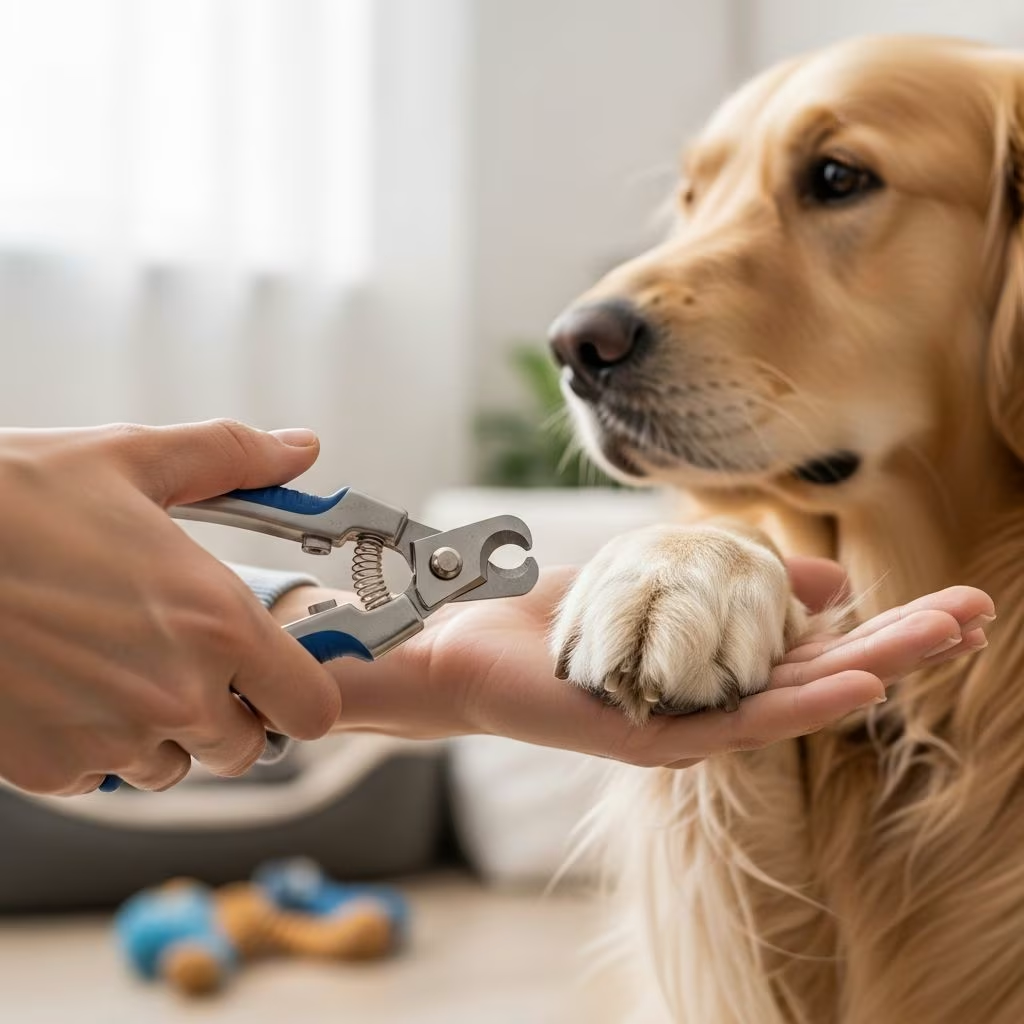
The traditional approach to dog nail trimming often involved restraint and force, treating the procedure as something to be endured rather than experienced. Modern dog care has shifted dramatically toward methods that prioritize the emotional wellbeing of our canine companions while still achieving practical grooming goals. This transformation reflects a deeper understanding of canine behavior and a commitment to maintaining healthy relationships built on trust rather than compliance through coercion.
Understanding the Shift in Dog Grooming Philosophy
For decades, dog owners and handlers assumed that physical restraint was necessary to safely trim nails. The assumption was that dogs needed to be held firmly in place to prevent movement and ensure precision. However, contemporary dog training has revealed that this approach often creates lasting negative associations with grooming, anxiety during handling, and deteriorating trust between dogs and their caretakers. The philosophical shift toward cooperative grooming recognizes that dogs can learn to voluntarily participate in procedures that benefit their health.
When we move away from force-based methods, we must replace them with intelligence and creativity. Rather than relying on physical dominance, handlers can utilize problem-solving skills and an understanding of canine motivation to make nail trimming a positive or at least neutral experience. This approach requires patience, planning, and a willingness to break complex tasks into manageable steps that dogs can learn progressively.
The Foundation: Understanding Your Dog’s Starting Point
Before implementing any nail trimming technique, it’s essential to recognize your individual dog’s baseline comfort level. Some dogs have had negative experiences with nail trimming in their past, while others may never have encountered clippers before. Dogs with sensitive paws, rescue dogs with unknown histories, or those who have experienced rough handling require particularly thoughtful approaches.
The first step involves observation and assessment. Notice whether your dog shows signs of anxiety when you touch their paws, when they see grooming tools, or during actual trimming. Common stress signals include pulling away, lip licking, yawning, turning their head away, freezing, or attempting to escape. Understanding these signals helps you identify which specific aspect of the procedure causes concern, allowing you to address that element systematically.
Building Positive Associations with Grooming Tools
One of the most effective techniques for helping dogs accept nail trimming involves gradually creating positive associations with the tools themselves. This process, known as counter-conditioning, transforms how dogs perceive clippers or grinders by consistently pairing these objects with rewards and pleasant experiences.
The counter-conditioning process typically follows these stages:
- Introduce the clipper or grinder at a distance where your dog notices it but remains relaxed, then immediately provide high-value treats or praise
- Gradually decrease the distance between your dog and the tool while maintaining positive associations
- Progress to touching your dog with the tool while still providing rewards
- Eventually position the tool near or touching the nail while rewarding calm behavior
- Practice actual trimming in very short sessions with immediate rewards following each nail
This gradual approach prevents overwhelming your dog while building a new neural pathway that associates grooming tools with good outcomes rather than discomfort or anxiety. The key is maintaining consistency and never rushing through stages before your dog demonstrates genuine comfort at each level.
Conditioning Your Dog to Accept Paw Handling
Parallel to introducing grooming tools, many dogs need specific training to comfortably accept paw handling. This is a separate but equally important component of the overall nail trimming process. Some dogs naturally tolerate touch on their paws, while others experience genuine sensitivity or anxiety about this type of contact.
Paw conditioning can be approached systematically:
- Begin by touching your dog’s leg or shoulder area briefly, rewarding calm acceptance
- Gradually move touches closer to the paw over multiple sessions
- Touch the paw itself for increasingly longer durations, always rewarding
- Gently hold the paw while providing treats
- Practice holding the paw in the position you’ll use for trimming
- Introduce the grooming tool while holding the paw, continuing to reward
This sequential approach ensures that your dog learns to tolerate necessary handling without experiencing fear or stress. Many dogs who seem resistant to nail trimming are actually responding to anxiety about paw handling rather than the trimming itself. Addressing this component separately can transform the entire grooming experience.
Voluntary Paw Positioning: Teaching Active Participation
An innovative approach to eliminating the need for restraint involves teaching dogs to voluntarily position their paws for trimming. Rather than holding or controlling your dog’s paw, you can use shaping techniques to teach them to place their paw on your leg or another designated surface where trimming becomes accessible and straightforward.
This method offers several advantages. First, it eliminates the need to condition your dog to accept restraint, reducing the overall steps in the training process. Second, it actively engages your dog’s problem-solving abilities and gives them agency in the procedure. Third, dogs who participate actively often experience less anxiety than those who are passively held.
Teaching paw positioning typically involves:
- Sitting at floor level beside your dog to seem less intimidating
- Gently encouraging your dog to place their paw on your leg through gentle guidance or luring with treats
- Rewarding any movement toward placing the paw in the desired position
- Gradually requiring fuller, more deliberate paw placement before rewards are given
- Practicing this positioning away from the actual trimming context first
- Eventually integrating brief, rewarded touches with grooming tools while the paw is in position
Dogs quickly learn this game, particularly when rewards are frequent and the process remains playful. Once your dog reliably positions their paw on command, the actual trimming becomes a secondary concern that your dog has already been prepared for through earlier conditioning steps.
The Intermittent Reward Strategy
Another effective technique involves using strategic placement of rewards to maintain your dog’s cooperation throughout a multi-nail trimming session. Rather than rewarding after each nail is trimmed, which can become disruptive and inefficient, some handlers use a “wait and reward” approach that keeps dogs engaged and cooperative.
This method works by:
- Positioning your dog in a stay or down position where nail access is optimal
- Placing high-value treats at a specific distance in front of your dog
- Trimming one nail while your dog remains in position
- Releasing your dog to consume the treat
- Repeating the cycle for subsequent nails
- Varying which nails trigger the release cue to maintain unpredictability and engagement
This approach maintains your dog’s focus and cooperation while allowing you to work efficiently. The unpredictability of which nail will result in a reward keeps your dog attentive and engaged. Dogs trained with this method often become enthusiastic about nail trimming sessions rather than tolerating them reluctantly.
Alternative Methods: Self-Filing and Grinding
Some dogs who struggle significantly with traditional nail trimming or handling may benefit from alternative approaches. Teaching dogs to file their own nails using a sandpaper-covered board represents one creative option. This method involves shaping your dog to paw at the textured surface, which naturally wears down their nails over time.
This technique works particularly well for dogs who enjoy shaping games and interactive training. The process involves teaching your dog to paw at the board through games and play, making nail maintenance feel like entertainment rather than a grooming procedure. While this approach takes longer than clipping and requires ongoing practice, it can be transformative for anxious dogs.
Nail grinders represent another alternative that many dogs find more tolerable than clippers. Grinders sand down nails gradually rather than creating a sharp cutting action, which some dogs find less startling. Grinders do require additional time and still need the same desensitization process, but they may present a lower barrier to cooperation for certain dogs.
Practical Considerations for Tool Selection and Technique
| Tool Type | Advantages | Considerations |
|---|---|---|
| Scissor-Style Clippers | Quick, precise cuts; familiar to many handlers | Requires good hand strength; can split nails if dull |
| Guillotine Clippers | Smooth cutting action; easier for beginners | Less precise; requires practice to avoid crushing nails |
| Nail Grinders | Gradual trimming; smoother edge; many dogs tolerate well | Takes longer; creates noise that some dogs find concerning |
Regardless of which tool you select, maintaining proper technique protects your dog from injury. Understanding the anatomy of the nail helps prevent cutting the quick, which contains blood vessels and nerve endings. In light-colored nails, the quick appears as a pink area. With dark nails, you can trim gradually until you see a small whitish cross-section, indicating proximity to the quick. Always stop before reaching this point.
If you accidentally cut into the quick, having styptic powder or cornstarch available helps stop bleeding quickly. Applying pressure for several minutes usually resolves the issue, though bleeding that continues beyond fifteen to twenty minutes warrants veterinary attention.
Troubleshooting Common Challenges
Despite implementing compassionate approaches, some dogs continue showing anxiety about nail trimming. Understanding common obstacles helps handlers adjust their methods appropriately.
Escalating anxiety during training: If your dog becomes increasingly anxious rather than gradually relaxing, you may be progressing too quickly through desensitization steps. Return to earlier stages and spend additional time building comfort before advancing.
Tool-specific anxiety: Some dogs respond better to grinders than clippers or vice versa. Experimenting with different tools helps identify what your individual dog finds most tolerable.
Inconsistent progress: Regular, brief training sessions work better than occasional longer sessions. Daily five-minute practice sessions typically produce faster results than weekly thirty-minute sessions.
Paw sensitivity limiting progress: If paw handling seems to be the primary barrier, extending the conditioning phase specifically for paw touch may be necessary before addressing tool-related anxiety.
Maintaining Long-Term Comfort and Cooperation
Once your dog demonstrates comfort with nail trimming, maintaining that positive association requires ongoing attention. Scheduling regular, brief trimming sessions maintains both physical health and positive conditioning. Dogs who receive nail trimming every four to six weeks typically remain more comfortable with the procedure than those who go long periods between trimmings and then face significantly overgrown nails.
Continuing to use rewards, maintaining calm and confident handling, and keeping sessions brief helps sustain the positive relationship with grooming. Some dogs eventually require less frequent rewards as nail trimming becomes routine, while others benefit from continued incentives indefinitely. Individual preferences and learning histories vary significantly.
Frequently Asked Questions
How long does the desensitization process typically take?
Timeline varies significantly based on your dog’s starting anxiety level and prior experiences. Dogs with minimal fear may progress to actual trimming within one to two weeks of daily brief sessions. Those with significant anxiety may require several weeks or months of gradual conditioning. The key is moving at your individual dog’s pace rather than adhering to any predetermined timeline.
Can older dogs or rescue dogs learn to accept nail trimming?
Age is not a limiting factor in learning. Rescue dogs with unknown histories often benefit most from compassionate, patient approaches. Even dogs with deeply ingrained fear responses can learn to tolerate nail trimming when given adequate time and consistent positive reinforcement.
What should I do if my dog seems to be regressing in their comfort level?
Regression often indicates that progression moved too quickly or that something triggered renewed anxiety. Return to earlier stages, increase the frequency of rewarding calm behavior, and move forward more gradually. Also consider whether environmental factors, changes in your own stress level, or other life events might have affected your dog’s emotional state.
Is it ever necessary to use restraint or force for nail trimming?
With adequate time and appropriate methods, physical restraint becomes unnecessary even for severely anxious dogs. Some nail trimmers employed by groomers or veterinarians may use brief gentle restraint, but long-term comfortable cooperation is achievable through patient conditioning alone.
References
- Force-Free Nail Trimming Techniques for Your Dog — Whole Dog Journal. May 15, 2018. https://www.whole-dog-journal.com/care/nail-clipping/force-free-nail-trimming-techniques-for-your-dog/
- How to Get Your Dog Used to Nail Trims — Preventive Vet. https://www.preventivevet.com/dogs/how-to-get-a-dog-used-to-nail-trims
- Pain Free Dog Nail Trimming: A Complete Guide — West Concord Animal Clinic. https://westconcordanimalclinic.net/dog-nail-trimming-a-complete-guide/



