

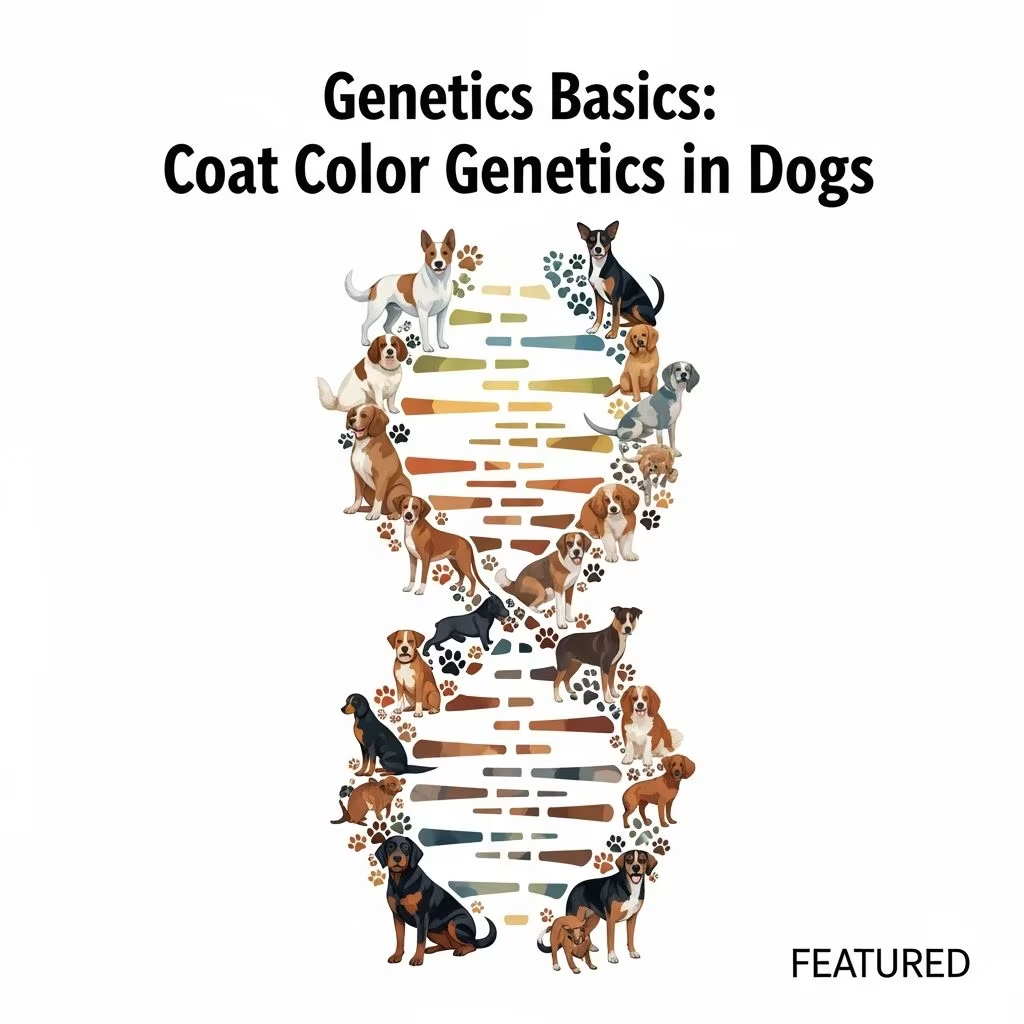
Understanding Dog Coat Color Genetics
The remarkable variety of coat colors seen in dogs—from solid blacks and chocolates to spotted dalmatians and sable German Shepherds—all stem from relatively simple genetic principles. Despite the astounding diversity in canine coat colors and patterns, the foundation of all these variations rests on just two basic pigments: eumelanin and phaeomelanin. Understanding how these pigments are produced, distributed, and modified by different genes provides insight into one of the most visible and appealing characteristics of dogs.
Dog coat color is not determined by random chance but rather by a dog’s inherited gene pool. Genes perform two critical functions that determine a dog’s coat appearance: they control which pigments are produced and regulate where those pigments are created throughout the coat. Different genes signal certain cells to produce eumelanin, instruct other cells to manufacture phaeomelanin, and direct some cells to produce no pigment at all. Remarkably, genes can even instruct individual hair cells to switch between producing eumelanin and phaeomelanin, creating hairs that display both black and red coloration.
The Two Primary Pigments in Dog Coats
All dog coat colors derive from two main pigments, which are both forms of melanin. Understanding these pigments is essential to comprehending coat color genetics:
Eumelanin is the pigment responsible for black, brown, grey, and taupe coloration in dog coats. This pigment can appear in two primary forms: black eumelanin and brown eumelanin. The specific shade and intensity of eumelanin-based colors depend on various genetic factors that modify how the pigment is produced and distributed.
Phaeomelanin produces the red, yellow, gold, and cream colorations seen in many dogs. This pigment creates the warm tones and lighter shades found in breeds like Golden Retrievers, Red Irish Setters, and yellow Labrador Retrievers. Additionally, some dogs may display a complete lack of melanin, resulting in white coat coloration with no pigment present.
Every variation in dog coat color—whether it’s a deep mahogany, a pale cream, a striking blue-grey, or a rich liver brown—results from the interaction of these two pigments and genes that control their production and distribution.
Major Genes Controlling Coat Color
More than eight genes in the canine genome have been identified and verified to influence coat color, with each gene containing at least two known alleles. These genes represent different locations, called loci, within the dog’s genetic code. Together, they account for the remarkable variation in coat colors observed across all dog breeds.
The E (Extension) Locus
The E locus, also known as the MC1R gene, plays a crucial role in determining whether eumelanin is produced in a dog’s coat. This locus is responsible for creating the black facial masks seen on many dog breeds and determining whether a dog displays yellow or red coats. The E locus contains four known alleles arranged in order of dominance: Em (melanistic mask), Eg (grizzle), E (black), and e (red/cream).
When a dog inherits the recessive e allele from both parents, it cannot produce black eumelanin in its coat, resulting in yellow, red, or cream coloration instead. The dominant E allele permits normal eumelanin production, while the Em and Eg alleles create distinctive masking or grizzling patterns.
The K (Dominant Black) Locus
The K locus, controlled by the β-Defensin 103 gene (DEFB103), determines the coloring pattern of a dog’s coat. This relatively recently discovered locus includes colorations previously attributed to other genes. The K locus contains three known alleles: KB (dominant black), kbr (brindle), and ky (phaeomelanin permitted).
The dominant KB allele produces solid black coloration regardless of alleles present at other loci. The brindle allele (kbr) creates distinctive black stripes over tan areas, while the phaeomelanin-permitted allele (ky) allows the pattern determined by other genes like the A locus to be expressed. Importantly, the KB allele is epistatic, meaning it overrides the expression of the A locus when present.
The A (Agouti) Locus
The A locus is responsible for different coat patterns in dogs and controls how melanin is distributed across individual hair shafts. The agouti protein produced by this gene controls the release of melanin into hair and switches between the production of eumelanin and phaeomelanin. This locus creates several distinct patterns including black and tan markings, sable patterns, and fawn coloration.
Different alleles at the A locus produce various phenotypes: ay (fawn), aw (wolf sable), at (black and tan), and a (recessive black). The expression of the A locus depends partly on the presence of other alleles, particularly at the K and E loci.
The B (Brown) Locus
The B locus affects the color of eumelanin pigment produced, determining whether it appears black or brown. This locus is controlled by the tyrosinase-related protein 1 (TYRP1) gene, which is an enzyme involved in eumelanin synthesis. The wild-type B allele is dominant and produces black eumelanin, while the recessive b allele produces brown eumelanin.
A dog must inherit two copies of the recessive b allele (genotype bb) to display brown or chocolate coat coloration and brown nose and paw pads. Dogs with at least one dominant B allele display black pigmentation. For dogs in the red or yellow pigment family (phaeomelanin), the brown allele can change the color of the nose and foot pads to brown while leaving the coat color relatively unchanged.
The D (Dilute) Locus
The D locus is responsible for diluted pigment that lightens coats from black or brown to grey, blue, or very pale brown. This genetic site is controlled by a mutation in the melanophilin (MLPH) gene, which codes for a protein involved in the distribution of melanin within hair cells. The MLPH gene is part of the melanosome transport complex; when defective, it prevents normal pigment distribution, resulting in a paler colored coat.
The D locus has two primary alleles: D (dominant full color) and d (recessive dilute). A dog must inherit two copies of the recessive d allele (genotype dd) to express dilution, which lightens black pigment to grey or blue and red pigment to cream. Diluted color is inherited as an autosomal recessive trait, meaning both parents must carry the dilute allele for offspring to display diluted coloration.
Additional Pigment Dilution Genes
Beyond the major loci described above, other genes—including the C, M, and G loci—function as pigment dilution genes that further modify coat color. The M locus controls the merle pattern, creating distinctive mottled or dappled effects in the coat. These additional genes can create even more color variations and patterns when combined with the primary loci.
Genes Affecting Coat Texture and Length
While color genetics focus on pigment production, coat texture and length are controlled by different genes entirely. Three genes—FGF5, KRT71, and RSPO2—are primarily responsible for variations in dog coat characteristics:
FGF5 determines whether a dog has long or short hair. Variations in this gene control hair growth cycle and length.
KRT71 (keratin-71) determines whether hair is straight or curly, affecting the texture and appearance of the coat.
RSPO2 determines whether a dog has a furnished face (with eyebrows and beard) or a smooth face. A 167 base pair deletion at the 3′ end of RSPO2 is responsible for this variation.
How Coat Color Inheritance Works
Dog coat color inheritance follows predictable patterns based on Mendelian genetics. Most genes that control coat color follow dominant and recessive inheritance patterns. Understanding these patterns helps breeders predict offspring coat colors and enthusiasts understand their own dogs’ genetic backgrounds.
For many coat color genes, a dog must inherit two copies of a recessive allele to express the recessive phenotype. For example, brown coloration requires genotype bb at the B locus, and dilute coloration requires genotype dd at the D locus. Dominant alleles only need one copy to be expressed in the dog’s coat color.
Some genes interact with each other in complex ways. The KB allele at the K locus is epistatic to the A locus, meaning it overrides A locus expression. Similarly, the presence of certain alleles at one locus can prevent or permit expression at another locus, creating intricate interactions that produce the diversity of coat colors and patterns seen in dogs.
Coat Color Is Not Completely Random
While coat color variation might appear random, it is actually determined entirely by a dog’s inherited gene pool and the interaction of multiple genes. Predictable patterns emerge when understanding parental genetics. Two black dogs might produce puppies in various colors if both parents carry recessive alleles for other coat colors. Conversely, two yellow dogs can only produce yellow puppies because they lack the dominant alleles needed to produce eumelanin-based colors.
Breeders use knowledge of coat color genetics to predict and sometimes select for specific colors and patterns in their breeding programs. DNA testing now allows breeders to identify which alleles individual dogs carry at each locus, enabling more accurate predictions of offspring coat colors even before breeding occurs.
The Complexity of Canine Pigmentation
The genetics of dog coat color demonstrates how relatively simple genetic principles can create extraordinary diversity. Multiple genes working together, some interacting in complex ways while others act independently, generate the full spectrum of colors and patterns seen across the hundreds of dog breeds worldwide. From the striking contrast of a black and tan German Shepherd to the uniform cream of a Golden Retriever, from the mottled pattern of a Merle Collie to the liver-colored nose of a Chocolate Labrador, all these variations trace back to variations in just a handful of genes controlling two primary pigments.
As genetic research continues to advance, scientists discover new genes and alleles that influence coat color and texture. This expanding knowledge benefits breed development, genetic health screening, and our fundamental understanding of canine biology.
Frequently Asked Questions
Q: Can two black dogs produce puppies of different colors?
A: Yes, if both black parents carry recessive alleles for other coat colors. For example, two black dogs that are both carriers of the recessive e allele at the E locus and the recessive b allele at the B locus could produce yellow, brown, or dilute-colored puppies.
Q: What causes a dog’s coat to change color as it grows?
A: Some dogs experience coat color changes as they mature. This can result from changes in pigment deposition, changes in hair growth cycles, or the progressive expression of certain genetic patterns over time. Sable and grizzle patterns often become more pronounced as dogs age.
Q: Why do some dog breeds have specific coat color requirements?
A: Breed standards often specify coat colors that were historically desirable or that breeders developed through selective breeding. These standards help maintain breed identity and consistency. Some colors became associated with breed function—for example, darker colors providing camouflage for hunting dogs.
Q: Can DNA testing predict my dog’s coat color?
A: Yes, genetic testing can identify which alleles a dog carries at each coat color locus. This information can be used to predict what colors puppies might inherit if that dog were bred, and to understand recessive traits a dog carries even if they aren’t expressed in the dog’s own coat.
Q: What is epistasis in dog coat color genetics?
A: Epistasis occurs when one gene suppresses or modifies the expression of another gene. In dog genetics, the KB allele at the K locus is epistatic to the A locus—when present, it produces solid black coloration regardless of what alleles are present at the A locus.
Q: Are some coat colors associated with health problems?
A: Some coat color genes have been associated with health concerns. For example, dogs homozygous for the merle allele (MM) can have vision and hearing problems. However, most coat color variations themselves do not indicate health issues when inherited from healthy parents.
References
- Dog Coat Colour Genetics: A Review — American Livestock Journal. 2020. https://www.als-journal.com/articles/vol7issue4/745.20/988.pdf
- Dog Coat Genetics: Color Basics — GenSol Diagnostics. 2024. https://www.gensoldx.com/dog-coat-genetics-color-basics/
- Dog Coat Genetics — Wikipedia Contributors. 2024. https://en.wikipedia.org/wiki/Dog_coat_genetics
- Genetics Basics: Coat Color Genetics in Dogs — VCA Animal Hospitals. 2025. https://vcahospitals.com/know-your-pet/genetics-basics-coat-color-genetics-in-dogs
- What Genes Decide a Dog’s Coat Length and Type? — American Kennel Club. 2024. https://www.akc.org/expert-advice/dog-breeds/dogs-coat-length-type/
- Science Corner: Coat Color Genetics 101 — Embarkvet. 2024. https://embarkvet.com/resources/science-corner-coat-color-genetics-101-2/



