

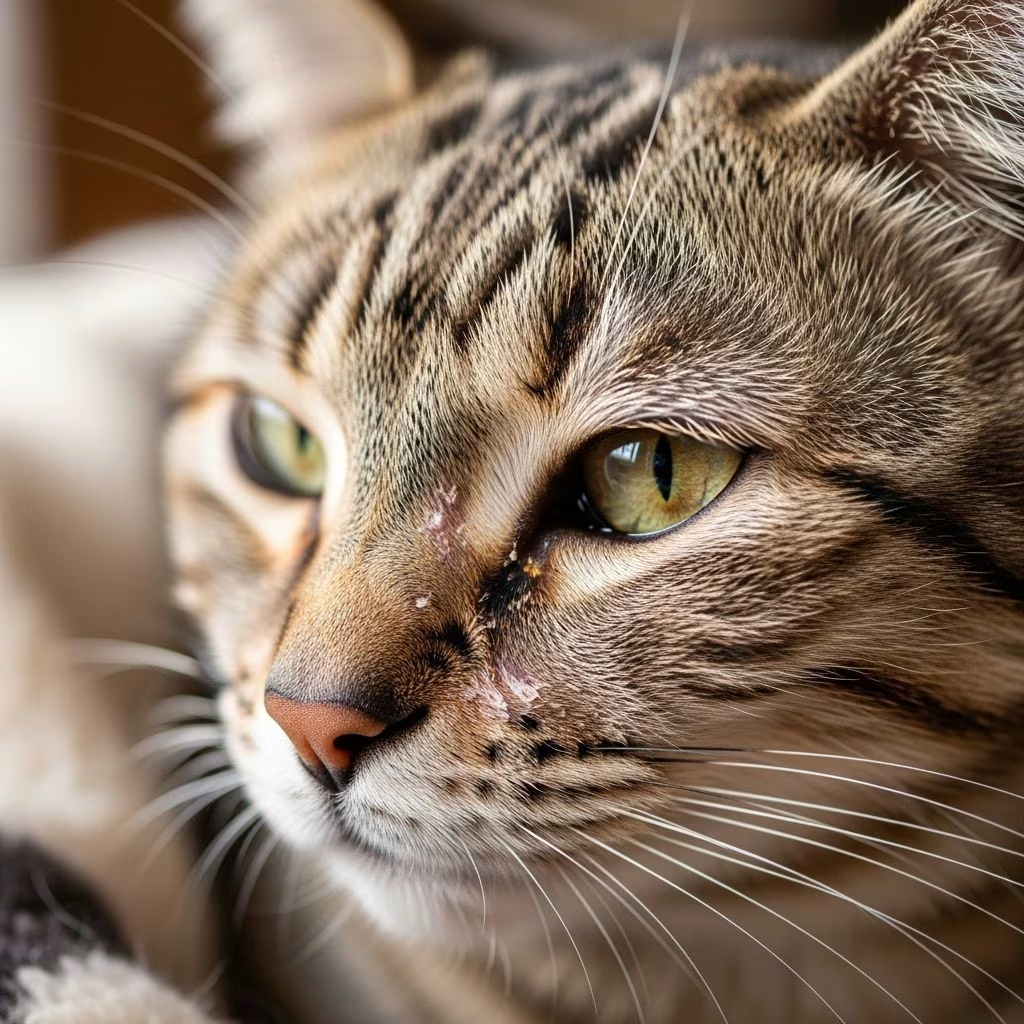
Feline skin health is a critical component of overall wellness, and while many skin issues develop from environmental or infectious causes, a significant subset of dermatological problems stem from genetic predisposition or developmental abnormalities present at birth. Understanding these inherited and congenital conditions is essential for cat owners seeking to protect their pets and make informed healthcare decisions. This comprehensive guide explores the landscape of genetically-determined skin disorders that affect cats, examining how these conditions develop, which breeds face elevated risk, and what treatment approaches are available.
Developmental Skin Defects Present at Birth
Certain cats are born with structural skin abnormalities that reflect disruptions during fetal development. These conditions manifest immediately upon birth and can range in severity from minor cosmetic concerns to life-threatening complications requiring urgent intervention.
Aplasia cutis represents one of the most severe congenital skin presentations, characterized by partial or complete absence of skin layers at birth. Affected kittens emerge with exposed areas lacking normal skin protection, resulting in open ulcerated regions and sometimes absent claws. The extent of involvement determines prognosis—while small localized defects may respond to surgical repair, widespread involvement creates significant complications including infection risk, fluid loss, and thermal dysregulation. Fatal outcomes occur when the condition affects substantial body surface areas, making early veterinary assessment critical for survival.
Another category of birth-related skin defects involves syndromic conditions affecting structural integrity. These disorders present with fragile skin evident from birth, accompanied by compromised wound healing capacity, hanging or loose skin, and fluid accumulation under the skin (both blood-filled hematomas and fluid-filled hygromas). Eyes may show concurrent abnormalities. These syndromes demonstrate different inheritance patterns depending on the cat population—Himalayan cats inherit the condition as a recessive trait, meaning carriers exist without displaying symptoms, while certain domestic shorthair lineages show autosomal dominant inheritance where all gene carriers develop clinical signs. The fragility of affected skin makes even minor trauma problematic, as normal activities easily cause wounds that heal with thin, inadequate scar tissue.
Blistering Disorders and Epidermal-Dermal Separation
A particularly challenging group of hereditary conditions affects the critical junction between the epidermis (outer skin layer) and dermis (deeper layer). Bullous syndromes in cats involve this interface separation, where even minimal trauma triggers blistering and subsequent ulceration. The blisters rupture easily, leaving shallow, glistening ulcers that are slow to heal. Affected areas develop most severely on the feet, oral cavity, facial regions, and genital zones—locations subject to frequent mechanical stress. Claw detachment and footpad loss create particularly debilitating complications. These conditions have been documented in Siamese, Persian, and domestic shorthair cats, with most cases proving fatal due to overwhelming secondary infections and systemic complications. Surviving cases typically experience severe pain and functional impairment.
Hair Loss Patterns of Genetic Origin
Hereditary alopecia conditions cause progressive or sudden hair loss through genetic mechanisms affecting hair follicle function or melanocyte (pigment cell) production.
Color-related hair loss syndromes represent a unique category where abnormal pigment production directly impacts hair shaft integrity. Coat color dilution results from defective pigment-producing cells, creating lighter or “diluted” coat colors. In Persian cats, this dilution produces the distinctive “blue smoke” appearance. However, this seemingly cosmetic variation frequently accompanies Chédiak-Higashi syndrome, a systemic disorder affecting multiple cell types beyond skin. These cats experience abnormal bleeding tendencies, compromised immune function reducing disease resistance, and characteristically shortened lifespans. The condition represents a clear example of how inherited skin pigmentation abnormalities often signal deeper systemic involvement.
Pigmentation Abnormalities and Color Changes
Several inherited conditions affect skin pigmentation without necessarily involving hair loss. These conditions range from benign cosmetic variations to potentially significant health markers.
Lentigo develops in orange and orange-faced male cats, characterized by the gradual appearance of pigmented spots typically first visible on the lips and eyelids around one year of age, progressively spreading to the nose and surrounding facial regions. Despite their dark appearance, lentigo spots carry no medical consequence and show no potential for malignant transformation. This condition represents a purely cosmetic manifestation requiring no treatment.
Vitiligo presents a more complex inherited disorder affecting pigment distribution. Unlike lentigo, vitiligo typically remains unnoticeable at birth, with onset typically occurring during young adulthood. The condition shows particular prevalence in Siamese cats. Affected animals develop bleached or depigmented patches of skin that may involve the hair coat and claws. The face bears the most visible involvement, particularly the bridge of the nose and periocular regions. Notably, pigmentation loss can fluctuate over time—patches may become more apparent or fade—though complete remission occurs rarely. Despite its aesthetic impact, vitiligo causes no underlying health complications, and treatment options remain limited, as therapies used in human vitiligo patients show minimal efficacy in feline patients.
Mast Cell Proliferation Disorders
Abnormal growth and multiplication of mast cells (immune system cells) create hereditary skin conditions with distinct clinical presentations.
Benign familial cutaneous mastocytosis has been identified in young Siamese cats as a rare inherited condition. Affected skin develops abnormal thickness with a distinctive leathery, bark-like texture. Intense pruritus (itching) is a hallmark feature, often leading to self-traumatization from excessive scratching and licking. Management focuses on pharmacological itching control and prevention of self-inflicted damage, though the condition persists throughout the affected animal’s life.
Urticaria pigmentosa represents another mast cell proliferation disorder. This hereditary condition produces multiple crusted bumps distributed across the head, neck, and legs. Diagnosis requires skin biopsy to confirm the excessive mast cell infiltration, distinguishing this condition from other papular and crusted dermatoses. Like mastocytosis, this condition is chronic and requires ongoing management.
Facial Dermatitis Affecting Specific Breeds
Certain breeds demonstrate genetic predisposition to specific facial skin conditions. Persian cats show particular susceptibility to chronic idiopathic facial dermatitis, colloquially termed “dirty face syndrome” by some veterinarians. This condition begins in young animals and persists throughout life, characterized by black or dark crusting particularly concentrated in facial folds and around the eyes. Secondary ear infections (ceruminous otitis) frequently accompany the facial disease. The cosmetic impact and associated self-trauma from grooming attempts can significantly affect quality of life, and treatment responses are often disappointing despite therapeutic intervention.
Genetic vs. Environmental Factors
Understanding the distinction between purely genetic skin conditions and those with multifactorial etiology is important for cat owners. True genetic/congenital disorders develop regardless of environmental circumstances—the abnormality originates from the cat’s genetic code or occurs during fetal development. Many feline skin conditions, however, involve complex interactions between genetic predisposition and environmental triggers, such as parasites, allergens, or infections.
This distinction has practical implications: while genetic conditions cannot be prevented through environmental management alone, some inheritable skin disorders show variable expressivity, meaning environmental optimization may reduce symptom severity in susceptible individuals.
Breed Predispositions
Certain cat breeds show documented increased prevalence of inherited skin disorders:
- Siamese cats demonstrate heightened susceptibility to vitiligo, epidermolysis bullosa, benign familial cutaneous mastocytosis, and various other inherited conditions
- Persian cats frequently develop idiopathic facial dermatitis, color dilution-related disorders, and epidermolysis bullosa
- Himalayan cats show increased risk for syndromic fragile skin conditions and structural integrity defects
- Male calico and tortoiseshell cats represent genetic anomalies with reproductive implications related to their color patterns
Diagnostic Approaches
Veterinary diagnosis of inherited skin conditions typically involves multiple assessment methods. Visual examination and patient history provide initial information, but definitive diagnosis often requires skin biopsy with histopathological examination. This procedure involves removing small skin samples for microscopic analysis, allowing veterinarians to identify specific cellular abnormalities characteristic of particular conditions. Imaging may be necessary to assess systemic involvement in syndromic conditions, and genetic testing may eventually become available for certain conditions as veterinary dermatology advances.
Treatment and Management Strategies
Treatment approaches vary dramatically depending on the specific condition:
| Condition Category | Management Approach | Expected Outcome |
|---|---|---|
| Severe structural defects | Supportive care, surgical correction of small defects, palliative care | Often fatal; small defects may be surgically managed |
| Pigmentation disorders (benign) | No treatment necessary; cosmetic concern only | Stable; affects appearance but not health |
| Pigmentation with systemic involvement | Symptom management, monitoring for systemic complications | Chronic; shortened lifespan in some cases |
| Mast cell disorders | Antihistamines, medications to prevent mast cell degranulation, anti-inflammatory agents | Chronic management; significant improvement possible |
| Fragile skin syndromes | Gentle handling, protective environment, wound care | Lifelong care required; variable prognosis |
Genetic Counseling and Prevention
For cat breeders and owners with pedigree cats, understanding the inheritance patterns of genetic skin conditions becomes critically important. Recessive conditions mean carriers exist without showing symptoms, potentially passing the gene to offspring if two carriers mate. Dominant conditions mean all carriers express clinical signs. Responsible breeding practices involve screening animals for hereditary skin conditions and avoiding breeding affected individuals or known carriers when possible. Genetic counseling from veterinary dermatologists can help breeding programs reduce disease prevalence in populations.
Quality of Life Considerations
The impact of inherited skin conditions on feline quality of life varies considerably. Some conditions (such as lentigo) cause no functional impairment despite their appearance. Others create persistent discomfort through itching or fragility requiring constant protective measures. The most severe conditions may prove incompatible with prolonged survival or comfortable existence. Owners and veterinarians must carefully weigh treatment burden against realistic improvement prospects when managing these lifelong conditions.
Future Perspectives in Feline Dermatogenetics
Ongoing veterinary research continues expanding understanding of inherited feline skin conditions. Advances in genetic testing may eventually enable identification of carrier animals before breeding, potentially eliminating certain hereditary conditions from specific breeding lines. Development of more effective therapies, particularly for currently untreatable conditions like vitiligo, may improve outcomes for affected cats. Increased awareness among cat owners and veterinarians ensures earlier recognition and appropriate management of these conditions.
References
- Congenital and Inherited Skin Disorders of Cats — Merck Veterinary Manual. 2026. https://www.merckvetmanual.com/cat-owners/skin-disorders-of-cats/congenital-and-inherited-skin-disorders-of-cats
- Understanding Skin Disease in Cats — DVM360, American Animal Hospital Association. 2017. https://www.dvm360.com/view/understanding-skin-disease-in-cats
- Skin Conditions in Cats: Types, Symptoms, and Treatment — PetMD Editorial. 2025. https://www.petmd.com/cat/general-health/skin-conditions-in-cats
- Feline Skin Diseases — Cornell Feline Health Center, College of Veterinary Medicine. 2025. https://www.vet.cornell.edu/departments-centers-and-institutes/cornell-feline-health-center/health-information/feline-health-topics/feline-skin-diseases
- Skin as a marker of general feline health: Cutaneous manifestations of systemic disease — National Center for Biotechnology Information, PubMed Central. 2024. https://pmc.ncbi.nlm.nih.gov/articles/PMC11128893/



