

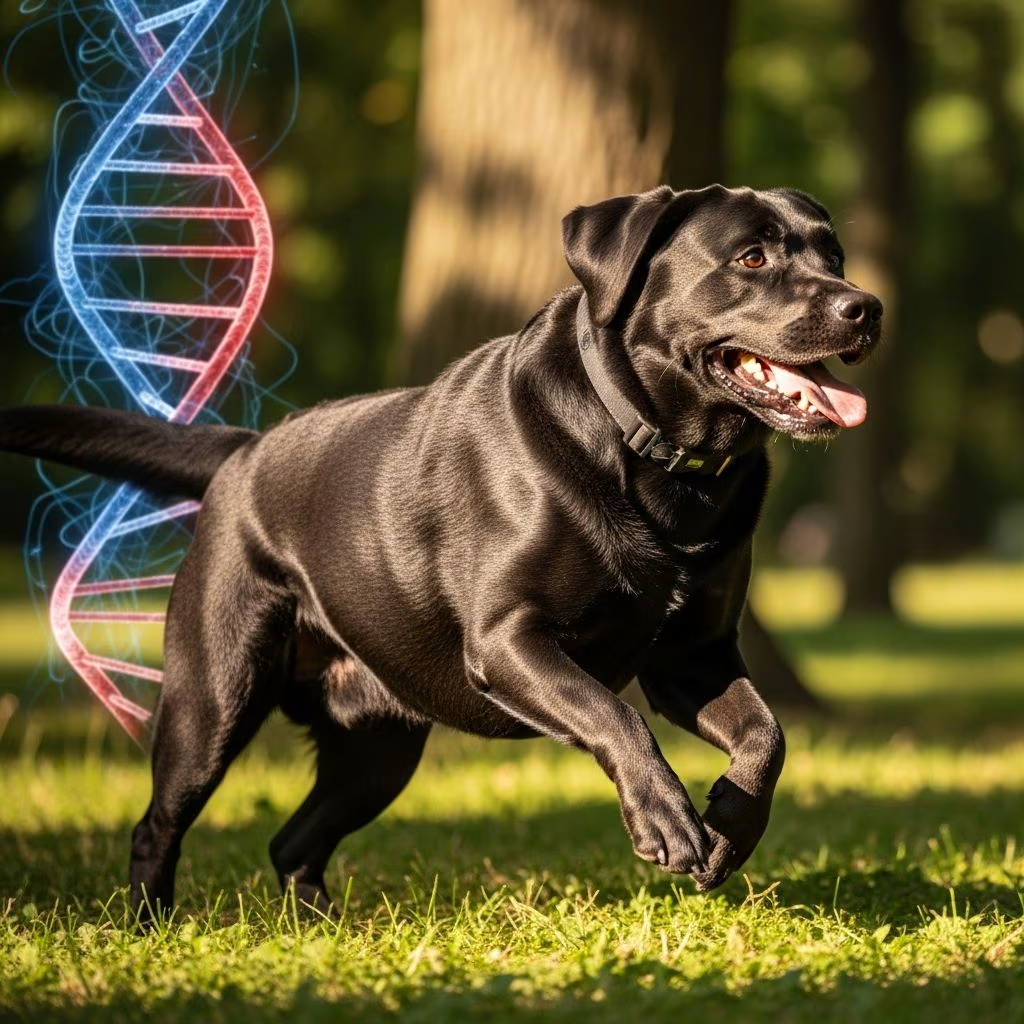
Labrador Retrievers, one of the most popular dog breeds worldwide, face a unique challenge: a pronounced susceptibility to obesity. This predisposition stems largely from their genetic makeup, where specific gene variants influence appetite, metabolism, and fat storage. Recent genomic studies have pinpointed several key players, providing breeders, owners, and veterinarians with actionable insights to combat this issue.
The Evolutionary Roots of Labrador Appetites
Labradors were originally bred for demanding fieldwork, such as retrieving game in harsh conditions. This history selected for dogs with exceptional drive for food, ensuring survival during scarce times. Today, in modern environments abundant with treats and kibble, these traits backfire, leading to rapid weight gain. Genetic research confirms that up to 25% of Labradors carry variants amplifying food motivation, making portion control essential.
Heritability estimates for body weight in dogs average around 51% across breeds, with Labradors showing particularly high intra-breed variation. Low birth weight puppies in this breed often develop obesity later, hinting at genetic correlations between early growth and adult adiposity.
Spotlight on DENND1B: A Major Obesity Driver
Among the genes linked to Labrador obesity, DENND1B stands out for its potent effect. A genome-wide association study (GWAS) in over 240 pet Labradors identified an intronic variant in DENND1B as the top signal for body condition score (BCS), a standard measure of adiposity. Each copy of this risk allele increases body fat by about 7.5-8%, meaning dogs with two copies can carry significantly more fat.
This gene influences the MC4R receptor in the hypothalamus, a critical regulator of hunger and energy use. Lab experiments showed that altered DENND1B expression disrupts MC4R signaling, promoting overeating. Remarkably, DENND1B variants also correlate with higher BMI in humans, as evidenced by UK Biobank data, bridging canine and human obesity research. Assistance dog Labradors often have elevated polygenic risk scores for this trait, likely due to selection for food-motivated training responsiveness.
POMC Mutations and Food-Seeking Behavior
Another cornerstone gene is POMC (pro-opiomelanocortin), where a 14-base-pair deletion drastically affects body weight. This loss-of-function mutation impairs production of hormones like β-MSH, which suppress appetite. Affected Labradors exhibit heightened hunger, begging, and stealing food, gaining up to 30% more weight on average.
Sequencing in Labrador cohorts revealed this variant’s large effect size, underscoring how single genes can dominate polygenic traits in dogs. Unlike diffuse human obesity genetics, canine versions allow clearer identification of high-impact markers, aiding breeding programs.
Emerging Roles of ADCY3 and Structural Variants
Whole-genome sequencing has uncovered an intronic mutation in ADCY3 (adenylate cyclase 3), strongly associated with obesity risk in Labradors. This gene regulates energy balance, glucose metabolism, and fat deposition; knockouts in mice lead to hyperphagia, leptin resistance, and increased adiposity. Human parallels exist, with ADCY3 variants linked to early-onset obesity and BMI elevation.
Additionally, structural variants near genes like RYR3, ALPL, KCTD8, SGSM1, SLC12A6, and VPS26C contribute to body weight variability. These polymorphisms, validated via dd-PCR in 110 dogs, explain 34-54% of standard deviation in weight and BCS. RYR3, encoding a calcium channel, may indirectly influence metabolism, though further validation is needed.
Comparing Key Obesity Genes in Labradors
| Gene | Effect Size | Mechanism | Human Relevance |
|---|---|---|---|
| DENND1B | 7-8% more fat per allele | MC4R signaling disruption | BMI association |
| POMC | Up to 30% weight increase | Reduced satiety hormones | Monogenic obesity |
| ADCY3 | Strong GWAS signal | Leptin resistance, hyperphagia | Early obesity |
| RYR3 | Moderate association | Calcium regulation | Potential metabolic link |
This table summarizes the primary genetic contributors, highlighting their impacts and cross-species ties.
Practical Strategies for Weight Management
Understanding these genetics empowers proactive care. Owners should:
- Monitor BCS regularly using 9-point scales, aiming for 4-5/9.
- Implement calorie-restricted diets, reducing intake by 20-25% for at-risk dogs.
- Incorporate daily exercise: 60+ minutes of high-intensity activity like fetch or swimming.
- Avoid free-feeding; use puzzle toys to slow consumption and reduce begging.
- Consult vets for genetic screening where available, especially for breeding.
Polygenic risk scores (PRS) predict BCS better within Labradors than across breeds, mediating via appetite. Breeders can select against high-risk variants to reduce population prevalence.
Implications for Breeding and Research
For breeders, prioritizing low-risk genotypes curbs obesity incidence without compromising working traits. Studies advocate meta-analyses to solidify markers like ADCY3. Ongoing GWAS expand to other breeds, revealing shared polygenes fixed in obesity-prone lines like Beagles and Pugs.
Human applications are promising: Labrador models accelerate obesity gene discovery, potentially informing therapies targeting MC4R or ADCY3 pathways.
Health Risks of Feline Obesity OverLOOKED
Beyond aesthetics, excess weight strains joints, hearts, and pancreases, raising risks for osteoarthritis, diabetes, and reduced lifespan. Early intervention preserves mobility and vitality into senior years.
Frequently Asked Questions
Can all Labradors be tested for obesity genes?
Commercial tests exist for POMC; emerging panels include DENND1B and ADCY3. Consult breed clubs or vets for options.
How much exercise do obese Labradors need?
Start with 30 minutes daily, building to 90 minutes of varied activity to burn fat without joint stress.
Does neutering contribute to Labrador obesity?
It can alter metabolism, but genetics amplify effects; adjust diets post-procedure.
Are there obesity-resistant Labrador lines?
Yes, field-bred lines often carry fewer risk alleles than show dogs selected for food drive.
What diet works best for genetic obesity?
High-protein, low-fat formulas with fiber promote satiety; portion via body weight calculators.
Future Directions in Canine Genomics
Advancing sequencing and AI-driven PRS will refine predictions, enabling personalized nutrition. Collaborations between vet schools and human geneticists promise breakthroughs, turning genetic insights into healthier lives for Labradors and beyond.
References
- A Study of 41 Canine Orthologues of Human Genes Involved in Obesity Risk — PMC/NCBI. 2023-06-26. https://pmc.ncbi.nlm.nih.gov/articles/PMC10301554/
- Study Links Canine and Human Obesity to Shared Gene — Morris Animal Foundation. 2024. https://www.morrisanimalfoundation.org/article/Shared-Obesity-Gene-in-Dogs-and-Humans
- Uncovering structural variants associated with body weight and adiposity in the Labrador retriever dog — Frontiers in Genetics. 2023. https://www.frontiersin.org/journals/genetics/articles/10.3389/fgene.2023.1235821/full
- Labrador genetic research reveals new human obesity genes — East Genomics. 2024. https://www.eastgenomics.nhs.uk/about-us/news-and-events/labrador-research-human-obesity/
- Canine genome-wide association study identifies DENND1B as an obesity gene — Science. 2024. https://www.science.org/doi/10.1126/science.ads2145



