
Gastropexy in Dogs
Learn how gastropexy surgery prevents life-threatening bloat in high-risk dogs, with details on techniques, recovery, and benefits.
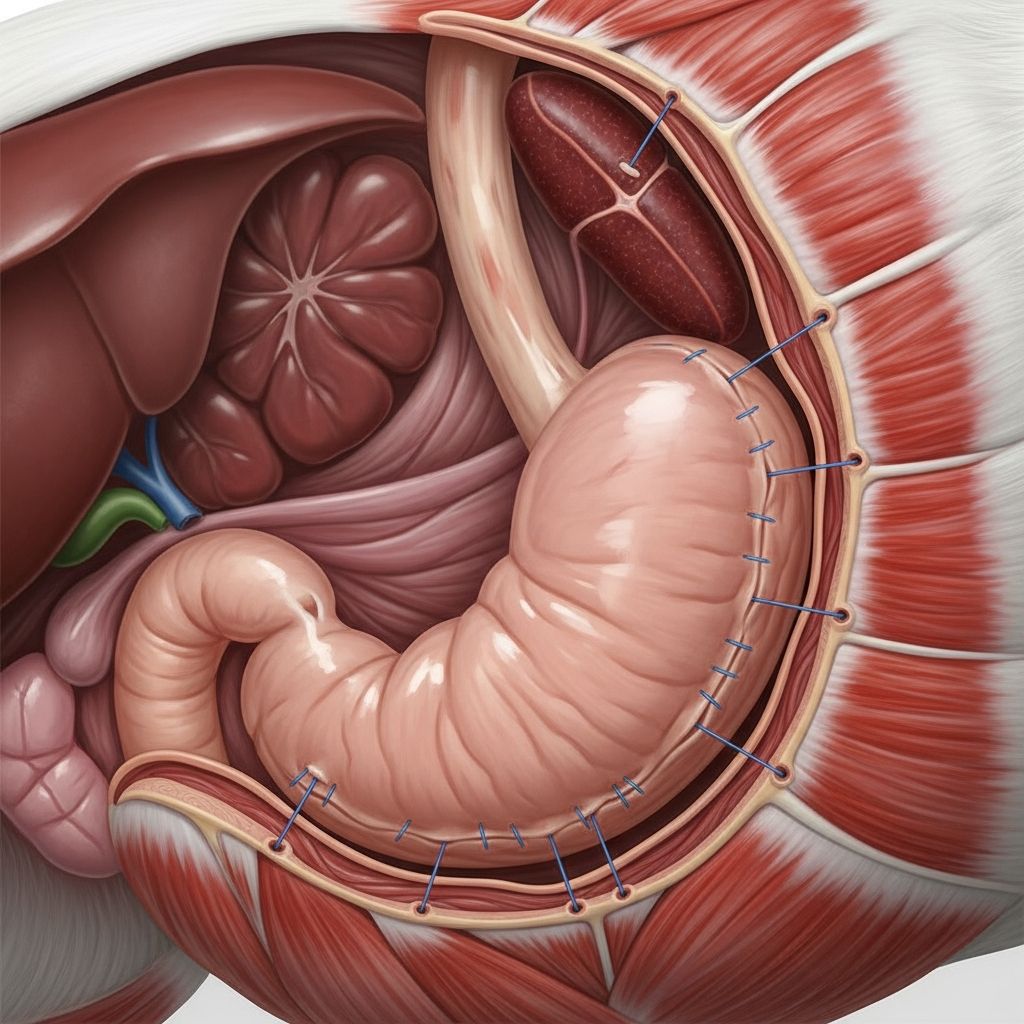
Gastropexy in Dogs: Safeguarding Against Deadly Bloat
Gastropexy is a surgical intervention that anchors a dog’s stomach to the abdominal wall, dramatically reducing the risk of gastric dilatation-volvulus (GDV), a fatal condition commonly known as bloat. This procedure is especially recommended for large, deep-chested breeds prone to this emergency.
Understanding GDV: The Silent Killer in Canines
GDV occurs when a dog’s stomach fills with gas and rotates, trapping blood flow and leading to shock if untreated. Deep-chested breeds like Great Danes, Saint Bernards, and Irish Setters face the highest risk, though any dog can be affected. Factors such as rapid eating, large meals, exercise post-feeding, and genetics increase susceptibility.
Without intervention, GDV mortality exceeds 80% in untreated cases, with recurrence rates over 70% in survivors lacking gastropexy. The condition demands immediate surgery, often after decompression via orogastric tube.
Why Choose Gastropexy? Benefits and Risk Reduction
By fixing the stomach in place, gastropexy prevents twisting (volvulus) while allowing dilatation (bloat) to resolve naturally. Studies show prophylactic gastropexy eliminates GDV recurrence in at-risk dogs over years of follow-up. It’s often performed electively during spay/neuter or as part of GDV treatment.
- High-risk breeds: Great Danes, German Shepherds, Standard Poodles, and relatives of GDV dogs.
- Recurrence prevention: Essential post-GDV, as untreated dogs face repeated episodes.
- Long-term efficacy: Permanent adhesion forms, maintaining stomach position lifelong.
Surgical Techniques: Options for Every Case
Veterinarians select techniques based on the dog’s condition, clinic capabilities, and whether it’s prophylactic or emergency. Incisional gastropexy dominates due to speed and low complications.
| Technique | Description | Best For | Pros | Cons |
|---|---|---|---|---|
| Incisional Gastropexy | Incisions in stomach’s seromuscular layer and abdominal wall are sutured together. | Most cases, including GDV emergencies. | Fastest, fewest complications, strong adhesion. | Open surgery required. |
| Belt-Loop Gastropexy | Stomach flap threaded through abdominal wall tunnel. | Prophylactic in healthy dogs. | Secure fixation. | Higher complication risk than incisional. |
| Circumcostal Gastropexy | Stomach flap around last rib, sutured back. | Large breeds. | Strong hold. | May delay gastric emptying post-GDV. |
| Laparoscopic-Assisted | Endoscope-guided incisional via small incisions. | Elective prophylactic only. | Minimally invasive, quicker recovery. | Not for GDV emergencies; needs equipment. |
Incisional method involves a 4-5 cm cut on the pyloric antrum, sutured to the right abdominal wall via midline celiotomy.
Preparing for Gastropexy: What Owners Need to Know
Pre-surgery includes fasting, bloodwork, and anesthesia evaluation. For prophylactic cases, combine with spay/neuter to minimize anesthesia exposure. Costs range widely but are far less than GDV emergencies, which involve ICU stays.
- Discuss breed risks with your vet.
- Opt for gastropexy during routine procedures if high-risk.
- Prepare for 30-90 extra minutes of surgery time.
The Procedure Step-by-Step
Under general anesthesia, a midline incision exposes the abdomen. The stomach is positioned normally, decompressed if needed, and attached via chosen method. Permanent scar tissue forms the adhesion over weeks.
In laparoscopic versions, small ports allow camera-guided suturing, reducing incision size. Surgery lasts 30-60 minutes for prophylactics.
Post-Operative Care: Ensuring Smooth Recovery
Recovery mirrors routine abdominal surgery: 2-3 weeks of rest, small frequent meals, and pain meds. Avoid large meals or vigorous activity to prevent strain.
- Days 1-7: Monitor incision, limit leash walks.
- Weeks 2-3: Gradual activity increase; vet recheck.
- Diet: Small meals 4-6 times daily initially.
- Complications (rare): Infection, dehiscence; contact vet for swelling or lethargy.
Laparoscopic patients often resume normalcy faster due to minimal invasiveness.
Success Rates and Long-Term Outcomes
Gastropexy boasts near-100% GDV prevention in prophylactic cases, with no recurrences in studies spanning years. Even post-GDV, it slashes repeat risks. Gastric function normalizes, though some techniques slightly prolong emptying.
Owners report high satisfaction, viewing it as life-saving insurance for vulnerable pets.
Risk Factors and Prevention Strategies Beyond Surgery
While gastropexy is gold-standard, lifestyle tweaks help: slow feeders, divided meals, no elevated bowls, and pre-meal rest. Age, stress, and family history amplify risks.
FAQs on Gastropexy for Dog Owners
Can gastropexy be done on puppies?
Typically during spay/neuter at 6-12 months for at-risk breeds, as it’s safe and effective young.
Does gastropexy stop all bloat?
No, it prevents twisting but not gas buildup; dilatation may still occur but resolves without rotation.
What’s the cost of gastropexy?
Elective: $1,500-$3,000; far cheaper than GDV ($5,000+).
Is recovery painful for dogs?
Managed with meds; most active within days, full recovery in 2-3 weeks.
Which breeds need it most?
Deep-chested giants: Great Danes, Mastiffs, Weimaraners.
Comparing Gastropexy to Alternatives
| Option | Effectiveness | Invasiveness | Cost |
|---|---|---|---|
| Gastropexy | 95-100% GDV prevention | Moderate | Medium |
| Diet/Feeding Changes | Low (20-30% risk reduction) | None | Low |
| GDV Emergency Surgery | High but reactive | High | High |
When to Consult a Veterinary Surgeon
If your dog is a high-risk breed, has GDV history, or shows bloat signs (distended abdomen, retching, restlessness), seek specialist advice promptly.
References
- Gastropexy in Dogs: Benefits, Risks, and Cost — PetMD. 2023. https://www.petmd.com/dog/procedure/gastropexy-in-dogs
- Elective Gastropexy — Dallas Veterinary Surgical Center. 2023. https://www.dvsc.com/gastropexy
- Key gastrointestinal surgeries: Incisional gastropexy — DVM360. 2023. https://www.dvm360.com/view/key-gastrointestinal-surgeries-incisional-gastropexy
- Gastropexy Surgery in Dogs — SurgiPet. 2023. https://www.surgipet.com/article/gastropexy-surgery-in-dogs
- Incisional Gastropexy — Veterinary Surgery Online. 2023. https://www.vetsurgeryonline.com/incisional-gastropexy/
Similar Articles








Read full bio of medha deb




