

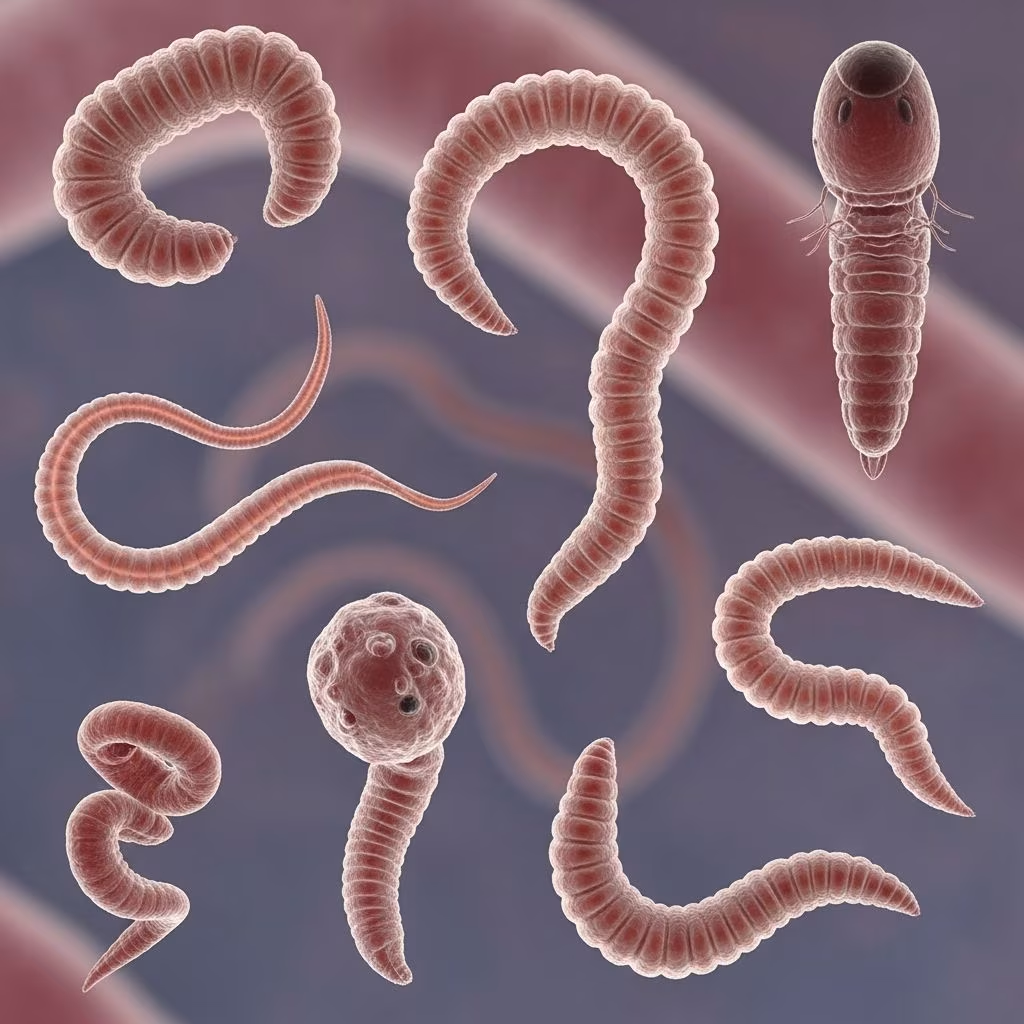
Gastrointestinal parasites pose a significant threat to swine production worldwide, leading to reduced growth rates, poor feed efficiency, and increased mortality, particularly in young pigs. These organisms, including nematodes and protozoa, infest the digestive tract, causing inflammation, nutrient malabsorption, and secondary infections. Effective management requires understanding their life cycles, clinical effects, and control measures.
Prevalence and Economic Impact
Intestinal parasites are nearly ubiquitous in pig populations, especially in outdoor or pasture-based systems. They compete for nutrients, damage mucosal linings, and trigger immune responses that divert energy from growth. Studies indicate that even subclinical infections can depress daily weight gains by 10-20% and worsen feed conversion ratios. In intensive operations, poor hygiene amplifies risks, while growing pigs and neonates suffer the most severe consequences.
Major Nematode Parasites
Nematodes, or roundworms, dominate swine GI parasitism. Their larvae migrate through tissues, causing multi-organ damage before maturing in the intestines.
Ascaris suum: The Roundworm Menace
Ascaris suum, the large roundworm, infects pigs via egg ingestion from contaminated soil or feed. Larvae penetrate the gut wall, travel to the liver and lungs, then return to the intestines. Heavily burdened pigs exhibit ‘thumps’—labored breathing due to lung inflammation—along with weight loss, unthriftiness, and visible worms in feces. Liver ‘milk spots’ from larval tracks persist as scars. Many infections remain asymptomatic, but outbreaks stunt growth and increase susceptibility to pneumonia.
Oesophagostomum spp.: Nodular Worms
These parasites encyst in the large intestine wall, forming nodules that impair digestion. Adults cause minimal harm, but larval burdens lead to emaciation, diarrhea, and poor condition. Infections thrive in moist environments, with pigs acquiring larvae from pasture.
Strongyloides ransomi: Threadworm Threats
Transmitted via colostrum or skin contact with the sow’s contaminated hide, this worm strikes piglets at 10-14 days old. Severe cases cause profuse diarrhea and high death rates. Larvae penetrate skin or mucosa, maturing rapidly in the small intestine.
Trichuris suis: Whipworms
Whipworms embed in the cecum and colon, causing bloody diarrhea, anemia, and rectal prolapse in heavy infestations. Light infections often go unnoticed, but chronic cases reduce productivity through inflammation and nutrient loss.
Protozoan Parasites: Coccidia and Cryptosporidia
Protozoa target epithelial cells, leading to villous atrophy and malabsorption.
Cystoisospora suis: Neonatal Coccidiosis
The primary coccidian in suckling piglets (6 days to 3 weeks), it destroys jejunal and ileal villi, causing yellow, frothy diarrhea, dehydration, and 20-25% mortality. Survivors often grow stunted. Secondary bacteria exacerbate damage.
Other Coccidia: Eimeria spp.
Common but rarely pathogenic, heavy Eimeria loads provoke enterocolitis in weaners.
Cryptosporidium spp.
Affecting pigs over 10 days, it attaches to small intestinal epithelium, occasionally yielding diarrhea and atrophy, though subclinical cases predominate.
Clinical Signs and Diagnosis
Symptoms vary by parasite load and pig age but commonly include:
- Diarrhea (scours), from watery to bloody
- Weight loss, potbelly, and rough hair coat
- Coughing, thumps, and respiratory distress
- Anemia, pale skin, and lethargy
- Poor feed intake and conversion
- Worms or oocysts in feces
Diagnosis relies on fecal flotation for eggs/oocysts, mucosal scrapes (Giemsa-stained for coccidia), histopathology, or serology. Post-mortem exams reveal larvae, nodules, or milk spots.
Treatment Strategies
Anthelmintics target specific worms effectively when dosed correctly. Common options include:
| Drug | Target Parasites | Administration |
|---|---|---|
| Ivermectin/Doramectin | Ascaris, Oesophagostomum, Strongyloides | Injectable or in-feed |
| Fenbendazole/Flubendazole | Most nematodes, some coccidia | In-feed, water, or oral |
| Pyrantel/Piperazine | Ascaris, Oesophagostomum | Oral |
| Coccidiostats (e.g., toltrazuril) | Cystoisospora | Oral for piglets |
Treat breeding stock pre-farrowing, growers every 2 months, and adults biannually. Avoid underdosing to prevent resistance.
Prevention and Control Programs
Integrated approaches outperform drugs alone:
- Sanitation: Clean farrowing pens daily; disinfect with 50% bleach. All-in/all-out systems minimize buildup.
- Pasture Rotation: Rest fields 6-12 months to break egg cycles.
- Strategic Deworming: Sow treatment 2-3 weeks pre-farrowing; piglets at 8 weeks.
- Feed Additives: Preventive coccidiostats for sows and neonates.
- Monitoring: Routine fecal checks guide interventions.[10]
Herd Health Monitoring
Regular vet consultations tailor protocols. Track growth rates, scour incidence, and slaughter condemnations (e.g., liver spots) to gauge parasite pressure. Biosecurity limits introductions.
FAQs
How often should I deworm my pigs?
Adults twice yearly; growers every 2 months; sows pre-farrowing. Consult a vet for customized plans.
Can pig parasites affect humans?
Ascaris suum rarely causes mild respiratory or GI symptoms in people, treatable with albendazole.
What causes milk spots on pig livers?
Ascaris suum larval migration scars the liver.
Is coccidiosis preventable without drugs?
Yes, via rigorous farrowing hygiene and disinfection.
Why do piglets get diarrhea at 10-14 days?
Often Strongyloides ransomi or Cystoisospora suis.
Advanced Management for Commercial Operations
In large herds, precision parasitism control uses fecal egg counts to trigger treatments, reducing chemical use. Genetic selection for resistant breeds and probiotics show promise. Climate influences: warm, humid conditions favor oocyst sporulation.[10] Economic modeling reveals that for every dollar spent on deworming, producers gain $3-5 in productivity.
Nutritional support bolsters immunity: high-protein diets aid repair post-infection. Quarantine new stock prevents spread.
References
- Parasitism (Gastrointestinal) in Pigs — MSD Veterinary Manual. 2023. https://www.msdvetmanual.com/digestive-system/intestinal-diseases-in-pigs/parasitism-gastrointestinal-in-pigs
- Parasitism (Gastrointestinal) in Pigs — Merck Veterinary Manual. 2023. https://www.merckvetmanual.com/digestive-system/intestinal-diseases-in-pigs/parasitism-gastrointestinal-in-pigs
- Common Internal Parasites of Swine — University of Missouri Extension. 2022. https://extension.missouri.edu/publications/g2430
- Be Proactive About Pig Parasites — Purina Animal Nutrition. 2024. https://www.purinamills.com/swine-feed/education/detail/win-the-battle-against-intestinal-pig-worms
- About Ascaris in Pigs — Centers for Disease Control and Prevention (CDC). 2023. https://www.cdc.gov/sth/about/about-ascaris-in-pigs.html
- Swine Parasites — Morris Veterinary Center. 2023. https://morrisvetcenter.com/livestock/swine/swine-parasites.html
- Overview of Gastrointestinal Parasites of Pigs — Merck Veterinary Manual. 2023. https://www.merckvetmanual.com/digestive-system/gastrointestinal-parasites-of-pigs/overview-of-gastrointestinal-parasites-of-pigs



