

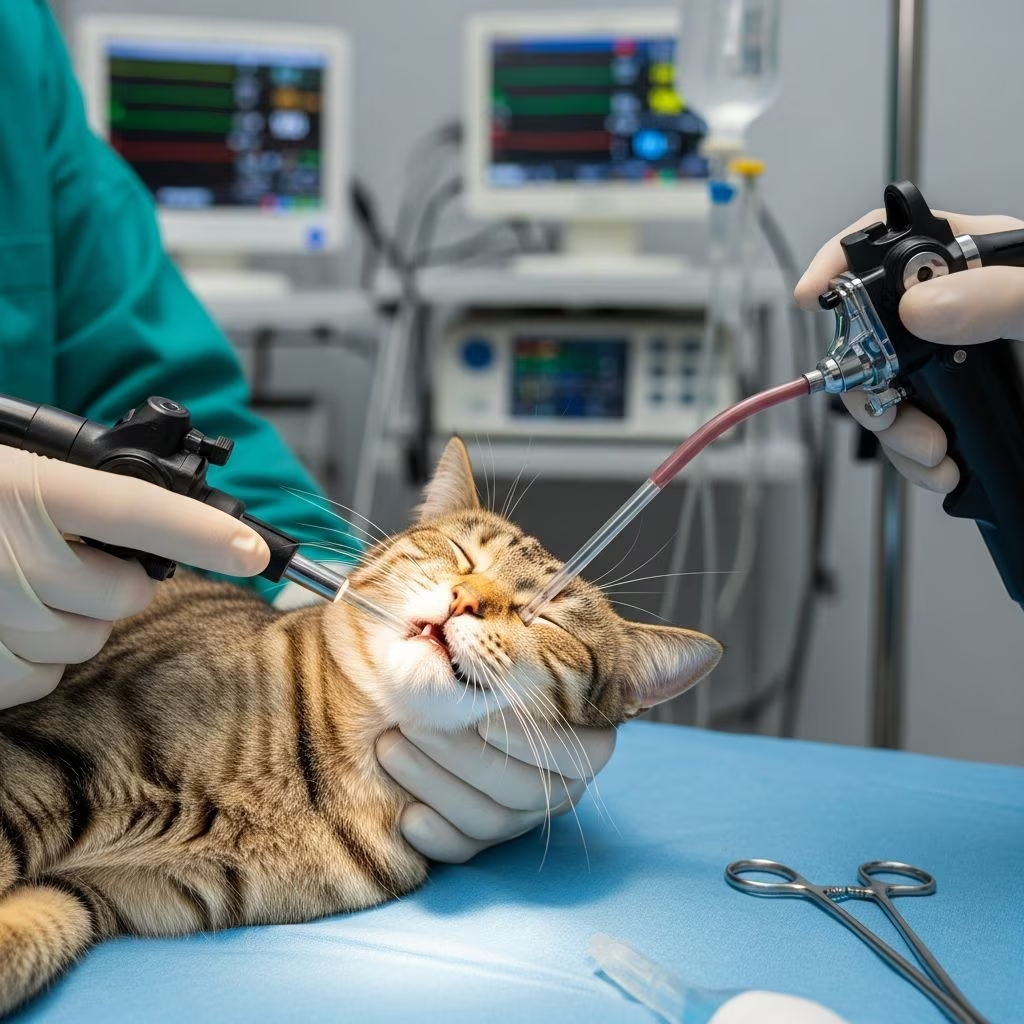
Understanding Gastrointestinal Endoscopy in Cats
Gastrointestinal (GI) endoscopy is a valuable diagnostic tool that allows veterinarians to directly visualize the internal structures of your cat’s digestive system. The purpose of an endoscopic examination is to help your veterinarian make a diagnosis of the disease that has been causing your pet’s clinical signs. This minimally invasive procedure uses a specialized camera-equipped instrument called an endoscope to examine the esophagus, stomach, and portions of the small and large intestines. For cat owners whose pets experience chronic digestive issues, weight loss, persistent vomiting, or inappetence, endoscopy often provides the answers that other diagnostic tests cannot.
Endoscopy represents an important advancement in veterinary medicine, offering a direct visualization method that surpasses the capabilities of radiographic imaging or ultrasound in many cases. While X-rays and ultrasounds provide valuable information about organ size and position, they may not reveal mucosal inflammation, ulcers, or other surface abnormalities that could be causing your cat’s gastrointestinal distress. Endoscopy fills this diagnostic gap by allowing your veterinarian to observe the internal lining of the digestive tract in real time and obtain tissue samples when necessary.
What Can Gastrointestinal Endoscopy Examine?
Gastrointestinal endoscopy in cats provides comprehensive visualization of multiple portions of the digestive system. The procedure typically allows examination of the following structures:
– Oesophagus (food pipe)- Stomach- Proximal duodenum (upper portion of the small intestine)- Ileum and colon (portions of the lower intestinal tract)- Rectum
Different types of endoscopes are used depending on which area of the digestive tract requires examination. Rigid endoscopes are suitable for examining smaller or more posterior structures, while flexible endoscopes are essential for complete visualization of the stomach and for advancing into the small and large intestines. The flexibility of the instrument allows your veterinarian to navigate the complex anatomy of your cat’s digestive system safely and thoroughly.
Clinical Indications for Endoscopy
Your veterinarian may recommend gastrointestinal endoscopy for your cat if she exhibits signs of digestive disease that have not been resolved through other diagnostic methods. Common clinical presentations that warrant endoscopic evaluation include:
– Chronic vomiting or regurgitation- Persistent inappetence or decreased appetite- Unexplained weight loss- Chronic diarrhea or intestinal dysfunction- Suspected foreign body ingestion- Suspected gastrointestinal obstruction- Investigation of abnormalities visible on imaging studies
Specific conditions that can be diagnosed through endoscopy include inflammatory bowel disease, gastrointestinal lymphoma, ulcers, strictures, and other cancers affecting the digestive tract. Additionally, if your cat has swallowed a foreign object such as string, plastic, or other materials, endoscopy may be used not only to visualize the object but also to remove it without requiring surgical intervention. This capability makes endoscopy particularly valuable for cats that have ingested potentially dangerous items.
What About Small Intestinal Disease?
One important limitation of gastrointestinal endoscopy in cats is its reach into the small intestine. In some cats, it is possible to pass the endoscope through the pylorus (a valve at the exit from the stomach) and into the upper duodenum, which represents the upper part of the small intestine. How far into the small intestine the endoscope can be safely passed depends on the size of the cat and the size of the endoscope being used.
Unfortunately, most of the small intestine is inaccessible to the endoscope, so other diagnostic tests or procedures are usually required to diagnose many types of small intestinal disease. If your cat’s symptoms suggest small intestinal pathology, your veterinarian may recommend additional diagnostic approaches such as advanced imaging, blood work, ultrasound, or even exploratory surgery to obtain tissue samples from areas that cannot be reached endoscopically. In some cases, endoscopy of the duodenum combined with other diagnostics can still provide valuable information to guide treatment decisions.
Is General Anesthesia Required?
Yes, general anesthesia is absolutely required for gastrointestinal endoscopy in cats. It is impossible to pass an endoscope safely into a conscious cat’s stomach or colon. The procedure cannot be performed with merely local anesthesia or mild sedation because the endoscope must be carefully positioned and manipulated through multiple anatomical structures, and any movement from a conscious cat could result in serious injury to the delicate mucosal tissues.
In most cases, a short-acting anesthetic is used, allowing the cat to recover quickly after the procedure. Your cat will be evaluated for anesthetization prior to the procedure to ensure she is in good health and appropriate for anesthesia. This pre-operative evaluation typically includes a physical examination and may include blood work and other diagnostics to assess your cat’s fitness for anesthesia. The cat will be discharged once the effects of anesthesia have worn off, which usually occurs within several hours of the procedure.
How Do I Prepare My Cat for Endoscopy?
Proper preparation is vital for a successful endoscopic examination. It is essential that the stomach and intestinal tract be empty of all food, water, and fecal matter before an endoscopic evaluation, as any remaining material can obscure visualization and compromise the quality of the examination.
Pre-Procedure Fasting Requirements
If the stomach is being examined, withholding food and water (fasting) for 12 hours is generally sufficient. Your veterinarian will provide specific instructions regarding when your cat should stop eating and drinking. Typically, you may be instructed to withhold food overnight and water for several hours before the scheduled procedure. It is important to follow these fasting guidelines precisely, as food remaining in the stomach can interfere with visualization and may increase the risk of aspiration during anesthesia.
Preparation for Colon Examination
If the colon is to be examined, more extensive preparation is necessary. Oral medication is begun 12 to 18 hours before the procedure to remove fecal material from the intestinal tract. Fasting for 12 to 18 hours is also necessary so that new fecal material does not form during this period. On the morning of the procedure, one or more enemas are given to remove any remaining stool from the lower intestinal tract. Your veterinarian will provide detailed instructions about which medications to use, how to administer them, and what to expect during the preparation process.
Pre-Operative Health Evaluation
Before the endoscopy appointment, your cat should receive a thorough examination from your veterinarian to ensure she is in good health and appropriate for anesthesia. This evaluation helps identify any underlying health concerns that might affect the safety of the procedure. Discuss with your veterinarian any medications your cat is currently taking, as some may need to be adjusted or temporarily discontinued before the procedure.
What Happens During Gastrointestinal Endoscopy?
The endoscopic procedure varies depending on which area of your cat’s gastrointestinal tract is being examined, but the general process follows a consistent pattern. Your cat will be anesthetized at the beginning of the procedure, and an assistant competent in maintaining and supervising anesthesia will be present throughout the entire procedure to ensure your cat’s safety and monitor for any complications.
Insertion and Navigation
After anesthesia has taken effect, the endoscope is inserted into the appropriate orifice depending on your cat’s symptoms and the area requiring examination. For upper GI endoscopy, the scope is inserted through the mouth. For lower GI endoscopy, the scope is inserted through the rectum. Your veterinarian will carefully advance the endoscope through the digestive tract, using insufflation (gentle air pressure) to visualize the lumen and navigate through the various anatomical structures.
Real-Time Visualization
As the endoscopy is taking place, your veterinarian will have a real-time visual of your cat’s internal organs as the endoscope is being maneuvered. This direct visualization allows identification of inflammation, ulcers, foreign bodies, strictures, masses, or other abnormalities. The veterinarian can carefully examine all areas of the digestive tract being accessed, looking for any signs of disease or pathology.
Tissue Sampling and Interventions
Depending on what is observed during the endoscopy, your veterinarian may choose to extract tissue samples for biopsy. Specialized instruments can be passed through the endoscope to obtain small pieces of tissue from suspicious areas. These biopsy samples are then examined under a microscope by a pathologist to help establish a definitive diagnosis. If a foreign body is identified, your veterinarian may also use specialized instruments to remove it during the same procedure, potentially avoiding the need for surgical intervention.
When Will I Know the Results?
The process of obtaining endoscopic results occurs in two stages. First, the organs are viewed in real time during the procedure, so those visual results are known immediately. Your veterinarian can inform you right after the procedure about any obvious abnormalities that were observed, such as inflammation, ulcers, foreign bodies, or masses.
However, the final diagnosis usually depends on the results of the pathologist’s study of the biopsies. This step may take several weeks, depending on circumstances and the complexity of the samples. The pathological examination provides microscopic detail about tissue changes that may not be apparent to the naked eye during the endoscopic procedure. These detailed findings are crucial for establishing a definitive diagnosis and guiding appropriate treatment decisions for your cat’s condition.
Recovery After Endoscopy
Recovery from endoscopy is typically swift and straightforward. Most cats recover from the short-acting anesthetic within a few hours and can be discharged the same day. Your veterinarian will provide specific post-operative instructions regarding feeding, activity restrictions, and any follow-up care. Generally, your cat should rest quietly at home for the remainder of the day following the procedure. You may resume normal feeding once your cat is fully alert, though your veterinarian may recommend starting with a bland diet for the first meal.
Contact your veterinarian immediately if your cat experiences any signs of distress after the procedure, such as persistent vomiting, inability to eat or drink, severe abdominal pain, or unusual behavior. While serious complications from endoscopy are rare when performed by experienced veterinarians, prompt communication with your veterinary team is important if any concerns arise.
Advantages of Gastrointestinal Endoscopy
Gastrointestinal endoscopy offers several significant advantages over other diagnostic approaches:
– Direct visualization: Allows direct observation of mucosal surfaces that may appear normal on imaging- Tissue sampling: Enables collection of biopsy samples for definitive diagnosis- Foreign body removal: Can remove ingested objects without surgical intervention- Minimal invasiveness: Avoids the need for exploratory surgery in many cases- Quick recovery: Short-acting anesthesia allows same-day discharge in most cases- Therapeutic potential: Can treat certain conditions in addition to providing diagnosis
Frequently Asked Questions
Q: Is gastrointestinal endoscopy safe for my cat?
A: Yes, endoscopy is generally a safe procedure when performed by an experienced veterinarian under appropriate anesthesia. As with any procedure involving anesthesia, there are some inherent risks, but serious complications are rare. Your veterinarian will discuss specific risks and benefits based on your cat’s individual health status.
Q: How long does an endoscopic procedure take?
A: The duration of an endoscopy varies depending on which areas require examination and what interventions may be necessary. Most procedures take 20 to 45 minutes, though this can vary. Your veterinarian can provide a more specific estimate based on what needs to be examined in your cat’s case.
Q: Can endoscopy diagnose all gastrointestinal problems in cats?
A: Endoscopy is excellent for evaluating the esophagus, stomach, and upper small intestine, as well as the colon and rectum. However, most of the small intestine cannot be reached with an endoscope, so other diagnostic methods may be needed for small intestinal disease.
Q: Will my cat need to stay overnight after endoscopy?
A: In most cases, no. Your cat can be discharged the same day once she has recovered from anesthesia, typically within a few hours of the procedure.
Q: What should I feed my cat after endoscopy?
A: Your veterinarian will provide specific post-operative feeding instructions. Typically, you can resume normal feeding once your cat is fully alert, though a bland diet may be recommended for the first meal.
Q: How much does gastrointestinal endoscopy cost?
A: The cost of endoscopy varies depending on your location, the complexity of the procedure, and your veterinary facility. Contact your veterinarian for pricing information specific to your cat’s needs.
References
- Gastrointestinal Endoscopy In The Cat — National Center for Biotechnology Information (NCBI), National Institutes of Health. 2024. https://pmc.ncbi.nlm.nih.gov/articles/PMC11383086/
- Gastrointestinal Endoscopy in Cats — VCA Animal Hospitals. https://vcahospitals.com/know-your-pet/endoscopy-gastrointestinal-in-cats
- Endoscopy is a minimally invasive way to evaluate organs — MedVet. https://www.medvet.com/gastrointestinal-endoscopy-dogs-cats/
- Cat GI Endoscopy & Colonoscopy — Cat Specialist Services. https://www.catspecialists.com.au/cat-gi-endoscopy-and-colonoscopy/
- Endoscopy for Diagnosing GI Issues in Dogs & Cats — Rock Hill Veterinary Hospital. 2023. https://www.rock-hill.carolinavet.com/site/blog/2023/08/15/pet-endoscopy



