

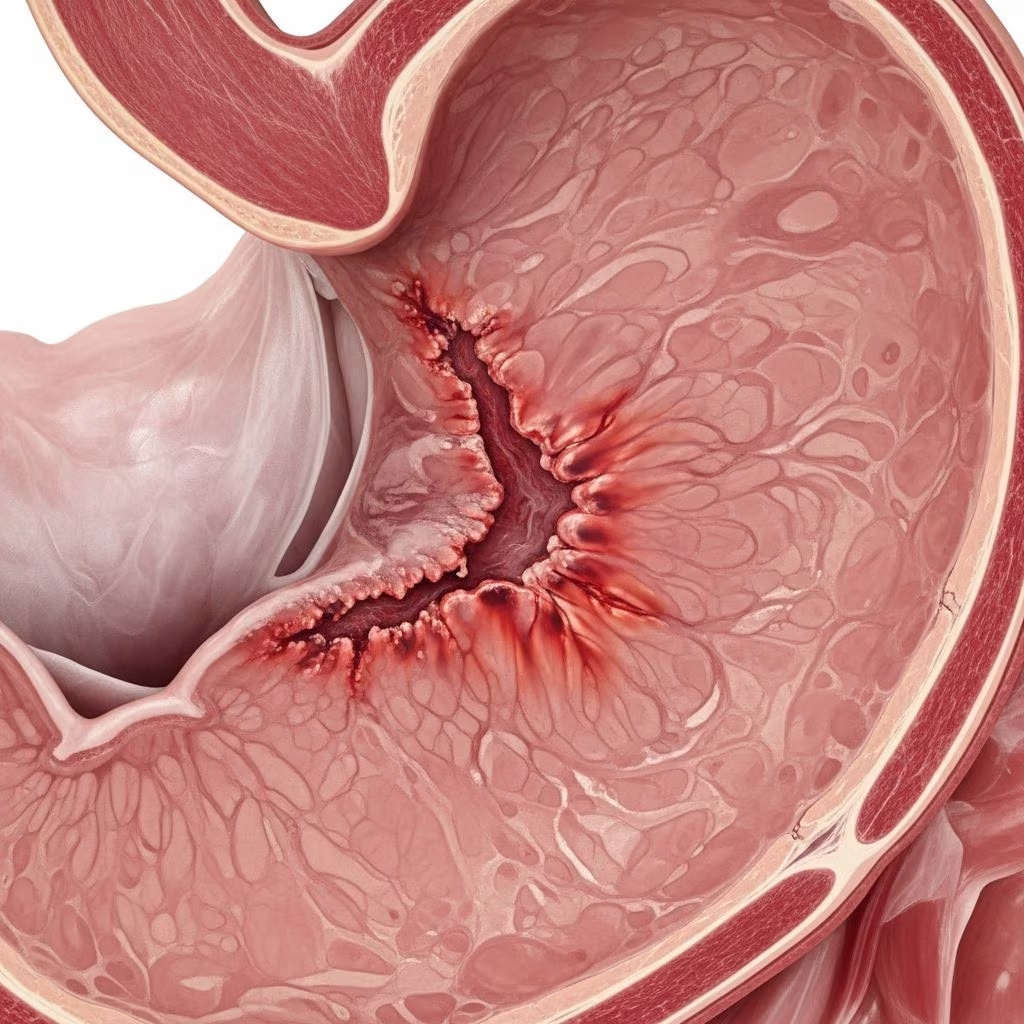
Gastric ulcers represent a prevalent digestive disorder in swine production, particularly impacting growing and finishing pigs, as well as sows. These lesions primarily develop in the pars esophagea, the squamous epithelial region near the stomach’s esophageal entrance, leading to potential hemorrhage, anemia, and mortality. With prevalence rates reaching up to 93% in some populations, this condition contributes to substantial economic losses through reduced growth rates and sudden deaths.
The Anatomy of Vulnerability in Porcine Stomachs
The porcine stomach features distinct regions: the proximal non-glandular pars esophagea, unprotected by mucus, and the distal glandular area producing acid, pepsin, and bile. This anatomical divide creates a natural pH gradient that shields the pars esophagea. When disrupted, acidic contents erode the unprotected epithelium, initiating ulceration. Factors eroding this barrier include prolonged fasting, which pools fluid chyme against the sensitive area, or excessive acid exposure from hypersecretion.
Primary Risk Factors Driving Ulcer Formation
Ulcer development stems from multifactorial interactions, blending nutritional, environmental, infectious, and management elements.
- Dietary Contributors: Finely milled feeds fail to buffer stomach contents, allowing acid reflux into the pars esophagea. Sudden shifts from pellets to meal exacerbate this by altering gastric motility. Excess whey or copper beyond 250 ppm in young pigs promotes hyperacidity.
- Nutritional Deficiencies: Shortages in vitamin E and selenium weaken mucosal integrity, heightening susceptibility.
- Parasitic and Infectious Agents: Heavy roundworm burdens irritate the gut, while bacteria like Helicobacter suis, H. heilmannii, and Fusobacterium gastrosuis stimulate parietal cells to overproduce acid. H. suis shows strong correlation with ulcers in growing pigs.
- Management Stressors: Feed interruptions from disease outbreaks, heat stress, or empty troughs cause prolonged exposure to corrosive ingesta. Transport, lairage delays, and overcrowding amplify risks.
| Risk Factor | Mechanism | High-Risk Groups |
|---|---|---|
| Fine particle feed | Reduces buffering, promotes acid reflux | Growers, finishers |
| Vit E/Se deficiency | Mucosal weakening | Show pigs, weaners |
| H. suis infection | Acid hypersecretion | Growing pigs |
| Feed interruption | Fluid chyme pooling | All ages during stress |
Recognizing Clinical Manifestations
Symptoms vary by ulceration severity. Acute cases present with sudden death in otherwise robust pigs, carcasses appearing pale due to internal hemorrhage. Subacute signs include pallor of mucous membranes, lethargy, anorexia, and melena—dark, tarry feces from digested blood. Affected pigs exhibit stunted growth, with daily gains dropping 50-75g below peers, weakness, and occasional vomiting. Dyspnea arises in severe anemia. Unlike enteric diseases, diarrhea is absent, aiding differentiation.
Diagnostic Approaches for Confirmation
Diagnosis hinges on history, clinical presentation, and pathology. Pen-level clues like isolated anorectic pigs with anemia suggest ulcers amid feed issues. Necropsy reveals hallmark erosions or deep craters in the pars esophagea, often with clotted blood filling the stomach. Pale carcasses confirm hemorrhage.
For live high-value animals, endoscopy visualizes lesions directly. Differentials encompass porcine circovirus disease, proliferative enteropathy, swine dysentery, and hemorrhagic bowel syndrome—ruled out by lesion location and absence of diarrhea. Abattoir surveys indicate prevalence but require caution due to pre-slaughter fasting inducing artifacts. H. suis testing via histology strengthens infectious etiology cases.
Strategic Management and Therapeutic Interventions
Treatment prioritizes supportive care over curative drugs in commercial settings, where economics limit options.
Acute Support for Affected Individuals
- Hospitalize weak pigs in quiet pens with palatable feeds like oat groats to stimulate intake.
- Administer vitamin E/selenium injections (e.g., BoSe) and iron for anemia correction.
- For pets or breeders, proton-pump inhibitors reduce acidity, promoting healing; analgesics ease pain.
- Early marketing or euthanasia prevents suffering and spread.
Pen-Level Interventions
Introduce coarse-ground feeds to enhance buffering and shorten ingesta transit. Ensure constant feeder access, avoiding interruptions.
Proactive Prevention Programs
Prevention outperforms treatment through holistic herd management.
- Feed Optimization: Use large-particle diets with adequate fiber; transition gradually over 7-10 days. Limit copper and whey; supplement vitamin E/selenium.
- Housing and Stocking: Provide ad libitum access to clean water and feed. Mitigate heat stress with ventilation.
- Parasite Control: Routine deworming reduces burdens.
- Infection Mitigation: Monitor for Helicobacter; consider structured feeds with fermentable fibers.
- Monitoring Protocols: Daily checks for pallor, appetite, feces color. Weigh subgroups regularly.
| Action | Frequency | Expected Benefit |
|---|---|---|
| Coarse feed implementation | Continuous | Reduced acid exposure |
| Vit E/Se supplementation | Daily in diet | Mucosal protection |
| Deworming | Quarterly | Lower irritation |
| Feeder checks | 2x daily | No interruptions |
Economic and Welfare Implications
Ulcers erode profitability via culls, slow gainers, and mortality—up to 20% in severe outbreaks. Welfare suffers from pain, anemia, and sudden deaths, underscoring ethical prevention mandates. Producers adopting coarse feeds report 30-50% prevalence drops.
Research Insights on Emerging Factors
Recent studies link H. suis to 3.82 mean ulcer scores in symptomatic pigs versus 1.50 asymptomatically, with growing pigs most vulnerable. Fermentation by Lactobacilli and Bacillus may synergize with pathogens. Future focus: probiotics buffering acid, genetics for resilient mucosa.
Frequently Asked Questions (FAQs)
What is the most common site for gastric ulcers in pigs?
The pars esophagea, due to its lack of mucus protection against acidic reflux.
Can gastric ulcers cause sudden death?
Yes, acute hemorrhage leads to rapid fatality in healthy-appearing pigs.
How do I differentiate ulcers from other pig diseases?
Absence of diarrhea, plus necropsy showing pars esophagea lesions and stomach blood.
Is Helicobacter infection treatable?
Injectable antibiotics may help valuable pigs; prevention via feed structure is key.
What feed changes prevent ulcers?
Switch to coarse particles, avoid fines, ensure frequent intake.
Implementing these strategies fosters resilient herds, minimizing ulcer impacts.
References
- Gastric Ulcers in Pigs — Sure Champ. Accessed 2026. https://surechamp.com/gastric-ulcers-in-pigs/
- Ulcers in Show Pigs — True North Technologies. Accessed 2026. https://truenorthfeed.com/ulcers-in-show-pigs/
- Gastric Ulcers in Pigs – Merck Veterinary Manual — Merck & Co., Inc. 2023-02-28. https://www.merckvetmanual.com/digestive-system/gastrointestinal-ulcers-in-large-animals/gastric-ulcers-in-pigs
- Gastric Ulcers in Swine — Danbred. Accessed 2026. https://danbred.com/gastric-ulcers/
- The Prevalence of Porcine Gastric Ulcer and Helicobacter suis Infection — PMC (National Library of Medicine). 2024. https://pmc.ncbi.nlm.nih.gov/articles/PMC11187585/
- Gastric Ulcers — The Pig Site. Accessed 2026. https://www.thepigsite.com/disease-guide/gastric-ulcers



