

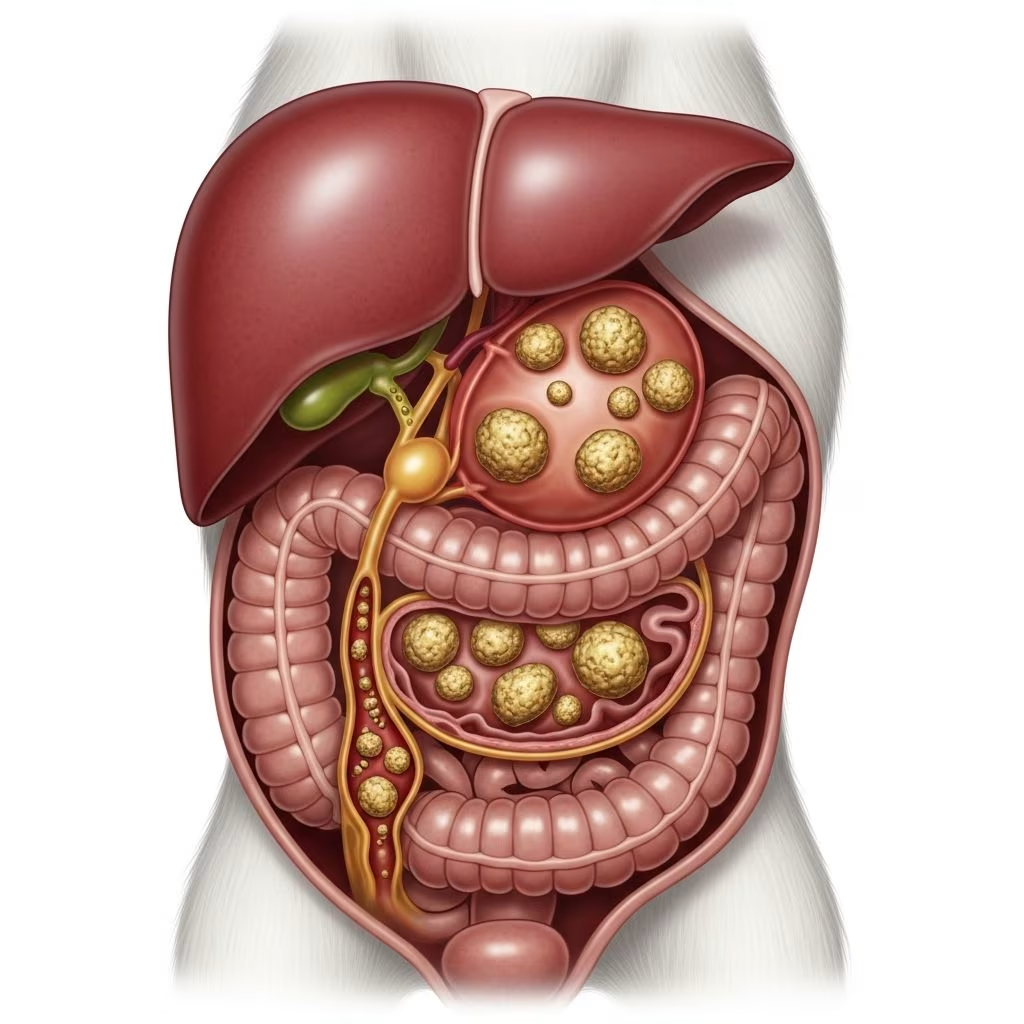
Gallstones, medically termed cholelithiasis, represent a formation of mineral or pigment-based concretions within the biliary system of dogs and cats. This condition primarily affects the gallbladder but can extend to intrahepatic ducts or the common bile duct, potentially leading to complications like obstruction or inflammation. While relatively rare in small animals, understanding its nuances is crucial for timely intervention and improved outcomes.
Understanding the Biliary System in Companion Animals
The biliary system plays a vital role in digestion by storing and concentrating bile produced by the liver, which aids in fat emulsification. In dogs and cats, the gallbladder serves as a reservoir, contracting in response to meals to release bile into the duodenum via the common bile duct. Disruptions in bile composition, flow, or infection can precipitate stone formation. Choleliths vary in composition—cholesterol, bilirubin, calcium salts, or mixed types—with calcium predominant in felines and cholesterol common in canines.
Predisposing factors include bile stasis, infections, dietary imbalances, and breed genetics. Middle-aged to senior pets, particularly females, show higher susceptibility, underscoring the need for routine hepatic screening in at-risk populations.
Prevalence and Epidemiology Across Species
Cholelithiasis manifests differently between dogs and cats. In canines, it occurs more frequently in small breeds like Miniature Schnauzers, Miniature Poodles, and Shetland Sheepdogs, often in middle-aged to older individuals. Studies indicate stones primarily reside in the gallbladder, with occasional migration to hepatic ducts or the common bile duct.
Cats exhibit lower prevalence, around 0.99% in ultrasound-screened populations, split between intrahepatic (41%) and gallbladder-based (59%) forms. Concurrent hepatobiliary issues accompany most cases, highlighting its incidental nature unless symptomatic.
| Species | Prevalence | Common Breeds | Stone Types |
|---|---|---|---|
| Dogs | Common in small breeds | Miniature Schnauzer, Poodle | Cholesterol, bilirubin, mixed |
| Cats | 0.99% (US screened) | Any | Calcium salts |
Pathophysiology: How Gallstones Form
Stone genesis stems from supersaturation of bile with precipitants like cholesterol, bilirubin, or calcium, compounded by mucin glycoproteins that nucleate crystals. Bacterial ascension from the intestine, such as Klebsiella or Bacillus species, fosters pigment stones via beta-glucuronidase activity deconjugating bilirubin. Bile stasis from ductal anomalies or hypomotility exacerbates this, while hepatic diseases promote intrahepatic calculi.
In dogs, extrahepatic manifestations often link to cholecystitis or mucoceles, whereas feline cases intertwine with cholangitis or triaditis. Unlike humans, where intrahepatic stones pose oncogenic risks, veterinary cases rarely progress similarly, though obstruction remains perilous.
Recognizing Clinical Manifestations
Many pets remain asymptomatic, with stones discovered incidentally on imaging. Symptomatic cases present variably:
- Lethargy and anorexia: Common in chronic forms.
- Vomiting and abdominal discomfort: Intermittent, signaling inflammation or partial obstruction.
- Jaundice (icterus): Indicates biliary blockage, with yellowing of mucosa, elevated bilirubin.
- Fever and pain: In acute cholecystitis or peritonitis.
In a series of 11 animals, only one dog exhibited overt hepatobiliary signs like vomiting and icterus, resolving temporarily before recurrence. Felines may show vague signs overlapping with inflammatory bowel disease.
Diagnostic Approaches for Accurate Detection
Diagnosis integrates history, physical exam, and multimodal imaging:
- Biochemistry: Hyperbilirubinemia, elevated ALP/ALT, cholestatic patterns.
- Ultrasonography: Gold standard—hyperechoic structures with posterior shadowing in gallbladder/ducts; assesses dilation, concurrent pathology.
- Radiography: Detects radiopaque stones (50-70% cases); useful for intrahepatic confirmation.
- Cholecystocentesis: Bile cytology/culture for bacteria, crystals.
- Histopathology: Post-biopsy reveals degeneration, cholestasis.
Differentiate from mucoceles (kiwi-like appearance) or neoplasms via advanced imaging like CT if needed.
Management Strategies: Medical vs. Surgical
Treatment hinges on clinical impact. Asymptomatic cases warrant monitoring with serial imaging and biochemistries.
Conservative Therapy
Addresses underlying factors:
- Antibiotics (4-6 weeks post-resolution) targeting enteric flora like Clostridium perfringens.
- Ursodiol (ursodeoxycholic acid) for litholysis in select cholesterol stones, though unproven in vets.
- Cholagogues, antioxidants (SAMe, vitamin E), hepatoprotectants.
- Diet: Low-fat, high-fiber to reduce stasis.
Medical resolution is rare; one study noted poor outcomes without surgery.
Surgical Interventions
Indicated for obstruction, rupture, severe inflammation:
- Cholecystectomy: Gallbladder removal; standard for mucocele/cholecystitis.
- Choledochotomy: Duct exploration for choledocholiths.
- Biliary diversion: Cholecystojejunostomy or choledochoduodenostomy for unrelievable blocks.
Perioperative care includes fluids, analgesia, cultures. Survival exceeds 75% post-cholecystectomy.
Prognosis and Long-Term Outlook
Excellent for incidental findings—follow-up in 8 dogs showed no progression over 12 months median, despite persistent stones. Intrahepatic cases rarely cause issues; 47% feline intrahepatic lacked follow-up signs. Biliary tract obstruction slashes survival odds (OR 13.87). Septic peritonitis elevates mortality.
Owners should monitor for recurrence, with annual ultrasounds recommended.
Preventive Measures for Pet Owners
Minimize risks via:
- Balanced diets avoiding obesity.
- Parasite control to curb infections.
- Early hepatic screening in predisposed breeds.
- Prompt treatment of cholangitis or pancreatitis.
Frequently Asked Questions (FAQs)
What breeds are prone to gallstones?
Miniature Schnauzers, Poodles, and Shetland Sheepdogs in dogs; less breed-specific in cats.
Can gallstones dissolve without surgery?
Rarely in vets; medical management supports but seldom resolves.
Is surgery always needed?
No—asymptomatic pets monitored; surgery for complications.
What are signs my pet has gallstones?
Vomiting, jaundice, pain; many asymptomatic.
How is cholelithiasis diagnosed?
Ultrasound primary; bloodwork, X-rays adjunct.
References
- Intrahepatic cholelithiasis in dogs and cats: A case series — H. Kobayashi et al. 2017-08-01. https://pmc.ncbi.nlm.nih.gov/articles/PMC5556477/
- Managing disorders of the gallbladder in dogs (Proceedings) — dvm360. 2023. https://www.dvm360.com/view/managing-disorders-gallbladder-dogs-proceedings
- Cholelithiasis and Choledocholithiasis in the Dog — SAVA. 2015. https://www.sava.co.za/wp-content/uploads/2015/10/Cholelithiasis-and-Choledocholithiasis-in-the-Dog-.pdf
- Cholelithiasis in Cats – Prevalence and Clinical Relevance — Wiley Online Library. 2023-10-02. https://onlinelibrary.wiley.com/doi/10.1111/jvim.16868
- Gallstones in Dogs — PetMD. 2023. https://www.petmd.com/dog/conditions/digestive/c_multi_cholelithiasis



