

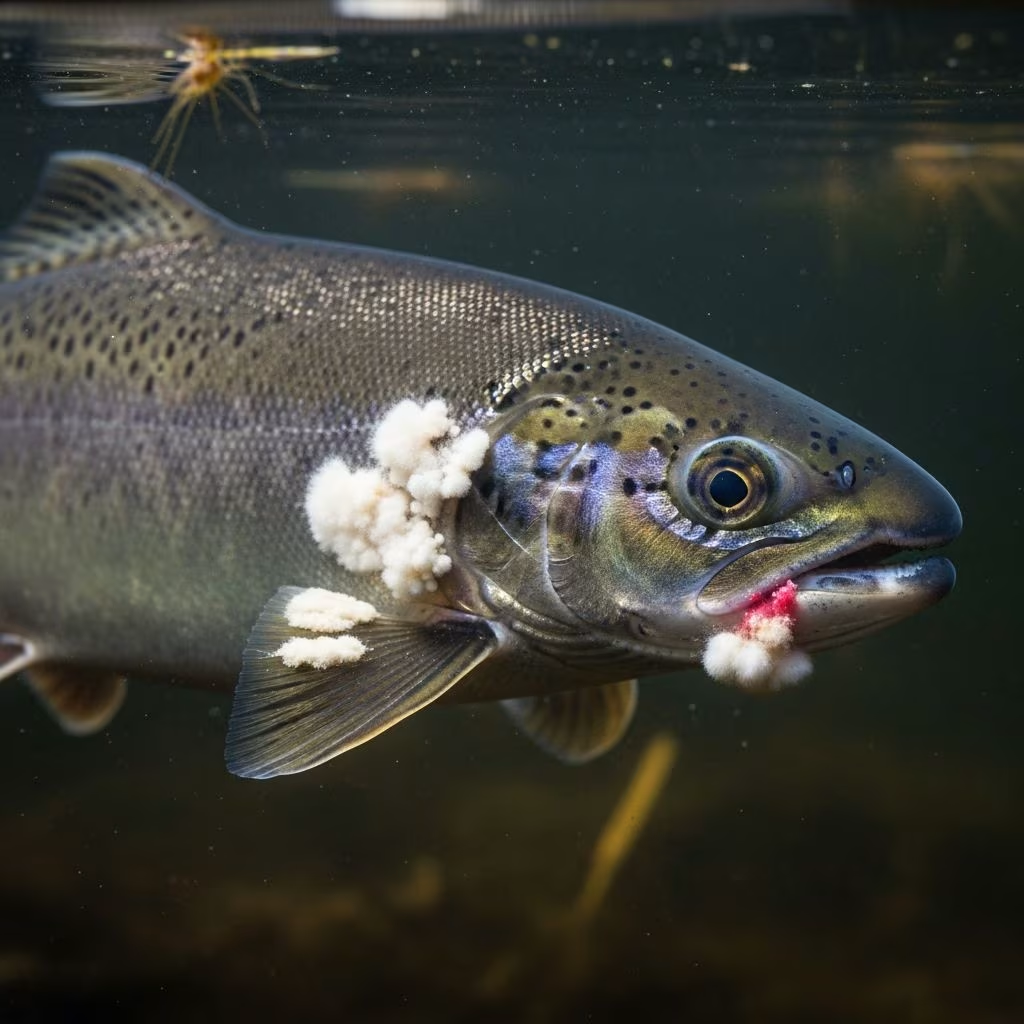
Fungal infections represent a significant challenge in modern aquaculture, often thriving in high-density environments where water quality fluctuates and stress levels are elevated. These pathogens primarily act as opportunistic invaders, exploiting weakened hosts after initial damage from bacteria, viruses, or physical injuries. Understanding their biology, transmission, and control is crucial for sustainable fish and shellfish production.
The Nature of Aquatic Fungi and Their Role in Disease
Aquatic fungi and fungus-like organisms are ubiquitous in water bodies, feeding on organic debris and colonizing stressed tissues. Unlike primary pathogens, most fungal species in aquaculture are secondary, gaining entry through wounds or compromised barriers like skin and gills. Poor water quality, low temperatures, and overcrowding exacerbate their proliferation, leading to outbreaks that can decimate populations.
These organisms include true fungi from phyla like Ascomycota and Zygomycota, as well as oomycetes (water molds) and microsporidia, which mimic fungal behavior despite distinct classifications. Oomycetes, such as Saprolegnia, produce zoospores that swim to infect eggs and injured fish, while microsporidia release resilient spores via ingestion or skin penetration.
Common Fungal Pathogens Affecting Finfish
Finfish in both freshwater and marine systems face several key fungal threats. Saprolegniasis, caused by Saprolegnia species, manifests as cotton-wool-like growths on skin, fins, and gills, often following trauma or bacterial infections. Affected fish exhibit lethargy, respiratory distress, and rapid mortality if untreated.
- Saprolegnia spp.: Thrives in cool, organic-rich waters; targets eggs and fry most severely.
- Fusarium solani: Emerging in marine species like sharks and parrotfish, linked to temperatures below 27°C, causing erosive lesions.
- Branchiomyces spp.: Induces ‘gill rot’ in species like pike, worsened by low pH and oxygen.
Ichthyophonus hoferi, a mesomycetozoean, infects in cooler waters (10-20°C), forming granulomas in organs and leading to systemic failure.
Fungus-Like Pathogens: Microsporidia and Oomycetes
Microsporidia, obligate intracellular parasites, pose unique challenges due to their spore durability. Species like Pleistophora hyphessobryconis cause ‘neon tetra disease,’ marbling muscles in tetras and zebrafish, with spores visible in wet mounts. Glugea spp. form xenomas—enlarged, fibrous host cells—in seahorses and flounders.
Oomycetes dominate egg infections, with Lagenidium and Haliphthoros devastating larval stages in salmonids and other species. These produce motile spores that encyst on chorions, halting development.
| Pathogen | Host Examples | Key Symptoms | Temperature Preference |
|---|---|---|---|
| Saprolegnia | Salmon eggs, carp | Cottony growths, mortality | Cool waters |
| Fusarium solani | Sharks, angelfish | Erosions, granulomas | <27°C |
| Pleistophora | Tetras, zebrafish | Muscle marbling | Variable |
| Ichthyophonus | Wild/farmed fish | Organ granulomas | 10-20°C |
Shellfish and Crustacean Mycoses
Crustaceans suffer from distinct fungal issues. Larval mycosis by Lagenidium, Sirolpidium, and Haliphthoros strikes prawn and crab larvae, causing mass die-offs during protozoeal stages. Black gill disease, driven by Fusarium solani and ascomycetes, blackens gills in shrimp and crayfish, often near human-impacted coasts.
Aflatoxicosis from Aspergillus toxins (‘red disease’) affects shellfish via contaminated feed, leading to liver damage. These infections highlight the need for vigilant hatchery protocols.
Economic and Ecological Impacts
Fungal diseases contribute to 40% of aquaculture losses, alongside bacteria and parasites, straining global production valued at billions. Dense stocking accelerates spread, increasing antimicrobial use and resistance risks. Ecologically, pathogens like Sphaerothecum destruens spread via invasive fish carriers, threatening biodiversity.
Diagnosis Techniques
Early detection relies on clinical signs, histopathology, and microscopy. Wet mounts reveal fungal hyphae or microsporidian spores (Luna stain enhances visibility). PCR confirms elusive pathogens like rosette agents. Culture on selective media aids oomycete identification.
- Gross exam: Mycelial mats, lesions.
- Microscopy: Zoospores, spores.
- Molecular: PCR for species ID.
Prevention and Management Strategies
Control emphasizes biosecurity over cure, as many fungi resist treatment.
Water Management: Maintain optimal temperature, oxygen, pH; use UV sterilization.
Chemicals: Formalin, malachite green (regulated), hydrogen peroxide for eggs.
Biosecurity: Quarantine, remove moribunds, disinfect. For microsporidia, depopulation may be necessary.
Vaccines and probiotics show promise, but research lags.
Emerging Threats and Research Directions
Climate change may expand fungal ranges, with Fusarium rising in warming seas. Molecular tools improve surveillance, targeting aquaculture fungal treatments market growth. Integrated pest management, combining environment and biology, is key.
Frequently Asked Questions (FAQs)
What causes most fungal outbreaks in fish farms?
Stressors like poor water quality, low temperatures, and injuries predispose fish to opportunistic fungi.
Can microsporidian infections be treated?
No effective treatments exist; prevention via biosecurity is essential.
How do I protect fish eggs from Saprolegnia?
Ensure good water flow, iodophors, or formalin baths post-fertilization.
Are fungal diseases more common in marine or freshwater aquaculture?
Both, but Saprolegnia dominates freshwater, Fusarium marine.
What role does temperature play in fungal infections?
Many favor cool waters (<27°C), slowing fish immunity.
References
- Mycotic Diseases of Fish — MSD Veterinary Manual. 2023. https://www.msdvetmanual.com/exotic-and-laboratory-animals/aquarium-fish/mycotic-diseases-of-fish
- Fungal diseases in aquaculture: A review — The Pharma Innovation Journal. 2023-07. https://www.thepharmajournal.com/archives/2023/vol12issue7S/PartX/S-12-7-153-522.pdf
- Current ecological understanding of fungal-like pathogens of fish — PMC (NCBI). 2014-02-26. https://pmc.ncbi.nlm.nih.gov/articles/PMC3928546/
- Aquaculture Overview — U.S. Department of Health and Human Services (.gov). 2025-01. https://health.gov/sites/oash/files/2025-01/7.1-white-aquaculture-overview-508.pdf
- Aquatic Fungi and Fungal Diseases of Fish: A Review — ADS Harvard (Academic). 2024. https://ui.adsabs.harvard.edu/abs/2024PZooS..77..430Q/abstract
- Aquaculture Fungal Infection Treatment Market — Future Market Insights. 2024. https://www.futuremarketinsights.com/reports/aquaculture-fungal-infection-treatment-market



