
Fungal Infections In Aquarium Fish: Prevention & Treatment
Comprehensive guide to identifying, preventing, and treating fungal diseases that threaten aquarium fish health and vitality.
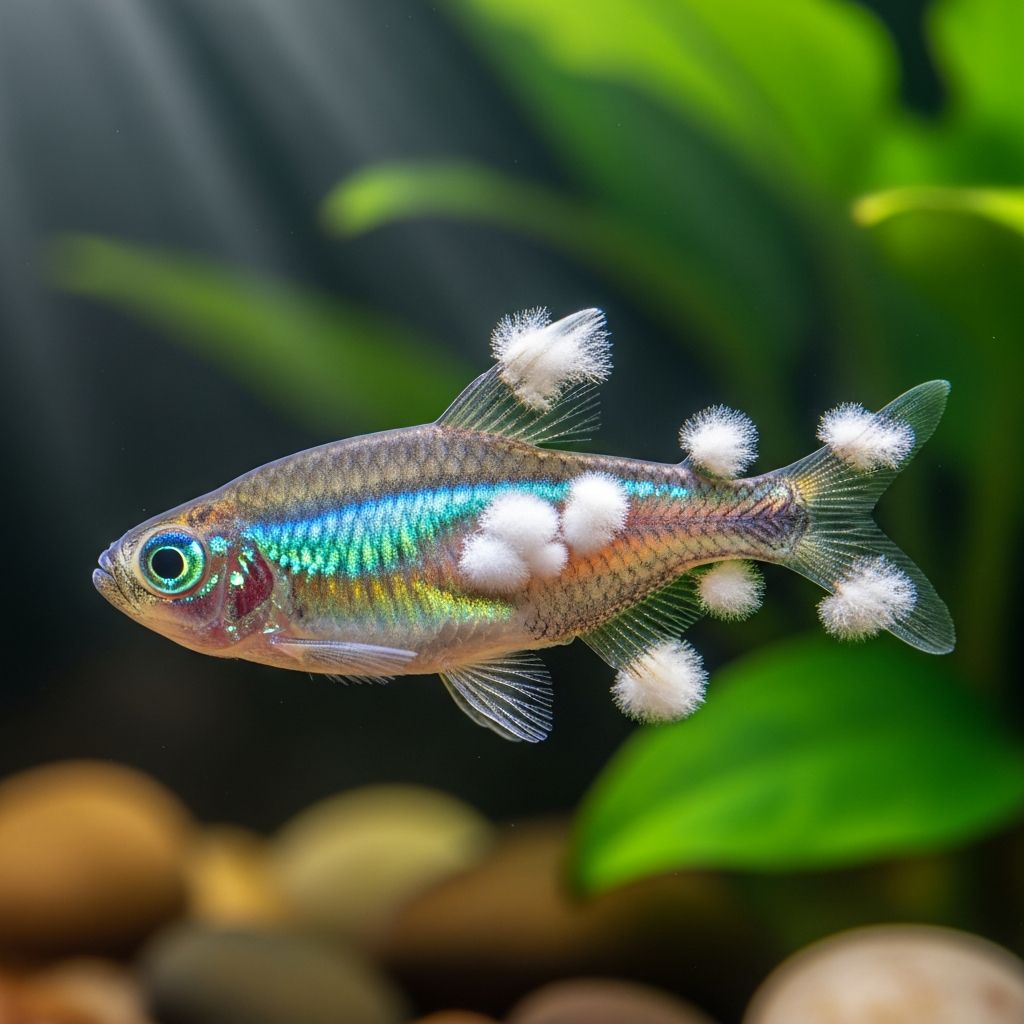
Fungal infections represent a significant threat to aquarium fish, often appearing as cotton-like growths on the skin, gills, or eggs. These mycoses typically exploit weakened immune systems, leading to rapid deterioration if not addressed promptly.
Understanding the Nature of Fish Fungal Pathogens
Aquatic fungi thrive in environments with organic debris, poor water quality, or stressed hosts. Unlike terrestrial molds, water molds such as Saprolegnia species dominate in freshwater setups, forming visible mycelial mats that invade living tissue. These organisms are opportunistic, rarely infecting healthy fish but proliferating when conditions favor them, such as low temperatures or injury sites.
Marine systems introduce additional risks from species like Fusarium solani, which targets elasmobranchs and tropical fish. This pathogen links to subtropical soils and plants, manifesting at temperatures below 27°C, causing erosive lesions. Microsporidia, fungus-like parasites, add complexity with their intracellular lifecycle, producing resistant spores that defy standard treatments.
Common Types of Mycotic Conditions in Fish
Diverse fungal agents cause distinct syndromes. Epidermal saprolegniasis, or ‘cotton wool disease,’ features branching hyphae on fins and body, often post-injury. Gill mycoses involve deep invasion, impairing respiration through proliferative lesions.
In breeding tanks, egg infections devastate spawns, with hyphae penetrating chorions and halting embryonic development. Systemic mycoses, rarer but lethal, disseminate via bloodstream to viscera, evident in necropsies as granulomatous inflammation.
- Saprolegnia spp.: Primary freshwater culprit, fluffy white patches progressing to necrosis.
- Fusarium solani: Marine concern, head granulomas in sharks.
- Microsporidia (e.g., Pleistophora hyphessobryconis): Muscle marbling in tetras, neon tetra disease.
- Pseudoloma neurophilia: Zebrafish lordosis and nervous damage.
Recognizing Early Warning Signs
Visual cues alert aquarists to fungal onset. Localized fluffy growths, grayish-white, anchor to damaged scales or fins, expanding if unchecked. Affected fish may isolate, flash against decor, or show lethargy with clamped fins.
Gill involvement signals rapid peril: excess mucus, accelerated opercular beats, and hemorrhagic bases. In advanced stages, erosions expose muscle, inviting secondary bacteria. Eggs display opaque fungal blooms, detaching from substrates.
| Symptom | Description | Common Sites |
|---|---|---|
| Cottony growths | White/gray mycelia | Fins, body, mouth |
| Lethargy | Reduced activity | General |
| Flashing | Rubbing on objects | Throughout tank |
| Gill distress | Swelling, rapid breathing | Gills |
Risk Factors Predisposing Fish to Infection
Compromised immunity stems from multiple stressors. Overcrowding depletes oxygen, while uneaten food fuels fungal blooms. Temperature fluctuations below species optima hinder phagocytosis, favoring hyphal penetration.
Physical trauma from nets, aggression, or parasites creates entry portals. Poor quarantine introduces carriers, and high organics from decaying matter amplify spore loads. In research or display settings, zebrafish face Pseudoloma via contaminated feed.
Diagnostic Approaches for Accurate Identification
Presumptive diagnosis relies on gross lesions, but microscopy confirms. Wet mounts reveal non-septate hyphae for water molds or polar filaments in microsporidia spores. Cultures on selective media isolate pathogens, though slow-growing.
Histopathology exposes systemic spread: granulomas encase hyphae in chronic cases. Molecular PCR detects microsporidia in tissues, vital for subclinical carriers. Differentiate from bacterial ‘fuzz’ via KOH prep dissolving fungi selectively.
Prevention Strategies for a Fungus-Free Aquarium
Maintain pristine parameters: weekly 25-30% water changes, robust filtration, and species-appropriate temperatures (e.g., 28°C+ for marine). Quarantine newcomers 4 weeks, scrutinizing for lesions.
- UV sterilizers disrupt spores.
- Salt dips (0.3-0.5%) prophylactically.
- Avoid overfeeding; siphon detritus daily.
- Calcium supplements bolster slime coat.
Biosecurity in multi-tank facilities prevents cross-contamination via dedicated tools.
Treatment Protocols and Management
Early intervention boosts success. Mild cases respond to malachite green (0.1 mg/L) or formalin (25 mg/L) baths, 30-minute dips repeated. Salt (0.5-1%) elevates osmotically, dehydrating hyphae.
Systemic microsporidia resist therapy; cull infected stock. Raise temperatures for Fusarium in sharks to 28-30°C, promoting immunity. Supportives include improved aeration, vitamin baths, and probiotics restoring microbiota.
Monitor via daily observations; isolate cases to hospital tanks with heavy aeration.
Case Studies: Real-World Examples
In a tropical display, angelfish developed Fusarium erosions at 24°C; warming resolved lesions without antifungals. Neon tetras showed marbled muscles from Pleistophora, untreatable, necessitating removal. Zebrafish colonies suffered Pseudoloma outbreaks, controlled by screening breeders.
Advanced Therapies and Emerging Research
Antifungals like itraconazole show promise systemically, dosed via feed (10 mg/kg). Probiotics compete with saprolegnia biofilms. Vaccines for microsporidia target research fish, reducing vertical transmission.
Nanoparticles delivering antifungals enhance penetration, per recent studies.
Maintaining Long-Term Tank Health
Post-treatment, cycle tanks fully, testing ammonia/nitrite zero. Diverse plantings and snails bio-control organics. Log parameters for trends predicting outbreaks.
Frequently Asked Questions (FAQs)
Can fungal infections spread between fish?
Yes, spores disseminate via water; isolate promptly.
Is salt safe for all freshwater fish?
No, sensitive species like tetras tolerate low doses only.
How do I differentiate fungus from columnaris?
Fungus is fluffy; columnaris slimier, peduncle-localized.
Are microsporidia contagious to humans?
No, host-specific.
What’s the best temperature to prevent saprolegnia?
24-28°C for most tropicals.
References
- Aquarium Fish Diseases with Pictures — Green Aqua. Accessed 2026. https://greenaqua.hu/en/blog/post/aquarium-fish-diseases-with-pictures
- Common Fish Disease Symptoms and Treatments — Aquarium Industries. 2015-04. https://www.aquariumindustries.com.au/wp-content/uploads/2015/04/Common-Fish-Disease-Symptoms-Poster.pdf
- Common Aquarium Fish Diseases and How To Prevent Them — Bluefish Aquarium. Accessed 2026. https://bluefishaquarium.com/blogs/aquarium-tips/common-aquarium-fish-diseases-and-how-to-prevent-them
- Mycotic Diseases of Fish — Merck Veterinary Manual. Accessed 2026. https://www.merckvetmanual.com/exotic-and-laboratory-animals/aquarium-fish/mycotic-diseases-of-fish
- Aquarium Fish Health & Diseases: Fungal Infections in Fish — LiveAquaria. Accessed 2026. https://www.liveaquaria.com/article/80/?aid=80
Similar Articles








Read full bio of Sneha Tete


