

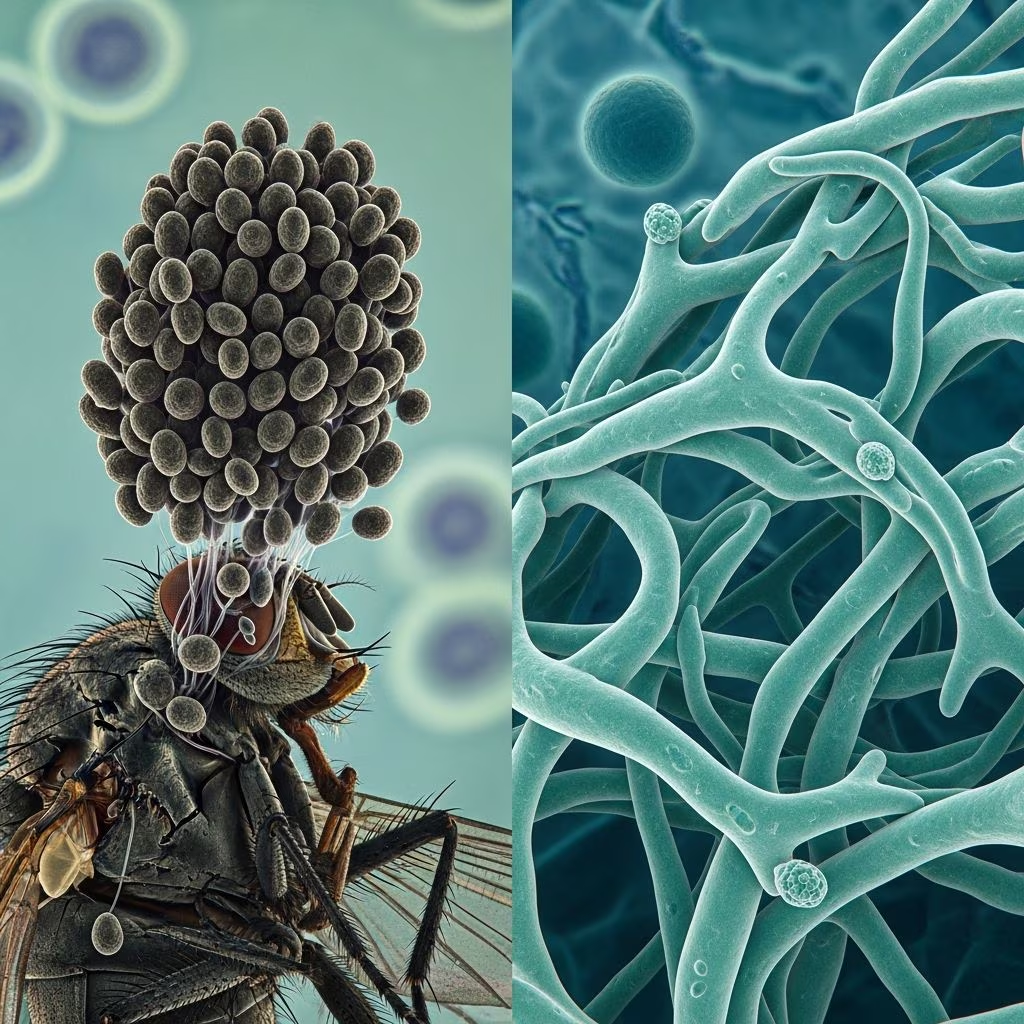
Entomophthoromycosis and mucormycosis represent two distinct yet challenging fungal infections primarily affecting animals in tropical and subtropical environments. These diseases, caused by specific zygomycete fungi, often manifest in herbivores like horses, cattle, and sheep, leading to debilitating subcutaneous and nasal swellings. Understanding their pathogenesis, clinical presentations, and management is crucial for effective veterinary intervention.
Understanding the Pathogens Behind These Infections
These infections stem from fungi in the order Entomophthorales and Mucorales, environmental saprophytes thriving in soil and decaying vegetation. Entomophthoromycosis involves genera such as Conidiobolus and Pythium, while mucormycosis is linked to Rhizopus, Absidia, and Mucor species. Transmission occurs via inhalation of airborne spores or through minor skin trauma, particularly in humid conditions favorable to fungal growth.
Unlike dimorphic fungi causing systemic mycoses, these pathogens induce localized, granulomatous responses. Their broad, non-septate hyphae invade tissues, provoking inflammation without hematogenous dissemination in most cases. Immunocompromised states, though less common, exacerbate severity in affected animals.
Species Susceptibility and Geographic Patterns
Horses dominate entomophthoromycosis cases, with Conidiobolus coronatus causing rhino-facial forms. Sheep and goats suffer subcutaneous variants from Conidiobolus incongruus. Mucormycosis frequently impacts cattle, manifesting as cutaneous or gastric lesions from Rhizopus spp. Dogs and cats rarely encounter these, but exotic species like llamas report occasional involvement.
- Horses: Predominant in Conidiobolus nasal infections, regions like Australia and Africa.
- Cattle: Rhizopus skin nodules, often post-trauma.
- Sheep/Goats: Pythium limb swellings in wet pastures.
Geographic hotspots include Southeast Asia, South America, and parts of North America with high humidity, correlating with seasonal rains promoting sporulation.
Clinical Manifestations and Disease Progression
Symptoms emerge weeks post-exposure, starting as painless swellings. In entomophthoromycosis, nasal and facial edema progresses to firm, non-pitting masses extending to lips and neck, impairing breathing and feeding. Ocular involvement leads to exophthalmos. Cutaneous forms yield ulcerated nodules with serosanguinous discharge.
Mucormycosis presents with similar subcutaneous granulomas, especially on limbs or abdomen in cattle, mimicking abscesses. Internal dissemination is rare but fatal, affecting GI tract or lungs. Systemic signs include weight loss, fever, and lethargy in advanced stages.
| Disease | Common Sites | Key Signs |
|---|---|---|
| Entomophthoromycosis | Nasal, facial, subcutaneous | Non-pitting edema, nodules, dyspnea |
| Mucormycosis | Skin, GI tract | Ulcerative lesions, granulomas, anorexia |
Diagnostic Approaches for Accurate Identification
Diagnosis combines clinical suspicion with cytology, histopathology, and culture. Fine-needle aspirates reveal suppurative inflammation with eosinophilic granulomas containing broad hyphae. Characteristic “cotton ball” aggregates in Conidiobolus aid differentiation. Biopsy confirms non-septate hyphae branching at right angles.
Culture on Sabouraud agar at 25-30°C yields characteristic sporangia, though slow growth (2-4 weeks) delays confirmation. PCR assays enhance specificity, detecting fungal DNA in tissues with 80-90% sensitivity. Serology lacks reliability due to cross-reactivity.
- Cytology: Eosinophilic infiltrates, hyphae visibility.
- Histopathology: Splendore-Hoeppli material around hyphae.
- Molecular: Panfungal PCR for species ID.
Treatment Strategies and Management Protocols
Therapy demands multimodality: surgical debridement, antifungals, and supportive care. Potassium iodide (KI) remains first-line for entomophthoromycosis, dosed at 40-100 mg/kg daily orally in horses, reducing lesion size via unclear mechanisms possibly involving iodine’s antifungal properties.
Triazoles like itraconazole (5-10 mg/kg BID) or fluconazole target ergosterol synthesis, effective against zygomycetes. Amphotericin B (0.5-1 mg/kg IV, 3x/week) reserved for refractory cases due to nephrotoxicity. Treatment spans 3-6 months minimum, monitoring via lesion regression and cytology.
Surgery excises accessible masses, preventing recurrence. Hyperbaric oxygen adjunctively enhances tissue oxygenation, inhibiting hyphal growth experimentally.
Prognostic Factors Influencing Outcomes
Early intervention yields 60-80% resolution in localized entomophthoromycosis; facial extension drops success to 40%. Mucormycosis prognosis is poorer (30-50%) due to deeper invasion. Chronicity, facial involvement, and fungal burden predict failure.
Comorbidities like malnutrition worsen outlook. Relapses occur in 20% post-therapy, necessitating lifelong monitoring.
Preventive Measures and Control Strategies
Control hinges on environmental management: reduce pasture humidity, avoid overcrowding, and inspect for wounds. Quarantine new animals; topical antifungals for at-risk individuals. No vaccines exist, but research into fungal antigens progresses.
- Stable hygiene to minimize spore load.
- Nutritional optimization for immunity.
- Veterinary surveillance in endemic areas.
Research Advances and Future Directions
Recent PCR diagnostics and novel azoles like posaconazole promise better outcomes. Studies elucidate host-fungal interactions, identifying eosinophil roles in containment. ISHAM-VMWG drives standardization in veterinary mycology.
Genomic sequencing reveals virulence factors, paving for targeted therapies.
Frequently Asked Questions (FAQs)
What animals are most at risk for these fungal infections?
Horses, cattle, sheep, and goats in humid tropics face highest risk, with horses prone to nasal entomophthoromycosis.
How do veterinarians diagnose these conditions?
Through cytology, biopsy showing broad hyphae, culture, and PCR for confirmation.
Is surgical removal always necessary?
Not always; medical therapy with KI or azoles suffices for mild cases, but surgery aids extensive lesions.
Can these infections spread between animals?
Direct transmission is unlikely; environmental spores are primary source.
What is the typical treatment duration?
3-12 months, depending on response and lesion resolution.
References
- Approaches to Opportunistic Fungal Infections in Small Animals — Today’s Veterinary Practice. 2023. https://todaysveterinarypractice.com/internal-medicine/approaches-to-opportunistic-fungal-infections-in-small-animals/
- Fungal infections in animals: a patchwork of different situations — PMC (PubMed Central). 2018-10-26. https://pmc.ncbi.nlm.nih.gov/articles/PMC6251577/
- An Overview of Fungal Infections in Cats, Dogs, and Exotic Small Mammals — PubMed. 2024. https://pubmed.ncbi.nlm.nih.gov/40691364/
- Fungal Infections in Dogs – Dog Owners — MSD Veterinary Manual. 2025. https://www.msdvetmanual.com/dog-owners/disorders-affecting-multiple-body-systems-of-dogs/fungal-infections-in-dogs
- Overview of Antifungal Agents for Use in Animals — Merck Veterinary Manual. 2025. https://www.merckvetmanual.com/pharmacology/antifungal-agents/overview-of-antifungal-agents-for-use-in-animals
- Overview of Fungal Infections in Animals — Merck Veterinary Manual. 2025. https://www.merckvetmanual.com/infectious-diseases/fungal-infections/overview-of-fungal-infections-in-animals



