

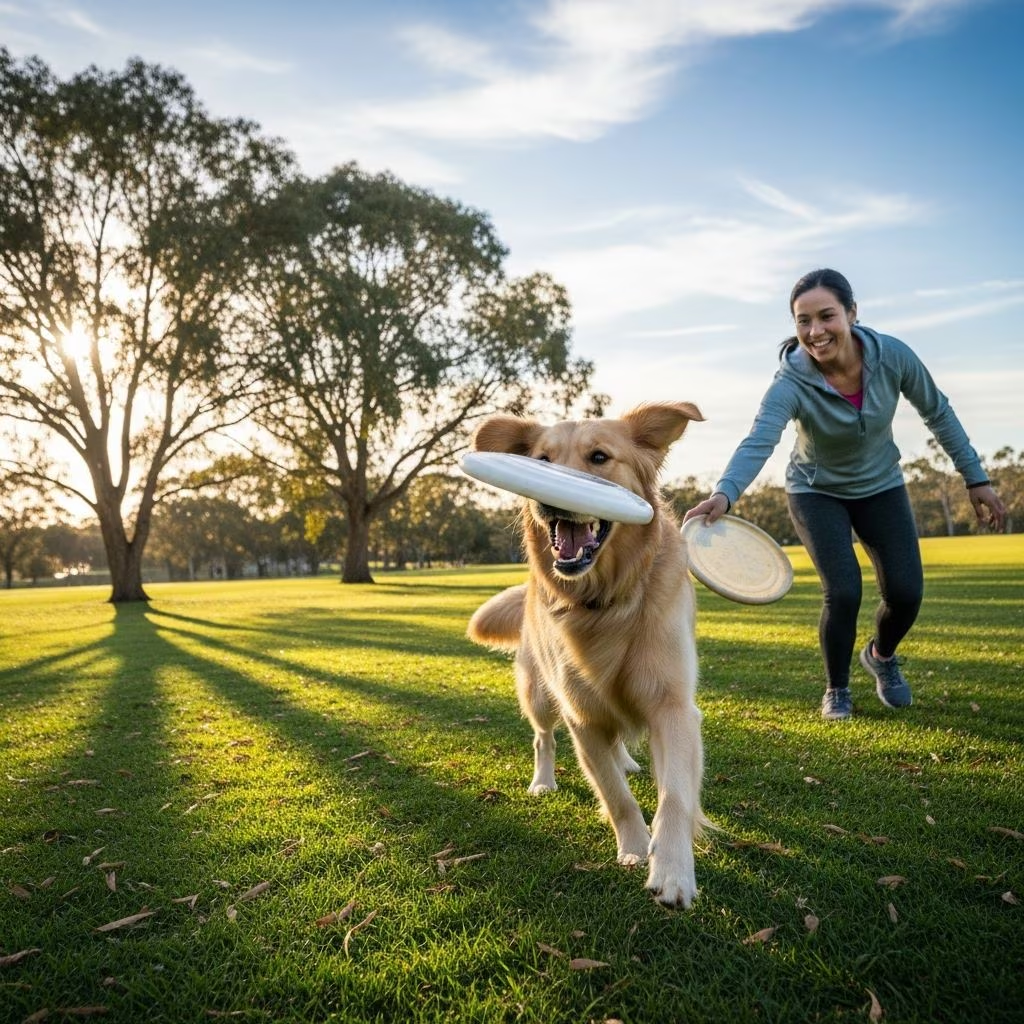
Running games are a powerful way to keep your dog healthy, happy, and mentally engaged while also strengthening your bond. For dogs that aren’t excited by traditional fetch, playful running can be the key to unlocking their love of exercise and training.
Regular physical activity helps dogs maintain a healthy weight, supports joint health, and reduces the risk of chronic disease, while also decreasing unwanted, high-energy behaviors at home. Playful movement-based training and games also boost learning, focus, and long-term memory for cues and behaviors.
Below are five engaging running games you can start today, plus tips to keep them safe, fun, and rewarding for both you and your dog.
Why Running Games Are Great for Your Dog
Before diving into specific games, it helps to understand why running-based play is such an effective tool for both behavior and wellbeing.
- Physical exercise: Running burns calories, helps maintain a healthy weight, and supports cardiovascular health in dogs.
- Mental enrichment: Games that include cues, direction changes, and decision-making challenge your dog’s brain and reduce boredom.
- Behavior benefits: Adequate exercise is associated with fewer destructive behaviors and lower anxiety in many dogs.
- Training support: Incorporating cues into games can improve response speed and reliability in real-life situations.
- Bonding: Shared play increases trust and positive emotional associations between you and your dog.
| Benefit | How Running Games Help |
|---|---|
| Physical health | Improves fitness, supports joints when done appropriately, and helps weight management. |
| Mental health | Provides an outlet for energy and reduces frustration and boredom-related behaviors. |
| Training | Pairs cues with excitement and rewards, improving attention and recall over time. |
| Bonding | Teaches your dog that you predict fun, safety, and rewards when you move together. |
Game 1: Chase the Person
Core idea: You run, your dog happily chases you. This built-in canine instinct can be redirected into a structured, safe game.
How to Play “Chase the Person”
- Start in a safe, enclosed area or use a long line attached to a harness.
- Get your dog’s attention with a clap, kissy noise, or their name.
- Turn away from your dog and run in an enthusiastic, inviting way.
- As your dog runs toward you and is within a few feet, stop, turn, and reward with a treat, toy, or praise.
- Repeat in short bursts to keep the excitement high but manageable.
Training Tips for this Game
- End before impact: Stopping and turning toward your dog before they reach you reduces the risk of jumping or nipping at your legs, which some herding or high-drive dogs may try.
- Pair with a recall cue: Say your recall cue (“Come!” or your dog’s name) right before you start running so they learn that moving toward you is always rewarding.
- Keep it short: Multiple, brief sprints are more fun and less tiring than one long chase.
Important Safety Warning
Do not reverse the game into “chase the dog.” If you repeatedly chase your dog, especially when they have an object or are trying to avoid you, they can learn that running away from you is part of the game. This can:
- Make recalls harder, as your dog finds it rewarding to stay just out of reach.
- Reinforce running away when you approach, especially in off-leash environments.
- Create dangerous situations near roads or hazards.
Game 2: On Your Mark, Get Set, Go
Core idea: Turn a simple run into a cue-based ritual that improves your dog’s impulse control and listening skills while they’re excited.
What This Game Teaches
- Body position cues: Your dog learns to lie down, bow, and run on specific words.
- Self-control: They wait for the “Go” cue instead of exploding forward prematurely.
- Fun obedience: Basic training becomes more engaging, increasing motivation and focus.
Step-by-Step Instructions
- Teach the positions separately:
- Pair “On your mark” with a down. Say the phrase, help your dog lie down, then reward.
- Pair “Get set” with a play bow (front legs down, rear end up). You can lure this with a treat toward the ground and slightly toward your dog’s chest.
- Use “Go” as your cue to start running forward together.
- Chain the cues:
- Ask for “On your mark” (down), reward.
- Then “Get set” (play bow), reward.
- Pause briefly, then say “Go!” and sprint forward for a few seconds.
- Gradually increase excitement:
- Cheer, move faster, and use your dog’s favorite rewards for responding quickly.
- Practice in different safe locations to generalize the behavior.
Why This Game Matters
Games that ask dogs to perform simple cues under moderate excitement teach them to think instead of react impulsively. This skill carries over into real-life situations such as crossing streets, greeting visitors, or waiting at doors.
Game 3: Fartlek (Speed Play)
Core idea: Borrowed from human training, fartlek (“speed play” in Swedish) means alternating between faster and slower paces during a run. This works beautifully with dogs that enjoy moving with you.
How to Play Fartlek with Your Dog
- Start with a warm-up walk of 5–10 minutes to loosen joints and muscles.
- Begin a gentle jog at a comfortable pace for both of you.
- Every so often, surge ahead for a short distance (for example, 10–30 seconds of faster running).
- Return to a walk or slow jog for a recovery period.
- Repeat the cycle several times, keeping sessions short at first.
Benefits of Fartlek for Dogs
- Variable intensity: Alternating speeds improves cardiovascular fitness without overloading your dog with constant sprinting.
- Engagement: Sudden changes encourage your dog to watch and follow you closely.
- Joint-friendly: Controlled bursts interspersed with walking can be easier on the body than nonstop high-speed play when appropriately tailored to your dog’s condition.
Safety Considerations
- Age and health: Young dogs whose growth plates have not closed and older dogs with joint disease may need gentler, shorter sessions.
- Surface choice: Grass, dirt, or rubberized surfaces are kinder on joints than concrete.
- Weather and hydration: Dogs are more prone to overheating than humans and rely on panting for cooling, so avoid hot, humid conditions and provide water breaks.
Game 4: Hard to Get
Core idea: A short, controlled “keep-away” style game that uses a toy or treat to spark enthusiasm and launch a longer play session.
How to Play “Hard to Get”
- Choose a toy your dog loves (tug toy, squeaky, or ball on a rope).
- Show the toy and make it exciting: squeak, bounce, or wiggle it close to the ground.
- As your dog shows interest, move away quickly while keeping the toy visible.
- Let your dog chase you for a few seconds.
- Very quickly allow them to catch and grab the toy, then transition into tug, fetch, or another running game.
Key Guidelines for This Game
- Don’t tease endlessly: If your dog never gets the toy, frustration can replace fun, potentially leading to grabbing, barking, or quitting the game.
- Watch body language: Relaxed body, wagging tail, and soft eyes usually indicate playful engagement; stiff posture or intense frustration suggests the game has gone too far.
- Use it as a warm-up: Play for just a few moments to energize your dog, then shift to a more structured game like chase, tug, or zig-zag.
Game 5: Zig-Zag
Core idea: Dogs find unpredictable movement fascinating. The zig-zag game harnesses this by having you move in ever-changing directions and speeds while rewarding your dog for staying with you.
Getting Started with Zig-Zag
- Hold several small, high-value treats in a pouch or pocket.
- Invite your dog to your side and give a treat when they are close to you.
- Start moving forward at a walk or light jog.
- After a few steps, change direction—turn right, left, or even double back.
- Each time your dog catches up and is by your side, mark (with a word like “Yes!”) and reward.
Ideas for Fun Zig-Zag Patterns
- Run 5 steps fast, then slow jog for 10 steps.
- Walk in a straight line, then make a sudden but safe U-turn.
- Mix short sprints, longer walks, and sharp but controlled turns.
Training Benefits of Zig-Zag
- Loose-leash practice: Rewarding your dog for staying near your side builds good walking and running habits.
- Focus under motion: Your dog learns that staying connected to you pays off more than running off independently.
- Body awareness: Direction changes help your dog become more coordinated and responsive.
General Safety and Health Tips for Running Games
Running games should always be tailored to your dog’s age, breed, health status, and fitness level. Some dogs are natural runners, while others need shorter, slower sessions or different types of activities.
Check if Your Dog Is Ready
- Puppies and growth: High-impact running should be limited until growth plates close, often between 12–24 months depending on size.
- Senior dogs: Dogs over about 7 years may have stiffer joints or underlying conditions and may need gentler exercise and veterinary guidance.
- Breed considerations: Brachycephalic (short-nosed) breeds and dogs with known heart or respiratory conditions may not tolerate intense running and may require modified activities.
Run Smart
- Warm up and cool down: Start and end each session with 5–10 minutes of walking to reduce injury risk.
- Use proper gear: A well-fitted harness and, if needed, a hands-free leash setup support safe movement for both of you.
- Monitor for fatigue: Excessive panting, slowing down, lagging behind, or limping are signs to stop immediately.
- Surface and environment: Avoid very hot pavement, icy surfaces, or areas with sharp debris.
How Play Supports Training Success
Integrating running games into your routine is not just about exercise—it also improves how effectively your dog learns and remembers cues.
Research has shown that dogs who engage in play and light activity immediately after training sessions can retain what they learned more efficiently than dogs who simply rest. In one study, dogs that played after a learning task needed significantly fewer trials to relearn it both 24 hours and even a year later compared with those that rested.
Running games fit perfectly into this model:
- You can practice cues such as “come,” “down,” “stay,” “go,” and name recognition within each game.
- Follow a short training session with a play session to help lock in the new skill.
- Associate listening to you with fun, movement, and rewards.
Frequently Asked Questions (FAQs)
Q: How often should I play running games with my dog?
A: Most healthy adult dogs benefit from at least one session of moderate to vigorous activity daily, but the exact amount depends on age, breed, and health. Aim to include running games a few times a week and adjust based on your dog’s energy level and your veterinarian’s advice.
Q: Can I play these running games with a puppy?
A: Yes, but keep the intensity and duration low. Use very short sprints on soft surfaces and focus more on training foundations and engagement rather than speed. Avoid repetitive high-impact running until your veterinarian confirms your puppy’s growth plates are closed.
Q: What if my dog isn’t interested in toys?
A: Use food rewards, praise, or access to something they enjoy, like sniffing a favorite spot. Many games, such as Chase the Person and Zig-Zag, work well with treat rewards instead of toys.
Q: Are these games suitable for leash-reactive or shy dogs?
A: Yes, as long as you choose a low-distraction, safe environment and keep enough distance from triggers. Running games can boost confidence and build a strong focus on you, but reactive dogs may benefit from guidance from a qualified behavior professional.
Q: How do I know when to stop a running game?
A: End the session if your dog begins to lag, pant excessively, drool thickly, or seem disinterested, or if they show any signs of pain or overheating. It’s better to stop while your dog is still having fun so they stay excited for the next session.
References
- Obesity in Dogs — American Veterinary Medical Association. 2023-08-10. https://www.avma.org/resources/pet-owners/petcare/obesity-dogs
- Affenzeller, N., et al. Playful post-training activities improve training success in dogs — Applied Animal Behaviour Science (via University of Lincoln). 2017-06-01. https://psycnet.apa.org/doi/10.1016/j.applanim.2017.04.004
- Exercising Your Adult Dog — American Kennel Club. 2022-05-12. https://www.akc.org/expert-advice/health/how-much-exercise-does-a-dog-need/
- How to Run Safely and Happily With Your Dog — RSPCA / Kinship collaboration. 2023-03-10. https://www.kinship.com/uk/dog-lifestyle/how-to-run-with-your-dog



