

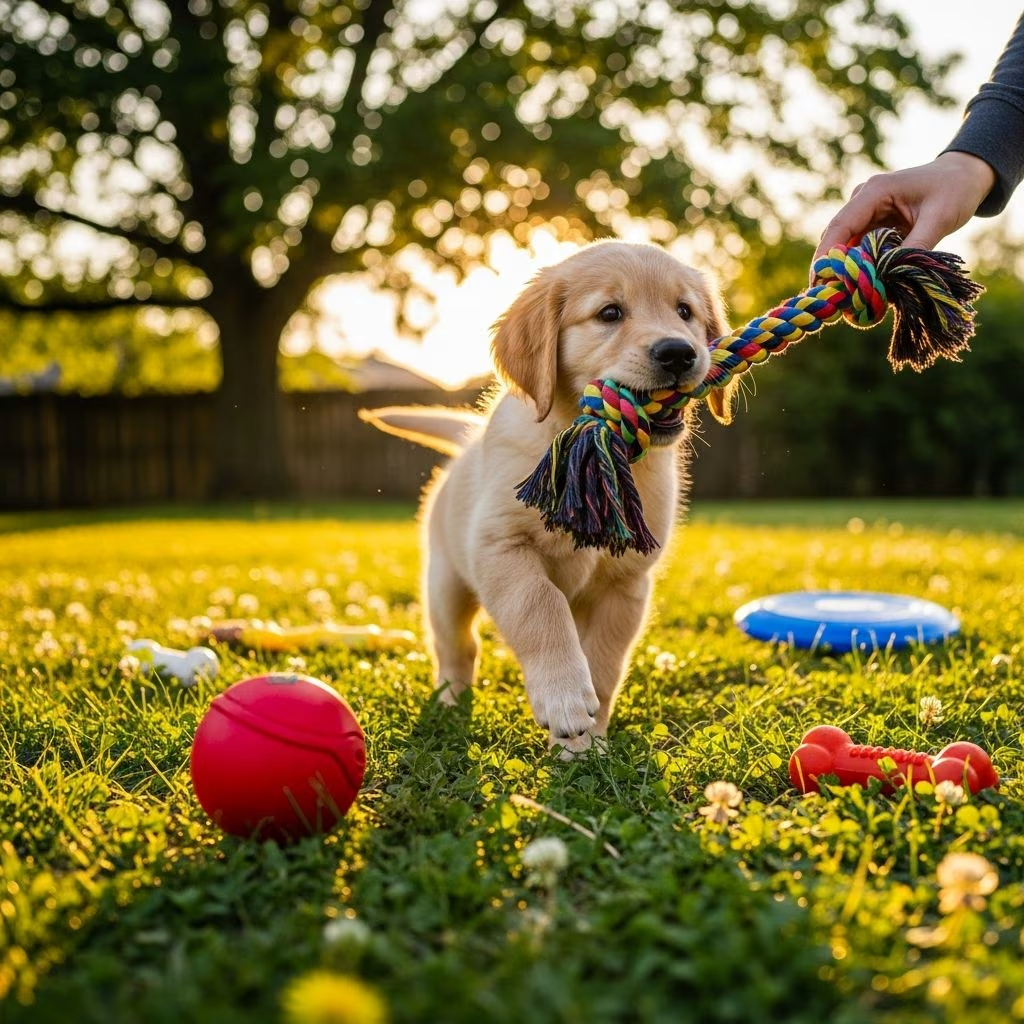
Puppies thrive on play that aligns with their developmental milestones, helping them build physical coordination, social skills, and cognitive abilities. These games, designed for various ages, promote healthy growth while strengthening the bond between you and your pup.
Understanding Puppy Growth Phases for Optimal Play
Puppy development unfolds in distinct stages, each offering unique opportunities for play-based learning. From birth to two years, pups progress through neonatal dependence, sensory awakening, socialization windows, juvenile exploration, and adolescent independence. Tailoring games to these phases ensures safe, effective engagement.
In the neonatal stage (0-2 weeks), puppies rely on touch and taste, crawling minimally while sleeping most of the time. Play is passive, focused on maternal stimulation.
The transitional stage (2-4 weeks) brings emerging senses: eyes open, ears perk, teeth appear, and pups begin walking, barking, and tail-wagging. Gentle interactions introduce movement.
Socialization (3-16 weeks) is critical, where pups learn bite inhibition, group dynamics, and human bonds through play with littermates and people.
During juvenile (3-6 months) and adolescent (6-18 months) phases, energy surges, fear periods may occur, and hierarchy testing begins. Structured games channel this vigor.
| Stage | Age Range | Key Developments | Play Focus |
|---|---|---|---|
| Neonatal | 0-2 weeks | Touch/taste senses; crawling | Passive warmth/stimulation |
| Transitional | 2-4 weeks | Senses develop; walking starts | Sensory gentle touches |
| Socialization | 3-16 weeks | Bite inhibition; bonding | Group play, exploration |
| Juvenile | 3-6 months | Energy, independence | Skill-building challenges |
| Adolescent | 6-18 months | Hierarchy, maturity | Advanced training games |
Early Sensory Games for Newborn Pups (0-4 Weeks)
For the tiniest pups, games emphasize comfort and subtle stimulation. Place soft, warm toys near the nest to encourage slow crawling toward scents and textures. Gently stroke with a soft cloth mimicking maternal licking, aiding elimination and bonding. These activities support neonatal reliance on mother-led cues.
- Warm Nest Exploration: Line a safe area with blankets scented by the mother; observe pup’s instinctive crawls.
- Tactile Massage: Use feather-light touches on paws and belly to build trust without overwhelming.
Avoid direct handling to prevent stress; focus on environmental enrichment that promotes natural development.
Discovery Plays for Emerging Senses (4-12 Weeks)
As senses sharpen, introduce games sparking curiosity. This socialization window (peaking 3-12 weeks) is prime for positive exposures, preventing fear later.
- Sound Safari: Softly play household noises (keys jingling, vacuum hum) from a distance, rewarding calm approaches with treats.
- Texture Treasure Hunt: Scatter safe fabrics, rugs, and grass clippings in a playpen; let pup paw and sniff freely.
- Toy Teasers: Roll plush balls gently; encourage chasing with littermates to practice inhibited biting.
Daily 5-10 minute sessions build confidence. Pair with vaccinations and basic training for holistic growth.
Active Adventure Games for Juvenile Explorers (3-6 Months)
Pups now burst with energy, testing boundaries in the ranking period. Games teach control, preventing overexertion in rapidly growing bodies.
- Chase and Freeze: Run short distances, then stop; teach ‘sit’ on cue to curb impulse chasing.
- Tunnel Tumblers: Create cardboard tunnels; pups learn navigation and emerge for praise.
- Bubble Burst: Blow pet-safe bubbles; popping hones paw-eye coordination without rough play.
Monitor for fear phases (8-16 weeks), responding with encouragement over force. Limit sessions to 15 minutes, twice daily.
Skill-Sharpening Challenges for Adolescents (6-18 Months)
Emotional maturity lags physical growth, especially in larger breeds. Games reinforce commands amid ‘flight instinct’ boundary-testing.
- Hide-and-Seek Recall: Hide behind furniture; call pup’s name enthusiastically for high-value rewards.
- Obstacle Odyssey: Set up low hurdles, weave poles from household items; builds agility and focus.
- Puzzle Pals: Use treat-dispensing toys; solves boredom, teaches problem-solving.
Positive reinforcement maintains hierarchy without dominance struggles. Gradually increase complexity as energy dips post-12 months.
Indoor Games for Rainy Days and Small Spaces
Not all play needs outdoors. These suit any stage:
- Flavor Fetch: Hide kibble in muffin tins covered by balls; sniffs engage nose work.
- Mirror Mimic: Let pup ‘play’ with reflection; harmless curiosity for socialization.
- Stuffing Surprise: Fill old socks with crinkly paper; tug gently for mouth coordination.
Rotate toys weekly to sustain interest, preventing destructive chewing.
Outdoor Escapades to Build Stamina
Fresh air amplifies fun, ideal post-12 weeks vaccination:
- Flirt Pole Frenzy: Attach toy to string on pole; mimics prey for controlled chasing.
- Scent Trails: Drag treat-scented rope; follows nose, enhancing tracking instincts.
- Water Wags: Shallow kiddie pool splashes; cools and exercises without joint strain.
Supervise leashed in public to reinforce recall amid distractions.
Group Playdates: Social Superchargers
Littermate wrestling teaches bite limits; arrange puppy classes for peers. Benefits peak in 3-14 week window.
- Match sizes/ages; end before fatigue.
- Monitor for bullying; intervene calmly.
- Post-play debrief with solo calm games.
Safety Essentials in Every Game
Prioritize health:
- Use durable, non-toxic toys; inspect regularly.
- Match intensity to breed/size; avoid jumps pre-growth plate closure.
- End on high note; rest prevents burnout.
- Consult vets for tailored advice.
Common Play Pitfalls and Fixes
| Issue | Why It Happens | Solution |
|---|---|---|
| Over-biting | Poor inhibition | Yelp, redirect to toys |
| Fear sudden | Fear period | Desensitize gradually |
| Ignores commands | Testing phase | Consistent rewards |
| Too hyper | Energy surge | Short bursts + walks |
FAQs
How often should I play with my puppy?
3-5 sessions daily, 5-20 minutes each, adjusted by age and energy. Quality trumps quantity.
Can play replace formal training?
No; integrate commands into games for best results during socialization.
What if my puppy seems scared of games?
Normal in fear periods (8-16 weeks, 6-14 months); go slower, use treats.
Best toys for each stage?
Neonatal: Soft cloths. Transitional: Plush. Juvenile+: Durable chew/puzzles.
Play differences by breed?
Larger breeds mature slower; high-energy herders need more action.
Tracking Progress Through Play
Journal sessions: note responsiveness, stamina, social ease. Adjust as pup hits milestones like reliable recall (3 months). Play fosters lifelong habits, turning chaotic puppyhood into confident adulthood.
References
- Puppy Development Stages & Behaviour Into Adulthood — Eukanuba. N/A. https://www.eukanuba.com/au/articles/puppy-development-stages-and-behaviour-into-adulthood
- Puppy Development Stages From Birth to 2 Years Old — Best Friends Animal Society. N/A. https://bestfriends.org/pet-care-resources/puppy-development-stages-birth-2-years-old
- The complete guide to puppy behavior and development stages — Banfield Pet Hospital. N/A. https://www.banfield.com/puppy-hub/puppy-behavior-and-training
- Understanding Puppy Behavior — Memorial Road Pet Hospital. N/A. https://www.memorialroadpethospital.com/services/puppy/understanding-puppy-behavior
- Developmental Stages — Purdue University Canine Welfare Science. N/A. https://caninewelfare.centers.purdue.edu/behavior/puppy-development/developmental-stages/
- Understanding Your Puppy’s Developmental Stages — Dogtopia. N/A. https://www.dogtopia.com/blog/understanding-your-puppys-developmental-stages/
- A Puppy Growth Timeline: Transitions in Puppyhood — American Kennel Club. N/A. https://www.akc.org/expert-advice/puppy-information/puppy-growth-timeline-transitions-puppyhood/



