

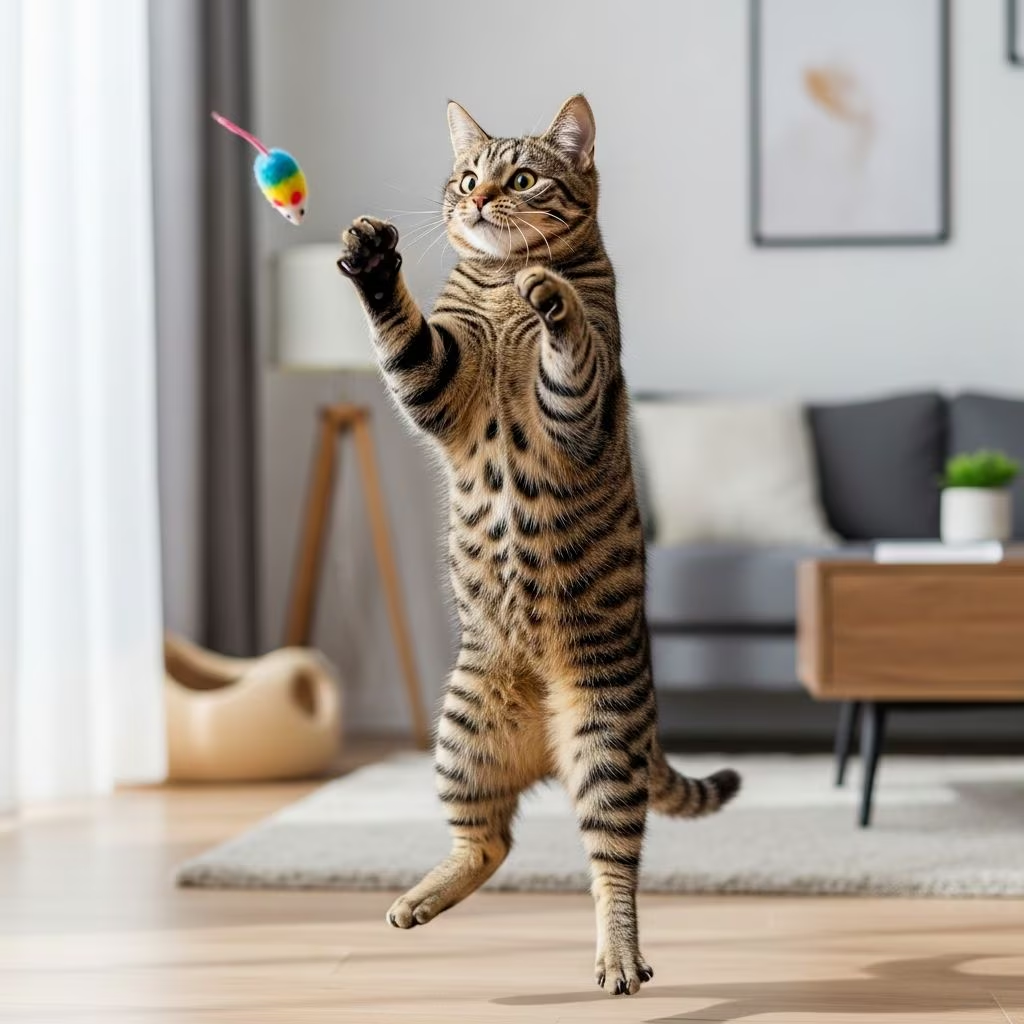
Training cats offers a rewarding way to engage their natural curiosity and intelligence, fostering a deeper connection between pet and owner. Unlike dogs, cats respond best to methods that respect their independence, using positive reinforcement to encourage desired behaviors. This guide explores practical techniques drawn from established training principles, helping you teach impressive tricks with minimal effort.
Why Train Your Cat?
Cats possess remarkable cognitive abilities, capable of learning complex sequences when motivated properly. Training provides mental stimulation, reduces boredom-related issues like destructive scratching, and improves everyday cooperation, such as nail trimming or carrier tolerance. Positive methods enhance trust, making interactions more enjoyable for both parties.
Key benefits include:
- Strengthened owner-pet bond through shared achievements.
- Improved behavior management in multi-pet households.
- Enhanced physical activity to combat obesity.
- Preparation for veterinary visits via desensitization.
Essential Tools for Success
Start with basic equipment to make sessions effective. A clicker delivers a consistent sound marking precise moments of success, bridging the gap between action and reward. High-value treats, such as freeze-dried chicken or tuna flakes, motivate participation. A quiet space free from distractions ensures focus.
| Tool | Purpose | Tips |
|---|---|---|
| Clicker | Marks exact behavior | Charge it first: click and treat repeatedly until cat anticipates reward. |
| Treats | Motivates action | Use small pieces to avoid overfeeding; vary types for interest. |
| Target Stick (optional) | Guides movements | Use a chopstick or finger initially for simplicity. |
Foundational Training Techniques
Charging the Clicker
Begin by associating the click sound with positivity. Sit with your cat in a calm area, click the device, and immediately offer a treat. Repeat 10-15 times per session over a few days. Soon, your cat will perk up at the sound alone, ready for action.
Capturing Behaviors
Observe natural actions like sitting or lying down, then mark them with a click and treat. This ‘captures’ voluntary behaviors, encouraging repetition. For sitting, wait for the cat to settle naturally, click precisely as hindquarters touch the ground, and reward promptly.
Luring with Treats
Guide your cat into positions using a treat as bait. Hold it near the nose and move slowly to elicit the motion. For example, to teach ‘sit,’ elevate the treat above the head and back toward the tail; the cat follows, lowering into position. Click and reward once achieved.
Shaping Complex Actions
Break advanced tricks into tiny steps, rewarding progress. This builds behaviors incrementally. Start with approximations, like a slight head turn, then refine to full spins or jumps.
Beginner Tricks to Master First
Come on Command (Finger Targeting)
This foundational skill paves the way for others. Hold a treat between thumb and middle finger, wiggling your index finger. As your cat noses it, click and treat. Repeat until they target reliably on cue, then add a verbal ‘come’ or hand signal. Practice across rooms for reliability.
- Present target finger with treat nearby.
- Click on nose touch.
- Fade treat, reward from hand.
- Introduce distance and voice cue.
Touch and Sit
Extend finger targeting to sitting. Lure the nose upward and back; click when butt hits floor. Pair with ‘sit’ cue after 5-10 successes. Sessions of 3-5 minutes prevent frustration.
Intermediate Tricks for Show-Offs
High-Five or Shake
Once targeting is solid, shape paw lifts. Click for any lift toward your hand, rewarding generously. Gradually require palm contact. Use a verbal ‘high-five’ as they improve.
Progression table:
| Step | Action | Approx. Reps |
|---|---|---|
| 1 | Lift paw slightly | 5-10 |
| 2 | Reach toward hand | 10-15 |
| 3 | Paw to palm | 15+ |
Spin in a Circle
Lure with treat held high, circling it around the cat’s head. They follow instinctively. Click on full rotation completion, adding a spin gesture and word. Practice both directions for versatility.
Lie Down
From sit, lure treat to the floor between paws. Cat stretches forward; click belly-down position. Advance to full prone with extended legs.
Advanced Tricks and Challenges
Roll Over
With cat lying down, hold treat near shoulder to encourage tilting. Click on side roll, building to full rollover. This requires patience and many short sessions.
Sit Pretty (Up on Hind Legs)
From sit, hold treat high above head. Cat rears up; click immediately. Shape for longer holds.
Jump Through Hoops
Use targeting to guide over a broomstick or leg first, then a hoop. Reward bold leaps.
Practical Training Applications
Nail Trimming Desensitization
Counter-condition fear with gradual exposure. Pair clipper sight/sound with treats, progressing to paw handling and clipping one nail per session.
- Show clippers: click/treat.
- Sound clippers nearby.
- Touch paw, lift, extend claw.
- Clip one nail.
Carrier Training
Toss treats inside voluntarily. Click for entry and stays, empowering choice.
Tips for Effective Sessions
- Keep it short: 3-5 minutes, 2-3 times daily.
- End on success: Quit while motivated.
- One trick per session: Avoid overload.
- Compete distractions: Practice with mild interruptions before advancing.
- Patience rules: Every cat learns at their pace; force backtracks progress.
Common Mistakes to Avoid
Punishment erodes trust, leading to avoidance. Inconsistent rewards confuse; always follow through. Overlong sessions cause burnout—watch for disinterest cues like tail flicks.
FAQs
Can any cat be trained?
Yes, kittens and adults alike respond to positive methods. Adjust for age, health, and personality.
What if my cat ignores me?
Boost motivation with hungrier timing or better treats. Ensure basics like targeting are solid first.
How long until tricks stick?
Basic cues in days; complex ones weeks with daily practice.
Is clicker necessary?
Ideal for precision, but a consistent word like ‘yes’ works.
Training multiple cats?
Work one-on-one; use names in cues.
Next Steps for Mastery
Build routines with food puzzles to prime engagement. Graduate to obedience amid distractions, like TV noise. Track progress in a journal to celebrate milestones. Training evolves your cat from aloof to active partner.
References
- How To Train Your Cat in 5 Easy Steps — cats.com. 2023. https://cats.com/how-to-train-your-cat
- Ultimate Guide to Cat Training — outdoorbengal.com. 2023. https://www.outdoorbengal.com/blogs/clicker-training-cats/cat-training-guide
- How To Train Your Cat: Beginners Start Here — YouTube (Jackson Galaxy). 2020-01-15. https://www.youtube.com/watch?v=yM3n2mWZqUU
- Learn 5 CAT TRICKS in 10 minutes — YouTube. 2022. https://www.youtube.com/watch?v=2h9VqeC6n50
- How to train a cat — British Psychological Society (BPS). 2023. https://www.bps.org.uk/psychologist/how-train-cat



