

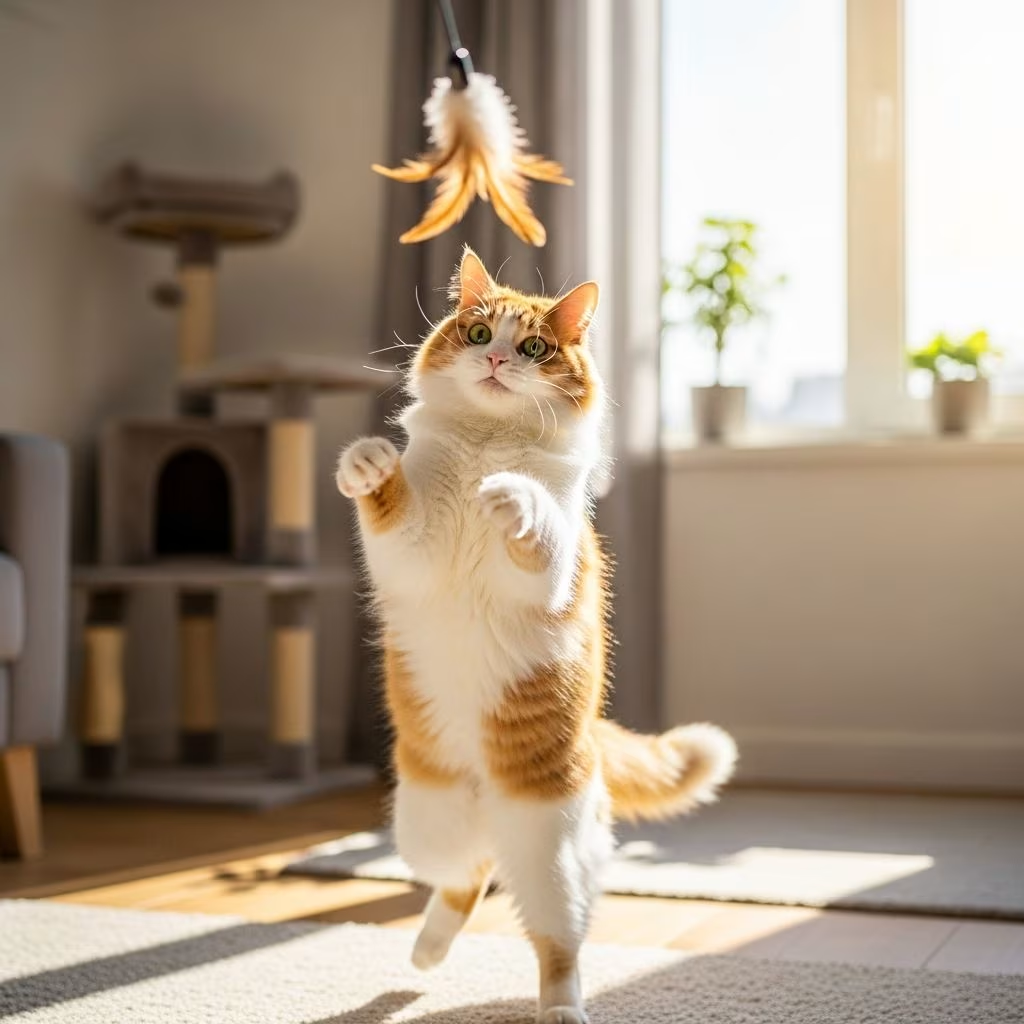
Interactive play forms the cornerstone of a thriving cat-owner relationship, channeling a cat’s innate predatory drives into structured fun that supports physical fitness, mental sharpness, and emotional well-being. Regular sessions mimicking hunting sequences—such as stalking, pouncing, and capturing—help prevent boredom-related issues like destructive scratching or excessive vocalization while fostering trust and affection.
Why Play Matters for Your Cat’s Overall Wellness
Cats evolved as solitary hunters, relying on play to hone skills essential for survival, from agile leaps to precise strikes. In domestic settings, these instincts persist, making purposeful play vital for health. Studies reveal that cats engaging in fetch-like activities, often without training, exhibit higher enthusiasm when they control the pace, leading to longer sessions and repeated initiations. This autonomy respects their independent nature, enhancing welfare and strengthening bonds.
Play transcends mere entertainment; it regulates stress hormones, builds resilience, and supports cognitive development. Research adopting a psychobiological lens distinguishes reciprocal social play—where cats mirror actions for mutual learning—from one-sided object manipulation, which practices environmental mastery. Owners observing tail flicks or abdominal exposure can gauge playfulness levels, adjusting intensity to match.
Benefits extend to multi-cat homes, where supervised play prevents escalation from friendly wrestling to tension. Recognizing shifts, like one cat fleeing without pursuit invitation, allows timely intervention, preserving harmony. For single cats, human-led games replicate pack dynamics, promoting exercise equivalent to 30 minutes of daily activity, crucial for weight management and joint health.
Essential Toys That Spark Instinctive Play
Selecting toys that simulate prey triggers natural responses. Soft, feathered wands evoke birds, while crinkly balls mimic rodents scurrying in grass. Avoid laser pointers as sole options, as they deny the ‘kill’ satisfaction, potentially frustrating cats.
- Wand Toys: Flexible poles with dangling attachments for chasing and batting, ideal for high-energy bursts.
- Ball Trackers: Circular designs with rolling balls satisfy solitary batting without owner involvement.
- Tunnel Systems: Fabric tubes for ambushing, encouraging exploration and hiding instincts.
- Fetch Balls: Lightweight, bouncy spheres for retrieval games, surprisingly common even untrained.
- Interactive Feeders: Puzzle dispensers turning meals into hunts, slowing intake and boosting mental stimulation.
Rotate toys weekly to maintain novelty, as familiarity dulls interest. Safety first: inspect for loose parts that could be ingested.
Mastering the Art of Fetch with Cats
Contrary to canine stereotypes, many cats naturally retrieve, with 94% showing this untrained from kittenhood. Success hinges on letting felines dictate rules—initiating drops or partial returns signals their leadership preference, yielding more frequent, enthusiastic rounds.
Start in a quiet room: toss a small toy short distances, praising vocal retrieves. Gradually extend range, pausing if they lie down or walk away, cues to end. Cats dropping toys halfway or escalating distance test boundaries, rewarding patience with prolonged engagement. This dynamic influences owner responses, akin to subtle manipulation for desired outcomes.
| Fetch Variation | Cat Behavior | Owner Tip |
|---|---|---|
| Full Retrieve | Drops at feet, stares expectantly | Praise and repeat immediately |
| Partial Drop | Leaves midway, waits | Encourage with gentle call |
| Initiator Role | Brings toy first | Follow their lead for best results |
Chase and Pounce Adventures Indoors
Chasing replicates stalking prey across savannas, vital for motor skill refinement. Use wand toys dragged erratically across floors or under blankets, varying speed to build anticipation. Pouncing practice sharpens reflexes; position toys on elevated surfaces for vertical leaps.
Incorporate household items like crumpled paper for unpredictable bounces. Sessions of 10-15 minutes, twice daily, mimic wild hunt cycles without exhaustion. Watch for horizontal leaps signaling play’s end, respecting boundaries to avoid overstimulation.
Hide-and-Seek Strategies for Clever Cats
Cats adore ambushes, turning homes into playgrounds. Hide behind doors or furniture, rustling fabrics to lure pursuits. Advance to treat-hiding in boxes, teaching scent tracking akin to locating hidden rodents.
For advanced play, use battery-operated mice that dart erratically, prompting explosive reactions. This builds confidence in shy cats, gradually introducing human interaction. Monitor body language: dilated pupils and crouched postures indicate peak engagement.
Solitary Play Options for Independent Felines
Not all cats crave constant companionship; provide self-directed outlets. Kickers—plush toys for ‘bunny kicking’—satisfy grappling urges. Window perches with bird feeders turn observation into mental hunts.
Motor patterns like solitary rolling refine balance. Hunger influences toy preference, with larger items favored during meals, blurring play and predation. Ensure variety to prevent fixation on unsafe objects like cords.
Play Routines Tailored to Age and Energy
Kittens thrive on frequent, short bursts practicing social cues like rearing. Adults benefit from scheduled evenings, aligning with crepuscular peaks. Seniors prefer gentle wand swishes, maintaining mobility without strain.
Multi-cat dynamics demand equity; mismatched styles risk ‘ugly’ aggression. Redirect with individual toys if one dominates.
Building Deeper Connections Through Play
Collaborative games forge emotional ties, with bonded owners seeking more vet care. Consent-based play—stopping on disinterest cues—enhances trust, yielding happier cats. Play dissipates stress, curbing issues like litter avoidance.
Common Play Pitfalls and Fixes
- Overstimulation: Hissing or swatting? Pause and offer space.
- Boredom: Introduce scents like catnip sparingly.
- Ignored Toys: Demonstrate use to reignite interest.
- Energy Mismatch: Match intensity to cat’s signals.
Frequently Asked Questions
How often should I play with my cat?
Two 15-minute sessions daily suffice for most, adjustable by age and health.
What if my cat ignores toys?
Tire them first with food puzzles, then demo play.
Is rough play okay?
Reciprocal only; intervene if unbalanced to prevent injury.
Can play help anxious cats?
Yes, building resilience via predatory fulfillment.
Best time for play?
Dawn and dusk align with natural rhythms.
References
- Play behaviour of cats surprises scientists — Burgess Pet Care. 2023. https://www.burgesspetcare.com/blog/cat/play-behaviour-of-cats-surprises-scientists/
- Cat play and toys — Wikipedia. Accessed 2026. https://en.wikipedia.org/wiki/Cat_play_and_toys
- Are These Cats Playing? – Social Play in Cats — PMC (Peer-reviewed). 2021-07-28. https://pmc.ncbi.nlm.nih.gov/articles/PMC8343019/
- How To Play With a Cat According to a Cat Behaviorist — Cats.com. 2024. https://cats.com/how-to-play-with-a-cat
- Cat-Cat Play: The Good, the Bad, and the Ugly — IAABC Journal. 2023. https://journal.iaabcfoundation.org/play-the-good-the-bad-and-the-ugly/
- Why You Should Play with Your Cat More — Psychology Today. 2024-02. https://www.psychologytoday.com/us/blog/animal-emotions/202402/playful-cats-are-happier-and-healthier-feline-friends



