

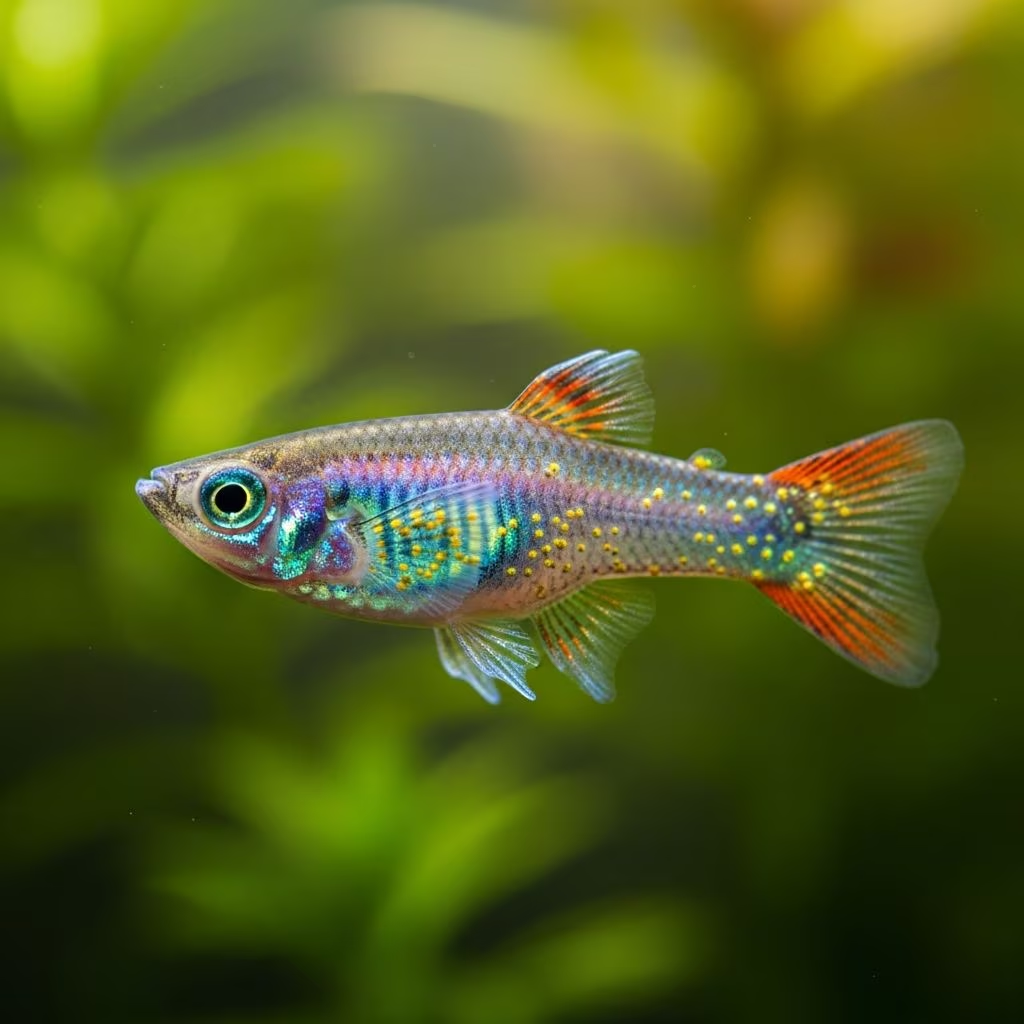
Understanding Freshwater Velvet Disease
Freshwater velvet disease, scientifically known as Piscinoodinium pillulare, represents one of the most serious threats to aquarium fish health. This highly contagious parasitic infection affects a wide variety of freshwater fish species and can spread rapidly through an aquarium if left untreated. The disease earns its common name from the distinctive velvety appearance it creates on infected fish, though it is also known as rust disease or gold dust disease due to the color of the parasitic coating. Understanding this disease is essential for any aquarist who wants to maintain a healthy tank environment.
The parasite responsible for velvet disease is a dinoflagellate that has a complex life cycle involving multiple stages. During its free-swimming stage, the parasite searches for a suitable host fish to attach to and feed upon. Once attached, the parasite multiplies rapidly, creating visible symptoms on the fish’s body. The severity and progression of the disease depend on factors such as water conditions, fish stress levels, immune system strength, and the promptness of treatment initiation.
Identifying Velvet Disease: Symptoms and Signs
Early recognition of velvet disease is crucial for successful treatment. The disease presents a range of symptoms that progress in severity as the infection advances. Aquarists should familiarize themselves with both early warning signs and advanced indicators to catch the disease before it becomes fatal.
Early Stage Symptoms
During the initial stages of velvet infection, observant aquarists may notice behavioral changes before visual symptoms become obvious. Fish infected with freshwater velvet often exhibit a behavior called “flashing,” where they rub, scratch, or flick their bodies rapidly against surfaces in the tank. This behavior represents the fish’s attempt to dislodge the parasites from their skin and gills. Additionally, affected fish may show labored breathing or rapid gill movement as the parasites irritate the delicate gill tissue and interfere with oxygen absorption.
The most characteristic early symptom is the appearance of a golden, rust-colored, or gray dust-like film coating on the fish’s body. This velvety sheen typically appears first on the fins, body, and gill areas, though it can sometimes be difficult to spot with the naked eye. In dim lighting or against dark tank decorations, the parasites may be nearly invisible. A helpful diagnostic technique is to shine a flashlight on the affected fish in a darkened room, which makes the gold or rust-colored coating much more visible and easier to confirm.
Advanced Stage Symptoms
As velvet disease progresses without treatment, the symptoms become increasingly severe and debilitating. Fish heavily infected with freshwater velvet parasites exhibit lethargy and loss of appetite, leading to rapid weight loss. The infected fish’s fins become clamped tightly against the body rather than remaining extended and relaxed. Difficulty breathing becomes more pronounced, with the fish displaying rapid or labored gill movements in an attempt to extract oxygen from the water despite the parasitic irritation.
In severe cases, the fish’s skin may begin to peel or slough off as the parasitic infection destroys the outer layers of the epidermis. Affected fish also produce abnormally large amounts of slime coating, which is the fish’s natural response to irritation and injury. Without prompt treatment, these advanced symptoms often result in death within one to two weeks of infection.
Understanding the Life Cycle and Transmission
The Piscinoodinium parasite exhibits a complex life cycle that influences treatment strategies. The parasite begins as a free-swimming stage called the dinospore, actively searching for a host fish. Once it contacts a suitable host, the parasite attaches and enters the feeding stage called the trophont, where it reproduces rapidly on the fish’s skin and gills. As the parasite matures, it eventually detaches from the fish and sinks to the tank bottom, where it encysts and becomes the tomont stage. Within the protective cyst, the parasite divides into multiple new dinospores that are released back into the water to infect additional fish. This entire cycle typically takes 7 to 14 days depending on water temperature, with warmer water accelerating the process.
Velvet disease spreads through direct contact with infected fish or by exposure to free-swimming parasites in the water. The disease is extremely contagious and can rapidly infect all susceptible fish in an aquarium. This is why prompt isolation of infected fish in a quarantine tank and treatment of all fish in the main tank is essential to prevent total tank loss.
Treatment Options for Freshwater Velvet Disease
Fortunately, freshwater velvet disease is treatable if caught early and managed aggressively. Several distinct treatment approaches exist, each with its own advantages and limitations. The most effective approach often combines multiple treatment methods to maximize the parasite’s elimination rate.
Medication-Based Treatments
Several medications are available that specifically target the free-living stages of the freshwater velvet parasite. Copper-based and quinine-based medications have proven very effective at poisoning free-swimming parasites and preventing reinfection. These medications work by disrupting the parasite’s metabolic processes and destroying its protective coating. However, these treatments carry significant limitations. Copper and quinine are highly toxic to certain fish species including loaches, pufferfish, mormyrids, stingrays, and catfish. Additionally, both medications are lethal to most aquatic invertebrates including shrimp and most snail species, making them unsuitable for planted tanks or tanks containing these creatures.
Safer alternative medications utilize acridine, acriflavine, and related organic chemicals. These options are less toxic to sensitive fish species and invertebrates while remaining effective against the velvet parasite. However, these safer medications are most effective when the disease is diagnosed and treated promptly during the early stages of infection. The earlier treatment begins, the better the likelihood of successful recovery.
Heat, Salt, and Darkness Treatment Method
The combination of heat, salt, and darkness provides an effective alternative to chemical medications, particularly for aquarists concerned about toxicity to sensitive fish or invertebrates. This method works by exploiting the parasite’s biological vulnerabilities.
First, gradually raise the aquarium temperature to between 82 to 86 degrees Fahrenheit over several hours. Warmer water accelerates the parasite’s life cycle, causing it to reproduce faster and complete its lifecycle more quickly, ultimately leading to faster eradication. However, this approach must be carefully managed, as excessively high temperatures can stress fish and promote bacterial growth.
Second, create a saltwater solution by dissolving 2 to 3 teaspoons of aquarium salt for every gallon of aquarium water in a jug of warm water. For example, in a 20-gallon aquarium, dissolve 40 to 60 teaspoons of salt in warm water. Over several hours, gradually add this saltwater solution to the aquarium in stages, allowing the fish adequate time to acclimate to the elevated salinity. Salt encourages the natural production of slime and mucus coating on fish, which deters parasites from attaching.
Third, place a blanket over the aquarium and turn off all lights, keeping the tank in complete darkness. Since Piscinoodinium parasites depend on light to photosynthesize and derive energy from photosynthesis, darkness creates additional stress on the parasites and accelerates their death. Maintain this darkened state for at least seven days while continuing the heat and salt treatment.
Combining Treatment Approaches
The most effective treatment often combines medication with heat and darkness. Remove any active carbon filters during treatment, as activated carbon absorbs many aquarium medications and renders them ineffective. Most treatment protocols recommend maintaining the medicated solution for 2 to 3 weeks to ensure complete eradication of all parasite stages. During this extended treatment period, perform biweekly water changes to remove dead parasites and reduce medication accumulation.
Treatment and Immunity Development
Once fish have successfully survived a velvet infection and been treated, they may develop immunity to future Piscinoodinium infections. This acquired immunity provides some protection against reinfection; however, this does not mean the fish is completely resistant. Velvet disease should still be taken very seriously even in previously infected fish, as reinfection remains possible under the right conditions. The critical factor is recognizing that prompt treatment at the first sign of symptoms significantly improves survival rates and reduces overall suffering.
Prevention and Tank Management
Preventing velvet disease is far preferable to treating it. Several preventive measures can significantly reduce the risk of velvet outbreaks in your aquarium.
Quarantine Procedures: Always quarantine new fish for 2 to 4 weeks in a separate tank before introducing them to your main aquarium. This observation period allows any latent parasites to manifest as visible symptoms, preventing introduction of infected fish into your established tank.
Maintain Water Quality: Healthy water conditions with appropriate pH, ammonia, nitrite, and nitrate levels reduce fish stress and support strong immune systems. Test water regularly and maintain consistent parameters.
Avoid Overcrowding: Overcrowded tanks create stress and poor water conditions that increase susceptibility to parasitic infections. Provide adequate space for all fish species in your care.
Regular Observation: Inspect all fish daily during feeding times. Early detection of any symptoms allows immediate intervention before the disease spreads.
Maintain Equipment Hygiene: Disinfect nets, decorations, and substrate from infected tanks before using them in uninfected systems to prevent cross-contamination.
Frequently Asked Questions About Freshwater Velvet Disease
Q: How quickly does velvet disease kill fish?
A: Without treatment, infected fish can perish in one to two weeks. Death can be slow and painful as the parasites gradually destroy gill tissue and the fish’s ability to breathe. Prompt treatment significantly improves survival chances and reduces suffering.
Q: Can velvet disease affect all freshwater fish species?
A: Velvet disease can infect most freshwater fish species, though some species may show greater resistance than others. Tropical fish species are particularly susceptible, as are young fish and those with compromised immune systems.
Q: Is velvet disease contagious to humans?
A: No, velvet disease does not affect humans. The Piscinoodinium parasite is species-specific and only infects fish. Standard aquarium maintenance precautions are sufficient for human safety.
Q: Can I use copper treatment in my planted aquarium?
A: Copper-based treatments are not recommended for planted aquariums as copper can accumulate and harm aquatic plants. Choose organic-based medications like acriflavine instead, or use the heat, salt, and darkness method.
Q: How long should fish remain in quarantine after velvet treatment?
A: Fish should remain in the treatment environment for 2 to 3 weeks to ensure complete eradication of all parasite lifecycle stages. Afterward, move them to a clean tank for a 2 to 4 week observation period before returning them to the main aquarium.
Q: Will velvet disease spread to plants or equipment?
A: Velvet parasites only affect fish and cannot infect aquatic plants. However, equipment can harbor free-swimming parasites, so disinfect all items removed from infected tanks before use in other systems.
Q: What should I do if I cannot identify which fish is infected?
A: Treat the entire tank prophylactically to prevent disease spread. Use a separate quarantine tank if available to house suspected fish during the observation period. When in doubt, it is safer to treat all fish than risk losing your entire collection.
References
- Freshwater Velvet Disease — Chewy Corporation. 2024. https://www.chewy.com/education/fish/general/freshwater-velvet-disease
- Velvet/Oödinium: Identification and Treatment Guide — Fritz Aquatics. 2024. https://fritzaquatics.com/resources/fish-diseases/velvet-oodinium
- Velvet Disease in Fish: Diagnosis, Symptoms, Treatment — Zooplus. 2024. https://www.zooplus.co.uk/magazine/aqua/velvet-disease-in-fish
- How to Treat and Prevent Velvet in Fish — Petbarn. 2024. https://www.petbarn.com.au/petspot/fish/medical-vet-services-fish/velvet-disease-treatment-symptoms-causes/
- 10.2.3. Velvet in Tropical Fish — Aquarium Science. 2024. https://aquariumscience.org/index.php/10-2-3-velvet/



