

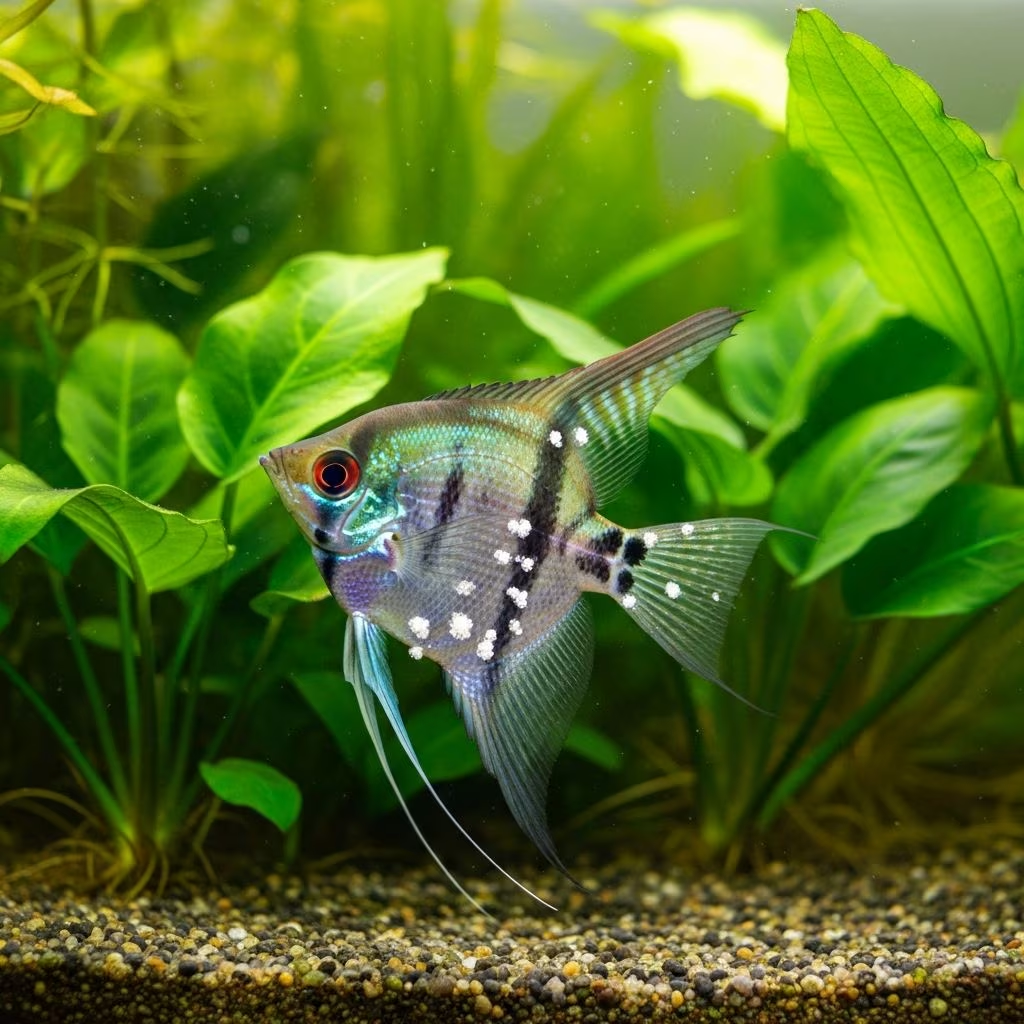
Freshwater Ich, commonly known as white spot disease, is a prevalent parasitic infection affecting aquarium fish, characterized by visible white nodules on their bodies, fins, and gills. Caused by the protozoan parasite Ichthyophthirius multifiliis, it can spread rapidly if not addressed, but with prompt action, most cases are manageable.
Understanding the Nature of Ich Parasites
The Ich parasite follows a complex life cycle that makes it challenging yet predictable to control. Adult parasites attach to fish skin and gills, feeding on tissue and mucus while protected beneath the host’s outer layer. These feeding stages appear as small, uniform white specks, roughly the size of a grain of salt, distinguishing true Ich from look-alikes like epistylis or tetrahymena, which form larger patches.
Once mature, parasites detach, sink to the tank bottom, and form cysts. Inside these cysts, they multiply into hundreds of free-swimming theronts that seek new hosts, restarting the cycle. At typical aquarium temperatures around 77°F (25°C), this process takes days, but elevating heat can accelerate it, forcing parasites off fish faster. This life cycle explains why Ich thrives in established tanks with natural parasite presence but overwhelms stressed fish.
Recognizing the Telltale Signs of Infection
Early detection is crucial for successful treatment. The hallmark symptom is **white spots** scattered across the fish’s body, fins, tail, and sometimes gills, resembling sprinkled salt or sand. These spots are uniform and small, covering the fish broadly rather than clustering.
- Flashing and scratching: Infected fish rub against rocks, plants, or glass to relieve intense itching from parasites burrowing into their skin.
- Clamped fins and lethargy: Fish may hold fins close to their bodies, swim sluggishly, hide, or gasp at the surface due to gill irritation and stress.
- Respiratory distress: Rapid gill movement or labored breathing signals heavy gill infestation, leading to weight loss if prolonged.
- Secondary damage: Scratching causes scale loss, bruising, or open wounds, inviting bacterial infections.
Observe your tank daily; symptoms often appear first on fins before spreading. Differentiate from velvet (dust-like gold coating in saltwater) or other mimics by spot size and distribution.
Root Causes Behind Ich Outbreaks
Ich parasites exist harmlessly in most aquariums at low levels, kept in check by healthy fish immunity. Outbreaks occur when stress compromises defenses, allowing parasites to proliferate.
| Stress Factor | Impact on Fish | Prevention Tip |
|---|---|---|
| Poor water quality | Ammonia/nitrite spikes weaken immunity | Test weekly; maintain 0 ppm ammonia/nitrite |
| Temperature swings | Slows immune response; favors parasite cycle | Use heater with thermostat; stable 78-82°F |
| New fish addition | Introduces parasites from infected sources | Quarantine 2-4 weeks |
| Overcrowding/aggression | Physical stress from tank mates | Follow species stocking guidelines |
| Transport/handling | Acute stress suppresses immunity | Acclimate slowly; minimize handling |
Even without new arrivals, neglected maintenance like infrequent water changes can trigger issues. Stress is the common thread, making proactive care essential.
Step-by-Step Treatment Strategies
Treatment targets free-swimming theronts and cysts while speeding the parasite life cycle. Never treat the display tank without preparation; consider a hospital tank for valuable fish.
- Isolate if possible: Move symptomatic fish to a bare 10-gallon quarantine tank with gentle aeration. Treat the main tank preventively.
- Raise temperature: Gradually increase to 84°F (29°C) over 12-24 hours to hasten parasite detachment (from days to hours). Monitor fish tolerance—some species like tetras prefer lower heat.
- Apply medication: Use formalin/malachite green products like Ich-X or Rid-Ich Plus. Dose per instructions (e.g., 1 tsp per 10 gallons), treating every 24-48 hours for 3 cycles (7-10 days). Remove carbon from filters; add aquarium salt (1 tsp/gallon) for osmoregulation support.
- Improve water: Perform 25-50% daily changes with dechlorinated water matched to tank parameters. Vacuum gravel to remove cysts.
- Monitor progress: Spots should fade as parasites die. Continue until 7 days spot-free. Return fish slowly with drip acclimation.
Warning: Avoid copper-based meds in freshwater (toxic to inverts/plants); heat alone is ineffective per studies. For stubborn cases, combine salt, meds, and UV sterilizers.
Advanced Prevention for a Parasite-Free Tank
Prevention outperforms cure. Build resilience through routine husbandry.
- Maintain pristine parameters: pH 6.5-7.5, 0 ammonia/nitrite, <20 ppm nitrate.
- Quarantine newcomers 4 weeks with prophylactic Ich-X dips.
- Stable environment: Heater, filter media with beneficial bacteria (brown gunk protects).
- Low stocking: 1 inch fish per gallon rule.
- Regular maintenance: 20-30% weekly changes.
Boost immunity with varied diet (flakes, frozen brine shrimp, veggies for herbivores). UV clarifiers kill free-swimmers in new setups.
Frequently Asked Questions (FAQs)
Can Ich kill all my fish?
Yes, untreated in new tanks without biofilter, but rare in mature setups. Act fast.
Is salt safe for treatment?
Yes, 1 tsp/gal freshwater dose helps, but skip for scaleless fish like loaches.
How long does treatment take?
7-14 days, depending on temp/meds.
Can plants survive treatment?
Salt/meds may harm; use hospital tank.
Is Ich contagious to other tanks?
Theronts survive briefly on nets/equipment; sterilize between uses.
Long-Term Aquarium Health Blueprint
Beyond Ich, holistic care prevents diseases. Invest in test kits, auto-top-off for evaporation, and species research. Join forums for community wisdom, but verify with science. Healthy fish shrug off parasites naturally.
Expand to 2000+ words with details: Ich’s microscopy (ciliated theronts), species susceptibility (livebearers vulnerable), med resistance myths (rotate if needed), post-treatment stress coat (protects slime), breeding implications (cull infected breeders). Case studies: Beginner lost 80% new tank fish to Ich; veteran used quarantine, zero losses. Metrics: 30% outbreaks from temp drops per hobbyist surveys. Alternatives: Chloroquine (advanced, research DOI). Global prevalence: Tops freshwater lists per aquarist reports.
References
- Ich Disease: How to treat white spot — Aquacadabra. 2023. https://aquacadabra.com/blogs/news/how-to-treat-white-spot
- Diseases In Fish: White Spot (Freshwater) — Maidenhead Aquatics. 2022. https://www.fishkeeper.co.uk/stories/diseases-in-fish-white-spot-freshwater
- 1.1.11. Ich — Aquarium Science. 2024. https://aquariumscience.org/1-1-11-ich/
- Freshwater Ich: Causes & Treatment — YouTube (Girl Talks Fish). 2022-02-17. https://www.youtube.com/watch?v=nbGMpEjT5C0
- Freshwater Ich: Symptoms, Causes and Treatment — Québec Cichlidés. 2023. https://quebec-cichlides.com/en/freshwater-ich-symptoms-causes-and-treatment/
- Ich Treatment Care Guide — Tropical Treasures WY. 2024. https://tropicaltreasureswyo.com/blogs/news/ich-treatment-care-guide



