
Fresh Foods and Behavior: Nutrition Tips for Pet Birds
Learn how proper fresh food nutrition impacts your bird's behavior and overall well-being.
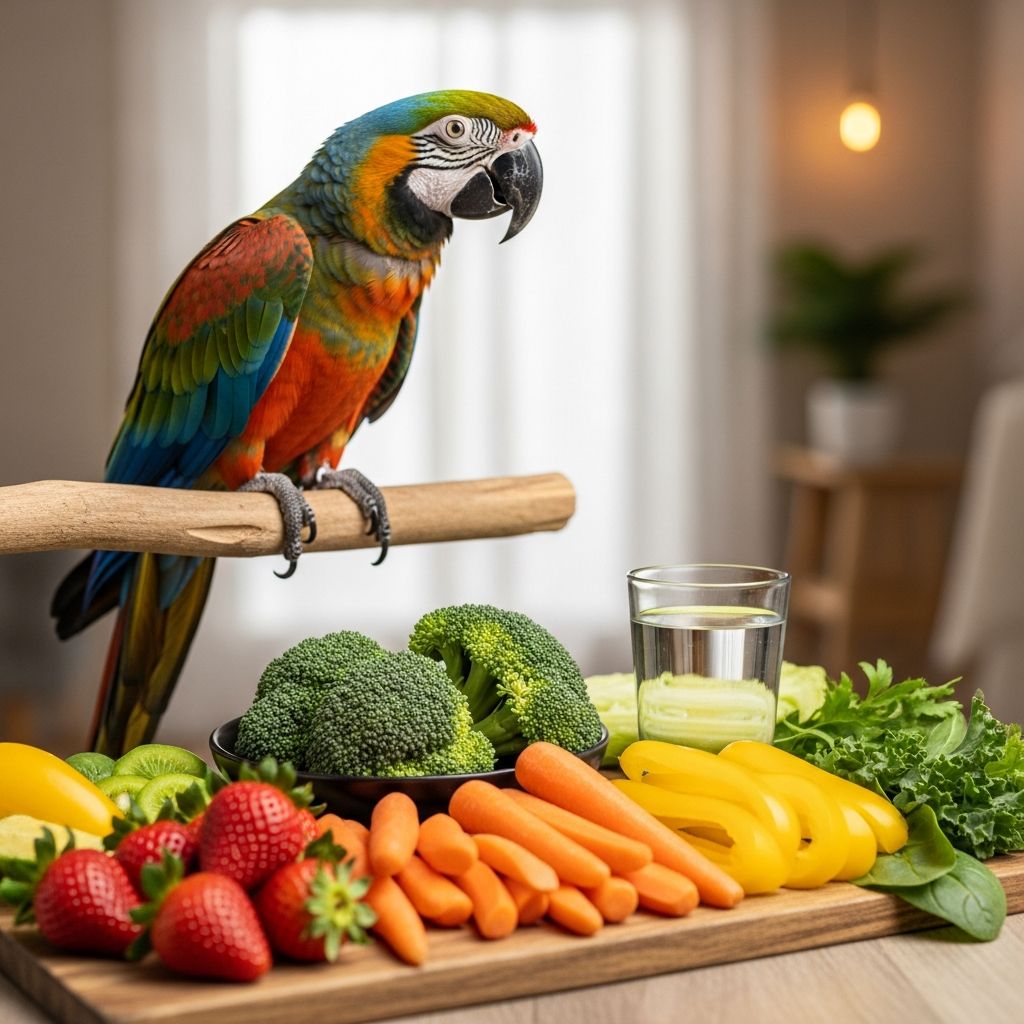
Fresh Foods and Behavior: A Complete Guide for Pet Bird Owners
Understanding the relationship between nutrition and behavior is crucial for any pet bird owner. Fresh foods play a significant role not only in maintaining your bird’s physical health but also in shaping their behavioral patterns and emotional well-being. This comprehensive guide explores how to properly incorporate fresh foods into your bird’s diet while addressing common behavioral challenges that many bird owners face.
The Importance of Fresh Foods in Your Bird’s Diet
Fresh foods are an essential component of a balanced diet for pet birds, providing vital nutrients, vitamins, and minerals that formulated diets alone cannot always deliver. However, the key to success lies in understanding proper portions and frequency. Fresh foods and any human treats should only make up approximately 20% of your bird’s daily diet, with the remaining 80% consisting of high-quality pellets and other appropriate nutrition sources.
When introducing fresh foods to your bird, it’s important to start with small quantities. For instance, sweet potatoes—a favorite among most parrots—can be offered raw or cooked, but only one or two small pieces are sufficient. This measured approach prevents nutritional imbalances and helps maintain your bird’s overall health while preventing excessive weight gain.
Understanding Your Bird’s Food Preferences
Birds can display remarkably selective eating habits, which is perfectly normal behavior. This pickiness often derives from evolutionary instincts developed in the wild. In their natural habitats, birds must be cautious about consuming spoiled food that could cause illness. This biological programming means your bird may reject certain foods or show strong preferences for others.
Individual birds have unique food preferences and idiosyncrasies. Some birds may prefer fresh, organic varieties of certain vegetables, spending considerable time playing with and enjoying them. Others may have specific temperature preferences—for example, some birds will enthusiastically consume warmed food but completely reject the same item when served cold directly from the refrigerator. Recognizing and respecting these individual preferences can significantly improve your bird’s eating habits and overall contentment.
Fresh Foods and Behavioral Issues
The Connection Between Diet and Behavior
There is a well-documented connection between diet quality and behavioral problems in captive birds. High-fat and high-carbohydrate diets can provide birds with excessive energy that may be channeled into destructive or problematic behaviors. When birds don’t have sufficient opportunities to expend this energy naturally, it can manifest as screaming, biting, aggressive territoriality, and other behavioral concerns.
Research has shown that converting birds from seed-based diets to pellets combined with fresh vegetables can help reduce behavioral issues. In many cases, simply adjusting the diet composition has proven crucial to addressing long-term behavioral problems. Additionally, high-fat diets are thought to contribute to increased hormonal behaviors such as cavity seeking, intense bonding with a single person, paper shredding, and territorial aggression.
Optimal Dietary Composition
For most bird species, a combination of formulated diet (50-80%) along with fresh vegetables, fruits, legumes, and other appropriate fresh foods represents the ideal nutritional approach. This balanced approach ensures your bird receives comprehensive nutrition while maintaining behavioral stability and encouraging natural foraging instincts.
Addressing Common Behavioral Challenges
Nipping and Aggression
Young birds often display nipping behavior when first introduced to their new homes. This is a natural part of their exploration and establishment of boundaries. However, with patience and proper handling techniques, this behavior typically improves. As your bird becomes more comfortable with you and gains confidence in its environment, it will gradually accept your presence in its cage for routine maintenance tasks such as changing food and water.
The “Step Up” Training
Teaching your bird to step up is one of the most fundamental and beneficial behaviors you can establish. This command creates a safe, controlled way to interact with your bird and is essential for veterinary care, safety, and bonding. The step-up command should be introduced gradually, using positive reinforcement and patience.
To teach the step-up command, begin by positioning your hand or arm at chest level in front of your bird. Use a consistent verbal cue such as “step up” while gently encouraging your bird to step onto your hand or arm. When your bird successfully complies, immediately offer positive reinforcement in the form of praise, treats, or gentle petting. Consistency is key—practice this behavior daily in short sessions to build confidence and reliability.
Feeding Strategies and Their Impact on Behavior
Free Feeding vs. Scheduled Meals
There are two primary feeding approaches for pet birds: free feeding, where food is available throughout the day, and scheduled meal feeding, where food is provided at specific times. In the wild, birds typically eat in two distinct sessions, spending several hours foraging and engaging in other activities between meals. This natural feeding pattern includes grooming, socialization, and environmental exploration.
While both approaches have merit, free feeding with lower energy-dense foods tends to work well for most birds. When birds consume lower energy-dense foods, they must eat more volume to meet their energy needs, which can contribute to better behavioral regulation. However, individual variations exist, and some birds may benefit from scheduled feeding, particularly if they tend toward excessive eating or weight gain.
The Role of Foraging
Even within a free-feeding model, introducing foraging opportunities can significantly enhance your bird’s mental stimulation and natural behaviors. Rather than simply placing food in a dish, consider hiding fresh foods throughout the cage or using foraging toys that require your bird to work for their food. This approach provides multiple benefits: mental enrichment, physical exercise, behavioral satisfaction, and more natural feeding patterns that align with your bird’s evolutionary instincts.
Fresh Vegetables and Fruits: Selection and Safety
Recommended Fresh Foods
Certain fresh foods are particularly beneficial for pet birds and are generally well-accepted. Sweet potatoes, both raw and cooked, are favorites among most parrots and provide excellent nutritional value. Dark leafy greens, such as organic chard, are nutritious options that many birds enjoy exploring and consuming. Other excellent choices include a variety of vegetables, legumes, and fruits suitable for your specific bird species.
Monitoring Your Bird’s Consumption
While fresh foods are beneficial, it’s important to monitor how much your bird actually consumes versus how much it plays with. Birds often enjoy manipulating fresh foods—tearing leaves, playing with pieces, and exploring textures—which is perfectly normal enrichment behavior. However, if your bird is primarily playing with fresh foods rather than eating them, you may need to adjust portions or types of foods offered.
Nutritional Balance and Behavioral Stability
Creating a Complete Diet
A well-balanced diet combining high-quality pellets, fresh vegetables, and appropriate fresh foods creates the foundation for both physical health and behavioral stability. Pellets should form the dietary foundation, providing consistent nutrition, while fresh foods add variety, nutrients, and enrichment. Human treats and additional fresh foods should remain limited to approximately 20% of the daily diet.
Monitoring Droppings and Health
Your bird’s droppings provide valuable insight into digestive health and dietary success. Regular observation of dropping appearance and consistency can alert you to potential dietary issues. Changes in droppings may indicate that dietary adjustments are needed or that a new food isn’t being tolerated well. When converting your bird to new foods or dietary approaches, careful monitoring of droppings serves as an additional health precaution.
Special Considerations for Young Birds
Young birds, such as an eight-month-old green-cheeked conure, are still developing their dietary preferences and establishing behavioral patterns. During this critical period, introducing a variety of fresh foods helps expand their acceptance of nutritious options while preventing dietary boredom. However, young birds still require careful portion control, with small pieces being the appropriate serving size.
Young birds transitioning to homes may display behavioral challenges like nipping as they adjust to their new environment. This is entirely normal and typically resolves as the bird gains confidence and trust. Consistent, patient interaction combined with proper nutrition creates an ideal foundation for a well-adjusted, behaviorally sound bird.
Frequently Asked Questions
Q: Are raw sweet potatoes safe for baby parrots?
A: Yes, raw sweet potatoes are safe for baby parrots when offered in very small quantities. One or two small pieces are appropriate for a bird, whether raw or cooked. Always introduce new foods gradually and monitor your bird’s response.
Q: How can I address nipping behavior in my young parrot?
A: Nipping is normal exploratory behavior in young birds. It typically improves as your bird becomes more comfortable in its environment. Consistent, gentle handling and patience are essential. Avoid punishing the behavior; instead, reward calm interactions and gradual trust-building.
Q: What is the step-up command and why is it important?
A: The step-up command trains your bird to step onto your hand or arm on cue. This is fundamental for safety, veterinary care, and bonding. Teach it using positive reinforcement, practicing short sessions daily until your bird responds reliably.
Q: What percentage of my bird’s diet should be fresh foods?
A: Fresh foods and treats should comprise only about 20% of your bird’s daily diet. The remaining 80% should consist of high-quality pellets and other appropriate nutrition sources to ensure balanced nutrition.
Q: How does diet affect behavioral problems like screaming and biting?
A: High-fat and high-carbohydrate diets provide excessive energy that may manifest as behavioral problems when birds lack sufficient outlets for activity. Converting to a balanced diet with pellets and fresh vegetables can help reduce screaming, biting, and other unwanted behaviors.
Q: Should I free-feed my bird or use scheduled meals?
A: Free feeding with lower energy-dense foods often works well for most birds, aligning with their natural foraging patterns. However, individual birds vary; some may benefit from scheduled meals. Consult with an avian veterinarian to determine the best approach for your specific bird.
Q: How can I introduce foraging into my bird’s feeding routine?
A: Hide fresh foods throughout the cage or use foraging toys that require effort to access food. This provides mental enrichment, physical exercise, and more natural feeding patterns while reducing behavioral problems.
Q: Why does my bird refuse fresh foods served cold but accepts them warm?
A: Individual birds have specific temperature preferences, likely related to their natural food sources. Experiment with serving fresh foods at room temperature or slightly warmed to discover your bird’s preferences and improve acceptance.
References
- Fresh Foods and Behavior — Lafeber Company. https://lafeber.com/pet-birds/questions/fresh-foods-behavior/
- Inside Dr. Pepperberg’s Lab: Dealing With Picky Eaters — Lafeber Company. https://lafeber.com/pet-birds/inside-dr-pepperbergs-lab-dealing-with-picky-eaters/
- Pellets: To Feed or Not to Feed — Pamela Clark, CPBC. 2018-07-03. https://pamelaclarkonline.com/2018/07/03/pellets-to-feed-or-not-to-feed/
- Fresh Foods — Lafeber Company. https://lafeber.com/pet-birds/questions/fresh-foods-2/
- Avian Vet Insider 19: Free Feeding or Meals — Lafeber Pet Birds Webinar Series. https://www.youtube.com/watch?v=5jG9_0rY_0Y
Similar Articles








Read full bio of Sneha Tete


