

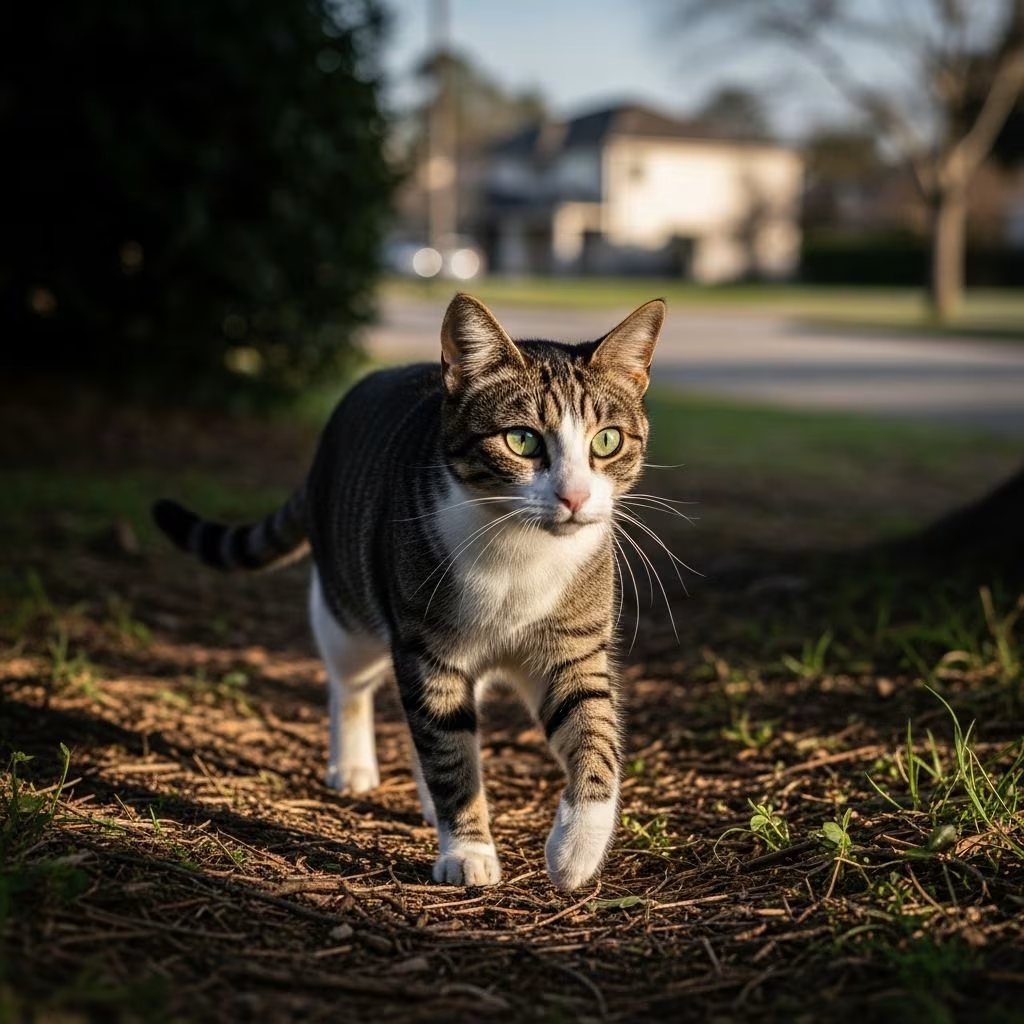
The decision to allow a cat outdoor access represents one of the most significant choices a pet owner can make. While many cat owners believe that outdoor freedom enhances their pet’s quality of life, veterinary research and animal welfare organizations increasingly document substantial risks associated with uncontrolled outdoor access. This comprehensive guide examines the multifaceted challenges of free-roaming cats and presents evidence-based alternatives that provide enrichment while maintaining safety.
The Comprehensive Health Risks Facing Outdoor Cats
Cats with unsupervised outdoor access experience dramatically elevated health risks compared to their indoor counterparts. The American Veterinary Medical Association documents that free-roaming cats face reduced life expectancy alongside exposure to numerous threats including vehicle collisions, predatory animals, intentional human harm, poisoning, traps, and severe weather conditions. These environmental hazards create a cascade of potential injuries and illnesses that fundamentally compromise feline wellbeing.
Disease transmission represents one of the most serious health concerns. Outdoor cats encounter infectious agents at significantly higher rates than indoor cats, with exposure risks including feline immunodeficiency virus (FIV), feline leukemia, and various parasitic infections. The Canadian Veterinary Medical Association notes that outdoor cats experience substantially higher rates of mortality and morbidity attributable to trauma, infectious disease, and parasite burdens compared to exclusively indoor cats. Studies utilizing animal-borne video cameras have documented that cats with outdoor access interact with unfamiliar cats and wildlife during their roaming periods, creating opportunities for disease transmission even during brief encounters.
Vehicle-related trauma represents a leading cause of injury and death in free-roaming cats. Beyond immediate fatality, cats surviving vehicle collisions often develop chronic health complications. Survivors may experience chronic bladder dysfunction, respiratory difficulties, and permanent mobility impairment that requires ongoing veterinary care and diminishes quality of life. These injuries frequently result in expensive emergency veterinary treatment and prolonged recovery periods.
Parasitic and Zoonotic Disease Transmission
Free-roaming cats serve as reservoirs and vectors for zoonotic diseases—illnesses transmissible from animals to humans. The Canadian Veterinary Medical Association identifies rabies, Yersinia pestis (plague), bartonellosis (cat scratch fever), toxoplasmosis, and toxocariaisis as significant zoonotic concerns associated with outdoor cat populations. These diseases carry substantial health and economic burdens for both human populations and communities.
Parasitic transmission extends beyond disease-causing organisms to include vectors of other infectious agents. Outdoor cats become infested with fleas and ticks at higher rates, and these parasites facilitate transmission of additional diseases including plague and typhus through flea populations. Cats may also contract and transmit ringworm, hookworm, salmonellosis, and leptospirosis—pathogens affecting both human health and other animal populations in shared environments.
The public health implications of widespread outdoor cat populations are substantial. Free-roaming cats constitute the most common vector of rabies among domestic animals, yet vaccination rates among unsupervised outdoor cat populations remain unclear and likely inadequate. This creates ongoing risk for human exposure to rabies through bite or scratch incidents.
Environmental and Wildlife Impact
The ecological consequences of free-roaming domestic cats extend far beyond individual pet ownership decisions. Research indicates that predatory behavior represents a fundamental characteristic of free-roaming cats, with observational studies documenting that approximately 44% of cats with outdoor access engage in active predation of wildlife during their time outdoors. These predatory activities target small mammals and birds with particular frequency, resulting in injury and mortality of wild animals.
The aggregate impact of domestic cat predation on wildlife populations carries significant implications for ecosystem health. Unlike other sources of anthropogenic wildlife mortality, the impacts of free-roaming cats exist within the sphere of individual pet owner responsibility and control. Veterinary organizations emphasize that accumulating evidence demonstrates domestic cats negatively influence native wildlife populations through direct predation, competition for resources, disease transmission, and indirect behavioral disruption such as nest failure and avoidance behaviors.
Beyond predation, free-roaming cats affect wildlife through disease transmission and competition. Outdoor cats transmit infectious agents to wild animal populations, and their presence in ecosystems creates competitive pressures that reduce foraging success and habitat availability for native species. While habitat loss and climate change represent ultimate risks to biodiversity, the cumulative impacts of domestic cat predation and disease transmission create additive mortality sources with measurable population-level consequences.
Legal and Liability Considerations
Pet ownership includes legal responsibilities that vary by jurisdiction. Owners allowing cats to roam freely may violate local animal control ordinances if their cats remain unconfined to their property or are not walked under harness and leash supervision. These legal requirements exist to protect both individual animals and community welfare, yet many cat owners remain unaware of applicable regulations in their areas.
Beyond compliance issues, pet owners face potential liability when their outdoor cats damage neighbor property, cause nuisance conditions, or transmit diseases. Unneutered male cats may spray urine on neighboring property, vehicles, landscaping, and personal belongings, creating persistent odor problems and property damage. Loud vocalizations from breeding cats create noise nuisances that disrupt neighborhood quality of life, particularly during reproductive periods when cats yowl extensively, often late into evening hours.
Behavioral and Welfare Considerations
While some owners believe outdoor access provides necessary enrichment and behavioral outlets, research documents that appropriately enriched indoor environments support robust feline welfare and behavioral health. Studies indicate that environmental enrichment significantly reduces behavioral problems including inappropriate urination and aggression toward owners. Cats provided with cognitive stimulation through games, hunting-mimicking toys, interactive play sessions, and social engagement demonstrate fewer behavioral issues than cats lacking such enrichment regardless of outdoor access.
The enrichment hypothesis suggests that cats require environmental complexity, mental stimulation, and opportunities for natural behaviors such as climbing, exploration, and hunting. However, these enrichment needs can be comprehensively met through thoughtfully designed indoor environments that do not require exposure to outdoor hazards. Veterinary research demonstrates that nearly 80% of veterinarians support indoor lifestyles for cats based on health considerations. This professional consensus reflects decades of accumulated evidence regarding welfare outcomes in different housing contexts.
Safe Alternatives to Free-Roaming Access
Recognizing the risks of uncontrolled outdoor access, veterinary organizations recommend multiple alternatives that provide outdoor experiences without corresponding safety hazards. These evidence-based approaches include:
- Indoor enrichment: Creating stimulating indoor environments with vertical space, hiding areas, window perches, puzzle feeders, and interactive toys that engage hunting and play behaviors
- Catios and outdoor enclosures: Enclosed outdoor spaces that provide natural light, fresh air, and environmental stimulation while preventing escape and wildlife predation
- Harness and leash training: Acclimating cats to harnesses and supervised outdoor walks that provide sensory stimulation under owner control and protection
These alternatives allow owned cats to experience outdoor environmental benefits while maintaining protected conditions that minimize disease exposure, injury risk, and wildlife impact. Catios represent particularly effective solutions, offering cats direct access to outdoor environments—including natural light, temperature variation, and sensory stimulation from outdoor sights, sounds, and scents—while maintaining secure containment that prevents escape and wildlife predation.
Understanding Feral and Community Cat Populations
Distinct from owned cats with outdoor access, feral and community cat populations present separate welfare and management challenges. Feral cats experience even lower welfare standards than free-roaming owned cats, lacking the care, veterinary attention, and shelter access available to pet cats. Effective feral cat management requires comprehensive strategies addressing entire colonies rather than individual animals, as removing isolated cats often results in density-dependent dispersal where other cats move into the vacated territory.
Trap-Neuter-Return (TNR) programs represent one approach to feral cat management, though costs exceed $100 per cat including trapping, sterilization, vaccination, and transportation. TNR remains controversial among animal welfare organizations due to ongoing disease exposure risks and quality-of-life concerns for cats living permanently in outdoor environments.
Addressing Owner Perspectives and Education Gaps
Despite substantial veterinary evidence regarding outdoor access risks, approximately 28% of Canadian cat owners continue allowing free-roaming without supervision. This disconnect between professional recommendations and owner practices reflects either incomplete awareness of specific risks or owner beliefs that perceived benefits outweigh documented dangers. Veterinary professionals emphasize the importance of client education regarding both the specific risks of outdoor access and the feasibility of alternative enrichment approaches.
Some owners perceive outdoor access as necessary for feline happiness or natural behavior expression. However, research indicates that cats maintained exclusively indoors with appropriate enrichment experience comparable welfare outcomes and behavioral health to those with outdoor access, while avoiding the health and safety risks that characterize free-roaming situations.
Making Informed Ownership Decisions
Responsible cat ownership requires evaluating available evidence regarding pet health and welfare alongside community impacts. While outdoor environments offer natural stimulation and sensory experiences, these benefits must be weighed against documented risks including disease exposure, injury, reduced lifespan, wildlife predation, legal liability, and neighborhood nuisance concerns. The cumulative evidence increasingly supports keeping cats indoors with thoughtfully designed enrichment or providing outdoor access through controlled mechanisms such as catios and harness training.
Pet owners considering outdoor access should consult with veterinary professionals regarding local disease prevalence, applicable legal regulations, and individual cat health status. Veterinarians can help owners identify appropriate enrichment strategies and containment solutions that accommodate their specific circumstances while prioritizing feline welfare and public health protection.
References
- Free-roaming, owned cats — American Veterinary Medical Association. https://www.avma.org/resources-tools/avma-policies/free-roaming-owned-cats
- Free-roaming owned, Abandoned, and Feral Cats — Canadian Veterinary Medical Association. https://www.canadianveterinarians.net/policy-and-outreach/position-statements/statements/free-roaming-owned-abandoned-and-feral-cats/
- Uncontrolled Outdoor Access for Cats: An Assessment of Risks and Welfare Issues — National Center for Biotechnology Information, PubMed Central. https://pmc.ncbi.nlm.nih.gov/articles/PMC7070728/
- Free-ranging and Feral Cats — United States Department of Agriculture, Animal and Plant Health Inspection Service. https://www.aphis.usda.gov/sites/default/files/free-ranging-and-feral-cats.pdf
- Are outdoor cats happier? — Animal Humane Society. https://www.animalhumanesociety.org/resource/are-outdoor-cats-happier



