

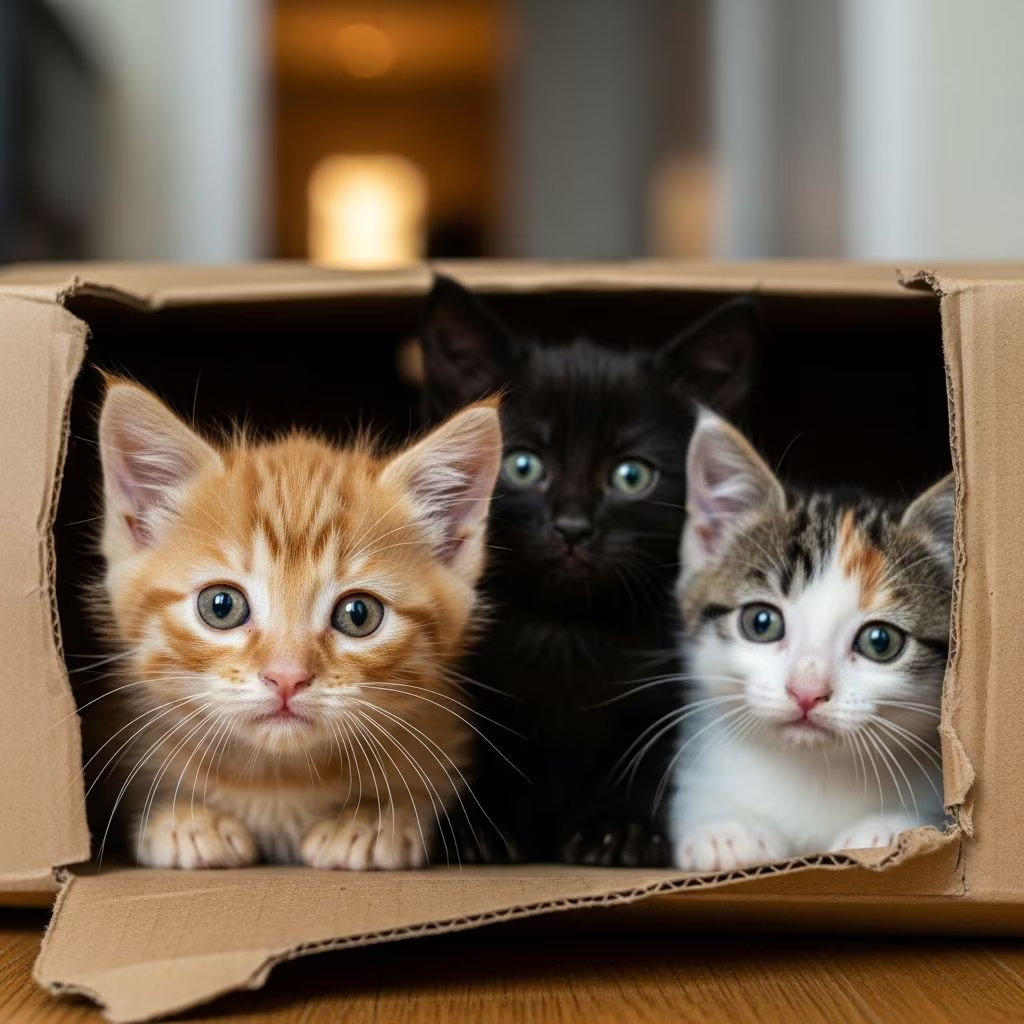
Encountering a box of adorable kittens labeled “free to a good home” can trigger an immediate emotional response, prompting many to act without full consideration of the implications. While the appeal is undeniable, such impulsive decisions often overlook substantial financial, health, and welfare challenges that accompany these pets. This article delves into the multifaceted realities of adopting free kittens, contrasting them with structured shelter programs to guide prospective owners toward responsible choices.
Understanding the Allure and Initial Appeal
The sight of playful kittens meowing for attention taps into a deep-seated desire to nurture and rescue. Offers of free kittens frequently appear in public spaces, online listings, or through personal networks, positioning them as effortless opportunities to expand one’s family. However, this perceived simplicity masks a complex web of responsibilities that new owners must navigate from day one.
- Emotional Pull: Kittens’ vulnerability evokes sympathy, leading to snap judgments.
- Perceived Savings: No upfront fee seems like a bargain compared to breeder or shelter costs.
- Social Pressure: Friends or strangers urging quick action to “save” the animals.
Despite these draws, data from pet population studies indicate higher surrender rates for cats acquired at no cost, highlighting the gap between initial excitement and long-term commitment.
Financial Burdens Beyond the Zero Upfront Price
Labeling a kitten as “free” ignores the immediate and ongoing expenses that quickly accumulate. Veterinary care alone can transform a no-cost acquisition into a significant investment, often exceeding standard adoption fees where preliminary treatments are included.
| Expense Category | Estimated Cost for Free Kitten | Shelter Kitten (Typical Fee Included) |
|---|---|---|
| Initial Vet Exam & Vaccinations | $200–$500 | Included in $50–$150 fee |
| Spay/Neuter Surgery | $150–$400 | Pre-performed |
| Deworming & Flea Treatment | $50–$150 | Often included |
| Microchipping & ID | $50–$100 | Usually provided |
| First-Year Food & Supplies | $500–$800 | Similar |
These figures underscore how shelters front-load essential services, making their programs more cost-effective overall. Free kittens from unregulated sources demand full outlays from owners, straining budgets unprepared for such demands.
Critical Health Risks in Unvetted Kittens
One of the most pressing concerns involves the unknown medical history of free kittens. Without prior screening, these animals may harbor parasites, infections, or congenital conditions that manifest post-adoption, leading to emergency interventions and prolonged care.
- Parasitic Infestations: Fleas, worms, and mites thrive in unscreened litters, transmissible to other pets and humans.
- Viral Threats: Feline leukemia (FeLV) and feline immunodeficiency virus (FIV) testing is rare in casual handouts, posing lifelong health risks.
- Underdeveloped Immunity: Premature weaning leaves kittens susceptible to respiratory and digestive illnesses.
Shelters mitigate these dangers through mandatory quarantine, testing, and treatments, ensuring adopters receive robust, healthy companions. Research confirms that unvaccinated free adoptions contribute to community-wide disease spread.
Behavioral Challenges from Poor Early Socialization
Kittens separated from mothers too early—common in free giveaways—miss vital developmental stages. Proper weaning around 8–12 weeks fosters litter box training, bite inhibition, and social skills. Deprived of this, free kittens often exhibit:
- Aggressive play turning into adult biting or scratching.
- Litter box avoidance due to stress-induced issues.
- Fearfulness around humans, noises, or other animals.
Correcting these requires time, professional training, or behavioral therapy, adding further costs. Shelters prioritize socialization, pairing kittens with foster families for optimal growth.
Ethical Dimensions and Community Impact
Accepting free kittens inadvertently sustains irresponsible breeding cycles. Owners who fail to sterilize their cats produce litters they offload without accountability, exacerbating overpopulation. Studies link free acquisitions to higher shelter returns, perpetuating euthanasia in crowded facilities.
Moreover, low barriers enable exploitation: free cats have ended up in testing labs, as bait, or resold for profit. Ethical pet ownership demands sourcing from transparent channels that prioritize welfare.
Why Shelters Trump Free Offers Every Time
Animal shelters and rescues invest heavily in preparation, offering kittens that are vaccinated, sterilized, microchipped, and temperament-tested. Adoption fees—typically modest—fund these services and ongoing operations. A landmark study on free adult cat adoptions found no differences in retention or care quality compared to paid ones, suggesting fee waivers work when managed professionally. However, random roadside kittens lack this oversight.
- Guaranteed Health: Full medical records provided.
- Behavioral Assurance: Pre-adoption assessments.
- Support Resources: Post-adoption counseling and returns if needed.
- Population Control: Fees subsidize spay/neuter for strays.
Steps for Responsible Kitten Acquisition
To avoid pitfalls, follow this roadmap:
- Research Local Shelters: Visit multiple to compare availability and policies.
- Prepare Your Home: Secure scratching posts, litter boxes, and safe spaces beforehand.
- Budget Comprehensively: Factor in first-year costs exceeding $1,000.
- Commit Long-Term: Cats live 12–18 years; plan for their lifespan.
- Seek Family Input: Ensure all household members are on board.
Volunteering at shelters provides insight and first dibs on litters, fostering informed decisions.
Common Myths About Free Kittens Debunked
| Myth | Reality |
|---|---|
| “They’re purebred or special.” | Often mixed breeds from unchecked breeding; no pedigree guarantees. |
| “Free means no strings attached.” | Ongoing care is intensive, especially for young kittens. |
| “I can always rehome later.” | Shelters are overwhelmed; returns harm the cat’s trust. |
| “Vets are optional for healthy-looking kittens.” | Latent issues emerge quickly without checkups. |
Frequently Asked Questions (FAQs)
Are free kittens ever a safe choice?
Rarely, unless from a known, responsible individual with vet records. Shelters are consistently safer.
How much does a shelter kitten really cost?
Fees range $50–$200, covering all basics—far less than piecemeal free kitten care.
What if the free kitten looks perfectly healthy?
Appearances deceive; hidden parasites or viruses require testing to confirm.
Can I negotiate fees at shelters?
Many offer waivers for seniors, vets, or multiples during promotions.
What’s the best age to adopt a kitten?
8–12 weeks, fully weaned and socialized, as ensured by reputable sources.
Long-Term Ownership: Building a Lasting Bond
Beyond initial hurdles, kittens demand consistent nutrition, play, and veterinary follow-ups. High-quality diets support growth, preventing obesity and urinary issues common in poorly fed free adoptions. Enrichment through toys and interaction curbs destructive behaviors rooted in boredom.
Annual checkups, dental care, and senior adjustments ensure a healthy 15+ year companionship. Owners who invest thoughtfully report deeper attachments and fewer regrets, contrasting with the remorse frequent among impulse free adopters.
Alternatives to Roadside Freebies
- Breed-Specific Rescues: For desired traits with health assurances.
- Foster Programs: Trial periods to test compatibility.
- Senior Cats: Lower maintenance, equally loving options.
- Events & Promotions: Shelters often waive fees ethically.
These paths align passion for cats with practicality, benefiting animals and families alike.
References
- Using Free Adoptions to Reduce Crowding and Euthanasia at Cat Shelters — Animals. 2017-11-24. https://pmc.ncbi.nlm.nih.gov/articles/PMC5742786/
- Is Adopting a Free Kitten a Good Idea? — Hill’s Pet Nutrition. Accessed 2026. https://www.hillspet.com/cat-care/new-pet-parent/should-you-adopt-a-free-kitten
- Why You Shouldn’t Get Free Kittens and Cats! — Second Chance Cats of West Michigan. 2024-03-23. https://sccatswm.org/2024/03/23/free-kittens/



