

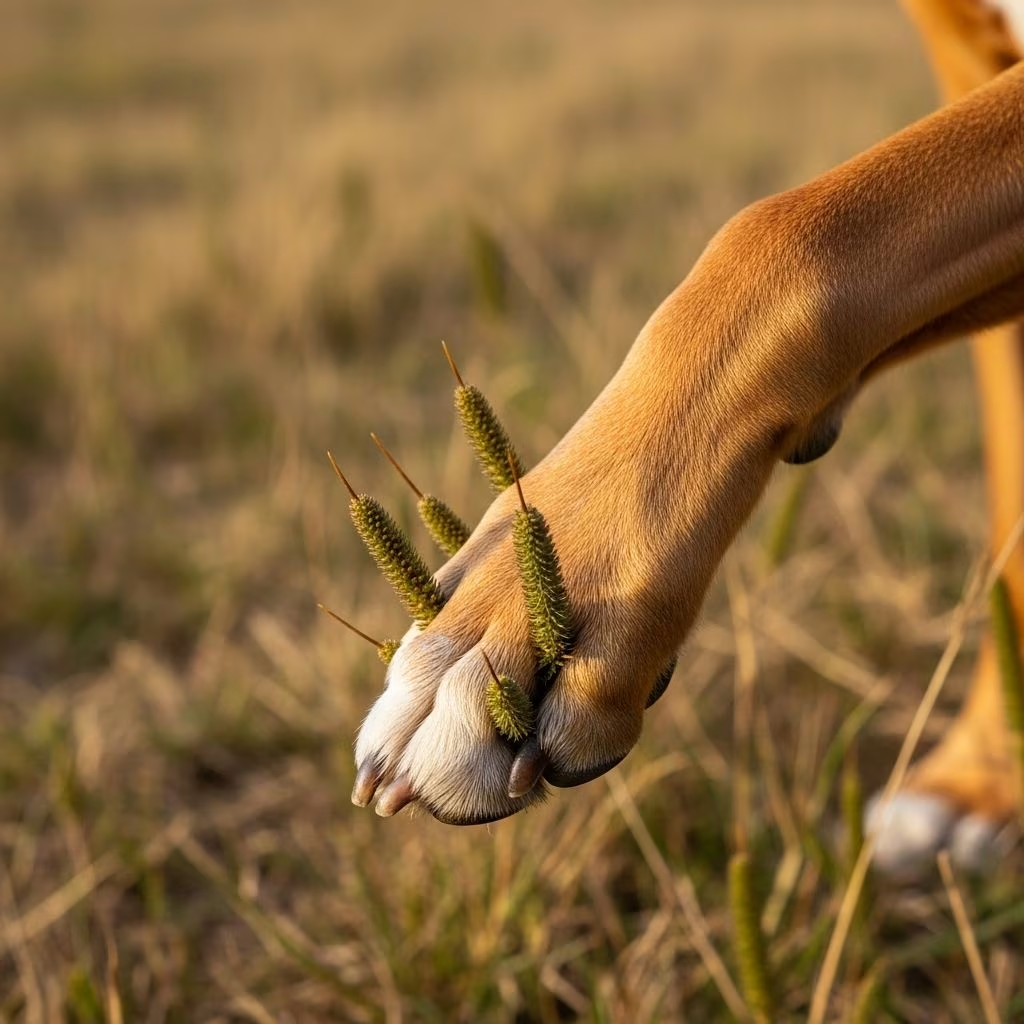
Foxtail grasses represent one of the most insidious environmental threats to dogs, particularly in regions across North America where these plants proliferate. Their barbed seeds, known as awns, can penetrate a dog’s body through even brief contact, leading to painful infections, abscesses, and in severe cases, life-threatening conditions. Understanding the biology of these weeds and implementing proactive measures is crucial for safeguarding canine companions during outdoor activities.
Understanding Foxtail Grasses and Their Spread
Foxtails are the dried seed heads of certain grasses belonging to genera like Hordeum (foxtail barley), Bromus (brome), and various Setaria species (millet). These plants thrive in dry, sunny environments, including fields, roadsides, parks, and backyards, especially from late spring through fall when they mature and harden. The seed clusters resemble a fox’s tail, featuring a dense, arrow-shaped cluster of barbs that point backward, designed by nature to burrow into soil for propagation.
As the grasses dry, the awns become rigid and sharp, capable of detaching easily upon contact with fur, skin, or mucous membranes. Each plant releases hundreds of these seeds annually, which can survive in soil for years, ensuring widespread distribution. In the western United States and other arid areas, foxtails dominate disturbed soils, making hikes, walks, and playtime in grassy areas high-risk endeavors for dogs.
The Menacing Biology Behind Foxtail Penetration
The danger stems from the awns’ unique structure: a spear-like tip with microscopic backward-facing barbs. This ratchet mechanism allows the seed to advance unidirectionally when disturbed by movement, moisture, or airflow, preventing backward retraction. Once embedded, the awn carries bacteria from the environment, fostering rapid infection as it migrates deeper into tissues.
Dogs encounter foxtails via paws stepping on seeds, fur brushing against plants, inhalation during open-mouthed running, or entry through eyes, ears, nose, or mouth. Unlike degradable materials, foxtails resist breakdown, continuing their inward journey potentially to vital organs like the lungs, brain, or spinal cord. Veterinary reports highlight cases where untreated migrations result in pneumonia, neurological damage, or sepsis.
Common Entry Points and Associated Symptoms
Foxtails target vulnerable areas, producing distinct signs that demand immediate attention:
- Paws: Seeds lodge between toes, causing limping, excessive licking, swelling, redness, or draining abscesses. Deep webbing in breeds like Labs exacerbates this.
- Ears: Awns trigger violent head shaking, tilting, scratching, foul odor, or discharge, potentially rupturing eardrums.
- Eyes: Irritation leads to squinting, tearing, pawing at the face, corneal ulcers, or vision loss if embedded.
- Nose: Sneezing, nasal discharge (often bloody or pus-filled), pawing, or breathing difficulties signal inhalation.
- Mouth/Throat: Coughing, gagging, retching, or lumps under the skin from swallowed seeds.
Systemic symptoms like lethargy, fever, or loss of appetite indicate advanced migration. Hunting breeds and long-coated dogs face heightened risks due to field exposure and fur entrapment.
Diagnosis Challenges in Veterinary Practice
Detecting foxtails requires vigilance, as they often burrow invisibly. Vets use otoscopy for ears, ophthalmoscopy for eyes, rhinoscopy or imaging for nasal/lung involvement, and exploratory surgery for skin tracks. Radiographs may reveal migrating paths or abscesses, while CT scans pinpoint deep-seated awns. Early intervention is key; delays allow spread, complicating treatment.
| Entry Point | Diagnostic Tools | Common Complications |
|---|---|---|
| Paws | Physical exam, sedation | Abscesses, osteomyelitis |
| Ears | Otoscopy, flushing | Chronic otitis, hematomas |
| Eyes | Fluorescein stain, scope | Ulcers, glaucoma |
| Nose/Lungs | Endoscopy, X-rays/CT | Pneumonia, cavitation |
Effective Treatment Strategies
Treatment hinges on prompt removal. Superficial awns can be extracted with tweezers or grooming tools post-thorough inspection. Deeper cases demand veterinary sedation, flushing, antibiotics, and pain management. Surgical extraction is standard for inaccessible sites, with some facilities using specialized tools like grasping forceps under endoscopy.
Post-removal care includes e-collars to prevent self-trauma, anti-inflammatories, and follow-ups to monitor for remnants. Recurrence is common without addressing environmental exposure. Costs range from $200 for simple extractions to thousands for surgeries or hospitalizations.
Proven Prevention Tactics for Dog Owners
Proactive strategies minimize risks:
- Groom short during peak season (spring-fall), especially between toes, ears, and underbelly.
- Scan and comb fur post-outings, focusing on high-risk zones.
- Steer clear of unkempt fields, trails, or yards; opt for mowed paths or leashed walks.
- Maintain a foxtail-free yard via mowing, mulching, and pre-emergent herbicides.
- Employ protective gear: booties, goggles, or snoods for vulnerable dogs.
- Train “leave it” cues and monitor play in grassy areas.
Annual vet check-ups in endemic areas aid early detection.
Seasonal and Regional Risk Factors
Peak danger occurs post-monsoon drying (summer-fall), though year-round in mild climates. Western states like California, Oregon, and the Southwest report highest incidences due to climate and habitat. Climate change may extend seasons, heightening exposure. Breeds like Spaniels, Retrievers, and Terriers suffer disproportionately from lifestyle and anatomy.
Frequently Asked Questions (FAQs)
Can foxtails kill my dog?
Yes, untreated migrations to lungs or brain can cause fatal infections or organ failure, though rare with prompt care.
How do I know if my dog has a foxtail?
Look for localized swelling, discharge, shaking, sneezing, or limping; consult a vet for confirmation.
Are foxtails dangerous to cats or humans?
Cats face similar risks, though less commonly; humans experience skin irritation or eye issues, treatable at home usually.
What if I can’t remove a foxtail myself?
Never probe deeply; seek professional extraction to avoid pushing it further.
Do foxtail vaccines exist?
No vaccines; prevention relies on avoidance and grooming.
Long-Term Management for At-Risk Dogs
For chronic exposure dogs, integrate booties into routines, schedule bi-weekly groomings, and map safe walking routes via apps tracking invasive plants. Insurance covering foreign body removals offsets costs. Community efforts like foxtail-free parks benefit all.
Owner education via workshops or apps enhances awareness. Track symptoms in a journal for vet patterns.
References
- Foxtails: Why They’re Dangerous for Dogs — WebMD. 2023-05-15. https://www.webmd.com/pets/dogs/foxtail-grass-and-your-dog
- Foxtails & Dogs: Why They’re Dangerous — American Kennel Club. 2024-06-10. https://www.akc.org/expert-advice/health/foxtails-theyre-dangerous-dogs/
- The Deadly Foxtail: What to Know as a Dog Owner — Whole Dog Journal. 2023-08-20. https://www.whole-dog-journal.com/care/the-deadly-foxtails-and-dogs/
- Foxtails: What They Are and Why They’re Harmful to Dogs — PetMD. 2024-02-28. https://www.petmd.com/dog/general-health/foxtails
- Foxtails and Dogs — UC Davis School of Veterinary Medicine. 2024-04-12. https://healthtopics.vetmed.ucdavis.edu/health-topics/foxtails
- Protecting Your Pet From Foxtails — San Francisco SPCA. 2023-11-05. https://www.sfspca.org/blog/protect-your-pet-from-the-dangers-of-foxtails/



