

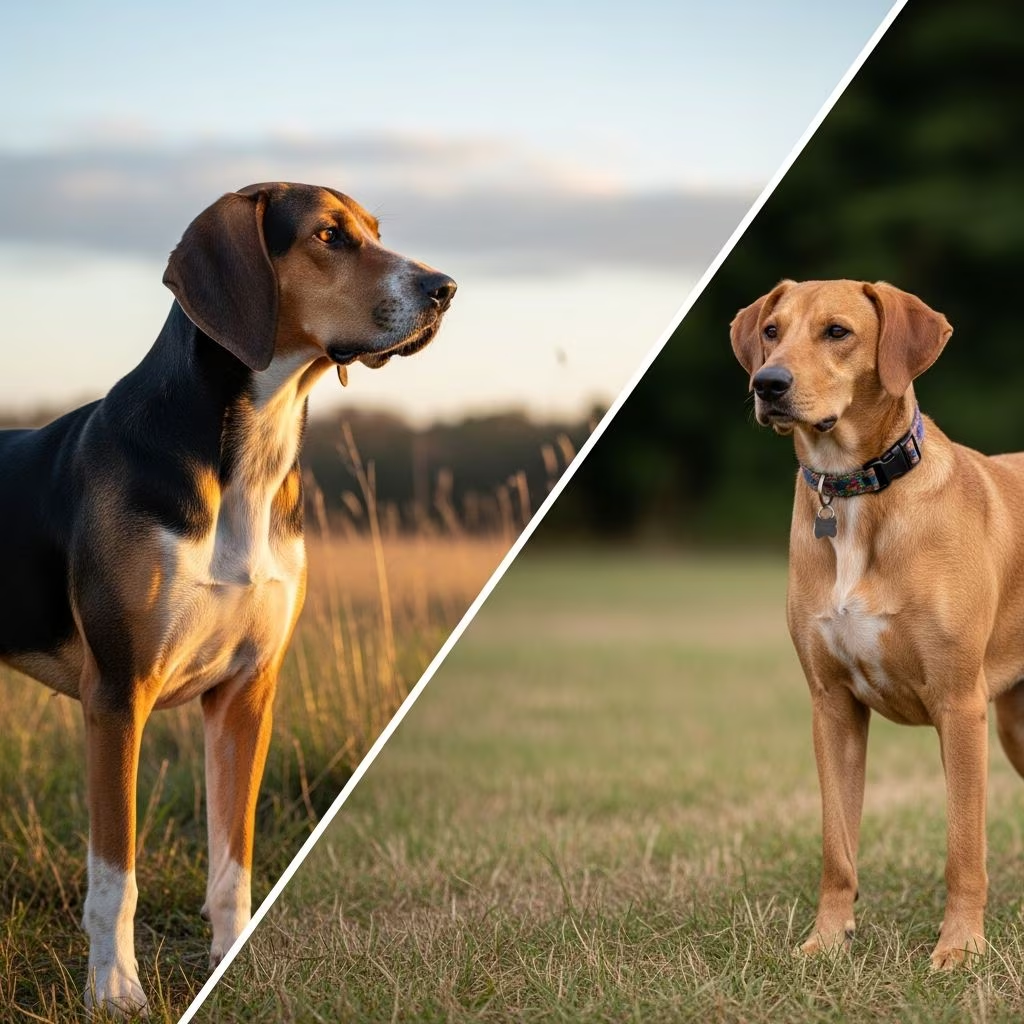
Understanding the Foxhound and Harrier Breeds
The English Foxhound, American Foxhound, and Harrier represent three distinct yet ancestrally related scenting pack hounds that have captured the hearts of hunters and dog enthusiasts for centuries. While these breeds share common origins, they have evolved distinctly to suit different hunting environments, quarry types, and geographic regions. Understanding the nuances between these three breeds requires examining their physical characteristics, temperament, historical development, and functional breeding purposes.
All three breeds were developed to hunt in packs accompanied by mounted huntsmen, possessing the essential attributes required of scenting pack hounds. However, the differences in quarry and terrain across their respective regions led to significant variations in breed development. The English Foxhound was designed for hunting foxes across English countryside, the American Foxhound for fox hunting in the diverse American landscape, while the Harrier was bred specifically for hunting hares across varied English terrain.
Running Gear: The Foundation of Breed Identity
Among dog breeders, exhibitors, and judges, the English Foxhound, American Foxhound, and Harrier are classified as “running gear breeds,” a designation that underscores the critical importance of their feet and legs in their functional capacity as pack hounds. This classification reflects the foundational breeding philosophy that prioritized locomotive efficiency and endurance in these working animals.
The American Foxhound breed standard exemplifies this emphasis by allocating a full 15 points specifically to the feet alone, included within a total of 35 points dedicated to running gear. Shoulders receive an additional 15 points in the standard, demonstrating the breed’s breeding focus on locomotor excellence. Similarly, the Harrier standard itemizes running gear alongside scenting ability as particularly important features, acknowledging that effective hunting performance depends on sound structural mechanics.
Foot Structure and Characteristics
The feet of these three breeds exhibit distinct characteristics that reflect their specific functional requirements. The American Foxhound foot is described as “fox-like,” featuring full, hard pads, well-arched toes, and strong nails that provide traction across varied terrain. A distinguishing feature of the American hound’s foot is its slightly longer center toes, which differentiate it from its English and Harrier cousins.
In contrast, the Harrier foot presents notable variations from its relatives. According to breed standards, it is considered acceptable, though not required, for the Harrier’s toes to turn slightly inward. During movement, a slight toeing-in of the front feet is countenanced in Harriers, a characteristic that would be considered undesirable in American Foxhounds.
Foreleg Structure and Build
The American Foxhound exhibits straight forelegs from the elbows to the feet, with well-developed bone structure that is proportionally lighter than both the Harrier and English Foxhound. The American Foxhound Club recently revised its breed standard to include the specification that “pasterns should be strong, flexible and very slightly sloping,” reflecting a refined understanding of optimal movement biomechanics.
Bred to hunt over different terrain types, the American Foxhound displays a racier and lighter overall build compared to its heavier cousins. This structural difference directly corresponds to their hunting environments—American terrain often requiring greater speed and agility across more varied landscapes.
Head Structure and Facial Characteristics
The head structure of these three breeds provides another clear point of differentiation, particularly in how selection pressures shaped the development of scenting and hunting capability.
English Foxhound and Harrier Head Type
The English Foxhound and Harrier share remarkably similar head characteristics, both featuring full heads without appearing heavy or coarse. Both breeds possess a well-defined stop, the transition point between the muzzle and forehead that contributes to facial expression and structure. The long, wide muzzle with open nostrils provides an optimal scenting structure essential for following scent trails across the hunting field. The lip finish is square rather than pointed, avoiding the undesirable wedge-shaped, snipey, or dish-faced appearances that would compromise their scenting capability.
When viewed from the front, both English Foxhounds and Harriers display quite rectangular head proportions. A more masculine head expression is considered appropriate in male hounds of these breeds, contributing to their characteristic hunting dog appearance.
American Foxhound Head Distinction
The American Foxhound head should be readily distinguishable from both the English Foxhound and Harrier heads. The ears are set moderately low, approximately at the level of the outer corner of the eye, and should reach nearly to the tip of the nose when drawn out. These ears are broad and of fine texture, with an almost complete absence of erectile power, allowing them to hang passively during hunting.
The typical American hound head displays a slightly more wedge-shaped appearance when viewed from the front, contrasting markedly with the quite rectangular proportions of the English Foxhound and Harrier heads. This distinction reflects different breeding priorities and aesthetic preferences that developed within the American hunting tradition.
Body Structure and Rib Cage Configuration
The body structure and rib cage configuration represent significant points of differentiation among these three breeds, with each design reflecting distinct hunting requirements and environmental challenges.
Rib Spring and Depth
While sufficient spring of rib is essential for providing adequate heart and lung room, depth of rib proves most important in these working hounds. Barrel-shaped ribs interfere with the free action of the front legs, creating inefficiency in movement. Shallow back ribs rob the hunting hound of essential stamina required for long days pursuing game across varied terrain.
In correctly conformed English Foxhounds and Harriers, deep back ribs running well back create a flat appearance to the underline, with only a slight tuck-up noticeable. This configuration maximizes internal capacity while maintaining the level topline essential for endurance hunting.
The American hound’s chest is narrower in proportion to the English Foxhound, with emphasis on flank springiness. This design creates a more sloping underline created by the tapered ribcage construction, reflecting the breed’s adaptation to faster, more varied hunting styles.
Topline and Back Structure
The English Foxhound and Harrier breed standards are explicit in requiring that the topline be “absolutely level.” The close-set shoulder blades should blend smoothly into the hard, muscular back. The backbone, set between two lines of muscle, creates a barely discernible arch at the loin that should not be confused with a roached back.
This flatter, level back configuration provides the endurance necessary for sustained hunting performance. In contrast, the American Foxhound displays a slightly more prominent rise over the loin that suits faster hunting styles. In no case should any of these hounds exhibit an inflexible “wheel back” that robs them of the flexibility and agility essential to their working function.
Loin and Hip Structure
Each breed maintains strong, broad loins with hip bones set wide apart. Narrow, weak loins represent a significant structural defect in all three breeds, as they would compromise the power transmission necessary for efficient movement and sustained hunting performance.
Tail Characteristics and Field Visibility
The Foxhound breeds and Harrier all exhibit a tail, technically called a “stern” in hunting dog terminology, that is set quite high and carried up but never over the back. The tail tapers to a point and is characterized by a fringe of hair on the underside, creating a straight, white-tipped “flag” that is easily visible as it waves in the field.
This distinctive tail presentation serves a practical purpose during hunting, allowing mounted huntsmen to easily track their pack members across open country. The high set and carried position contribute to the overall outline characteristic of these pack hunting breeds.
Coat Characteristics and Grooming Requirements
All three breeds feature short, dense coats that provide protection in varied weather conditions while requiring minimal grooming maintenance. The typical coat is fine in texture and typically multicolored, featuring combinations of white with red, lemon, tan, or black markings. This practical coat design reflects their heritage as working hunting dogs rather than companion breeds with extensive grooming requirements.
Temperament and Pack Mentality
The Harrier and Foxhounds were developed to perform specific hunting tasks, and their character and disposition reflect these functional requirements. These breeds must live and work with other hounds in a pack environment, where a quarrelsome nature would be entirely unacceptable. Historically, the job of these hounds provided the test for soundness, both mental and physical. Those dogs that didn’t measure up did not continue in the gene pool, creating strong selection pressures for cooperative pack behavior.
The breed standards emphasize the importance of temperament traits that facilitate pack living. These hounds must possess the ability to follow commands from huntsmen while maintaining focus on their scenting task. They require a balance between independence necessary for tracking scent and cooperation essential for pack harmony. The natural pack instinct of these breeds makes them inherently more social and cooperative than many other dog breeds.
Size Comparison and Physical Dimensions
| Characteristic | English Foxhound | American Foxhound | Harrier |
|---|---|---|---|
| Height | 24 inches | 21-25 inches | 19-21 inches |
| Weight | 60-75 pounds | 60-70 pounds | 45-60 pounds |
| Build Type | Solid, Heavy-boned | Racer, Lighter-built | Compact, Well-proportioned |
| Lifespan | 10-12 years | 10-12 years | 12-15 years |
The Harrier stands as a distinctly smaller breed than the English Foxhound, yet considerably larger than the Beagle breed from which it was partially descended. The Harrier’s size makes it particularly suited for hunting hares across varied English terrain, providing the nimbleness required for this quarry while maintaining the stamina of its foxhound ancestry.
Historical Development and Geographic Influences
The three breeds share common ancestral roots but diverged significantly due to geographic and functional requirements. The English Foxhound was refined specifically for hunting foxes across English countryside, often with Greyhound blood introduced to increase speed and Spanish Pointer blood to improve scenting ability. The American Foxhound developed when colonists brought English Foxhounds to America and adapted them through selective breeding to suit American terrain and hunting traditions.
The Harrier emerged as a distinct breed between the Beagle and English Foxhound, sized specifically for hunting hares. While breeding records lack absolute conclusive proof, it is believed that Harriers were bred down in size from the larger foxhound, creating a breed perfectly suited to its intended quarry and hunting environment. The breed was officially recognized by the American Kennel Club in 1885, and Harriers have been noted in colonial America for their hunting excellence.
Exercise Requirements and Activity Levels
Both Foxhound breeds and Harriers are high-energy dogs requiring substantial daily exercise to maintain physical health and mental well-being. These pack hunting dogs were bred for endurance and sustained activity, making them unsuitable for sedentary lifestyles. The American Foxhound requires very high levels of exercise, reflecting its breeding for active hunting pursuits.
Harriers also require high exercise levels, though their smaller size means they may adapt somewhat more readily to varied living situations compared to their larger foxhound cousins. All three breeds benefit tremendously from activities that engage their scenting abilities and pack instincts, such as organized hunting activities, hound trials, or structured pack exercises.
Health Considerations
Like all dog breeds, Foxhounds and Harriers are susceptible to certain health conditions. Common health issues in these breeds include ear infections due to their long, hanging ears that can trap moisture and debris. Obesity represents a significant concern, particularly for dogs that cannot exercise adequately. Eye problems and thrombocytopenia (a blood disorder affecting platelet function) have been documented in some bloodlines.
Regular veterinary care, appropriate nutrition, and adequate exercise form the foundation of maintaining health in these breeds. Responsible breeders screen for hereditary conditions and maintain careful breeding records to minimize genetic disease prevalence.
Suitability as Family Companions
While historically developed as hunting pack hounds, Foxhounds and Harriers can adapt to family life when their substantial exercise requirements are met. These breeds generally display above-average friendliness and demonstrate good compatibility with children and other pets, particularly when socialized early. Their pack heritage makes them inherently social animals that typically thrive in homes where they receive adequate attention and activity.
These breeds are not recommended for apartment living due to their size and energy levels. They require at least medium to large yards and ideally access to open areas where they can exercise and pursue their natural scenting instincts safely.
Frequently Asked Questions
Q: What is the primary difference between English Foxhounds and American Foxhounds?
A: The primary differences lie in their build and head structure. American Foxhounds are lighter and racier in build with slightly wedge-shaped heads, while English Foxhounds are heavier-boned with more rectangular heads. The American breed was adapted for American terrain and hunting styles.
Q: How do Harriers differ from Foxhounds in size?
A: Harriers are significantly smaller than both Foxhound breeds, weighing 45-60 pounds compared to 60-75 pounds for Foxhounds. The Harrier was specifically developed for hunting hares and represents a size between Beagles and Foxhounds.
Q: Can these breeds live in apartments?
A: These breeds are not recommended for apartment living due to their high energy levels and substantial exercise requirements. They need medium to large yards and access to open spaces for adequate physical activity.
Q: What are the running gear requirements for these breeds?
A: Running gear refers to the feet and legs that are critical for hunting performance. American Foxhound breed standards allocate 35 of 100 points to running gear, emphasizing the importance of sound structure in feet, legs, and shoulders.
Q: How long do these breeds typically live?
A: English and American Foxhounds typically live 10-12 years, while Harriers tend to have a longer lifespan of 12-15 years. Proper care, nutrition, and exercise contribute to longevity.
Q: Are these breeds suitable for first-time dog owners?
A: These breeds are better suited for experienced dog owners who understand pack dog behavior and can provide structured exercise and training. Their pack mentality and high energy levels require knowledgeable handling.
References
- Back to Basics: A Comparison of the English Foxhound, American Foxhound, and Harrier — American Kennel Club / Chewy. https://www.akc.org
- Beagle, Harrier, Foxhound: The Same But Different — AKC Gazette, American Kennel Club. 2024. https://www.akc.org/expert-advice/gazette/beagle-harrier-foxhound-different/
- Harrier Dog Breed Profile: Essential Facts — Petful Dog Breed Information. 2024. https://www.petful.com/dog-breeds/breed-profile-harrier-dog/
- Foxhound vs Harrier Breed Comparison — Dog Learn Breed Comparison Database. 2024. https://www.dog-learn.com/breed-vs-breed/foxhound-vs-harrier
- Official American Kennel Club Breed Standards — American Kennel Club. 2024. https://www.akc.org/



