

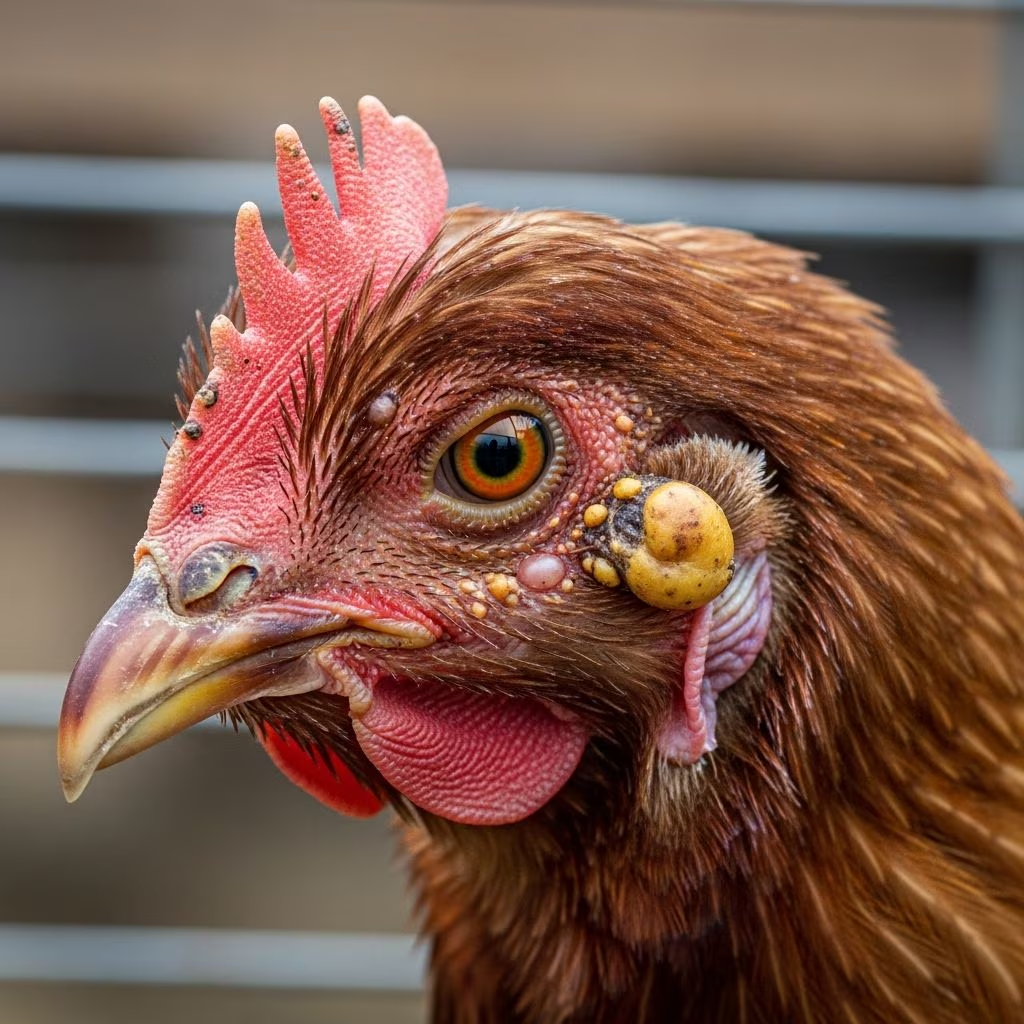
Fowlpox is a highly contagious viral disease primarily affecting chickens and turkeys, though it can impact other bird species. Caused by a poxvirus, it manifests in multiple forms, leading to significant economic losses in poultry operations through reduced productivity and occasional mortality. This guide delves into its biology, spread, identification, and control measures to equip poultry keepers with actionable knowledge.
The Nature of the Fowlpox Virus
The fowlpox virus belongs to the Avipoxvirus genus, known for its large, brick-shaped structure and ability to persist in the environment. It targets epithelial tissues, causing localized or systemic infections. Unlike some avian viruses, fowlpox does not integrate into host DNA but replicates in the cytoplasm of infected cells, leading to cell death and characteristic lesion formation. The virus is stable outside the host, surviving in scabs and dried materials for months, which complicates eradication efforts.
In chickens, outbreaks often coincide with mosquito season, as these insects mechanically transmit the virus. Turkeys show similar susceptibility, with lesions frequently appearing on the head and neck. Environmental factors like high humidity and temperature exacerbate spread, making it a seasonal concern in many regions.
Pathways of Transmission
Fowlpox spreads through multiple routes, amplifying its threat in dense flocks. Primary transmission occurs via biting insects, especially mosquitoes, which carry the virus on their mouthparts after feeding on infected birds. These vectors remain infectious for weeks, facilitating rapid dissemination during warm, wet weather.
- Mechanical transfer through skin abrasions or mucous membranes.
- Aerosolized scabs from shedding lesions inhaled by susceptible birds.
- Contaminated equipment, feeders, waterers, and clothing.
- Direct contact with infected dander, saliva, or feces.
- Wild birds introducing the virus to backyard setups.
Incubation typically spans 4-14 days, with slow flock-wide spread allowing weeks for full outbreak development. Multi-age flocks in open systems face higher risks due to persistent virus reservoirs.
Recognizing Clinical Manifestations
Symptoms vary by form, but common signs include lethargy, appetite loss, weight reduction, and ruffled feathers. Flocks experience drop in egg production and growth rates, signaling underlying infection.
Dry or Cutaneous Form
The most prevalent presentation, affecting unfeathered skin like combs, wattles, face, and legs. Lesions evolve from small, pale nodules to yellow pustules, then dark, crusty scabs. These may coalesce, impairing vision if near eyes or causing nasal discharge around nostrils. While often self-resolving in 2-4 weeks, secondary bacterial infections worsen outcomes.
| Lesion Stage | Description | Common Locations |
|---|---|---|
| Early | Raised, blanched papules | Comb, wattle base |
| Mid | Yellowish vesicles/pustules | Around eyes, beak |
| Late | Thick, dark scabs | Legs, feet |
Wet or Diphtheritic Form
This severe variant invades mucous membranes of the mouth, throat, larynx, trachea, and esophagus. Yellow-white, caseous plaques adhere firmly, obstructing airways and feeding. Affected birds exhibit open-mouth breathing, coughing, and starvation risks, with mortality up to 50%.
Systemic Involvement
Rarely, virulent strains cause internal lesions in organs, compounding severity. Birds may show generalized weakness, with mixed cutaneous and diphtheritic signs.
Diagnosis Methods
Diagnosis relies on clinical observation of pathognomonic lesions, confirmed by histopathology revealing eosinophilic inclusions or PCR detecting viral genes. Differentiate from avian pox-like conditions such as infectious laryngotracheitis (ILT) or thrush via lesion location and microscopy. Necropsy of severe cases reveals diphtheritic membranes or scab histology.
- Gross exam: Characteristic scabs and plaques.
- Microscopy: Bollinger bodies (viral inclusions).
- Molecular: PCR for specificity.
Management and Supportive Care
No specific antiviral cure exists; focus on supportive therapy and preventing secondary issues. Isolate affected birds, maintain hygiene, and provide soft, nutritious feed. Topical antiseptics reduce bacterial overgrowth on cutaneous lesions. Ensure clean water and monitor for dehydration. Most recover fully if complications are minimized, regaining productivity post-scab shedding.
In outbreaks, cull severely affected individuals humanely to curb spread. Biosecurity—limiting visitors, quarantining new birds, and insect control—is paramount.
Vaccination Strategies
Vaccines are wing-web administered using a forked needle, inducing mild infection for immunity. Pigeon pox vaccines offer cross-protection against field strains. Vaccinate chicks at 1-10 days or layers pre-lay. Revaccination boosts titers in endemic areas. Vaccination slashes incidence, even curbing outbreaks in exposed flocks.
| Vaccine Type | Target Age | Efficacy | Notes |
|---|---|---|---|
| Fowlpox live virus | 1-10 days | High | Prevents severe disease |
| Pigeon pox | Day-old | Moderate-High | Cross-protective |
| Recombinant | Breeder flocks | Variable | In ovo possible |
Prevention in Different Systems
Backyard Flocks
Free-range setups heighten exposure to vectors and wild birds. Screen coops, use insect repellents, and vaccinate routinely. Monitor during mosquito peaks.
Commercial Operations
Implement all-in-all-out systems, strict biosecurity, and vector control. Multi-age housing perpetuates virus; single-age batches aid clearance.
Frequently Asked Questions (FAQs)
Is fowlpox fatal to chickens?
Typically low mortality in dry form (<10%), but wet form can reach 50% without intervention.
Can humans catch fowlpox?
No, it’s avian-specific and poses no zoonotic risk.
How long does fowlpox last in a flock?
2-8 weeks, with protracted courses in unvaccinated groups.
Does fowlpox affect egg production?
Yes, layers drop output by 20-50% during peaks.
When is the best time to vaccinate?
Day-old chicks or 4-6 weeks for growers.
Long-Term Control and Research Directions
Climate shifts may intensify outbreaks by boosting vector populations. Ongoing research explores recombinant vaccines and antiviral peptides. Producers should integrate vaccination with integrated pest management for sustainable control. Early detection via routine checks preserves flock health and profitability.
By understanding fowlpox dynamics, poultry enthusiasts can safeguard their birds effectively, minimizing disruptions from this persistent pathogen.
References
- Fowlpox. Viral disease in chickens, turkeys and many other birds — Veterinaria Digital. 2023. https://www.veterinariadigital.com/en/articulos/fowlpox-viral-disease-in-chickens-turkeys-and-many-other-birds/
- Fowlpox in Chickens and Turkeys — Merck Veterinary Manual. 2023-10-17. https://www.merckvetmanual.com/poultry/fowlpox/fowlpox-in-chickens-and-turkeys
- Fowl Pox and Marek’s Disease in Poultry: Causes & Prevention — Bivatec. 2024. https://www.bivatec.com/blog/fowl-pox-and-marek-s-disease-in-poultry
- Fowl Pox in Chickens: Symptoms, Treatment, and Prevention — YouTube (The Happy Chicken Coop). 2022. https://www.youtube.com/watch?v=Oz4a-vFpYZM
- Recognise and Treat Fowl Pox in Chickens — Dine-A-Chook. 2023. https://www.dineachook.com.au/blog/recognise-and-treat-fowl-pox-in-chickens/
- Fowl Pox — PetMD. 2024. https://www.petmd.com/bird/conditions/skin/fowl-pox



