
Four Parrot Behaviors That Might Baffle New Owners
Understanding common parrot behaviors: A guide for new bird owners to decode their feathered companions.
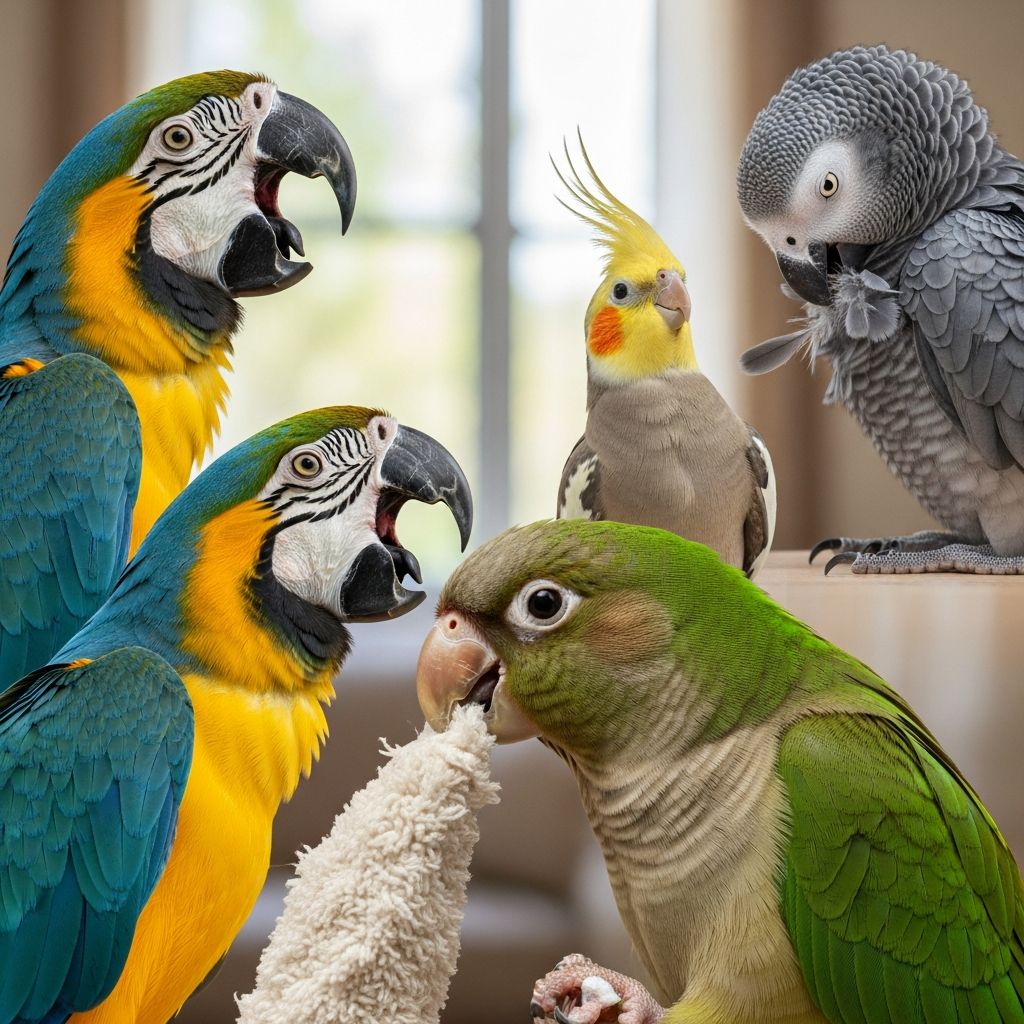
Understanding Your Parrot: Four Behaviors That Confuse New Owners
Bringing a parrot into your home is an exciting adventure, but it can also be a bewildering experience. These intelligent, social creatures communicate in ways that often leave new owners scratching their heads. What might seem like strange or concerning behavior is often completely normal for parrots. Understanding these behaviors is crucial to building a strong, healthy relationship with your feathered companion and ensuring their emotional and physical well-being.
Parrots are thinking and feeling beings with complex emotional needs and sophisticated communication methods. They are incredibly sensitive to their environment and the people around them. When you bring a parrot into your home, you’re not just acquiring a pet; you’re inviting a companion that requires patience, understanding, and informed care. This guide explores four of the most common behaviors that baffle new parrot owners and provides insight into what your bird is actually trying to communicate.
1. Head Bobbing: What Is Your Parrot Trying to Tell You?
One of the first behaviors new owners notice is head bobbing. Your parrot may bob their head up and down in a rhythmic fashion, and you might wonder if something is wrong or if they’re simply being playful. The truth is, head bobbing can mean several different things depending on the context and your bird’s body language.
The Meaning Behind Head Bobbing
Head bobbing often indicates that a bird is anxious to go somewhere, eager to move to a different location, or excited about an upcoming activity. This behavior is particularly common in very young parrots, who bob their heads frequently as part of their natural development and exploration of the world. Additionally, head bobbing can indicate that your parrot is regurgitating to you in an effort to bond with you. This is a sign of affection and trust, though it may seem gross to human sensibilities.
Quaker parrots are especially prone to head bobbing behavior. If you own one of these delightful birds, you’ll likely see this behavior frequently throughout the day. Understanding that this is normal helps you appreciate rather than worry about what your bird is doing.
Related Head Movements
Head shaking is another behavior you might observe, particularly in African grey parrots. These birds shake their heads as if something is stuck in their ears. The exact reason for this behavior isn’t entirely understood by researchers, but it’s considered completely normal for the species. Head shaking in African greys is as natural as head bobbing in quakers—it’s simply how these birds move and communicate.
2. Screaming and Excessive Vocalization: Understanding Your Bird’s Voice
Perhaps no parrot behavior frustrates new owners more than screaming and screeching. Some parrots scream and screech, which is normal to a degree. However, excessive vocalization can disrupt your household and strain your relationship with family members who aren’t prepared for a loud feathered roommate.
Why Parrots Scream
Parrots that scream the loudest are those that tend to mingle in mixed groups, like many of the South American species. In their natural habitats, these birds live in flocks with dozens or hundreds of other parrots. They have to be loud to be heard over the din of so many voices, locate their mates, and maintain contact with their flock. In captivity, these behaviors persist even though your parrot no longer lives in such a large group.
Species that tend to stick together in a single-species flock are often quieter. Not necessarily less persistent, but slightly lower in volume. Understanding your parrot’s species can help you set realistic expectations for vocalization levels.
Contact Calling and Bonding
One specific type of vocalization is “contact calling,” which helps partners locate each other and affirms that both are safe. Your bird may want to participate in this behavior with you. Your parrot may call you by screaming or whistling, essentially trying to ensure you’re still there and that you’re okay. You can respond to this behavior in a positive way by calling back to your bird, signaling that you’re okay. You can make a game of it, and this helps the bird feel secure and will usually quiet them down after a few calls—though this depends on the individual bird.
Managing Excessive Screaming
Many birds come to realize very quickly that screaming gets their person’s attention. Many people run to a screaming bird to shut them up, especially when the rest of the family is protesting the loud noise. Rather than being at your bird’s beck and call, notice quiet moments and give your bird attention then, rather than when they are screaming. This reinforces quiet behavior instead of loud behavior. By rewarding calm, quiet moments with your attention, you gradually reduce excessive vocalization.
You can limit unwanted vocalization behaviors by not indulging them, even though they can seem kind of cute at first. The moment your bird realizes that screaming gets results, the behavior becomes reinforced and much harder to change.
3. The One-Person Bird Phenomenon: Understanding Exclusive Bonding
There’s a phenomenon among captive parrots often called the “one-person bird.” These birds closely bond to one person in the household and may shun the rest, even becoming aggressive to anyone who isn’t “their” person. This behavior can be heartbreaking to the people whom the bird shuns, especially if the bird was supposed to be a certain person’s bird—for example, a wife brings a bird home to be her companion, but the feathered traitor likes the husband instead.
Why This Happens
This behavior is actually quite normal for parrots. In the wild, most parrots mate for life and don’t spend much time on their own. Your parrot is programmed to want company and to bond intensely with their chosen mate or social partner. In captivity, your parrot chooses their “mate” from the humans in your household. This isn’t a flaw; it’s simply how parrots’ social systems work.
Managing One-Person Bird Behavior
While this behavior is normal, it can be managed to create a more harmonious household. The key is understanding your bird’s motivation for staying with their chosen person and providing alternative motivations to other family members. If your bird loves being on one person’s shoulder, that person provides warmth, soft clothing, and an intimate zone that stimulates positive feelings. Other family members can offer different rewards: engaging toys, treats the bird enjoys, or interactive play sessions.
By ensuring that other family members also provide positive experiences and rewards, you can gradually broaden your bird’s social circle, though they may always have a favorite person.
4. Regurgitation: A Sign of Affection and Bonding
One of the most perplexing and sometimes unpleasant behaviors new owners encounter is regurgitation. Your parrot may regurgitate food, and while this seems disgusting to humans, it’s actually a significant sign of affection and bonding in the parrot world.
The Meaning Behind Regurgitation
In the wild, regurgitation is a crucial parenting behavior. Adult birds regurgitate food to feed their chicks. When your parrot regurgitates toward you, they’re essentially treating you as part of their family unit or as a mate. This is a profound compliment in parrot society—your bird trusts you enough to share food with you in this intimate way. Head bobbing, which we discussed earlier, can also accompany regurgitation as your bird prepares to offer you this “gift.”
Managing Regurgitation Behavior
If your parrot is regurgitating frequently or in ways that concern you, it’s important to understand this is normal behavior, but excessive regurgitation can sometimes indicate dietary or hormonal issues. Ensure your parrot has a balanced diet and appropriate sleep schedule. Parrots need 10-12 hours of uninterrupted sleep per night to maintain hormonal balance. Excessive daytime regurgitation combined with other behaviors may warrant a visit to an avian veterinarian to rule out health issues.
Additional Behaviors Worth Understanding
Biting and Fear Responses
Two other behaviors that commonly confuse new owners are biting and what might be called “fear biting.” You can hardly blame a bird that bites out of fear, even if the fear is unfounded. Birds bite for many reasons: territorial defense, playful nipping that went too far, or genuine fear. Learning to “read” your bird so that you can assess the situation and remove yourself before a bite happens is crucial. Rather than make a big fuss over a bite, which can be attractive to birds that love drama, simply avoid the behavior happening in the first place.
Out-of-Cage Time and Mental Health
Even the smallest of parrots appreciate being allowed outside of the cage every day. Cage-bound birds can become very unhappy and can develop neurotic behaviors, sometimes called “cageosis.” The bird will pace along the perch and swing their head from side to side, bob their head, and scream. Being constantly trapped in a cage, especially one that is too small, can also lead to feather plucking behavior and certainly too loud vocalization.
The Importance of Understanding Parrot Psychology
Birds are thinking, feeling beings, and are incredibly sensitive to their environment and the other beings in it. They can feel “vibes” and pick up mood changes. They try to “fit in” with the other members of the household as best they can. When you live with a bird, you have to put the needs of the bird first and make sure that they have everything they need to thrive.
Birds can be physically fragile, but they are also emotionally fragile as well. Birds are incredibly adaptable, but they don’t flourish when they are being ignored or treated poorly. Take some time each day to spend with your bird, and reassure them that your relationship is strong.
Frequently Asked Questions
Q: Is head bobbing always a sign that my parrot wants to go somewhere?
A: Head bobbing can indicate several things: anxiety to move to a different location, excitement, or preparation for regurgitation as a bonding gesture. Observe your bird’s overall body language and context to better understand what they’re communicating.
Q: Why does my parrot scream when I’m not paying attention to them?
A: Your parrot may be engaging in contact calling, a natural behavior to ensure you’re nearby and safe. They may also have learned that screaming gets your attention. Reward quiet behavior instead by giving attention during calm moments.
Q: Can I change my one-person bird’s behavior?
A: While parrots naturally bond intensely with one person, you can broaden their social circle by having other family members provide rewards and positive interactions. However, your bird may always have a favorite person.
Q: What should I do if my parrot regurgitates on me?
A: Recognize this as a sign of affection and trust. However, if regurgitation is excessive or accompanied by other concerning symptoms, consult an avian veterinarian to rule out dietary or hormonal issues.
Q: How much out-of-cage time does my parrot need daily?
A: All parrots, regardless of size, should have access to out-of-cage time every day. This prevents behavioral issues like pacing, screaming, and feather plucking that result from constant cage confinement.
Q: Why is my African grey shaking its head?
A: Head shaking is a normal behavior in African grey parrots. While the exact reason isn’t fully understood, it’s similar to how quaker parrots bob their heads—simply part of their natural movement and communication repertoire.
Conclusion: Building a Stronger Bond Through Understanding
The behaviors that baffle new parrot owners are rarely signs of problems; they’re windows into how parrots think, communicate, and bond. By understanding head bobbing, screaming, one-person bonding, and regurgitation, you move from confusion to appreciation. You begin to see your parrot not as a strange creature doing inexplicable things, but as a complex individual with genuine emotions and sophisticated communication methods.
Remember that birds are thinking, feeling beings that require patience, understanding, and informed care. When you take time to learn what your bird’s behaviors mean, you’re investing in a relationship that can span decades and bring immeasurable joy to your life. Every head bob, every scream, and every regurgitation is your parrot trying to connect with you. By learning to understand these signals, you become not just a bird owner, but a true bird companion.
References
- Pet Bird and Parrot Behavior — Lafeber Company. 2024. https://lafeber.com/pet-birds/bird-behavior/
- Parrot Behavior: What Are You Actually Rewarding? — Lafeber Company. 2024. https://lafeber.com/pet-birds/what-are-you-actually-rewarding/
- Pet Bird Behavior Articles – Parrots & Pet Birds — Lafeber Company. 2024. https://lafeber.com/pet-birds/category/behavior/
- Translating Parrot 5: Behavior 101 – Why Does My Parrot Do That? — Lafeber Pet Birds Webinar Series, hosted by Laura Doering with Pamela Clark, CPBC. 2024. https://www.youtube.com/watch?v=YdR0cBtGvS0
- Parrot Behavior Questions and Answers — Lafeber Company. 2024. https://lafeber.com/pet-birds/questions/parrot-behavior/
- Hormonal Behavior in Pet Birds – Introduction — For The Birds DVM. 2024. https://www.forthebirdsdvm.com/pages/hormonal-behavior-in-pet-birds-pt-1
Similar Articles








Read full bio of Sneha Tete


