

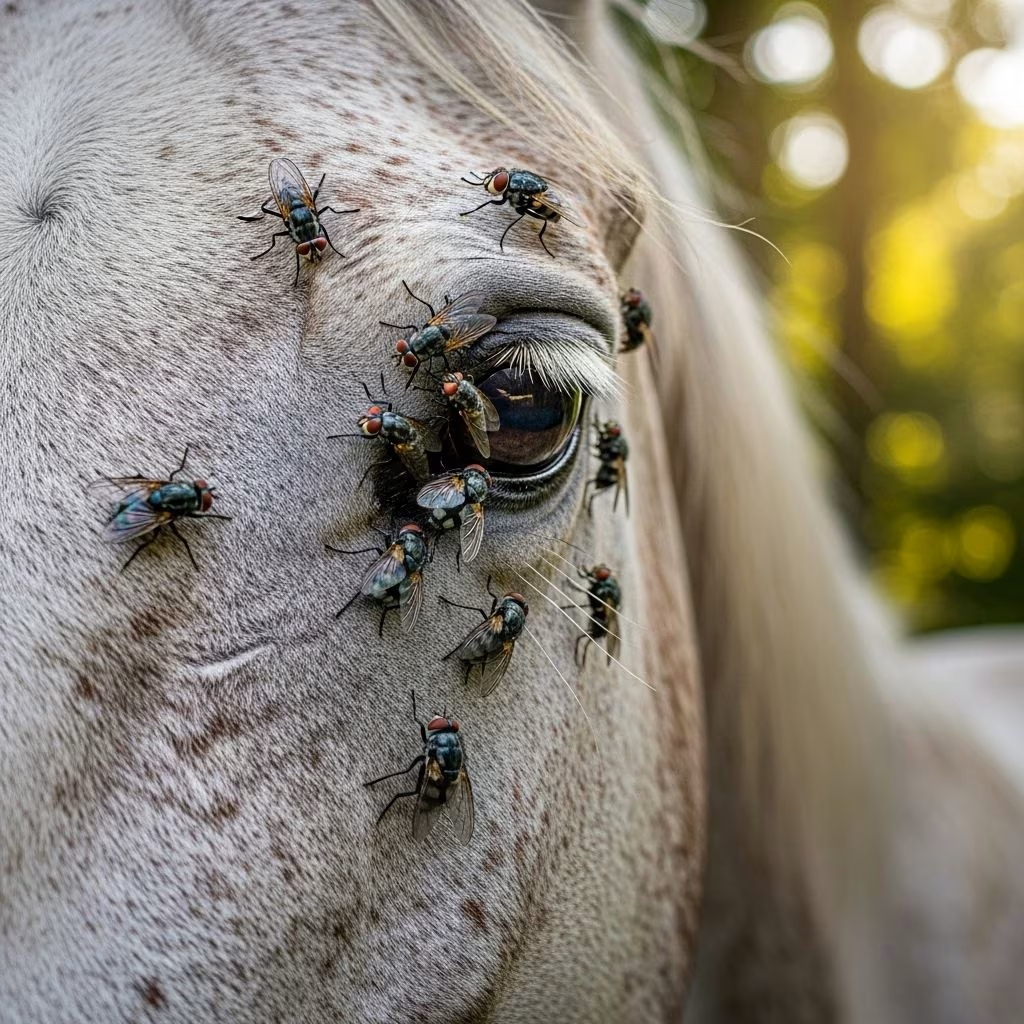
Forest flies, scientifically known as Hippobosca equina, represent a significant parasitic challenge for horse owners in various regions. These resilient insects target equines primarily, causing irritation through their persistent biting behavior. Understanding their characteristics and management is crucial for maintaining animal welfare.
Recognizing the Forest Fly
Adult forest flies measure approximately 10 mm in length, featuring a distinctive flattened and wrinkled body structure that aids in navigating dense fur. Unlike many common flies, they retain fully developed wings throughout their adult life, enabling agile flight and host location. Their dark coloration blends with surroundings, making visual detection tricky until they land on the host.
- Body shape: Broad, leathery appearance for adhesion to skin.
- Wings: Prominent and functional, unlike related species that shed them.
- Preferred hosts: Horses mainly, with occasional cattle infestations.
Geographically, these flies thrive across Europe, Asia, and Africa, with notable presence in the UK where they disrupt grazing activities. Their affinity for warm-blooded mammals drives them to cluster around vulnerable body areas.
Geographic Spread and Seasonal Patterns
Forest flies exhibit a broad distribution, favoring temperate climates where livestock density supports their populations. In Europe, particularly the New Forest regions of the UK, they peak during summer months, aligning with horse outdoor activities. Asian and African equine populations face similar seasonal pressures, often intensifying in humid conditions.
| Region | Peak Activity | Host Impact |
|---|---|---|
| Europe/UK | Summer | High grazing disruption |
| Asia | Warm seasons | Moderate to severe |
| Africa | Year-round in tropics | Persistent annoyance |
This pattern underscores the need for region-specific monitoring, as warmer temperatures accelerate their reproductive cycles.
Biological Life Cycle Insights
The reproductive strategy of forest flies mirrors that of sheep keds, emphasizing viviparity for survival advantages. Females produce a single fully developed larva at a time, which drops to the ground upon maturity to form a pupa in soil. This pupal stage withstands environmental stresses, emerging as winged adults ready to seek hosts.
- Female retains larva internally until ready.
- Larva pupates in moist soil.
- Adult emergence triggered by warmth and humidity.
- Host-seeking behavior commences immediately.
This cycle, completing in weeks under optimal conditions, allows rapid population buildup near stables or pastures. Unlike egg-laying flies, the lack of free larvae reduces intermediate host reliance, focusing infestation directly on equines.
Preferred Feeding Zones and Bite Mechanics
Forest flies exhibit a strong preference for the perineal area and inner hind legs, where skin is thinner and movement limited. Their bites deliver a sharp prick, injecting saliva that prevents clotting and induces itching. Horses respond with tail swishing, leg stomping, and evasion maneuvers, signaling discomfort.
- Primary sites: Groin, underbelly, and tail base.
- Bite effect: Localized swelling and serum exudation.
- Behavioral cues: Restlessness, reduced feed intake.
While not primary disease vectors, secondary infections from self-trauma pose risks, particularly in humid environments fostering bacterial growth.
Health Consequences for Equines
Infestations lead to chronic stress, manifesting as weight loss, hide damage from rubbing, and impaired performance in working horses. Severe cases correlate with anemia from repeated blood meals, though less pronounced than in tabanid flies. Veterinary observations note elevated cortisol levels, impacting immune function.
Long-term exposure compromises coat quality and invites dermatitis. In multi-horse settings, fly aggregation amplifies transmission of skin pathogens, necessitating vigilant herd management.
Differential Diagnosis from Similar Pests
Forest flies differ markedly from horse flies (Tabanus spp.), which are larger (15-26 mm) with robust bodies and nectar-feeding males. Horse flies target legs and inflict deeper wounds, often near water sources. Stable flies, biting leg shins, breed in manure, unlike soil-pupating forest flies.
| Fly Type | Size | Bite Location | Breeding Site |
|---|---|---|---|
| Forest Fly | 10 mm | Perineum/hind legs | Soil pupae |
| Horse Fly | 15-26 mm | Legs, flanks | Aquatic larvae |
| Stable Fly | Small | Legs | Manure |
Accurate identification relies on morphology and host behavior: forest flies provoke perineal targeting versus leg-focused stomping for stable flies.
Integrated Prevention Approaches
Effective control combines environmental, topical, and behavioral tactics. Pasture rotation disrupts pupal development by exposing soil to desiccation. Shaded rest areas deter landing, as these flies avoid deep cover.
- Repellents: Pyrethroid-based sprays safe for equines.
- Barriers: Fly sheets and masks covering vulnerable zones.
- Biological: Encourage parasitic wasps targeting pupae.
Zebra-striped patterns on horse coverings confuse visual host-seeking, reducing landings per recent studies.
Topical and Systemic Treatments
Treatment is often unnecessary for light infestations but warranted for heavy loads. Approved equine repellents, including permethrin formulations, provide 24-48 hour protection when reapplied post-rain. Pour-ons target fly congregation sites effectively.
Systemic ivermectins address concurrent worms but show limited efficacy against winged adults; focus remains on contact insecticides. Bathing with mild soaps removes adhered flies pre-treatment.
Environmental Management Strategies
Soil cultivation in paddocks buries pupae beyond emergence depth. Draining standing water curbs humidity-loving stages. Manure composting at high temperatures kills potential contaminants, though not primary breeders.
Planting fly-repellent herbs like lavender around perimeters offers natural deterrence, complementing chemical controls.
Monitoring and Early Intervention
Regular body checks, especially post-grazing, detect early signs like rubbing marks. Fly counts via sticky traps quantify infestation levels, guiding intervention thresholds. Digital apps for equine health tracking log patterns for predictive management.
FAQs on Forest Fly Management
Are forest flies dangerous to horses?
They cause irritation and stress but rarely transmit diseases directly. Secondary infections are the main concern.
How do I identify a forest fly bite?
Look for small, itchy welts in perineal areas, accompanied by horse fidgeting.
What is the best repellent for these flies?
Pyrethrin sprays applied to hindquarters offer reliable, vet-approved relief.
Can forest flies affect other animals?
Primarily horses, but cattle experience occasional infestations.
Do natural remedies work?
Essential oils like citronella provide mild protection; combine with proven methods for best results.
Future Research Directions
Ongoing studies explore genetic markers for resistance breeding and novel biopesticides. Climate change models predict expanded ranges, urging adaptive strategies. Collaborative vet-farmer networks enhance surveillance.
References
- Spider Flies/New Forest Flies of Horses — Merck Veterinary Manual. 2023. https://www.merckvetmanual.com/integumentary-system/flies/spider-flies-new-forest-flies-of-horses
- Horse Flies and Deer Flies — NC State Extension Publications. 2022-01-15. https://content.ces.ncsu.edu/horse-flies-and-deer-flies
- Horse and Deer Flies (Tabanids) — Missouri Department of Conservation. 2024. https://mdc.mo.gov/discover-nature/field-guide/horse-deer-flies-tabanids
- New Forest fly (Hippobosca equina) — iNaturalist. 2023. https://www.inaturalist.org/taxa/451397-Hippobosca-equina
- Horse Fly — Insect Identification. 2023. https://www.insectidentification.org/insect-description.php?identification=Horse-Fly



