

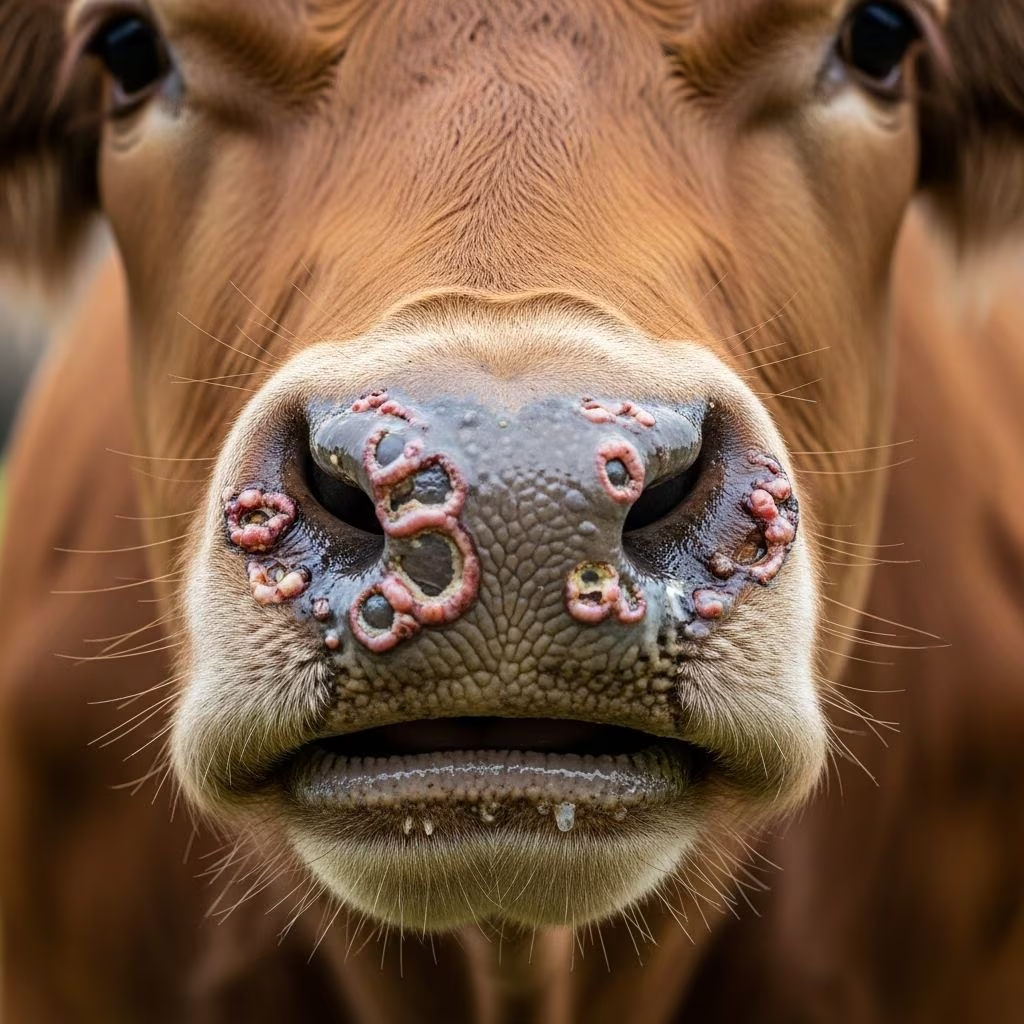
Foot-and-mouth disease (FMD) stands as one of the most infectious viral illnesses impacting agricultural animals, particularly those with cloven hooves. This pathogen disrupts farming operations globally by causing painful lesions that hinder eating and movement, leading to substantial production losses. Unlike human hand-foot-mouth disease, FMD poses no significant public health risk, though rare mild cases in humans have occurred from direct contact with infected materials.
The Viral Culprit Behind FMD
The FMD virus belongs to the Aphthovirus genus within the Picornaviridae family, featuring a single-stranded RNA genome enclosed in an icosahedral capsid. Seven distinct serotypes exist—A, O, C, Asia 1, SAT 1, SAT 2, and SAT 3—each with numerous strains that challenge vaccine efficacy due to antigenic variation. This diversity necessitates serotype-specific diagnostics and vaccination strategies.
Cloven-hoofed mammals of the Artiodactyla order are primary hosts, encompassing domestic species like cattle, swine, sheep, goats, and water buffalo, alongside over 70 wild species such as deer, antelope, bison, giraffes, and African buffalo. Horses and other equids remain unaffected, aiding in differential diagnosis. The virus thrives in the upper respiratory tract, particularly the pharyngeal mucosa, from where it disseminates systemically via lymphatics and bloodstream.
How FMD Spreads in Herds and Beyond
FMD transmission occurs through multiple efficient pathways, amplifying its contagiousness. Direct contact with infected animals allows virus transfer via saliva, nasal secretions, milk, semen, feces, urine, and vesicular fluids. Aerosolized respiratory droplets enable spread over short distances, especially in confined spaces, while pigs act as potent amplifiers due to high viral excretion in coughs and feces.
Indirect routes include contaminated feed, water, equipment, vehicles, and personnel. Ingested infected meat, offal, or dairy products pose risks, particularly to pigs. FMD persists in chilled or frozen animal products, bone marrow, and lyophilized powders, facilitating long-distance spread via trade. Wildlife, notably African buffalo, can maintain reservoirs, though most wild species do not sustain outbreaks independently. The incubation period varies: 2-14 days in cattle, 2+ days in pigs, and 3-8 days in sheep/goats, with pre-symptomatic shedding heightening undetected transmission.
Recognizing FMD Symptoms Across Species
Clinical presentation hinges on species, age, strain, and immunity. Common hallmarks include fever (up to 40°C/104°F), excessive salivation, lameness, and reluctance to eat or move due to vesicular lesions.
Cattle Manifestations
In cattle, fever precedes oral vesicles on the tongue, gums, hard palate, dental pad, and lips, often rupturing into erosions within days. Foot lesions affect coronary bands, interdigital spaces, and heel bulbs, causing lameness and secondary bacterial infections. Lactating cows develop teat vesicles, leading to mastitis and sharp milk yield drops—up to 70% in acute cases. Calves may succumb to myocarditis without visible lesions. Recovery takes 2-4 weeks, but chronic weight loss and reduced productivity linger.
Swine and Small Ruminants
Pigs exhibit rapid onset with vesicles on snouts, mouths, feet, and teats; they amplify spread through copious viral shedding. Sheep and goats often show subclinical or mild signs, primarily foot lesions causing lameness, though mouth and udder involvement occurs. Lesions heal faster than in cattle but can cause flock-wide productivity dips.
Other Affected Species
Camelids like llamas display mild salivation and footpad sloughing; water buffalo experience less severe lesions. Wildlife mirrors domestic counterparts but may show extreme signs like antler sloughing.
| Species | Key Lesion Sites | Prominent Signs | Severity |
|---|---|---|---|
| Cattle | Mouth, feet, teats | Fever, salivation, milk drop, lameness | High |
| Pigs | Snout, mouth, feet | High viral shedding, rapid spread | High |
| Sheep/Goats | Feet, mouth | Lameness, mild fever | Mild-Moderate |
| Wildlife | Variable | Species-specific | Variable |
Diagnostic Approaches for Confirmation
Suspected cases demand lab verification, as lesions mimic vesicular stomatitis, swine vesicular disease, or chemical burns. Field exams note fever and lesions, but samples—vesicular fluid, epithelial tags, blood, or oropharyngeal fluids—are tested via real-time RT-PCR for viral RNA detection. Serotyping uses antigen ELISA, with virus isolation in cell culture for strain identification. Serology via ELISA or virus neutralization assays detects antibodies post-infection or vaccination. Rapid penside tests aid initial screening.
Management and Eradication Strategies
No antiviral treatments exist; care focuses on supportive measures like foot baths, soft bedding, and antibiotics for secondary infections. Control diverges by region.
In FMD-Free Countries
Strategies emphasize stamping out: culling infected/exposed animals, movement bans, quarantine, tracing, surveillance, and premises disinfection. Zoning protects unaffected areas; emergency vaccination may ring-fence outbreaks. The U.S. and Canada exemplify such protocols, with compensation for depopulated livestock.
In Endemic Regions
Vaccination with inactivated quadrivalent vaccines (targeting local serotypes) is routine, administered every 4-6 months. Biosecurity—quarantine, vector control, and trade restrictions—complements vaccination.
- Prevention Essentials: Strict biosecurity, import controls on animals/products, routine surveillance, and farmer education.
- Vaccine Limitations: Serotype-specific, short immunity, no cross-protection; cold chain dependency.
- Global Efforts: WOAH and FAO Progressive Control Pathway guides endemic countries toward elimination.
Economic and Global Ramifications
FMD inflicts billions in annual losses via trade bans, culling, and production shortfalls. Outbreaks trigger export halts, as seen in historical events. Endemic persistence hampers development in Africa/Asia, while free-status nations invest heavily in prevention.
FAQs on Foot-and-Mouth Disease
Is FMD zoonotic?
Rarely; mild blisters from contact with fresh lesions or unpasteurized milk, but no systemic human disease.
Can vaccines eradicate FMD?
Not alone; combined with biosecurity, yes, as in Europe post-2001.
How long does the virus survive outside the host?
Up to months in chilled products, weeks in dried blood; inactivated by heat, sunlight, disinfectants.
What if I suspect FMD on my farm?
Isolate animals, notify authorities immediately—do not move anything.
Does FMD affect meat quality?
No direct impact, but infected animals are condemned.
Future Directions in FMD Combat
Research advances include synthetic vaccines, marker vaccines for DIVA (differentiating infected from vaccinated animals), and antiviral therapies. Genomic surveillance tracks strains for proactive vaccination. International collaboration via WOAH aims for global control.
Farmers must prioritize vigilance: monitor for fever/lameness, enforce hygiene, source animals responsibly. By integrating these practices, the livestock sector can minimize FMD’s devastating toll.
References
- Foot and mouth disease (FMD) — Canadian Food Inspection Agency. 2023. https://inspection.canada.ca/en/animal-health/terrestrial-animals/diseases/reportable/foot-and-mouth-disease
- Foot-and-Mouth Disease in Animals — MSD Veterinary Manual. 2024-01-15. https://www.msdvetmanual.com/infectious-diseases/foot-and-mouth-disease/foot-and-mouth-disease-in-animals
- Foot-and-Mouth Disease (FMD) Response Ready Reference Guide — USDA APHIS. 2022. https://www.aphis.usda.gov/sites/default/files/fmd_plan_rrg_ee.pdf
- Foot and mouth disease fact sheet — Government of Canada. 2023. https://inspection.canada.ca/en/animal-health/terrestrial-animals/diseases/reportable/foot-and-mouth-disease/fact-sheet
- Foot and Mouth Disease (FMD) — Center for Food Security and Public Health, Iowa State University. 2023. https://www.cfsph.iastate.edu/thelivestockproject/foot-and-mouth-disease-fmd/
- FOOT AND MOUTH DISEASE (FMD) Cattle Pocket Guide — Secure Beef. 2018. https://www.securebeef.org/Assets/SBS_FMDPocketGuide.pdf
- Foot and Mouth Disease — World Organisation for Animal Health (WOAH). 2022. https://www.woah.org/fileadmin/Home/eng/Animal_Health_in_the_World/docs/pdf/2.01.05_FMD.pdf



