

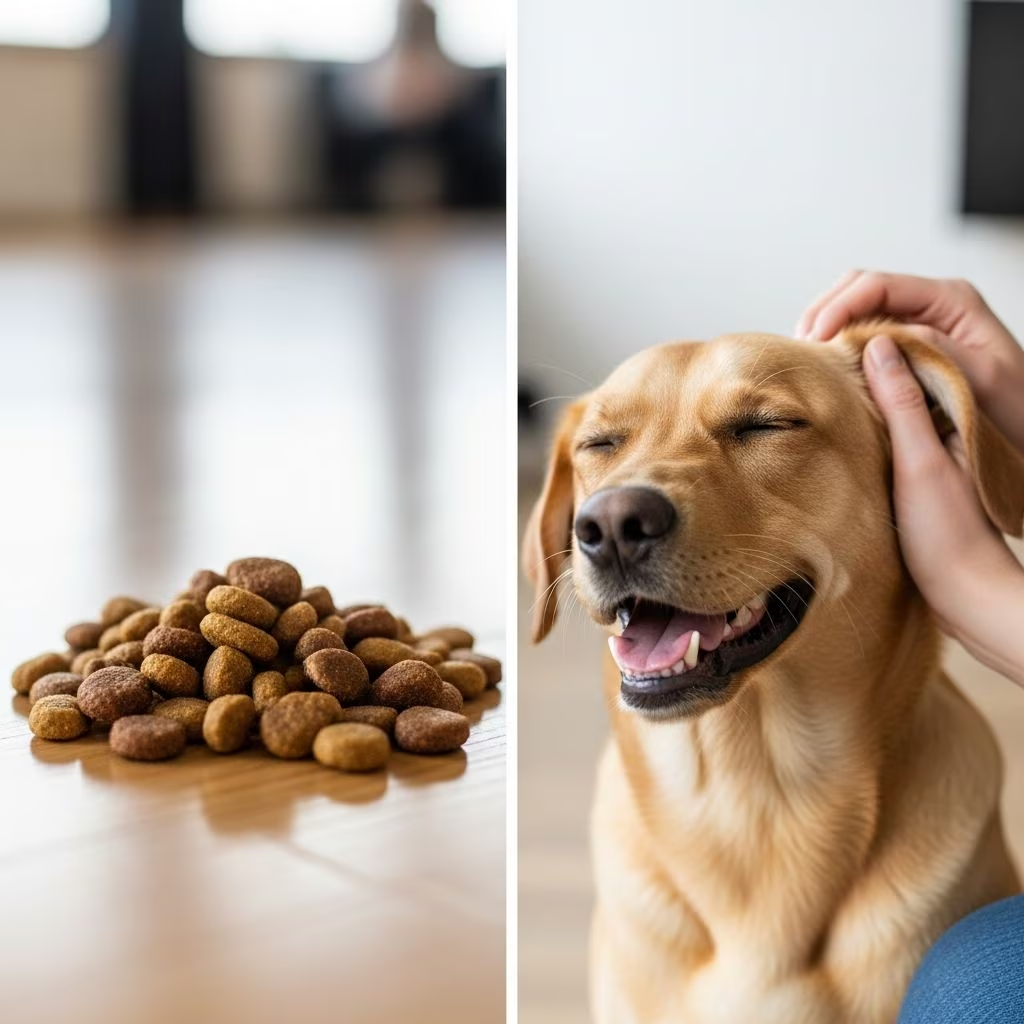
Food Is Still the Best Way to Reinforce Your Dog’s Good Behavior
Modern, science-based dog training is built on positive reinforcement—rewarding the behaviors you want so your dog offers them more often in the future.
For many years, trainers have relied heavily on food rewards like treats to reinforce behaviors such as sit, stay, or come. Recently, research has taken a closer look at whether social interaction—things like praise and petting—can also act as effective reinforcers, and how they compare to food.
A March study titled “Social interaction can function as a reinforcer for dogs: Effects of stimulus duration and session parameters” explored exactly this question. The findings support what many trainers suspected: dogs can be trained with both food and social reinforcement, but for most dogs, food is still the stronger, more reliable reinforcer.
Why Reinforcement Matters in Dog Training
In behavioral science, reinforcement is anything that makes a behavior more likely to occur again. When your dog sits and then receives something they value—like a treat, a game, or affection—that consequence strengthens the “sit” behavior.
- Positive reinforcement adds something your dog likes after a behavior (for example, giving a treat after a sit).
- Over time, consistently reinforcing a behavior makes it a habit rather than a one-time response.
- Reward-based training has been shown to support a better human–dog relationship and reduce stress compared with punishment-based methods.
Food has long been the most common reinforcer, but many guardians also rely on verbal praise or petting and wonder whether that is enough. The new research helps clarify how social reinforcement fits into the bigger training picture.
How the Social Reinforcement Study Worked
The study examined whether social interaction (praise and petting) could function as a reinforcer for dogs, and how effective it would be compared with food.
The Behavior: Targeting a Hand (“Touch”)
Researchers needed a simple, clearly defined behavior to measure the effects of different rewards. They chose hand targeting, often called “touch” in training.
- Dog guardians held out their hand at the dog’s nose level.
- The hand was presented for up to 30 seconds, or until the dog touched the hand with their muzzle.
- Each touch was followed by one of the planned reinforcers or, in some sessions, no response at all.
Because hand targeting is simple, easy to repeat, and neutral (most dogs don’t perform it outside of training), it works well for studying how different rewards influence behavior frequency.
The Reinforcement Conditions
Dogs experienced multiple training sessions, each with a different consequence after a correct hand target:
- Short social interaction: about 4 seconds of combined petting and praise after each successful touch.
- Long social interaction: about 30 seconds of petting and praise.
- Food reinforcement: a verbal marker (a brief “yip” sound) followed by a piece of food.
- No reinforcement: the guardian did not respond when the dog touched the hand.
The 4-second duration was chosen in part because it roughly matches how long it takes to deliver a piece of food during typical training. This allowed researchers to compare social interaction and food under similar timing conditions.
Session Structure and Parameters
The study also looked at how session design influences the effectiveness of social reinforcement.
- Sessions were not packed back-to-back with large numbers of trials, unlike some earlier studies where short social interaction was less effective.
- Instead, conditions such as no reinforcement, social reinforcement, and food reinforcement were run in separate blocks, allowing clearer comparisons.
These experimental details matter because they show that how and when you deliver social interaction can change whether your dog finds it reinforcing.
What the Study Found About Social Reinforcement
Overall, the study confirmed that social interaction can work as a reinforcer for many dogs, especially when used thoughtfully. However, it also highlighted important limitations compared with food.
Social Interaction vs. No Response
When researchers compared sessions with social interaction to sessions where guardians offered no response at all, they found that dogs generally worked more when they received social interaction.
- Dogs responded more frequently to the “touch” cue when they were petted and praised afterward, compared with when nothing happened.
- This indicates that for many dogs, attention, touch, and praise have real value and can maintain behavior better than ignoring it.
From a practical perspective, this means that if you have no treats with you, using warmth and physical affection is much better than offering no reinforcement at all.
Does Duration of Social Interaction Matter?
An intuitive assumption might be that longer petting and praise (for example, 30 seconds) would be more reinforcing than a very brief 4-second interaction. However, the study did not find a consistent difference in the dogs’ performance between short and long social interaction.
- In general, whether dogs received 4 seconds or 30 seconds of petting and praise did not significantly change how often they performed the hand target.
- One dog did show more barking after 4 seconds of social interaction than after 30 seconds or food, which may indicate frustration or arousal in that shorter condition.
This suggests that once social interaction is reinforcing, more is not necessarily better, at least in the context of simple, repeated training trials.
Food vs. Social Interaction: Which Works Better?
When the study compared social reinforcement directly with food reinforcement, food generally came out ahead.
| Reinforcer Type | Typical Dog Response | Notes |
|---|---|---|
| Food (treats) | Often produced more responses or maximal responding. | Fast, clear, and usually highly motivating for most dogs. |
| Social interaction (petting + praise) | Better than no response; sometimes nearly as good as food for particular dogs. | Convenient, always available, and strengthens relationship; effectiveness varies by dog. |
| No response | Lowest responding; dogs had little reason to keep offering the behavior. | Does not reinforce behavior and may cause it to fade. |
In some cases, dogs responded equally well in both social and food conditions. In others, dogs performed twice as many responses when food was the reinforcer compared with social interaction. This supports a key conclusion: although social interaction can function as a reinforcer, food is still more effective for most dogs.
The Power of Food in Positive Reinforcement
Food rewards have several advantages in training:
- They are typically high-value and immediately meaningful to dogs.
- Food delivery is quick and precise, making it easy to reinforce the exact moment your dog does the right thing.
- Using food enables many repetitions in a short session, which supports faster learning.
- Food-based positive reinforcement has a strong evidence base in both animal learning research and practical dog training.
This does not mean food is the only option, but it explains why it is considered the gold standard for teaching new behaviors and improving reliability.
The Importance of Individual Differences
Not all dogs value the same things equally. The study emphasized that there was considerable variation among individual dogs.
- Some dogs responded maximally for social interaction alone, showing that attention and petting can be very powerful for them.
- Others responded much more when food was used, suggesting they found social interaction less reinforcing in a training context.
The lead researcher noted that this variability highlights a crucial training principle: guardians must pay attention to what is meaningful and valuable to their own dog. While food is broadly effective, certain dogs may be more motivated by:
- Physical affection (petting, leaning into you)
- Play (tug, fetch, chase games)
- Access to environmental rewards (sniffing, greeting another dog)
Effective, humane training programs often combine these reinforcers and tailor them to the individual dog, a practice consistent with broader positive reinforcement principles in animal training.
Praise vs. Petting: Which Does Your Dog Prefer?
The study combined petting and vocal praise in its social interaction condition, but earlier research suggests that these two components are not equally valuable to dogs.
In previous work, the same research group found:
- Dogs generally prefer petting over verbal praise when given a choice.
- Adding vocal praise to food delivery did not increase the effectiveness of food as a reinforcer.
These findings imply that for many dogs, touch is the key ingredient in social reinforcement, while voice alone may not carry the same weight—especially in distracting or demanding training situations.
Practical Takeaways for Guardians
- When training, combine a clear marker (like “Yes!” or a clicker) with a primary reinforcer such as food or petting.
- If your dog seems only mildly interested in verbal praise, try pairing it with gentle, consistent petting they enjoy.
- Watch your dog’s body language; relaxed posture, soft eyes, and leaning into contact usually indicate that petting is reinforcing, while stiffening or moving away suggests it may not be.
Why Social Reinforcement Still Matters
Even though food is more effective overall, social reinforcement plays an important role in real-world training and your everyday life with your dog.
Always Available, No Prep Required
You might forget treats or run out of them, but your ability to praise and pet your dog is always with you.
- Social reinforcement requires no special preparation or equipment.
- It can be used spontaneously when your dog chooses a behavior you like—such as calmly lying on a mat or checking in with you on a walk.
- This convenience may encourage more people to adopt positive reinforcement rather than relying on punishment or force.
Strengthening the Human–Dog Bond
Research on reward-based training methods suggests that consistent, positive interactions help support a trusting relationship between dogs and their guardians. Petting, friendly eye contact, and relaxed physical contact can help maintain that bond, especially when combined with fair, predictable training.
Using both food and social reinforcement allows you to teach effectively while also nurturing your dog’s emotional well-being, which is central to force-free training approaches.
Blending Food and Social Rewards in Everyday Training
In practice, the most effective approach is often to combine food and social reinforcement strategically rather than relying on just one or the other.
When to Prioritize Food
- Teaching new behaviors (sit, down, recall, leash manners)
- Working in distracting environments like parks or busy streets
- Training behaviors that are emotionally challenging for the dog (for example, calm behavior around triggers, as in gradual socialization work)
In these scenarios, using high-value treats helps your dog focus and learn faster, and for behavior modification around fears or triggers, pairing those triggers with food is a core technique.
When Social Reinforcement Shines
- Maintaining behaviors your dog already knows well at home
- Rewarding calm, default behaviors (settling, checking in, loose-leash walking)
- Daily interactions where you want to acknowledge good choices without constantly using food
In these cases, a warm, well-timed combination of petting and praise can help keep good habits strong, especially if your dog clearly enjoys physical affection.
Sample Training Flow Using Both
- Step 1: Teach with food. Start with small, frequent treats for each correct response.
- Step 2: Add social reinforcement. As your dog becomes reliable, layer in praise and petting along with some of the food rewards.
- Step 3: Gradually reduce food frequency. Keep treats unpredictable but continue to use social interaction regularly, so your dog still feels reinforced.
- Step 4: Continue occasional jackpots. From time to time, surprise your dog with extra-good treats or longer affection for especially great responses, which helps maintain enthusiasm.
Frequently Asked Questions (FAQs)
Q: Can I train my dog using only praise and petting?
A: You can reinforce some behaviors with praise and petting alone, especially once your dog already understands what you are asking. However, research indicates that food is generally a more effective reinforcer for most dogs, particularly when teaching new behaviors or working in challenging environments.
Q: Will my dog become “treat dependent” if I use food in training?
A: Dogs do not become truly dependent on treats if you gradually shift to a more varied reinforcement strategy. Science-based approaches recommend starting with frequent food rewards and then reducing their frequency over time while maintaining occasional treats and adding social reinforcement, toys, or play. This keeps behavior strong without needing a treat every time.
Q: Is petting or verbal praise more important to my dog?
A: Research suggests that many dogs prefer petting over verbal praise, and adding praise to food does not necessarily make food more reinforcing. Your individual dog may differ, so watch their body language: leaning in, relaxed muscles, and soft eyes usually indicate that petting is rewarding.
Q: What if my dog is not very food motivated?
A: Some dogs are less interested in food during training, especially if they are stressed, tired, or have just eaten. In those cases, try different types of food, adjust meal timing, or use alternative reinforcers such as petting, play, or access to preferred activities. The key is to identify what your dog values and use that consistently.
Q: Is positive reinforcement supported by scientific research?
A: Yes. Positive, reward-based methods are strongly supported by learning theory and by applied animal behavior research. Studies and expert reviews highlight that reinforcing desired behaviors with rewards like food, play, and social interaction is effective and helps maintain a positive dog–guardian relationship.
References
- Training your Dog with Science — Illinois Science Council. 2019-05-06. https://www.illinoisscience.org/blog/lynnmeador/
- Social interaction can function as a reinforcer for dogs: Effects of stimulus duration and session parameters — Feuerbacher, E. et al., Journal of the Experimental Analysis of Behavior. 2024-03-01. https://doi.org/10.1002/jeab.932
- Top tips for training new puppies – pawsitive reinforcement — Oak Barn Vets. 2022-02-01. https://www.oakbarnvets.com/pet-help-advice/puppies/576-top-tips-for-training-new-puppies-pawsitive-reinforcement
- Can You Socialize an Adult Dog? — Kinship. 2023-08-10. https://www.kinship.com/dog-behavior/can-you-socialize-adult-dog
- Coexisting With Wolves: Lessons From Force-Free Dog Training — Psychology Today. 2025-02-01. https://www.psychologytoday.com/us/blog/animal-emotions/202502/coexisting-with-wolves-lessons-from-force-free-dog-training



