

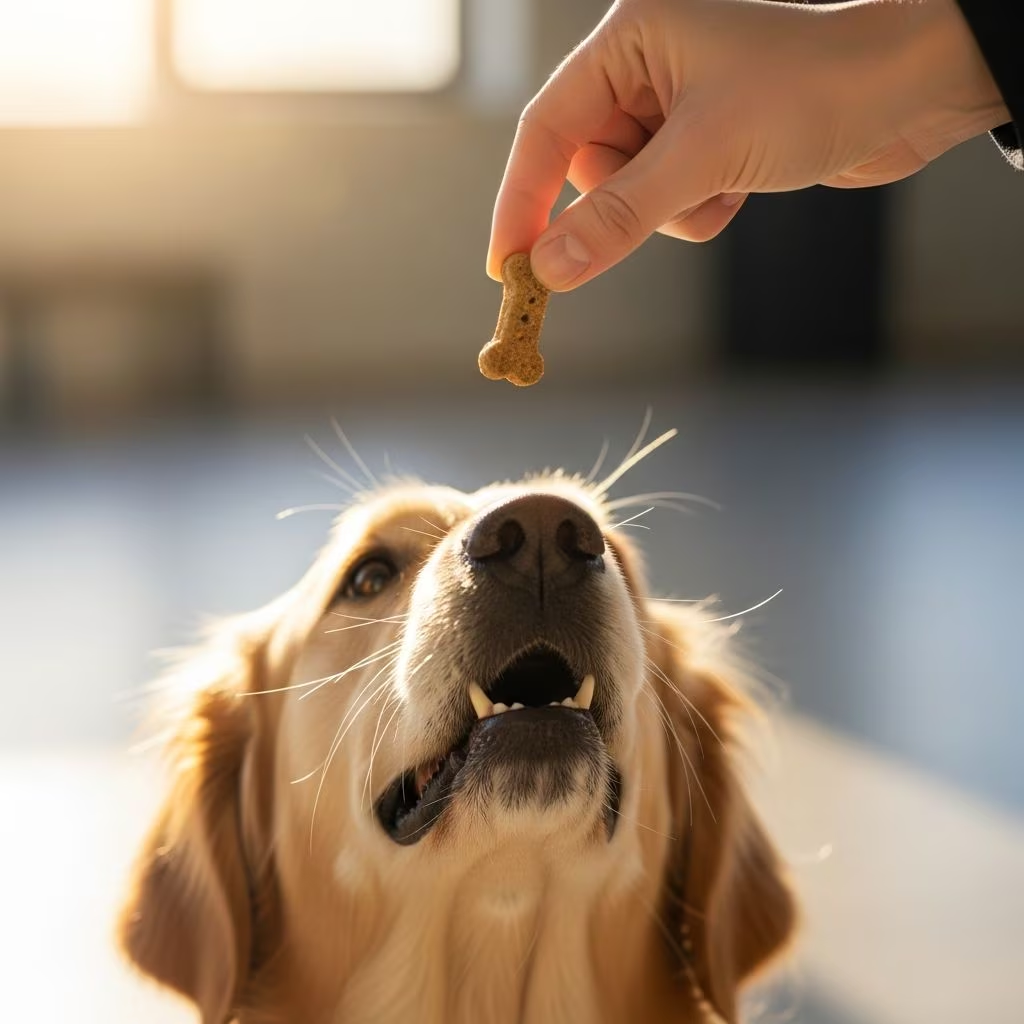
Positive reinforcement dog training leverages food rewards to encourage desired behaviors, fostering a strong human-canine bond while promoting long-term obedience without fear or force. This method, supported by behavioral science, proves more effective than punishment-based approaches for most dogs.
Why Food Drives Dog Learning
Dogs naturally respond to incentives that fulfill their needs, with food standing out as a primary motivator due to its biological importance. When a dog performs a wanted action and receives a treat immediately, their brain releases dopamine, reinforcing the connection between the behavior and the reward. This operant conditioning principle, first outlined by B.F. Skinner, explains why treats accelerate learning compared to verbal praise alone in high-distraction environments.
Unlike aversive methods, food-based training reduces stress hormones like cortisol, leading to calmer, more confident dogs. Studies from animal behaviorists show dogs trained positively exhibit fewer fear responses and better problem-solving skills.
Selecting the Perfect Treats for Success
Choosing appropriate food rewards is crucial for engagement. High-value treats—small, soft pieces of meat, cheese, or commercial training treats—work best because they deliver quick satisfaction without filling the dog up. Avoid dry kibble for initial sessions; reserve it for maintenance phases.
- High-value options: Chicken bits, hot dog slices, or freeze-dried liver for motivation during challenging tasks.
- Low-calorie choices: Zucchini pieces or blueberries for overweight dogs or prolonged sessions.
- Variety matters: Rotate treats to prevent boredom and maintain interest, as dogs quickly habituate to single flavors.
Size is key: Treats should be pea-sized to allow rapid delivery and multiple repetitions without overfeeding. Calculate daily intake to ensure treats don’t exceed 10% of caloric needs, preventing weight gain.
Mastering Timing and Delivery Techniques
The golden rule of positive reinforcement is immediacy: Reward within one second of the behavior to create a clear link. Delayed treats confuse dogs, as they associate the reward with whatever they did last, often unrelated actions.
Use a marker like a clicker or enthusiastic “Yes!” right before delivering the treat. This bridges the gap, precisely pinpointing the exact moment of success. Practice delivery from various positions—sitting, standing, walking—to mimic real-life scenarios.
| Scenario | Ideal Timing | Common Mistake |
|---|---|---|
| Sit command | Click/treat as rear touches ground | Waiting until dog stands up again |
| Recall in park | Marker + treat upon arrival at feet | Calling repeatedly before rewarding |
| Leave-it | Treat for ignoring distraction | Rewarding after distraction is removed |
Building Core Commands with Treats
Teaching Sit and Down
For “sit,” hold a treat above the dog’s nose, lure backward until hips drop, then mark and reward. Fade the lure by using a hand signal without food, rewarding from your other hand. Progress to downs by luring from sit position toward the ground.
Repeat 5-10 times per session, gradually adding distance and duration. Consistency across family members ensures reliability.
Recall and Loose-Leash Walking
Recall starts indoors: Say the dog’s name enthusiastically, reward heavy eye contact or approach with jackpot treats (multiple pieces). Graduate to longer distances and outdoor distractions, always rewarding generously to outcompete other stimuli.
For leashes, reward every step without tension. If pulling occurs, stop moving and wait for slack—then treat. This shapes patience and attentiveness.
Addressing Unwanted Behaviors Through Rewards
Instead of scolding jumping, teach an incompatible behavior like “sit for greetings.” Reward calm sitting profusely while ignoring jumps. For barking, reward silence or offer a toy diversion, reinforcing quiet moments.
Prevent resource guarding by trading up: Offer higher-value treats for toys or food, building positive associations with humans approaching valuables.
Fading Treats for Real-World Reliability
Continuous rewards build habits, but intermittent schedules maintain them, similar to slot machines keeping dogs guessing. Start with 100% reinforcement, then every other time, randomizing to a variable ratio.
Replace treats with life rewards: Access to doors, play, or walks. Verbal praise and petting become secondary reinforcers when paired consistently with food initially. Track progress: If behavior falters without treats, rebuild with higher value incentives.
Common Pitfalls and Fixes
- Lure fading too soon: Dogs revert if hand signals still mimic treats. Solution: Practice without visible food.
- Inconsistent household rules: Mixed signals confuse. Solution: Group training sessions with all members.
- Treat obsession: Dogs ignore commands awaiting food. Solution: Reward only correct responses; use hunger timing (pre-meal sessions).
- Overuse in low-motivation dogs: Test preferences; some prefer toys. Solution: Conduct “reward menu” trials.
Advanced Applications: Shaping and Chains
Shaping breaks complex behaviors into approximations. For “spin,” reward head turns, then partial circles, building to full rotations. Use a treat target stick for precision.
Behavior chains link commands: Treat after each step in “sit-stay-come,” rewarding the full sequence increasingly. Ideal for agility or service dog tasks.
Science Behind Food’s Effectiveness
Modern ethology confirms positive reinforcement outperforms dominance theories, with fMRI studies showing reward centers activate strongly in canine brains during treat anticipation. The American Veterinary Society of Animal Behavior endorses it as first-line for aggression and anxiety cases.
Practical Training Schedules
Short, frequent sessions (3-5 minutes, 3x daily) yield better retention than marathon drills. End on successes to build enthusiasm. Log sessions to monitor improvement metrics like response time or error rate.
FAQs
Can all dogs be food-motivated?
Most are, but test with a variety. Low-food-drive dogs respond to tug toys or access to scent games.
How many treats per day?
Limit to 10% of daily calories. Break into tiny pieces for volume.
What if my dog gets fat?
Use weight management treats or subtract from meals. Consult a vet for obese pups.
Does this work for aggressive dogs?
Yes, under professional guidance; counter-conditioning pairs triggers with treats to reduce reactivity.
When to stop using treats entirely?
Never fully; use sparingly for maintenance. Random rewards prevent extinction.
Tools and Resources for Success
- Clickers for precise marking.
- Treat pouches for quick access.
- High-quality treat brands like Zuke’s Mini Naturals.
Integrate apps for session tracking and progress charts.
References
- The Power of Positive Reinforcement: 5 Effective Dog Training Tips — 3 Dog Ranch MT. 2023-05-15. https://www.3dogranchmt.com/post/positive-reinforcement-tips
- How To Train a Dog With Positive Reinforcement — PetMD (Erika Lessa, CBST, CDBT, CDBC, CPDT-KA). 2024-02-12. https://www.petmd.com/dog/behavior/how-to-train-a-dog-with-positive-reinforcement
- Positive Reinforcement Dog Training: Understanding Operant Conditioning — American Kennel Club (AKC). 2023-11-08. https://www.akc.org/expert-advice/training/operant-conditioning-positive-reinforcement-dog-training/
- 6 Dos and Don’ts of Positive Reinforcement Dog Training — Ridgeside K9 Winchester. 2024-01-20. https://ridgesidek9winchester.com/6-dos-and-donts-of-positive-reinforcement-dog-training/
- Philosophy of Positive Training — Positively.com. 2023-09-10. https://positively.com/dog-training/article/philosophy-positive-training
- How to Reward Dogs With Positive Reinforcement Training — Humane World. 2024-03-05. https://www.humaneworld.org/en/resources/positive-reinforcement-training



