

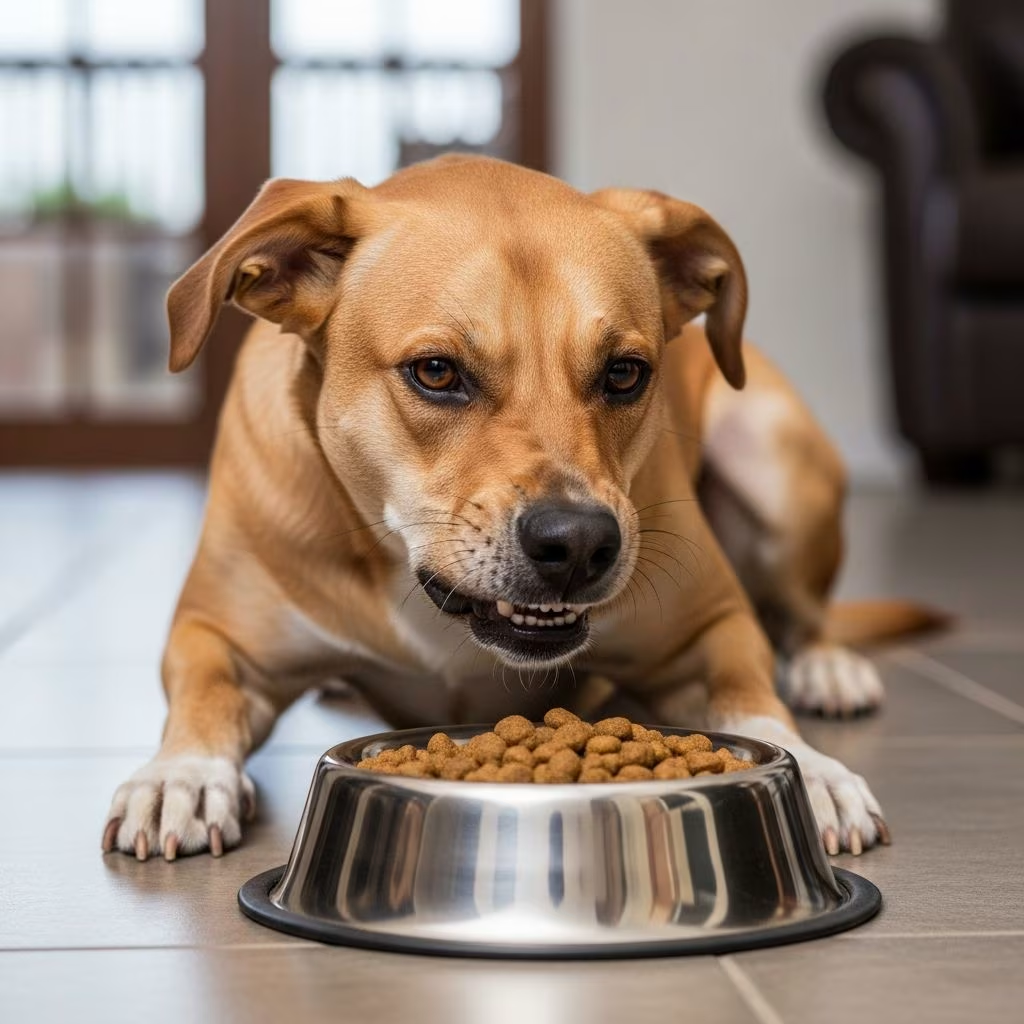
Food Bowl Aggression in Dogs: A Comprehensive Guide
Food-related aggression in dogs describes aggressive behavior when a dog is approached while eating or in possession of food-related items. Most commonly referred to as “food bowl aggression,” this behavior is a form of resource guarding that can pose significant safety risks to family members, visitors, and other pets. Understanding the underlying causes, recognizing early warning signs, and implementing appropriate management strategies are essential for any dog owner dealing with this behavioral challenge.
Dogs who exhibit food-related aggression may display aggressive behavior not only around their food bowls but also related to other valuable items, such as chews, toys, and even favorite locations or people. It is important to recognize that while some level of resource protection is a normal canine behavior, unmanaged food aggression can escalate quickly and become dangerous.
Understanding Food-Related Aggression
Food-related aggression is fundamentally rooted in your dog’s instinct to protect valuable resources. Dogs communicate using a range of postures and vocalizations designed to signal “do not approach.” A behaviorally appropriate dog may stare, freeze, place their chin or paw on an object, or even snarl or growl when they feel their resources are threatened. These behaviors are your dog’s way of communicating boundaries and requesting space.
Problems arise when these subtle signals are not recognized or when they are ignored by people or other pets. When an oncoming person or animal does not back away in response to these initial warnings, the dog experiences frustration, which motivates them to intensify their signals. Dogs quickly learn that lower-level signals to stay away are ineffective, so they escalate to more forceful behaviors such as lunging or biting.
Preventing this escalation requires you to identify subtle signals earlier in the communication sequence, so you can apply an effective management and behavior modification strategy before the situation becomes dangerous.
Recognizing Warning Signs of Food Aggression
Identifying early warning signs that your dog is uncomfortable with you or another pet near their food dish is crucial for preventing escalation. Many dog owners miss these subtle communications because they don’t understand what to look for. Early recognition allows you to intervene effectively before your dog resorts to more serious aggressive displays.
Subtle Warning Signs
Pay close attention to the following behaviors that indicate your dog is uncomfortable with your proximity during feeding:
– Speeding up eating, swallowing quickly, or gulping- Stopping eating abruptly- Stiffening or becoming still- Staring at or watching the one approaching- Holding a hard, focused stare- Pinning their ears back- Grabbing an item and taking it elsewhere- Watching your movements while eating
Escalated Warning Signs
In more severe cases, you may observe more obvious aggressive displays that require immediate intervention:
– Baring teeth or snarling- Growling when approached- Lunging toward the approaching person or pet- Snapping in the direction of a threat- Biting or attempting to bite- Chasing people or other pets who come too close to their guarded food
Never ignore these signs, whether subtle or severe. They represent your dog’s attempt to communicate a need, politely and clearly. Recognizing signs when they are subtle and intervening early is vital for success in managing this behavior.
Causes and Contributing Factors
Genetic and Temperament Factors
Most behavior problems are caused by a combination of environmental and genetic factors. Genetic factors may cause a dog to have a predisposition to respond to certain circumstances in particular ways. Dogs with naturally shy or fearful temperaments may feel threatened more easily, making them more likely to want to protect their resources. Additionally, stressful situations like having visitors or introducing a new pet into the home can increase food guarding tendencies.
Environmental Influences
Environmental factors can either positively or negatively impact your dog’s food guarding tendencies. Dogs likely behave aggressively around food-related items for several reasons:
– They truly enjoy a particular item and don’t want others to have it- There is a history of conflict or punishment related to the item- They come from a background where food was scarce and aggression enabled them to get enough food to survive
Dogs are more likely to demonstrate aggression over foods they perceive as particularly tasty, known as “high value” foods, such as canned food or special treats, compared to less appealing kibble.
Medical and Pain-Related Causes
Even easygoing dogs may act out aggressively when they’re experiencing pain or discomfort. Several health issues can contribute to food aggression behavior. Dental problems, such as a cracked tooth or gum inflammation, can make chewing painful. Gastrointestinal issues can also cause significant discomfort, leading to resource guarding as a protective mechanism. Even conditions like arthritis could make it painful for your dog to move away from their bowl if they feel threatened, increasing the likelihood of aggressive behavior.
Communal Feeding Situations
Communal free feeding situations can worsen food aggression, particularly in dogs with possessive tendencies. Research shows that communal feeding is likely to cause problems in dogs already prone to resource guarding. To minimize food-related aggression in multi-dog households, feed each dog separately in individual bowls and always supervise children during mealtimes.
Management Strategies for Food Bowl Aggression
Prevention Through Environment Control
The most immediate and effective management strategy is to prevent the problem by controlling your dog’s environment. Key management techniques include:
– Feed your dog in a separate, quiet space away from other pets and family members- Close the door to the feeding area to prevent interruptions during meals- Remove your dog’s food bowl immediately after feeding time- Avoid approaching your dog while they are eating or chewing on valuable items- Keep high-value items like bones and special chews out of reach when unsupervised- Never allow children to approach a dog while eating
While prevention is important, it is equally essential to implement behavior modification techniques to help your dog become more comfortable with people approaching their food bowl.
Behavior Modification Training
Food Bowl Training Program
A structured training program can help modify your dog’s response to people approaching their food bowl. This training should only be undertaken if your dog shows mild to moderate food aggression. Severe food aggression with biting should be addressed by a veterinary behaviorist.
Part 1: Association Building
The foundational exercise helps your dog understand that someone approaching means wonderful, higher-value treats appear. This exercise reverses the negative association your dog has developed between approaching and loss of resources.
Begin by having your dog eat from their bowl in a comfortable environment. Walk toward your dog’s bowl, and as you approach, toss a high-value treat directly into the bowl. This treat should be more valuable than what your dog is currently eating. Immediately walk away after delivering the treat. Repeat this exercise multiple times during feeding sessions.
Part 2: Distance Reduction
Once your dog is comfortable and does not show any signs of concern during Part 1, repeat this exercise a few times weekly. Gradually decrease the distance at which you pass the bowl until you are close enough to say a cue word like “bonus” and then toss the high-value treat directly into your dog’s dish as they eat. Always continue walking away after you deliver the treat.
Progressive Training Stages
If you have a dog with both food bowl aggression and aggression over delicious chew toys, structure your training program strategically. Start with Food Bowl Training during week two and Delicious Chew Toy Training in week three, practicing once daily, five to seven days per week. Continue with Retrieve Training one to two times daily, five to seven days per week. Additional enrichment activities should be conducted as needed to reduce stress and maintain the behavioral health of your dog.
When to Seek Professional Help
Monitoring Training Progress
Throughout your training program, monitor your dog’s progress carefully. Stop training and consult with a veterinary behaviorist if:
– Aggression is observed during training sessions, such as stiff body posture, showing teeth, growling, snapping, or biting- If the behavior evaluation is repeated and your dog’s behavior is worse compared to the previous evaluation- Any other aggression has occurred, such as aggression toward strangers or during handling- Your dog shows multiple problem behaviors, which makes placement in a home more challenging
Working with Veterinary Behaviorists
If your dog exhibits severe food aggression with biting, or if your training efforts are not producing improvement, consult with a certified veterinary behaviorist. These specialists can provide personalized intervention plans and may recommend additional behavioral tools or medical evaluations to address underlying health issues contributing to the aggression.
The Role of Value and Resource Guarding
Understanding your dog’s perception of value is essential to addressing food aggression. Dogs don’t guard items that have no value to them. Most dogs are more likely to behave aggressively over a bowl of canned food or a special treat than over a bowl of regular dry kibble.
Research indicates that approximately 25% of dog guardians report having a dog that has exhibited food aggression. While this is a relatively common issue, it is not one that should be ignored or accepted as simply part of dog ownership. With proper management and behavior modification, most cases of food aggression can be significantly improved.
Communication and Prevention
Your dog is constantly communicating with you through body language and behavior. Learning to interpret these signals is crucial for preventing escalation. When you notice your dog giving you subtle warnings—such as stiffening, staring, or stopping eating—this is your opportunity to back away and implement your management plan.
By recognizing these signals early and responding appropriately, you prevent your dog from escalating to more serious aggressive displays. This creates a positive feedback loop where your dog learns that their polite communication works, and they don’t need to resort to more forceful behaviors.
Creating a Safe Feeding Environment
Creating a safe feeding environment for your dog is foundational to managing food aggression. This includes:
– Establishing a consistent feeding schedule- Providing a quiet, secure space away from distractions- Using the same bowl and feeding location each day- Avoiding sudden movements or loud noises during feeding time- Teaching children to respect the dog’s space during meals- Never forcing your dog to eat or preventing them from leaving their bowl
Frequently Asked Questions
Q: Is food aggression a sign that my dog is dominant?
A: No. Food aggression is not about dominance; it’s about resource protection. Your dog is communicating that they want to keep their food or valuable items. This is a normal canine behavior that simply needs to be managed and modified.
Q: Can I punish my dog for showing food aggression?
A: No. Punishment often makes food aggression worse by creating fear and increasing the dog’s motivation to guard resources. Instead, use positive reinforcement and behavior modification techniques to change your dog’s emotional response to your approach.
Q: Will my dog ever be completely comfortable with people around their food?
A: Many dogs can make significant progress with consistent training and management. However, some dogs with severe food aggression or a long history of resource guarding may always need some level of management, such as separate feeding spaces.
Q: Is food aggression dangerous?
A: Food aggression can escalate and become dangerous, particularly if not addressed early. It poses risks to family members, visitors, and other pets. Even mild food aggression should be taken seriously and addressed promptly.
Q: How long does food aggression training take?
A: The timeline varies depending on the severity of the aggression, your dog’s history, and how consistently you implement the training program. Some dogs show improvement within weeks, while others may require months of consistent training.
References
- Food Bowl Aggression in Dogs — VCA Animal Hospitals. Accessed 2025-11-28. https://vcahospitals.com/know-your-pet/food-bowl-aggression-in-dogs
- Food Aggression – Collaborative for Shelter Dogs — Tufts University. Accessed 2025-11-28. https://sites.tufts.edu/collaborativeforshelterdogs/dog-behavior/problems-and-management/food-aggression/
- How to Address Food Aggression in Dogs — Hill’s Pet US. Accessed 2025-11-28. https://www.hillspet.com/dog-care/behavior-appearance/food-aggression-in-dogs
- How to Stop Food Aggression and Resource Guarding in Dogs — Best Friends Animal Society. Accessed 2025-11-28. https://bestfriends.org/pet-care-resources/how-stop-food-aggression-and-resource-guarding-dogs
- Dog Food Aggression | Resource Guarding Facts + Infographic — Sniffspot. Accessed 2025-11-28. https://www.sniffspot.com/blog/dog-training/how-to-deal-with-food-aggression-in-dogs-facts-infographic
- Food Guarding — ASPCA. Accessed 2025-11-28. https://www.aspca.org/pet-care/dog-care/common-dog-behavior-issues/food-guarding
- Food Aggression in Dogs: What You Need to Know — Lemonade Insurance. Accessed 2025-11-28. https://www.lemonade.com/pet/explained/food-aggression-dogs/



