

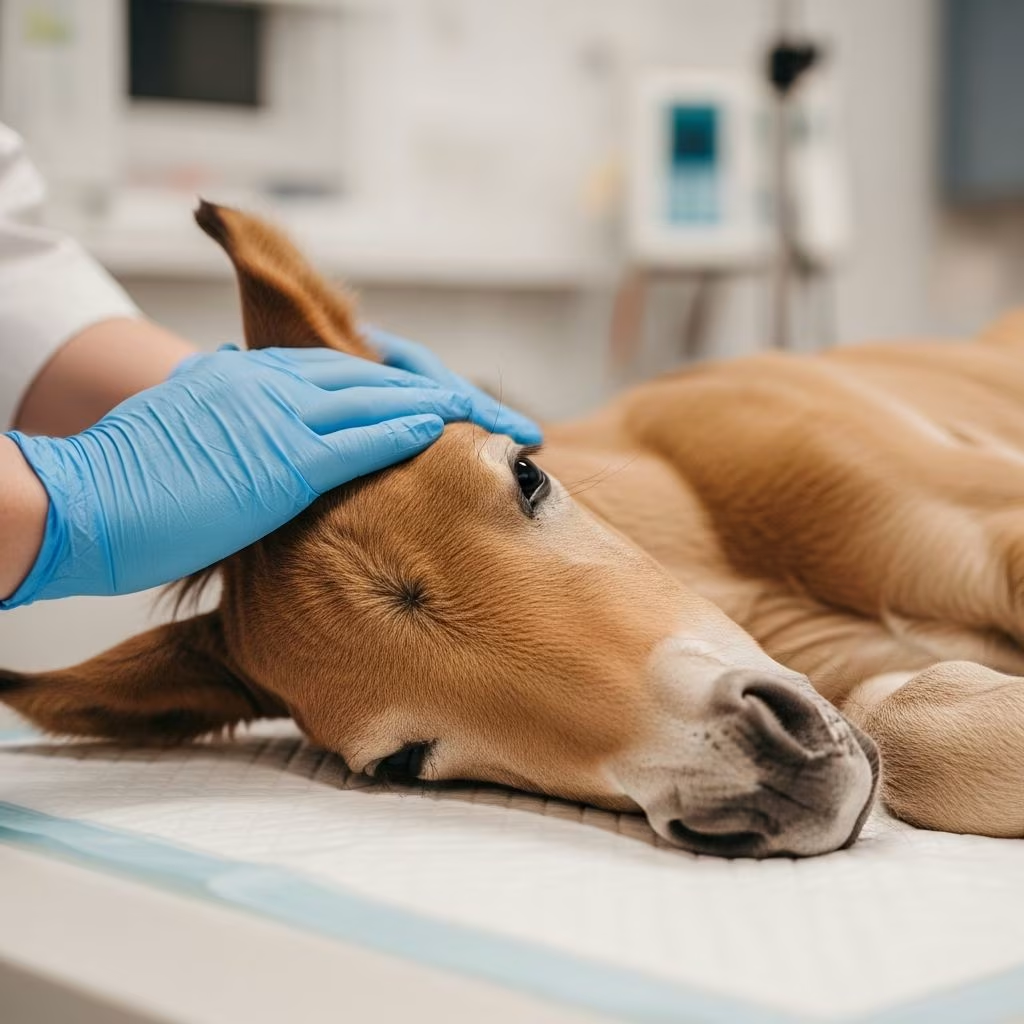
Neonatal encephalopathy represents a significant challenge in equine veterinary practice, affecting newborn foals with neurological abnormalities that can compromise their immediate survival and long-term development. This condition, often manifesting shortly after birth, demands prompt recognition and intensive care to improve outcomes.
Understanding the Condition in Newborn Foals
Neonatal encephalopathy, sometimes referred to as neonatal maladjustment syndrome or dummy foal syndrome, involves a range of behavioral and neurological disturbances in foals during their first days of life. It arises primarily from disruptions during the perinatal period, leading to impaired brain function without an infectious cause.
The syndrome disrupts the foal’s ability to adapt from fetal to postnatal life, resulting in signs that mimic intoxication or profound neurological injury. While the exact mechanisms remain under study, it is clear that timely intervention plays a crucial role in recovery.
Primary Causes and Underlying Mechanisms
The development of neonatal encephalopathy often links to perinatal asphyxia, where oxygen deprivation occurs during delivery. Factors such as dystocia, premature placental separation, or placental infections heighten the risk by limiting oxygen supply to fetal tissues.
Recent research highlights the role of persistent neuroinhibitory steroids, including progesterone and pregnenolone, which fail to clear rapidly after birth. This persistence may prolong a fetal-like state of unconsciousness, particularly in foals born via cesarean section or rapid delivery.
- Asphyxia-related damage: Leads to neuronal cell death through hypoxia, energy failure, and reperfusion injury.
- Steroid imbalance: Delays transition to alert wakefulness.
- Multi-organ impact: Affects kidneys, heart, gut, and lungs beyond the brain.
Pathophysiological processes include excitotoxicity, oxidative stress, inflammation, and apoptosis, drawing parallels from human neonatal studies.
Recognizing Early Warning Signs
Clinical presentation varies widely, from subtle delays in suckling to severe convulsions. Foals may appear normal at birth but deteriorate within hours, showing disinterest in the mare, inability to stand, or erratic wandering.
| Symptom Category | Common Manifestations | Severity Level |
|---|---|---|
| Behavioral | Lethargy, lack of affinity for dam, aimless movement | Mild to Moderate |
| Neurological | Seizures, tremors, hypotonia, head tilt, circling | Moderate to Severe |
| Motor | Weakness, recumbency, loss of suckle reflex | All Levels |
| Systemic | Oliguria, colic, diarrhea, cardiac irregularities | Variable |
Seizures can range from facial twitching to full-body paddling and vocalization resembling barking, earning the term “barker foal.” Affected foals are typically afebrile unless secondary issues arise.
Associated Complications and Multi-System Effects
Beyond neurological deficits, perinatal hypoxia impacts other organs. Renal issues manifest as reduced urine output, while gastrointestinal problems include ileus, ulcers, and necrotizing enterocolitis. Cardiac and pulmonary dysfunctions further complicate the picture.
Failure to nurse adequately leads to passive immunity deficits, increasing sepsis risk. Neurologically impaired foals expose themselves to environmental pathogens through indiscriminate behavior.
Diagnostic Approaches and Differential Considerations
Diagnosis relies on clinical history and exclusion of infectious or structural causes. Key indicators include dystocia history or abnormal placental findings. Thorough physical exams assess all systems.
Laboratory tests reveal hypoxemia, acidemia, hypercarbia, or hypocalcemia. CSF analysis may show elevated protein or RBCs, though often normal. Necropsy reveals inconsistent edema or hemorrhage.
- Complete blood work and serum chemistry.
- Urinalysis for renal function.
- CSF tap if safe.
- Ultrasonography for organ assessment.
- Rule out sepsis, trauma, or congenital defects.
Differentials include bacterial meningitis, viral encephalitis, hypoglycemia, and electrolyte imbalances.
Comprehensive Treatment Strategies
Supportive care forms the cornerstone, focusing on seizure control, hydration, nutrition, and injury prevention. Antibiotics prevent secondary infections, while plasma transfusions address colostrum deficits.
- Seizure management: Anticonvulsants like diazepam or phenobarbital.
- Environmental protection: Padded stalls, constant monitoring to avoid trauma, especially to eyes.
- Fluid therapy: Judicious IV fluids to maintain perfusion without overload, monitoring for edema.
- Nutrition: Tube feeding or IV support if suckling fails.
- Inotropes: For blood pressure support if needed.
Experimental approaches like the “squeeze procedure” mimic birth canal pressure to signal steroid clearance, showing promise in neurosteroid-related cases.
Prognosis and Long-Term Outlook
With uncomplicated management, 70-80% of foals recover fully, often within days for mild cases or a week for severe ones. Survivors perform athletically comparably to peers.
Poor prognostic signs include prolonged coma, unresponsive seizures past day 5, or sepsis. Early daily improvements signal good recovery potential.
Prevention Tactics for Breeders and Veterinarians
Minimize risks through vigilant pregnancy monitoring, prompt dystocia intervention, and placental examination post-foaling. Ensure colostrum intake within hours of birth.
High-risk mares (prior history, infections) warrant intensive neonatal surveillance for the first 48 hours.
Recent Advances in Research and Therapy
Ongoing studies emphasize neurosteroid modulation and neuroprotective agents. Equine research lags behind human analogs but benefits from translational applications.
Improved survival reflects better fluid management and sepsis protocols.
Frequently Asked Questions (FAQs)
What is the most common trigger for neonatal encephalopathy in foals?
Perinatal asphyxia from difficult births or placental issues is the leading cause.
How quickly do symptoms appear after birth?
Many foals seem normal initially, with signs emerging within hours to 1-2 days.
Is neonatal encephalopathy contagious?
No, it is noninfectious, stemming from birth-related physiological disruptions.
What is the survival rate for affected foals?
Approximately 70-80% with proper care, higher in uncomplicated cases.
Can recovered foals lead normal lives?
Yes, most achieve full neurological recovery and normal athletic performance.
Key Takeaways for Equine Care
- Early detection hinges on monitoring suckle reflex and mare-foal bonding.
- Intensive 24/7 care maximizes recovery chances.
- Collaborate with equine specialists for best results.
References
- Neonatal Encephalopathy in Foals (Neonatal Maladjustment Syndrome) — Merck Veterinary Manual. 2023. https://www.merckvetmanual.com/horse-owners/brain-spinal-cord-and-nerve-disorders-of-horses/neonatal-encephalopathy-in-foals-neonatal-maladjustment-syndrome
- Neonatal Encephalopathy in Foals — Merck Veterinary Manual (Management and Nutrition). 2023. https://www.merckvetmanual.com/management-and-nutrition/management-of-the-neonate/neonatal-encephalopathy-in-foals
- Neonatal encephalopathy in foals — University of Illinois Experts (.edu). 2020. https://experts.illinois.edu/en/publications/neonatal-encephalopathy-in-foals/
- Equine Neonatal Encephalopathy: Facts, Evidence, and Opinions — PubMed (Peer-reviewed). 2019-05-28. https://pubmed.ncbi.nlm.nih.gov/31088699/
- Neonatal Maladjustment Syndrome in Foals — UC Davis Center for Equine Health (.edu). 2023. https://ceh.vetmed.ucdavis.edu/health-topics/neonatal-maladjustment-syndrome-foals
- Hypoxic Ischemic Encephalopathy: Neonatal Encephalopathy — IVIS (Veterinary Information). 2022. https://www.ivis.org/library/recent-advances-equine-neonatal-care/hypoxic-ischemic-encephalopathy-neonatal



