

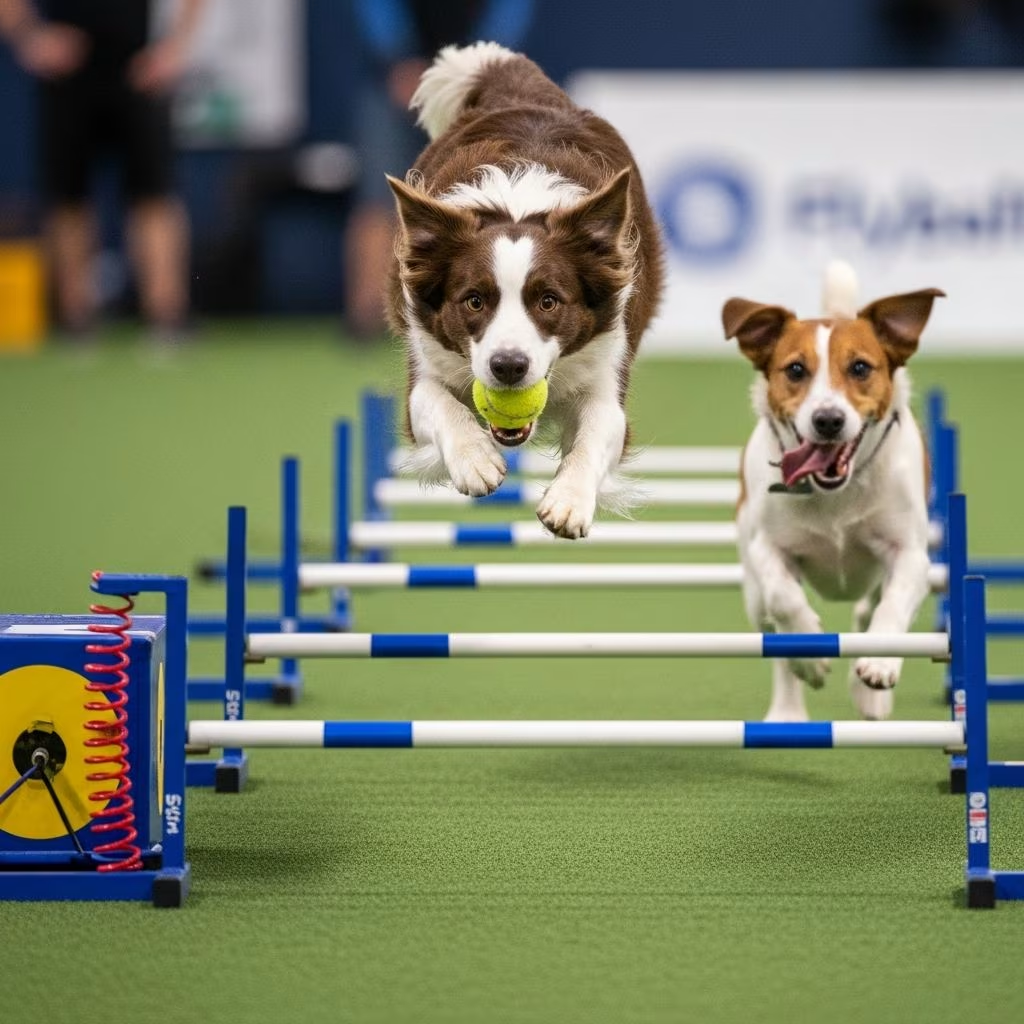
In the world of competitive dog sports, few activities capture the energy, excitement, and pure joy quite like flyball. This thrilling relay race transforms ordinary dogs into athletic competitors, combining multiple skill sets into one fast-paced, adrenaline-pumping event. Whether you’re a seasoned dog sports enthusiast or simply curious about ways to challenge your canine companion, flyball represents one of the most engaging and rewarding activities available to dog owners today.
Understanding the Fundamentals of Flyball Competition
Flyball operates as a team-based relay race where athleticism, precision, and coordination converge in spectacular fashion. The sport pits two teams directly against each other, with each team consisting of four competing dogs and their handlers. The competition takes place on a clearly defined 51-foot-long course, creating an intense head-to-head racing experience.
The mechanics of flyball are deceptively simple yet incredibly challenging. Each dog must navigate four hurdles positioned strategically along the course, maintain momentum while executing a turn at the flyball box, successfully trigger the box to release a tennis ball, catch the ball mid-air, and return over all four hurdles to cross the finish line. The sequence must be executed flawlessly because relay timing is critical—the next dog cannot begin their run until the previous competitor has completely cleared all obstacles and reached the starting line.
What distinguishes flyball from many other dog sports is its emphasis on speed combined with accuracy. Dogs racing at full sprint must simultaneously maintain control, jump precisely over obstacles, and respond immediately to the mechanical trigger of the flyball box. This unique combination demands both physical capability and mental sharpness from competing canines.
The Mechanical Innovation: The Flyball Box
At the heart of every flyball competition lies an ingenious mechanical device: the spring-loaded flyball box. This apparatus represents the defining innovation that transformed a casual training concept into a legitimate sport. The box features a specially angled pad that, when triggered by a dog’s contact, releases a tennis ball with significant force into the air.
The spring mechanism serves multiple purposes. First, it standardizes the ball release across all competitions, ensuring fairness and consistency. Second, it transforms the sport from simple fetch-and-retrieve into a sport requiring split-second timing and precision. Dogs must learn not merely to trigger the box but to do so while maintaining their forward momentum and ability to catch the ejected ball before it travels too far.
Understanding how to properly approach and activate the flyball box represents a significant portion of training for flyball competitors. Many dogs initially struggle with the mechanics, requiring patient coaching to develop the muscle memory and spatial awareness necessary for reliable activation at high speeds.
The Remarkable Origins and Evolution of Flyball
The history of flyball reveals a fascinating journey from accidental invention to globally recognized competitive sport. The sport emerged organically in Southern California during the late 1960s and early 1970s when innovative dog trainers sought creative ways to engage their animals. These trainers experimented by combining elements of scent discrimination hurdle racing with ball retrieval activities, creating an early prototype of what would become flyball.
The pivotal moment in flyball’s development came from Herbert Wagner, a California dog enthusiast who grew weary of manually throwing tennis balls to his fetch-loving dog. Rather than accepting this repetitive task, Wagner engineered a revolutionary solution—a catapult-style launching device that would automatically eject a ball when his dog pressed a pedal. This ingenious contraption, which later became known as the first flyball box, transformed casual backyard play into the foundation of an international sport.
Wagner’s invention gained extraordinary visibility when he demonstrated the flyball box on The Tonight Show Starring Johnny Carson. This television appearance, reaching millions of American households, introduced the concept to a dramatically expanded audience and helped legitimize the sport beyond its original California-based community.
Formal structure began developing in the early 1980s. The first official flyball tournament was held in 1981, marking the transition from informal recreation to organized competition. This milestone spurred the creation of standardized rules and regulations. In 1985, Mike Randall authored the first official NAFA rulebook, establishing consistent guidelines that would allow tournaments across different locations to operate under identical parameters.
The formation of the North American Flyball Association (NAFA) in 1984 proved instrumental in formalizing the sport’s growth and ensuring its sustainable development. Today, more than 16,000 dogs compete through NAFA-sanctioned events across the United States and Canada.
How Flyball Competitions Work
Understanding the practical mechanics of a flyball race provides insight into why the sport captivates both participants and spectators. Races operate according to a structured format designed to maximize fairness and safety while maintaining the intense competitive atmosphere that defines the sport.
- Team Composition: Each team fields four active competitors plus substitutes, allowing for flexibility when dogs require rest or if injuries occur during tournaments.
- Relay Structure: Dogs run sequentially, not simultaneously within the same team. The critical rule prevents the next dog from crossing the starting line until the previous competitor has cleared all hurdles and reached the finish area.
- Scoring System: The team whose fourth dog crosses the finish line first without accumulation of errors wins the heat. Some tournaments use time-based scoring, with penalties added for knocked hurdles or other infractions.
- Course Layout: Hurdles are uniformly spaced ten feet apart, creating consistent challenges across all competitions. The flyball box sits at the end of the jump line, creating the turning point where dogs must exhibit precision and control.
Physical and Mental Benefits for Participating Dogs
Dogs competing in flyball experience multifaceted developmental benefits extending far beyond simple physical exercise. The sport naturally engages both the body and mind, creating a holistic enrichment experience that many owners find transformative for their companions.
Physical Development: The sport builds cardiovascular endurance, muscular strength, and agility. Repeated jumping and sprinting develop powerful leg muscles and improve overall athletic capacity. The directional changes and precise jumping mechanics strengthen core stability and balance. Many dogs demonstrate improved overall fitness after consistent flyball training.
Mental Stimulation: Flyball demands cognitive engagement at levels rarely achieved through casual activities. Dogs must remember jump heights, anticipate box mechanics, process timing cues from handlers, and execute complex sequences—all at high speeds. This mental challenge creates deep satisfaction and cognitive development.
Behavioral Outcomes: Dogs engaged in structured competitive activities frequently demonstrate improved focus, better impulse control, and increased confidence. The combination of physical exertion and mental engagement often reduces problematic behaviors stemming from boredom or excess energy.
Social Development: Team participation exposes dogs to new environments, varied handlers, and different canine competitors in controlled settings. This socialization, combined with positive experiences, typically enhances adaptability and confidence in unfamiliar situations.
Breeds and Dog Types That Excel in Flyball
While flyball welcomes dogs of diverse breeds and mixed-breed backgrounds, certain characteristics predispose dogs toward success in the sport. Athletic builds, strong prey drives, ball obsession, and trainability create ideal candidates for flyball competition.
Border Collies, Australian Shepherds, and other herding breeds frequently dominate flyball competitions due to their natural athleticism, intelligence, and eager-to-please temperaments. However, dogs of various breeds have achieved competitive success when they possess strong motivation and appropriate physical capabilities. Mixed breeds often prove exceptional flyball competitors, particularly when their genetic makeup includes athletic ancestors.
Size considerations affect competition structure. Dogs of different heights jump adjusted hurdle heights, ensuring fair competition across size categories. This inclusivity means smaller dogs and giant breeds can both participate meaningfully within appropriate classifications.
The most critical factor determining flyball success extends beyond breed—it centers on individual temperament and motivation. Dogs displaying high ball drive, natural athleticism, trainability, and enthusiasm for retrieving activities typically progress more rapidly and achieve higher competitive levels than those lacking these characteristics.
International Expansion and Global Growth
What began as a California phenomenon has evolved into a genuinely international sport. Flyball’s expansion beyond North America demonstrates the sport’s universal appeal and adaptability to diverse cultural contexts.
In 1996, flyball arrived in England when enthusiasts from the Wakefield dog training club encountered the sport at British dog shows and subsequently learned from American pioneers. The British Flyball Association emerged, providing organizational structure similar to NAFA. Today, flyball competitions occur across the United Kingdom with established clubs and regular tournaments.
The sport continues expanding throughout Europe and beyond, with competitive flyball communities establishing themselves in numerous countries. International teams occasionally compete in cross-border tournaments, creating exciting opportunities for global competition and knowledge sharing among flyball enthusiasts.
Getting Started: Pathways Into Competitive Flyball
Prospective participants wondering how to enter the flyball community will find multiple accessible entry points. Most geographic regions contain established flyball clubs affiliated with NAFA or similar organizational bodies.
Beginning flyball participants typically start with training sessions at local clubs, where experienced handlers teach fundamental skills. Initial training focuses on building confidence around the flyball box, developing reliable jumping technique, and establishing ball drive. Dogs progress at individualized paces, advancing only when demonstrating consistent competency with foundational skills.
Formal tournaments commence after dogs achieve adequate training proficiency. Competition structures include multiple heat formats, allowing teams to race repeatedly throughout tournament days. Divisions often separate dogs by experience level, ensuring newcomers compete against similarly skilled teams rather than facing elite performers immediately.
Essential Preparation and Training Considerations
Successful flyball participation requires thoughtful preparation addressing physical conditioning, technical skill development, and handler coordination.
- Physical conditioning should occur gradually to prevent injury, with age-appropriate exercise progressions for young dogs
- Jump heights adjust based on dog size, eliminating injury risk from excessive impact
- Handler training proves equally important as canine training, as effective communication and timing directly impact performance
- Veterinary clearance remains essential before beginning any competitive program
- Mental preparation helps dogs develop focus and confidence in competitive environments
Common Questions About Flyball
Is flyball appropriate for all dog ages? Young puppies and senior dogs may participate at modified levels, but competitive flyball typically suits dogs aged two to seven years when they’ve achieved physical maturity and maintained athletic capacity.
Can mixed-breed dogs compete? Yes, absolutely. NAFA welcomes mixed-breed dogs alongside purebreds. Individual temperament and athletic ability matter far more than pedigree.
What injuries are common in flyball? While the sport involves inherent physical stress, well-trained dogs competing under proper conditions experience relatively low injury rates. Most injuries prove minor, though serious incidents occasionally occur. Proper training, conditioning, and veterinary oversight minimize risk substantially.
How much does flyball competition cost? Entry fees vary by region and tournament level, typically ranging from modest amounts per heat to higher fees for larger competitions. Club memberships and training fees represent additional investments.
How do handlers communicate with dogs during races? Handlers typically call their dogs with verbal commands and sometimes use whistles. Effective communication develops through consistent training and strong handler-dog relationships.
The Lasting Appeal of Competitive Flyball
Flyball endures as one of the most engaging dog sports because it successfully combines multiple appealing elements. The sport delivers physical excitement, mental engagement, competitive opportunity, and meaningful human-canine partnership within a structured, safe environment. Dogs experience the satisfaction of performing at their peak capabilities while handlers enjoy the camaraderie of the flyball community and the pride of watching their companions excel.
From Herbert Wagner’s accidental innovation to contemporary international competitions, flyball represents how creative problem-solving and genuine dog enthusiasts can transform simple concepts into enriching activities benefiting countless animals. Whether as casual recreation or serious competition, flyball continues proving that the right sport can unlock remarkable potential within our canine companions.
References
- Flyball: The First Team Sport for Dogs — Cobber Dog King. 2024. https://www.cobberdogking.com/en/blog/article/flyball-the-first-team-sport-for-dog
- About Flyball — North American Flyball Association. 2024. https://www.flyball.org/aboutflyball.html
- Flyball Dogs: A Complete Guide to This Exciting Sport — Sniffspot. 2024. https://www.sniffspot.com/blog/dog-enrichment/the-pocket-guide-to-flyball-for-dogs
- Flyball Dog Sport — Showsight Magazine. 2024. https://showsightmagazine.com/dog-sports/flyball/
- The History of Flyball — Abbots Flyball. 2024. https://abbotsflyball.webnode.page/the-history-of-flyball/
- Flyball — A Competitive Sport for Owners and Their Dogs — American Kennel Club. 2024. https://www.akc.org/expert-advice/sports/flyball-competitive-sport-owners-and-dogs/
- Flyball — Britannica. 2024. https://www.britannica.com/sports/flyball



