

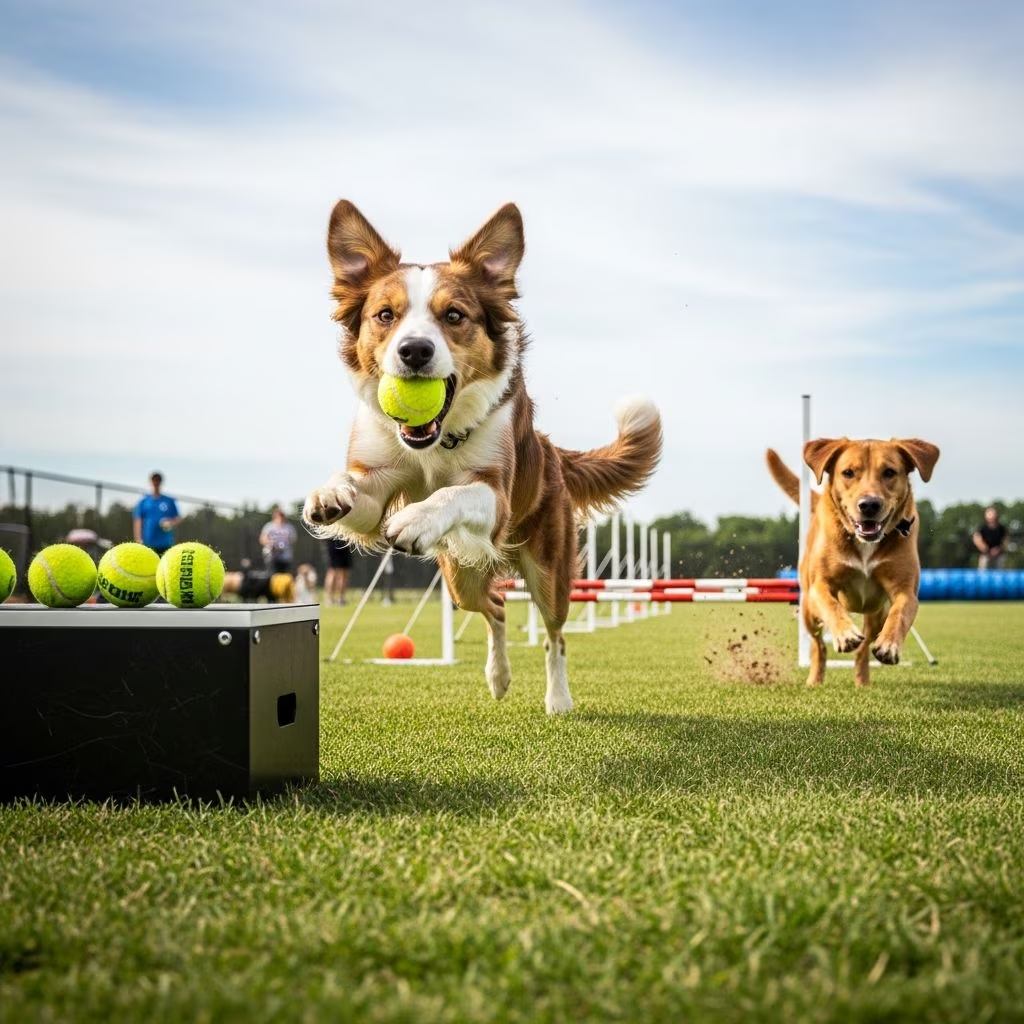
Flyball is a dynamic relay race sport designed specifically for dogs, where teams compete head-to-head in a test of speed, precision, and coordination. Dogs navigate a course featuring hurdles and a spring-loaded ball launcher, fostering physical fitness and mental sharpness in an inclusive environment open to all breeds and sizes.
The Thrilling Mechanics of a Flyball Race
In flyball, two teams of four dogs each line up at the starting line, poised for action under drag racing-style lights. The first dog bursts forward upon the green light, leaping over four evenly spaced hurdles spaced 10 feet apart, leading to a box positioned 15 feet beyond the final hurdle on a standard 51-foot course.
At the box, the dog strikes a spring-loaded pad with its paw, releasing a tennis ball. The dog catches the ball mid-air, executes a swift 180-degree turn, and races back over the same hurdles, ball securely in mouth, crossing the finish line—also the start line—before the next teammate begins. This nose-to-nose passing ensures seamless relay progression. The first team to complete all four runs without faults claims victory in a best-of-five heats format.
Errors like dropped balls or missed hurdles require a rerun after the team’s completion, emphasizing flawless execution alongside velocity. Top teams shatter records, with the world best clocking in at 14.433 seconds, showcasing the sport’s elite pace.
Adapting Challenges for Every Dog Size
Flyball’s appeal lies in its equity across canine physiques. Hurdle heights adjust to the shortest dog on the team—measured at the withers minus roughly five inches—ensuring small breeds like Yorkshire Terriers compete fairly against giants like Great Danes.
| Dog Withers Height | Typical Hurdle Height | Example Breeds |
|---|---|---|
| Under 10 inches | 4-6 inches | Chihuahua, Yorkie |
| 10-14 inches | 8-10 inches | Jack Russell, Beagle |
| 14-18 inches | 12-14 inches | Border Collie, Aussie |
| Over 18 inches | 14-16 inches max | Labrador, Great Dane |
This system, governed by organizations like the North American Flyball Association (NAFA), promotes diversity, with mixed breeds and rescues frequently starring on champion squads.
Team Composition and Roles Explained
A standard flyball team comprises four primary dogs and handlers, plus up to two backups for rotation, decided by the captain. Handlers release dogs, offer encouragement, and manage passes. A dedicated boxloader replenishes balls, while spotters retrieve strays and monitor line crosses.
- Lead Dog: Sets the pace with consistent, rapid runs.
- Height Dog: Shortest team member dictating jump levels.
- Power Dog: Excels in box turns and ball catches.
- Cleanup Dog: Ensures no faults in final leg.
This structure demands synergy, turning individual talents into collective triumphs.
Earning Titles and Tournament Divisions
Competitions sort teams into divisions by speed for balanced matchups. Points accrue per heat: 25 for under 24 seconds per dog, 5 for under 28, and 1 for under 32, fueling title pursuits like Flyball Dog (FD), Flyball Dog Champion (FDCH), Flyball Master (FM), and ONYX via AKC-NAFA partnership.
Tournaments span weekends, blending intense rivalry with social vibes. Casual participants relish community, while pros chase rankings in this fastest-growing dog sport.
Essential Training Foundations for Success
Preparation begins at home. Start with recall drills, toy drive enhancement via tug games, and low jumps to build confidence. Progress to box simulation using a mat and ball launcher, rewarding sharp turns.
- Retrieve Mastery: Teach solid ball holds without drops.
- Hurdle Drills: Introduce progressive heights with enthusiasm.
- Box Turn Practice: Condition paw slap for instant release.
- Relay Simulation: Practice passes with a partner team.
Handlers cue verbally, using toys or treats sparingly to fuel intrinsic motivation. Consistency and fun prevent burnout, ideal for high-drive breeds like Border Collies or mixed mutts.
Physical and Mental Boosts from Flyball
Beyond competition, flyball delivers profound benefits. It torches calories through sprints and jumps, improving cardiovascular health and muscle tone. Mentally, problem-solving at the box and focus amid excitement sharpen cognition.
- Energy Outlet: Channels zoomies into structured exertion.
- Confidence Builder: Overcomes fears via progressive achievements.
- Socialization: Interacts with dogs and humans in controlled settings.
- Bond Strengthener: Deepens handler-dog partnership.
Veterinarians endorse it for fit dogs over 15 months, cautioning injury risks for puppies or those with joint issues—always vet-check first.
Getting Your Dog Competition-Ready
Entry is straightforward: Locate clubs via NAFA or AKC directories. Attend a “funny” meet—non-competitive intro sessions—to observe and trial. Many clubs lend gear, easing startup costs like hurdles ($200-500/set) or boxes ($300+).
Progress from clinics to local tournaments. All-breed inclusivity means no pedigree needed; passion suffices. Global reach spans North America, Europe, Australia, with events year-round.
Common Hurdles and Pro Tips
Novices face box hesitancy or early releases. Counter with patience: shape behaviors incrementally, celebrate approximations. Weatherproof training builds resilience for outdoor venues.
Pro handlers stress drive over perfection—dogs thrive on joy. Rotate team spots to leverage strengths, and film runs for analysis.
Flyball’s Rich Legacy and Global Reach
Invented in the 1970s, flyball evolved from agility experiments into a standalone spectacle. Today, it captivates worldwide, with herding breeds leading but mutts proving stars. Its non-hunting, team ethos appeals to pet owners seeking purpose.
Frequently Asked Questions (FAQs)
What age can dogs start flyball?
All dogs 15 months or older qualify, ensuring physical maturity.
Is special equipment required to begin?
Clubs provide rentals; home starters need balls, low hurdles, and enthusiasm.
Can shy dogs participate?
Yes, gradual exposure builds boldness; it’s adaptable for various temperaments.
How much does competing cost?
Entry fees $20-50/dog/day; gear $500-1000 initial investment.
What if my dog drops the ball often?
Drill retrieves separately; use higher-value toys to boost commitment.
Why Flyball Stands Out Among Dog Sports
Flyball uniquely blends relay excitement with accessibility, outshining solo agility by emphasizing canine camaraderie. Its speed—teams blurring past in seconds—rivals human track events, yet prioritizes fun over formality. Whether eyeing titles or backyard romps, it transforms energetic pups into stars.
References
- Flyball Dogs: A Complete Guide to This Exciting Sport — Sniffspot. 2023. https://www.sniffspot.com/blog/dog-enrichment/the-pocket-guide-to-flyball-for-dogs
- Dog Sports – Flyball — VCA Animal Hospitals. 2024-01-15. https://vcahospitals.com/know-your-pet/dog-sports—flyball
- What is Flyball? — North American Flyball Association (via wp.flyball.org). 2025. https://wp.flyball.org/flyball/
- What Is Flyball? | Westminster Dog Show — YouTube/Westminster Kennel Club. 2023-05-10. https://www.youtube.com/watch?v=2YaLYqAAQfA
- Flyball — Wikipedia (citing NAFA standards). 2026-03-01. https://en.wikipedia.org/wiki/Flyball
- How to Compete in Flyball for Dogs — American Kennel Club. 2024-06-20. https://www.akc.org/expert-advice/sports/flyball-101-how-to-compete-in-flyball-for-dogs/



