

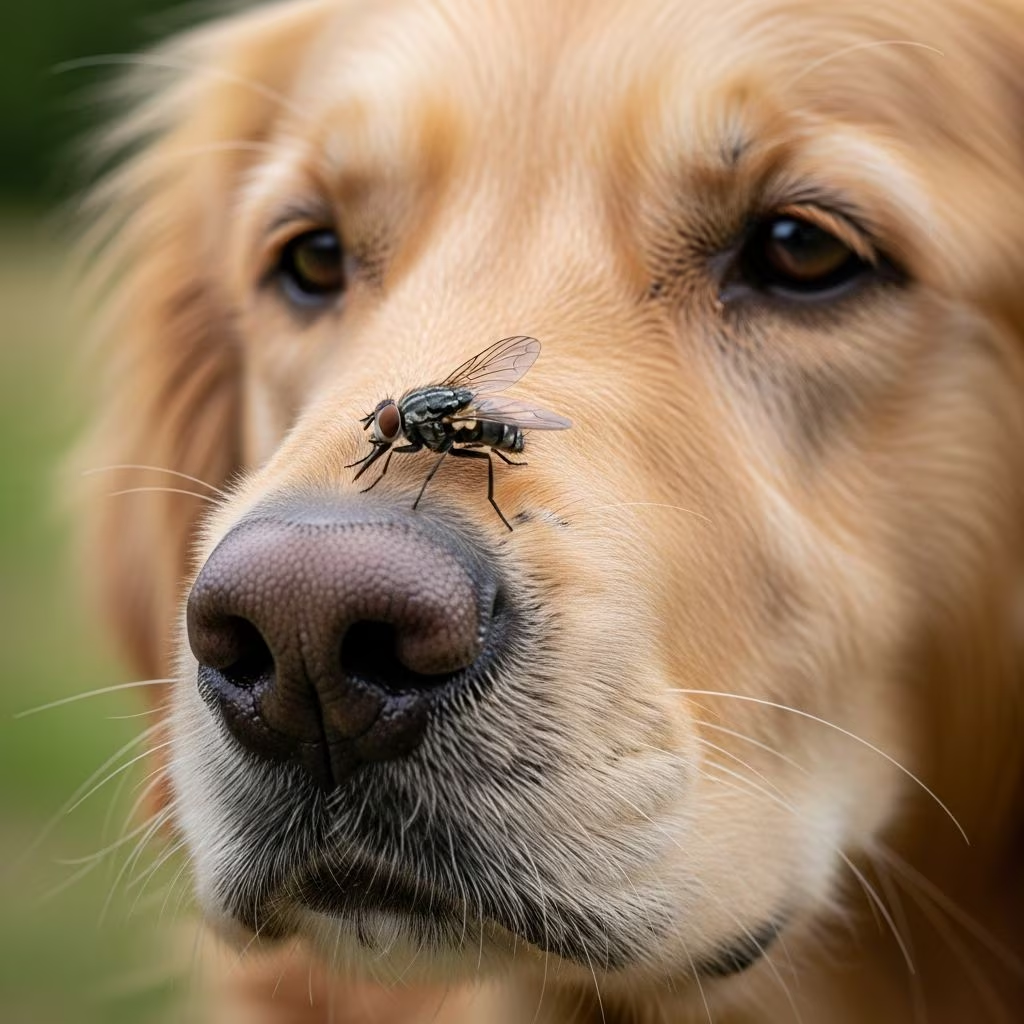
Fly biting, also known as fly catching or jaw snapping syndrome, is a peculiar behaviour where dogs suddenly snap at imaginary flies or snap their jaws in the air. This condition can be alarming for pet owners, as it often appears compulsive and disrupts normal activities. While previously dismissed as purely behavioural or idiopathic, recent veterinary research reveals underlying medical causes, particularly gastrointestinal (GI) disorders, in many cases. A prospective study of seven dogs found that all exhibited GI issues, with five showing complete resolution after targeted treatment.Early diagnosis is crucial, as untreated fly biting can lead to self-injury or mask serious health problems.
This comprehensive guide covers the symptoms, potential causes, diagnostic approaches, treatment options, and prevention strategies for fly biting in dogs. Drawing from peer-reviewed studies and veterinary expertise, it equips owners with actionable insights to help their pets.
What is Fly Biting in Dogs?
Fly biting describes episodes where a dog rapidly snaps its jaws, stares intently at nothing, raises its head, and extends its neck as if chasing invisible insects. These bouts can last seconds to minutes and occur multiple times daily. Owners often report dogs becoming agitated, licking paws excessively, or showing anxiety during or after episodes. Unlike playful snapping at real flies, fly biting targets non-existent targets, often in specific triggers like post-meal times.This stereotypic behaviour mimics human conditions like Sandifer syndrome, where GI reflux causes dystonic neck movements in infants.
Video analysis from affected dogs consistently shows jaw snapping preceded by head raising and neck extension, occurring more frequently in some cases than snapping itself. At home, episodes may cluster after feeding, suggesting postprandial discomfort. Dogs may also exhibit ancillary signs like fractiousness, running into objects, or eating non-food items like mud.
Symptoms of Fly Biting Syndrome
Recognizing fly biting early prevents escalation. Common symptoms include:
- Sudden, repetitive jaw snapping or ‘biting’ at thin air.
- Head raising and neck extension before snapping.
- Intense staring at the ceiling or empty space (stargazing).
- Episodes triggered by meals, stress, or excitement.
- Associated behaviours: excessive paw licking, agitation, whining, or pacing.
- Spontaneous remissions lasting days to months, followed by recurrence.
In severe cases, dogs may injure their mouths or become distressed. Behavioural changes like following owners obsessively or becoming fractious signal underlying discomfort.
Causes of Fly Biting in Dogs
Fly biting is multifaceted, with medical causes outnumbering purely behavioural ones. Veterinary consensus points to GI disease as primary, challenging the outdated view of it as idiopathic or compulsive disorder.
Gastrointestinal Disorders
The most common cause, GI issues like eosinophilic gastritis, gastroesophageal reflux (GER), delayed gastric emptying, and stomach inflammation provoke fly biting via pain or discomfort. In a study of seven dogs, all had GI diagnoses; fly biting resolved in five post-treatment. Post-feeding episodes in three dogs suggested reflux or distension.
Endoscopy revealed reflux in some cases, akin to Sandifer syndrome where oesophageal pain triggers neck dystonia. Hypoallergenic diets and prednisone resolved symptoms in dogs with gastritis.
Neurological Causes: Focal Seizures
Partial (focal) seizures cause abnormal brain activity leading to fly biting. These differ from grand mal seizures by lacking full-body convulsions. Vets often trial anti-epileptics like phenobarbital; response confirms seizures. However, prior treatments failed in several study dogs, pointing to non-epileptic origins.
Eye Problems and Visual Hallucinations
Occipital lobe epilepsy or retinal issues may create hallucinatory ‘flies’. Chorioretinitis was noted in some cases.
Genetic and Hereditary Factors
Breeds like Cavalier King Charles Spaniels show predisposition, possibly linked to dietary intolerance or inherited neurology.
Other Potential Causes
Rarely, compulsive disorders, stress, or medications contribute. Previous anti-seizure drugs (phenobarbital, clomipramine) failed in study dogs with GI roots.
How is Fly Biting Diagnosed?
Diagnosis requires ruling out medical causes via thorough evaluation. Start with:
- History and Video Analysis: Owners log episodes, triggers, duration. Home/consult videos reveal patterns like neck extension.
- Physical/Neurological Exam: Checks for pain, deficits.
- Laboratory Tests: Bloodwork, faecal analysis for GI clues.
- Imaging/Endoscopy: Ultrasound, gastroscopy for reflux, gastritis.
- Response to Trial Therapy: Anti-epileptics or GI treatments gauge cause.
Specialists in behavioural medicine or neurology may consult. Avoid assuming seizures without GI exclusion.
Treatment for Fly Biting in Dogs
Treatment targets the root cause, yielding high success rates.
GI-Focused Treatments
Hypoallergenic diets, antacids, prokinetics for reflux, or steroids for inflammation. Five of seven study dogs improved within 30 days; four fully resolved.
| Condition | Treatment | Success Rate (Study) |
|---|---|---|
| Eosinophilic Gastritis | Hypoallergenic diet + Prednisone | Complete resolution |
| GER/Reflux | Antacids, prokinetics | High improvement |
| Delayed Emptying | Prokinetics | Resolution in cases |
Seizure Management
Anti-convulsants: phenobarbital, levetiracetam (Keppra), zonisamide, potassium bromide. Monitor via logs; adjust doses.
Behavioural Therapy
For confirmed compulsions: desensitization, counter-conditioning. Combine with medical treatment.
Owners track progress 30/60/90 days post-treatment via logs.
Prevention and Management Tips
Prevent recurrence by:
- Feeding small, frequent meals to avoid distension.
- Using hypoallergenic food if allergies suspected.
- Reducing stress with exercise, enrichment.
- Regular vet check-ups for early detection.
- Avoiding triggers like excitement post-meals.
Monitor for remission periods (up to 5 months) but treat promptly on return.
Frequently Asked Questions (FAQs)
Is fly biting in dogs a seizure?
Not always; while focal seizures cause it, GI disease is more common per studies. Trial anti-epileptics if neurology confirmed.
Can fly biting be cured?
Yes, in 70%+ cases with GI treatment. Full resolution in four of seven studied dogs.
What breeds are prone to fly biting?
No specific breed dominance, but genetic links in some like Cavaliers.
Should I punish my dog for fly biting?
No; it’s involuntary. Punishment worsens stress.
How long do episodes last?
Seconds to minutes; track frequency for vets.
References
- Prospective medical evaluation of 7 dogs presented with fly biting — Bécuwe-Bonnet V, et al. PMC. 2012-10-01. https://pmc.ncbi.nlm.nih.gov/articles/PMC3500118/
- Dog ‘fly biting’: A symptom of digestive disorder or seizures? — PetCareRx. 2023-06-15. https://www.petcarerx.com/article/dog-fly-biting-a-symptom-of-digestive-disorder-or-seizures/4842
- Fly Biting: Is it a Seizure or a Digestive Disorder? — PetMD (Dr. Coates). 2016-04-01. https://www.petmd.com/blogs/thedailyvet/dr-coates/2016/april/fly-biting-it-seizure-or-digestive-disorder-33881
- Underlying Gastrointestinal Disease May Manifest as Neurologic Signs — MSPCA-Angell. 2022-01-01. https://www.mspca.org/angell_services/24422-2/
- Focal Seizures and Fly-Biting in Dogs — VCA Animal Hospitals. 2024-01-01. https://vcahospitals.com/know-your-pet/focal-seizures-and-fly-biting-in-dogs
- Managing Seizures — Cornell University College of Veterinary Medicine. 2025-01-01. https://www.vet.cornell.edu/departments-centers-and-institutes/riney-canine-health-center/canine-health-topics/managing-seizures



